 Ferndale
 Siding Replacement for Semiahmoo Homes Near Ferndale
Semiahmoo is one of the more exposed pockets of Whatcom County to own a home in — close enough to open water that salt air is a daily fact of life, and far enough out that wind gets a clean run at the walls before anything slows it down. For homeowners in and around this part of the Ferndale service area, that combination shortens the useful life of a lot of siding products well below what the manufacturer's brochure promises. When siding out here starts failing, it's rarely a cosmetic problem you can paint over. It's usually a sign that moisture has been working behind the surface for a while, and the right response is a full, correctly detailed replacement rather than another round of patching.
This page is specifically about siding replacement as a project — what triggers the need for one, what a correct replacement actually involves on an exposed property like this, and how we run that project from first look to final walkthrough. We install James Hardie fiber cement siding exclusively, and nothing about that changes for a replacement job versus a new build.
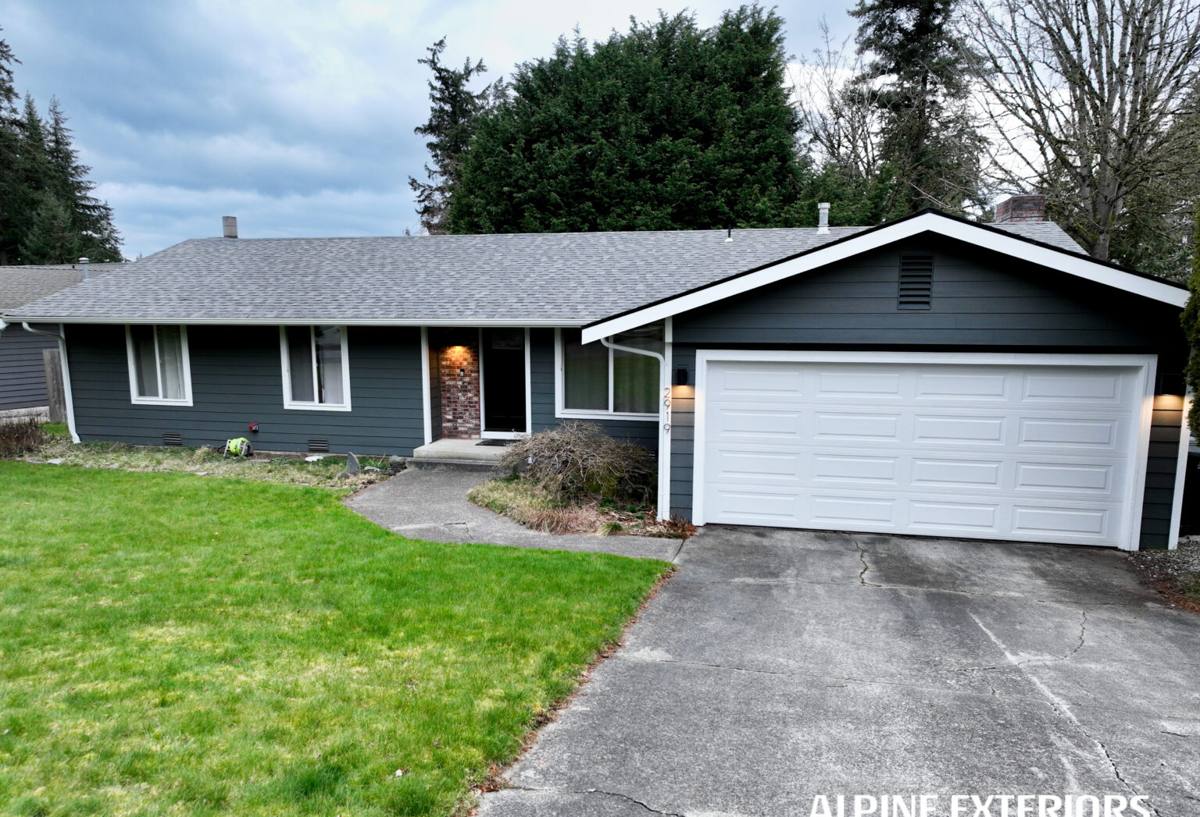
Why Siding Fails Faster Near Semiahmoo
Salt Air and Corrosion
Homes near Semiahmoo pick up salt-laden air on a near-constant basis, and that salt does more damage than most homeowners expect. It accelerates corrosion in fasteners, flashing, and any exposed metal trim, and it breaks down lower-grade paints and coatings faster than a drier inland climate would. A siding system that was installed with standard-grade hardware or a thin field-applied finish often shows its age here years before an identical installation would show wear somewhere more sheltered.
Driving Rain That Doesn't Fall Straight Down
With open exposure and little to break the wind, rain in this area routinely comes in sideways rather than straight down. That matters because most siding systems are detailed to shed water moving downward — laps, joints, and flashing are built around that assumption. Wind-driven rain finds the gaps in that assumption: it gets pushed up under laps, into butt joints, and behind trim that isn't sealed for lateral water pressure. Over years, that's how water tracks behind a wall without ever leaving an obvious drip trail inside the house.
A Moss Season That Runs Most of the Year
Mild temperatures and near-constant humidity give Whatcom County a moss and mildew season that runs longer than most of the country ever deals with, and shaded or north-facing walls near Semiahmoo see it worst. Porous or moisture-retentive siding materials give moss and mildew something to hold onto, which keeps the wall surface damp longer after every rain and slows how quickly it dries out between storms.
Signs a Semiahmoo Home Actually Needs Full Replacement
Not every siding issue calls for tearing the whole wall off. But there's a real difference between a problem you can spot-repair and one that means the assembly behind the siding has already been compromised. Knowing which situation you're in before you spend money on the wrong fix matters.
- Soft or spongy spots when you press on the siding, which usually means the substrate underneath has already absorbed moisture
- Visible warping, cupping, or bowing across multiple courses rather than one isolated board
- Paint or finish failure that keeps recurring within a year or two of repainting, which points to moisture cycling underneath rather than a surface problem
- Persistent moss or mildew that returns quickly after cleaning, especially on shaded walls
- Interior signs such as staining, peeling paint, or a musty smell near exterior walls after wind-driven storms
- Siding that's simply reached the end of its material life — older wood-based or lower-grade products that were never built for this level of moisture exposure
If you're only seeing one or two of these, on one section of wall, a repair or partial re-side is often a reasonable option. When several of them show up at once, or when a contractor opens up a wall and finds rot or trapped moisture behind more than a small area, full replacement is usually the honest recommendation — patching over a wall that's already wet just delays a bigger repair later.
What a Correct Siding Replacement Involves
Tear-Off and Substrate Inspection
A real replacement starts with removing the old siding entirely, not overlaying new material on top of it. That step matters most in a climate like this, because it's the only way to actually see what's happening behind the wall — whether the sheathing has taken on moisture, whether framing needs repair, and whether the house wrap or weather barrier underneath is still doing its job. Overlaying new siding on a wall with hidden moisture damage just buries the problem for the next owner or the next contractor to find.
Weather Barrier and Flashing Detail
Given how much of this climate's moisture arrives sideways rather than straight down, the weather-resistant barrier and flashing details behind the siding carry more of the load than they would in a calmer setting. Window and door flashing needs to integrate correctly with the barrier so water is directed out and down rather than trapped behind the cladding. This is detail work that doesn't show up in a finished photo, but it's the difference between a replacement that lasts thirty years and one that starts leaking again in five.
Fastening and Clearances
James Hardie siding performs the way it's engineered to only when it's installed to the manufacturer's published specifications — correct fastener type and spacing, proper clearance from grade, roof lines, and decking, and joints that are either factory-mitered or properly sealed. Given the corrosion risk from salt air in this area, fastener grade is not a place to cut costs. We use hardware rated for the exposure this location actually gets, not the minimum the code allows.
Matching the Product to the Exposure
Hardie's HZ5 formulation is engineered for regions with heavy moisture exposure and freeze-thaw cycling, which fits this part of Whatcom County well. Getting the right HZ line, panel profile, and factory finish for a Semiahmoo property is part of the specification decision, not an afterthought made on-site.
Why We Only Use James Hardie for Replacement Work
We used to install a wider range of siding products. We stopped, and it wasn't a marketing decision — it came from what we kept finding when we tore old siding off homes in exposed, salt-air locations like this one.
- Non-combustible core: fiber cement doesn't feed a fire the way wood-based siding can, which matters for both safety and insurance underwriting.
- Factory-applied ColorPlus finish: baked on under controlled conditions instead of brushed on in the field, so it resists fading, chalking, and moisture damage far longer than site-applied paint.
- Dimensional stability: fiber cement doesn't swell, cup, or warp the way engineered wood products can after repeated wetting.
- Strong transferable warranty: Hardie backs its products with one of the more substantial warranty structures in the industry, provided installation follows spec.
We won't install LP SmartSide, vinyl siding, Cemplank, Allura, primed spruce, or cedar on a replacement job here. Each of those has a legitimate place in the market, and plenty of homeowners elsewhere are satisfied with them. But on a full tear-off and replacement near open water, we'd rather put on one system we fully stand behind than offer a cheaper option that quietly shifts long-term maintenance risk back onto the homeowner a few years down the road.
Cost Factors for a Semiahmoo Replacement Project
| Factor | What It Affects | Why It Matters Near Semiahmoo |
|---|---|---|
| Substrate condition found at tear-off | Whether repair work is needed before new siding goes on | Wind-driven rain here means hidden moisture damage is more common than in sheltered areas |
| Wall complexity and trim detail | Labor time and number of joints/flashing points | More corners and dormers mean more places for wind-driven rain to intrude if not detailed correctly |
| Fastener and hardware grade | Long-term corrosion resistance | Salt air accelerates corrosion of standard-grade hardware faster than inland locations |
| Product line and profile selected | Material cost and climate performance | HZ5 and comparable moisture-rated lines are the right match for this exposure |
| Access and site conditions | Labor time, equipment needs | Waterfront and spit-adjacent lots sometimes have tighter access or landscaping to work around |
Our Replacement Process
We start with an on-site walkthrough of the existing siding, looking specifically at how it's held up against salt air and wind-driven rain rather than just its cosmetic condition. If there's any indication of trapped moisture, we'll say so plainly before quoting the job, since that changes the scope. From there we put together a clear, written estimate covering tear-off, any substrate repair, the specific Hardie product and color selected, and a realistic timeline.
During the job, tear-off happens in manageable sections so the wall isn't left exposed to weather any longer than necessary, and any substrate issues get addressed and documented before new siding goes up. We finish with a walkthrough so you can see the completed work and ask questions before we consider the job done.
A Homeowner's Checklist Before Hiring for Replacement Work
- Ask whether the quote includes full tear-off or is an overlay — and understand what you're giving up if it's the latter
- Confirm the contractor will document substrate condition once the old siding is off, before closing the wall back up
- Ask what siding product they install and why, and get their warranty terms in writing
- Confirm current Washington contractor licensing and active liability insurance
- Ask specifically how they handle fastener and flashing details for wind-driven rain, not just general workmanship
Why Local Experience on This Stretch of Coast Matters
A crew that regularly works siding replacement near Semiahmoo and the rest of the Ferndale area already knows how this climate behaves differently than it does even a short drive inland. That shows up in decisions made before the first board goes up — which fastener grade to use, how much flashing overlap to build in, where to add extra drainage detailing on a wall that faces prevailing wind. Those are the decisions that determine whether a replacement lasts one or two wet seasons longer, or three decades, on a property this exposed.
If your siding near Semiahmoo is showing signs of wear, or you're just not sure whether you're looking at a repair or a full replacement, we're happy to take a look and give you an honest read. Reach out below for a free, no-pressure estimate.