 Ferndale
 Sandy Point's Roof Problem Isn't Like Anywhere Else in Whatcom County
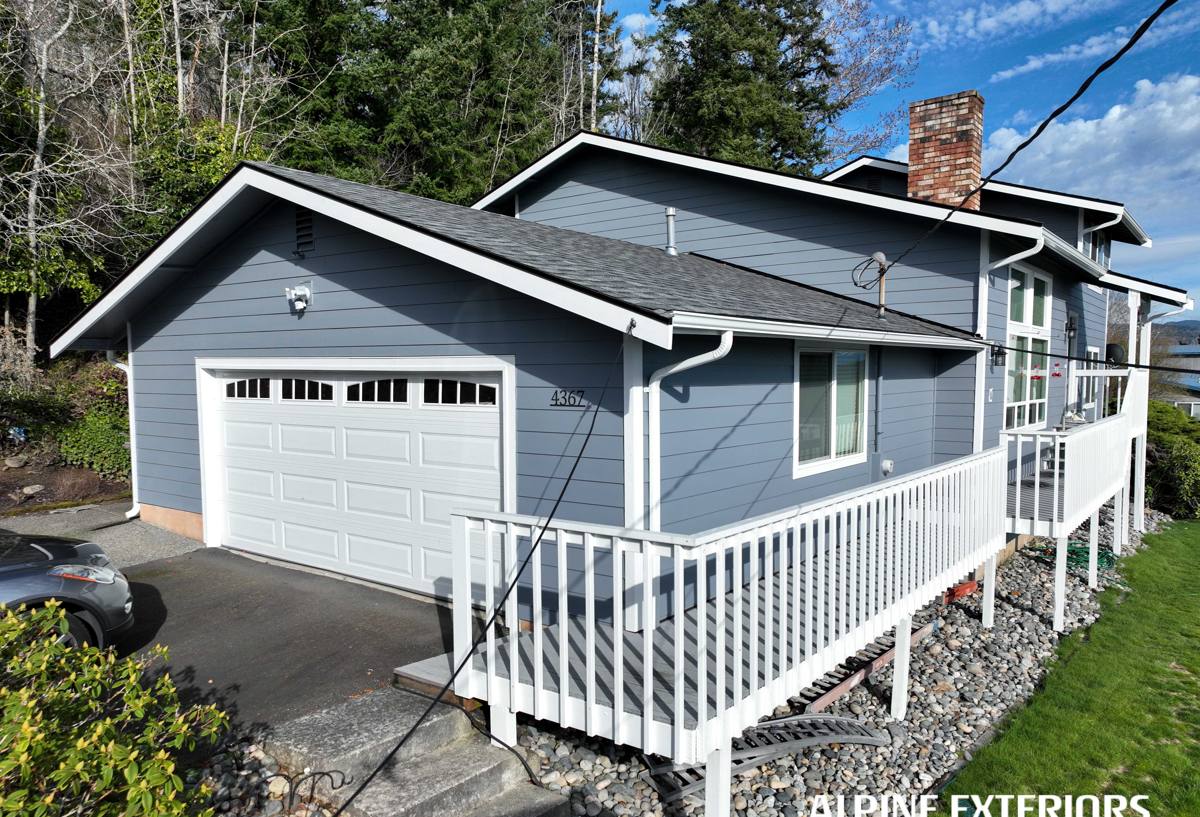
Sandy Point sits right up against the water, and that changes what a roof has to survive year after year. Salt-laden air moves off the Strait and settles on every exposed surface, including shingles, flashing, and fasteners. Add Whatcom County's long, wet winters and the near-constant shade many Sandy Point lots get from mature evergreens, and you have a recipe for moss, algae, and slow material breakdown that inland Ferndale roofs simply don't deal with at the same rate. A roofing job that would hold up fine a few miles inland can fail early out here if it wasn't built with these specific conditions in mind.
None of this means asphalt shingles are the wrong choice for Sandy Point — they're not. It means the details matter more here than they do elsewhere: the underlayment you use, how the flashing is fastened, how the roof breathes, and how often moss gets knocked back before it does damage. Get those details right and an asphalt shingle roof performs well for its full expected service life. Get them wrong and you're looking at leaks, granule loss, and premature replacement well ahead of schedule.
What Salt Air and Driving Rain Actually Do to a Roof
Salt air is corrosive to unprotected metal. On a roof, that means nails, flashing, and any exposed hardware are under constant low-grade attack. Standard fasteners can corrode faster near the water than they would a few miles inland, which is why fastener choice isn't a place to cut corners on a Sandy Point job.
Wind-driven rain is the other half of the equation. Storms coming off the water don't just fall straight down — they push rain sideways, up under shingle tabs, and into any gap in flashing or underlayment that a calm-weather rain would never find. A roof detailed for a drier, calmer climate can look fine for a season or two and then start leaking the first time a real coastal storm hits at the wrong angle.
Where Wind-Driven Rain Finds Its Way In
- Under-sealed or wind-lifted shingle tabs along exposed roof faces
- Valleys where two roof planes meet and water concentrates
- Flashing around chimneys, vents, and skylights that wasn't properly step-flashed or sealed
- Eaves and rakes without adequate underlayment coverage
- Nail penetrations that weren't sealed or were driven at the wrong angle
Moss and Algae: Sandy Point's Long Season
Between tree cover, coastal humidity, and a wet season that runs longer here than in drier parts of the state, moss and algae get a real head start on Sandy Point roofs. Moss isn't just a cosmetic issue. As it grows, it lifts shingle edges, holds moisture against the roof deck, and creates a foothold for water to work its way underneath the shingle layer instead of shedding off the roof the way it's designed to.
The fix isn't a one-time treatment — it's a combination of design choices and ongoing upkeep. Proper attic ventilation keeps the underside of the roof deck drier, which slows moss growth from below. Keeping gutters and valleys clear stops standing water and debris from giving moss a place to establish. And where a roof sits under heavy tree cover, periodic gentle cleaning (never pressure-washing, which strips granules and shortens shingle life) keeps growth from getting a permanent grip.
What a Correctly Built Asphalt Shingle Roof Includes
A roof built for Sandy Point conditions isn't fundamentally different in materials from a roof anywhere else in Ferndale — it's different in how carefully each layer is installed. The components that matter most here:
Underlayment and Ice/Water Protection
A synthetic underlayment rated for wind and moisture resistance, with self-adhering ice-and-water membrane at eaves, valleys, and around all penetrations, gives the roof a real second line of defense if wind-driven rain gets past the shingles.
Ventilation
Balanced intake and exhaust ventilation keeps the attic space dry and temperature-stable. This matters twice as much near the water: poor ventilation traps moisture, and trapped moisture accelerates both wood rot in the deck and moss growth on the surface.
Flashing
Step flashing at walls and chimneys, proper valley flashing, and corrosion-resistant fasteners throughout are non-negotiable this close to salt air. This is one of the most common places we find shortcuts on roofs that are failing early.
Fastening and Wind Resistance
Shingles nailed in the correct pattern, with the correct number of fasteners, hold up dramatically better in wind events than roofs where installers rushed the nailing schedule. This is a detail homeowners can't see once the roof is finished, which is exactly why it's worth asking about.
Comparing Shingle Options for Waterfront Exposure
| Shingle Type | Typical Wind Rating | Algae Resistance | Best Fit for Sandy Point |
|---|---|---|---|
| Standard 3-tab | Lower wind rating | Standard, no algae-resistant granules | Budget option; more frequent maintenance needed |
| Architectural (laminate) | Higher wind rating | Often available with algae-resistant (AR) granules | Good balance of durability and cost |
| Impact-resistant architectural | Higher wind rating | Usually available with AR granules | Best long-term option for exposed, wind-heavy sites |
Algae-resistant (AR) shingles use copper-infused granules that slow the growth of the black streaking common in wet coastal climates. They don't eliminate moss, but they meaningfully cut down on algae staining, which is worth the modest upgrade cost on a home with heavy shade or a north-facing slope.
Our Process for a Sandy Point Roofing Job
- On-site inspection. We walk the roof, check the attic for ventilation and moisture signs, and look closely at flashing, valleys, and any areas showing moss or granule loss.
- Honest scope and written estimate. You get a clear breakdown of what's needed — full replacement, repair, or a maintenance plan — with no pressure to over-scope the job.
- Tear-off and deck inspection. On replacements, we remove old material down to the deck and check for rot or soft spots before anything new goes down.
- Underlayment and flashing installed first. This is the layer that does the real work against wind-driven rain, so it gets done right before a single shingle goes on.
- Shingle installation to manufacturer nailing specs. Correct fastener pattern and count, every time — not a shortcut, even under time pressure.
- Final walk-through. We review the finished roof with you and explain any maintenance steps specific to your property's tree cover, slope, and exposure.
Signs a Sandy Point Roof Needs Attention
- Visible moss growth along shingle edges or in shaded valleys
- Dark streaking or algae staining across north-facing slopes
- Granules collecting in gutters or at downspout outlets
- Curling, cupping, or lifted shingle tabs, especially on wind-exposed faces
- Rust staining near flashing, vents, or fasteners
- Any interior water staining on ceilings after a windy rainstorm
- Soft or spongy spots when walking the roof (a sign of deck moisture)
Any one of these on its own isn't necessarily an emergency, but they're worth a professional look before the next storm season rather than after.
Why It Matters to Hire a Crew That Already Works This Neighborhood
A roofing crew that regularly works Sandy Point already knows which slopes catch the worst of the wind, which lots hold onto moisture longest under tree cover, and which flashing details tend to fail first in this specific setting. That's not something you get from a crew that mostly works dry, inland neighborhoods and treats every job the same way. Being based in Ferndale means we're familiar with Whatcom County's permitting process and the realities of building near the water in this county, and it means we're not driving in from out of the area to handle a warranty callback or a follow-up question.
Local presence also matters for timing. Coastal storm damage tends to hit a lot of roofs in the same neighborhood around the same time. A crew that's already established here can respond faster than one working from farther away.
Maintenance That Actually Extends Roof Life Here
| Maintenance Task | Recommended Frequency | Why It Matters at Sandy Point |
|---|---|---|
| Gutter and valley clearing | 1-2 times per year | Prevents standing water and moss establishment |
| Visual roof inspection | Annually, and after major storms | Catches wind and salt-air damage early |
| Gentle moss/algae removal | As needed, based on tree cover | Stops moss from lifting shingle edges |
| Flashing and fastener check | Every 2-3 years | Salt air accelerates corrosion on unprotected metal |
Skipping maintenance doesn't just shorten a roof's lifespan — it usually turns a small, inexpensive fix into a larger repair once water finds a way past the shingle layer. A ten-minute gutter check twice a year is a lot cheaper than a deck repair.
Get a Straight Answer About Your Roof
If you're not sure whether your Sandy Point roof needs a repair, a maintenance visit, or a full replacement, we'll take a look and give you an honest answer — not an upsell. Reach out for a free, no-pressure estimate using the form below, and we'll walk you through exactly what your roof needs and why.