 Ferndale
 Why Point Roberts Roofs Wear Differently
Point Roberts sits on its own peninsula, cut off from the rest of Whatcom County by water on three sides and by an international border on the fourth. That geography is exactly what makes it a beautiful place to live and exactly what makes roofs there age faster than a roof ten miles inland in Ferndale. Homes here take a steady diet of salt-laden air, wind-driven rain off the water, and a moss season that runs longer than almost anywhere else in the county. None of that is a reason to panic about your roof — it's just the reason repairs done here need to account for conditions a standard repair crew from out of the area might not think twice about.
Salt Air and Slow Corrosion
Being surrounded by saltwater means airborne salt settles on every exposed surface, including your roof. Over years, that accelerates corrosion on exposed fasteners, flashing, and any metal roofing components that aren't rated for coastal exposure. A nail or flashing seam that would last decades in a drier inland climate can start failing well ahead of schedule out here, and a failed fastener or seam is usually where a leak starts.
Driving Rain and Wind-Driven Water
Open water exposure also means Point Roberts catches wind-driven rain that doesn't behave like a normal vertical rainfall. Water gets pushed sideways and upward under shingle edges, around vent boots, and into flashing laps that would stay dry in calmer conditions. Repairs that don't account for wind-driven water tend to look fine for a season, then leak the next time a storm comes off the water at the wrong angle.
The Long Moss Season
Whatcom County's wet season already runs long, and Point Roberts' marine climate stretches it further. Shaded, north-facing slopes and roofs under tree cover stay damp for months at a stretch, which is exactly what moss and algae need to take hold. Left alone, moss lifts shingle edges, holds moisture against the roof deck, and turns small granule loss into a real leak path.
What "Roof Repair" Actually Covers
Roof repair isn't one task — it's a category, and the right fix depends entirely on what's actually failing. On Point Roberts homes, the calls we get usually fall into a handful of buckets:
- Flashing repair or replacement around chimneys, skylights, and roof-wall intersections
- Shingle or shake replacement where wind, moss, or age has damaged individual sections
- Moss and algae removal, plus treatment to slow regrowth
- Sealing and re-securing loose or lifted material after a windstorm
- Fixing leaks at vent boots, pipe collars, and roof penetrations
- Gutter and roof-edge repair where water is backing up under the roofline
- Ventilation corrections that are letting moisture build up under the roof deck
A correct repair starts with figuring out which of these is actually happening, not just patching whatever's visible from the ground.
Common Problems We Find on Point Roberts Roofs
By Roofing Material
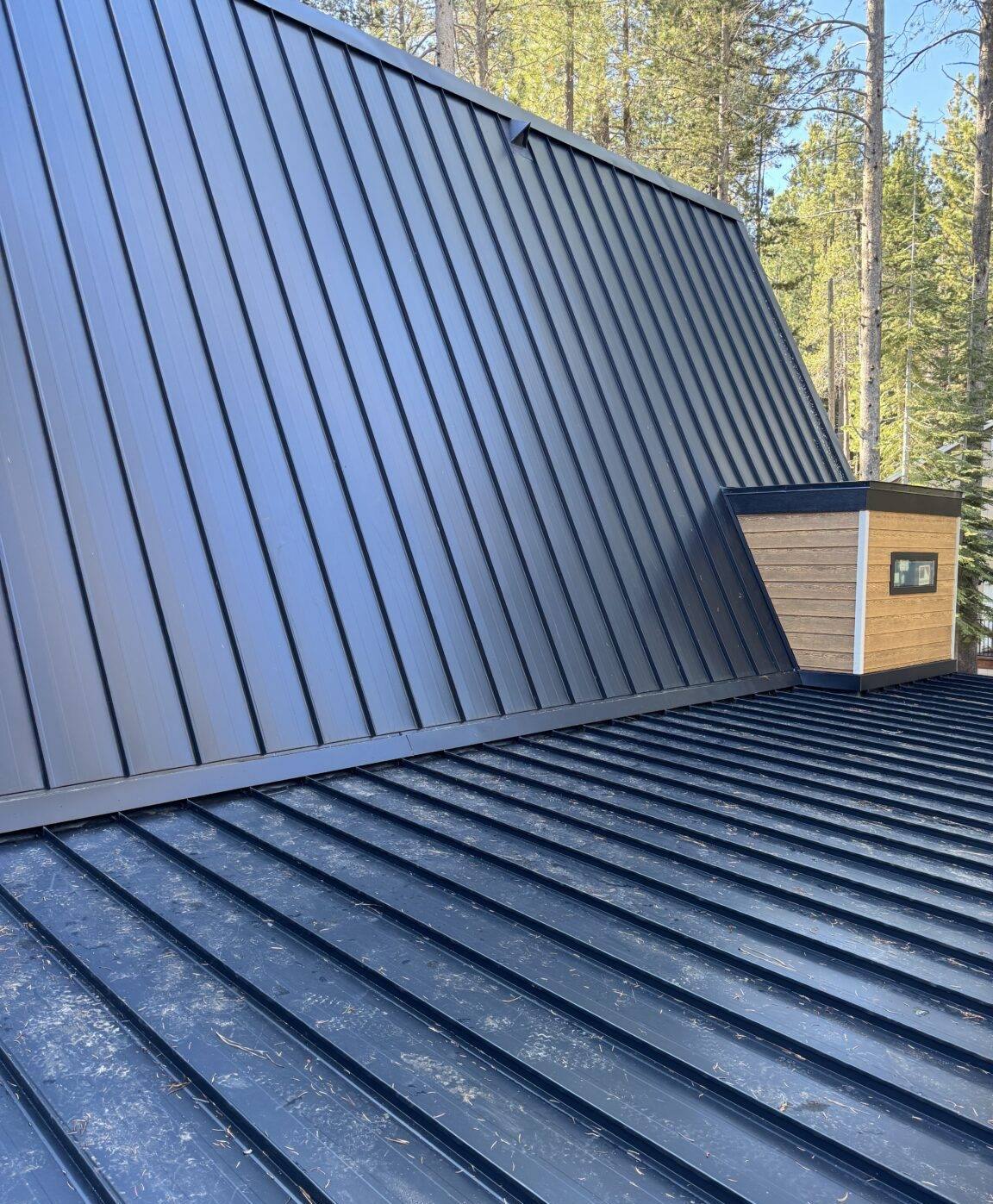
Asphalt shingle roofs on this peninsula tend to show granule loss and curling edges earlier than the same product would inland, especially on the sides facing open water. Cedar shake, still common on older homes in this part of Whatcom County, needs more frequent moss management or it stays damp and deteriorates from underneath. Metal roofing holds up well against moss but is the material most sensitive to using the wrong fastener or flashing metal in a salt-air environment — mixing incompatible metals here causes galvanic corrosion that eats through material from the inside.
What Homeowners Usually Notice First
- A ceiling stain that appears after a windy rainstorm, not a steady drizzle
- Visible moss patches on north-facing or shaded roof sections
- Granules collecting in gutters or at downspout outlets
- Shingles that look lifted or curled at the edges after a storm
- A musty smell in the attic that wasn't there before
Any of these is worth a look before it becomes a bigger repair — small water intrusion problems get expensive fast once they reach framing or insulation.
What a Correct Repair Involves
A repair that actually holds up on a coastal roof isn't just replacing what's visibly damaged. It means tracing the leak or failure back to its real source, checking the flashing and fasteners around it for the same corrosion or wear, and matching materials so nothing installed today becomes next year's failure point. On a moss-affected roof, that also means treating the cause — moisture retention and shade — not just scraping off what's visible and calling it done.
| Cost Factor | Why It Matters | Point Roberts Consideration |
|---|---|---|
| Roof material | Asphalt, cedar shake, and metal each repair differently | Cedar and metal are common on older peninsula homes and take more specialized work |
| Extent of moss/algae damage | Surface growth vs. deck-level moisture | Longer moss season means damage is often further along than it appears |
| Flashing and fastener condition | Corroded metal is the most common hidden failure point | Salt air shortens the service life of standard fasteners and flashing |
| Roof pitch and access | Steeper or harder-to-reach roofs take longer to repair safely | No unique factor, but standard on any coastal home with wind exposure |
| Scheduling and travel | Crew time to reach and work the site | Point Roberts' border-crossing location affects trip planning for any contractor |
Repair vs. Replacement: How We Decide
Not every damaged roof needs a full replacement, and we're not going to tell you it does. The decision usually comes down to how much of the roof's remaining service life is left and whether the damage is isolated or spread across the whole surface.
- If the damage is confined to one section — a single storm-damaged area, one failed flashing detail, one moss-affected slope — repair is almost always the right call
- If the roof is past two-thirds of its expected lifespan and showing widespread granule loss, curling, or multiple leak points, a repair is often a short-term fix on a roof that needs replacing soon anyway
- If moss has been established long enough to affect the roof deck itself, not just the surface, that's a bigger conversation than a simple treatment
We'll tell you honestly which category your roof falls into, including when a repair is the smarter money and when it's just delaying an inevitable replacement.
Our Process for a Point Roberts Repair
Diagnosis First, Not Guesswork
We start every job by finding the actual source of the problem — water travels sideways under a roof deck before it shows up on a ceiling, so the stain isn't always above the leak. We check flashing, fasteners, ventilation, and material condition together, not just the spot that's visibly failing.
Getting the Timing Right for an Exclave
Point Roberts' location means every contractor working there is crossing an international border to get to the job site, and that's true for us too. The difference is we already build that into how we schedule and batch work in the area, so a repair visit isn't held up by logistics that catch an unfamiliar crew off guard. We plan around it, not around you.
The Repair Itself
Once we know what's actually wrong, we replace or reseal only what needs it, match materials and fastener types appropriate for a marine climate, and check the surrounding area so we're not leaving a second failure point next to the one we just fixed.
Materials We Use and Why
For fasteners and flashing on Point Roberts homes, we favor stainless steel or hot-dip galvanized components over standard-grade materials — the added corrosion resistance is worth it given how much salt air this location sees over a roof's lifetime. For shingle roofs, we lean toward algae-resistant products on shaded or north-facing slopes, since standard shingles in a long moss season need more frequent maintenance to stay clean. This isn't a knock on any manufacturer's core products — it's a matter of matching the material to the specific exposure the roof will actually face, which is a different call on this peninsula than it would be a few miles inland in Ferndale.
Why a Local Crew Matters Here
A roofing crew that's never worked Point Roberts before is learning the border crossing, the ferry-adjacent scheduling quirks, and the marine exposure all on your job. That's not a knock on their skill — it's just a fact of unfamiliar territory. We already know how the peninsula's exposure affects material choices, how the border crossing affects scheduling, and how Whatcom County's permitting and code requirements apply out here. That familiarity means fewer surprises, fewer wasted trips, and a repair that's built for the actual conditions your roof faces, not the conditions a generic repair job assumes.
Keeping a Repair From Becoming a Recurring Problem
A good repair should hold — but on a coastal roof, a little seasonal attention goes a long way toward making sure it does.
- Clear debris from valleys and gutters before the wet season sets in
- Check shaded and north-facing roof sections for early moss growth each fall
- Have flashing and fasteners inspected every few years, not just after a visible leak
- Trim back overhanging branches that keep roof sections shaded and damp
- Address small leaks immediately — wind-driven rain finds small gaps fast
If your Point Roberts roof has a leak, storm damage, or a moss problem that's gotten past the point of a simple cleaning, we're glad to take a look and give you an honest read on what it needs. Reach out for a free, no-pressure estimate — the form below gets you started.