 Ferndale
 Why Metal Roofing Makes Sense for Nooksack Homes
Nooksack sits in a part of Whatcom County where roofs earn their keep. You've got salt air drifting in off the Salish Sea, long stretches of driving rain that can last for days, and a moss season that seems to start earlier and run longer every year. A roof out here isn't just shedding water — it's fighting corrosion, holding up under wind-driven rain that gets under poorly lapped materials, and resisting the moisture that moss traps against a roof deck. Metal roofing, installed correctly, handles all three of those better than most alternatives, which is why we get asked about it often from homeowners in and around Ferndale and the Nooksack area.
This page is specifically about metal roofing for Nooksack properties — not a generic rundown of metal roofing in general. The climate here dictates real decisions: which metal, which coating, which fastening method, and how the roof gets flashed and vented. Get those details wrong and you end up with a metal roof that looks fine for a few years and then starts showing rust streaks, fastener backout, or trapped moisture underneath the panels.
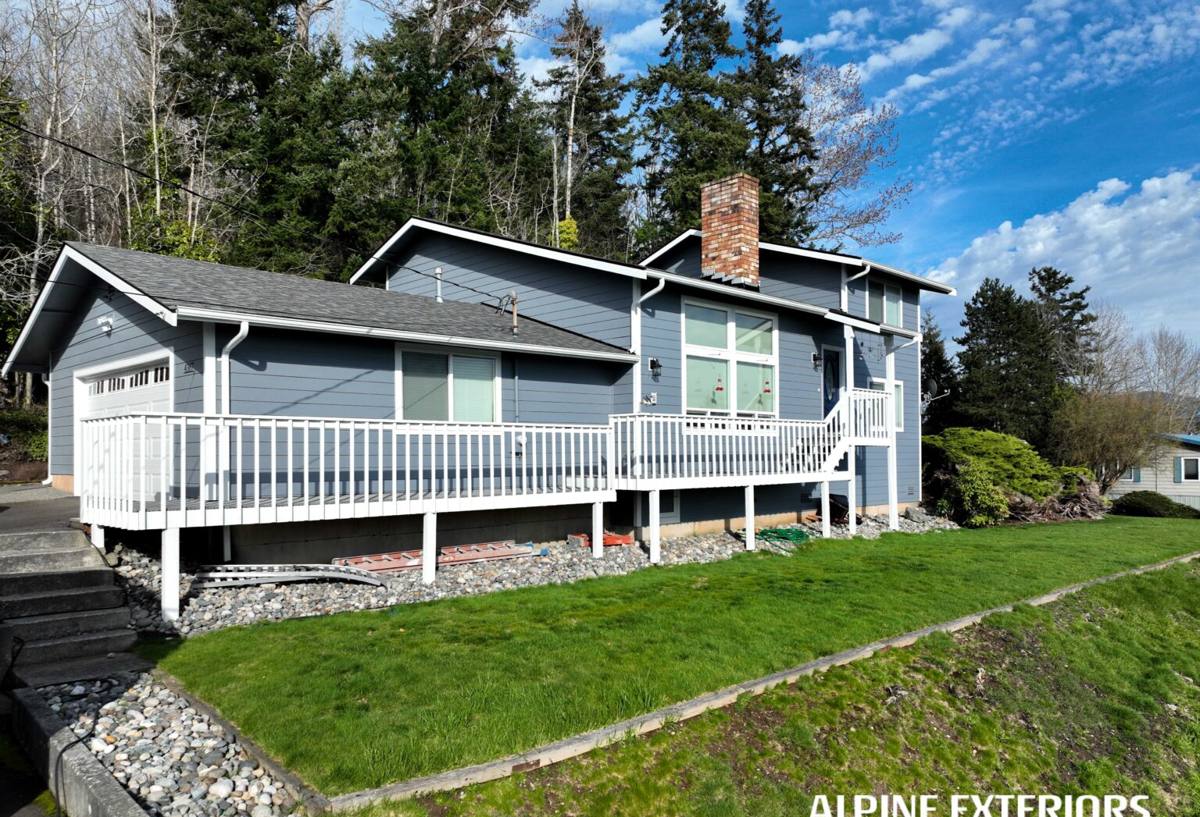
What This Climate Actually Does to a Roof
Salt Air and Corrosion
Even inland from the water, Whatcom County gets enough salt-laden air moving through on weather systems that it accelerates corrosion on unprotected or poorly coated metal. This shows up first at cut edges, fastener heads, and anywhere the factory finish has been scratched during installation. It's slow, but it's steady, and it's one of the main reasons material choice and installation care matter more here than in a dry inland climate.
Driving Rain and Wind-Driven Moisture
Rain here doesn't always fall straight down. Storms push it sideways, which means water gets tested at every seam, lap, and penetration on a roof. A metal roofing system that relies on face-fastened screws with exposed gaskets has more opportunities for that wind-driven rain to find a way in over time, especially as gaskets age and compress.
Moss and Shade
Many Nooksack lots have mature trees and enough shade that moss finds a foothold on any roofing surface that stays damp. Moss itself doesn't grow on bare metal the way it does on shingles, but debris and organic buildup can still collect in low-slope areas, valleys, and around poorly designed flashing details — holding moisture against the roof and undermining an otherwise durable system.
Metal Roofing Options — What's Actually Different
"Metal roofing" covers a range of products with real differences in cost, appearance, and how well they perform in a wet, salt-influenced climate. Here's how the common options compare for a Nooksack home:
| Type | Typical Lifespan | Upfront Cost | How It Handles This Climate |
|---|---|---|---|
| Standing seam (concealed fastener) | 40-60+ years | Higher | Best moisture resistance — no exposed fasteners or gaskets to fail over time |
| Exposed-fastener panel (screw-down) | 25-40 years | Lower to mid | Functional, but gaskets and fastener heads need monitoring and eventual replacement |
| Stone-coated steel (shake/tile profile) | 40-50 years | Mid to higher | Good durability; coating adds a maintenance consideration if it's ever scratched or chipped |
| Corrugated/agricultural panel | 20-30 years | Lowest | Cost-effective for outbuildings; not our recommendation for a primary residence in this climate |
Our standard for Nooksack homes is a quality standing seam system in most cases, or a well-detailed exposed-fastener system when budget or roof design calls for it. We steer away from bargain-grade corrugated panel on houses here — not because it can't shed water, but because the exposed fasteners and thinner gauge material give this climate more places to work on it over the decades a metal roof is supposed to last.
What a Correct Installation Actually Involves
The panel itself is only part of a metal roof. In a climate like this, the details underneath and around it do most of the work:
- Underlayment: A synthetic, high-temp underlayment (not old-style felt) as a secondary moisture barrier under every panel
- Ice and water barrier: Self-adhering membrane at eaves, valleys, and penetrations where wind-driven rain is most likely to push past the panel seams
- Flashing: Custom-formed metal flashing at every valley, wall intersection, chimney, and vent — not generic off-the-shelf pieces caulked into place
- Fastening pattern: Correct clip spacing on standing seam, or proper screw pattern and torque on exposed-fastener panel, so the roof can expand and contract without stressing the fasteners
- Ventilation: Balanced intake and exhaust venting so moisture from inside the home doesn't get trapped under the metal — this matters as much as keeping rain out
- Edge and rake detailing: Properly formed drip edge and rake trim so wind-driven rain can't get behind the first course of panels
Skipping or rushing any one of these is how a metal roof that should last decades starts leaking or corroding early. Most callbacks we see on metal roofs elsewhere trace back to flashing and underlayment shortcuts, not the panel itself.
Signs Your Current Roof Is Ready for a Metal Upgrade
Homeowners in the Nooksack area usually start looking at metal roofing for one of a few reasons. Worth a look if you're seeing:
- A composition roof past 20 years old, especially one that's had moss scraped off repeatedly
- Granule loss showing up in gutters or at downspouts
- Recurring moss or algae staining even after cleaning
- Visible sag, curling shingles, or daylight through the attic sheathing
- A roof that's been patched more than once in the last few years
- An interest in reducing long-term maintenance and re-roofing frequency
None of these mean you need a metal roof today, but they're the honest signals worth having looked at before you're dealing with an active leak.
Our Process for Nooksack Metal Roofing Projects
- On-site assessment: We look at your roof deck, existing flashing, ventilation, and slope — not just the surface condition — since these drive both material choice and cost.
- Straight-talk estimate: We walk through options that fit your roof and budget, with honest trade-offs on lifespan, appearance, and cost — no pressure toward the most expensive system if a simpler one is the right fit.
- Deck prep: Any soft, rotted, or undersized decking gets addressed before a single panel goes on — a metal roof is only as good as what it's fastened to.
- Underlayment and flashing: Installed to the standard described above, with particular attention to valleys and penetrations given how much rain this area sees.
- Panel installation: Fastened and seamed to manufacturer spec, with clean, straight lines and properly formed trim at every edge.
- Final walkthrough: We go over the finished roof with you, including what maintenance (if any) it needs going forward.
Cost Factors Worth Understanding Upfront
Metal roofing costs more upfront than composition shingles, and it's worth understanding why before comparing quotes:
| Factor | Why It Affects Price |
|---|---|
| Roof complexity | More valleys, dormers, and penetrations mean more custom flashing labor |
| Panel system | Standing seam costs more per square than exposed-fastener due to the equipment and labor involved |
| Coating and gauge | Heavier gauge steel and premium coatings cost more but last longer and resist corrosion better |
| Tear-off vs. overlay | Removing old roofing and inspecting the deck adds cost but is usually the right call on an aging roof |
| Access and pitch | Steep or hard-to-access roofs take longer and require more safety setup |
We'd rather explain these factors plainly than quote a number without context. A metal roof is a long-term investment, and understanding what you're paying for helps you compare estimates that aren't apples to apples.
Why Hiring a Crew That Already Works in Nooksack Matters
Metal roofing done wrong in this climate doesn't fail immediately — it fails in year 8 or 12, long after the crew that installed it has moved on. A contractor who works Whatcom County regularly knows which flashing details actually hold up against our driving rain, how much ventilation a typical local roof design needs, and where salt-air corrosion tends to show up first on a metal system. That's the kind of judgment that comes from doing this work in this specific climate, not from a general roofing background alone.
We also know that Nooksack homes vary — some are older farmhouses with original framing, others newer builds — and a correct metal roof installation has to be adapted to what's actually on your house, not installed the same way regardless of what's underneath.
Get an Honest Look at Your Roof
If you're weighing metal roofing for a home in Nooksack or elsewhere around Ferndale, we're happy to take a look and give you a straightforward assessment — no pressure, no inflated urgency. Fill out the form below for a free estimate and we'll walk you through what your roof actually needs.