 Ferndale
 Building New in Point Roberts: What the Climate Actually Demands
Point Roberts sits on its own small peninsula at the far northwest corner of Whatcom County, with water on three sides. That location is part of what makes it a great place to build, and it's also exactly why new-construction windows here need more thought than a standard inland install. Salt-laden air off the water, wind-driven rain for a good chunk of the year, and a moss season that starts early and hangs around into summer all put steady stress on window frames, glazing, and the flashing details around them. On a new build, you get one real chance to plan for that before the siding goes on and those details disappear behind it.
None of this means new construction here is harder than it should be — it just means the material choices, the flashing sequence, and the hardware need to match the site, not a generic spec sheet. That's the whole focus of this page: what correct new-construction window installation looks like specifically for a Point Roberts build.
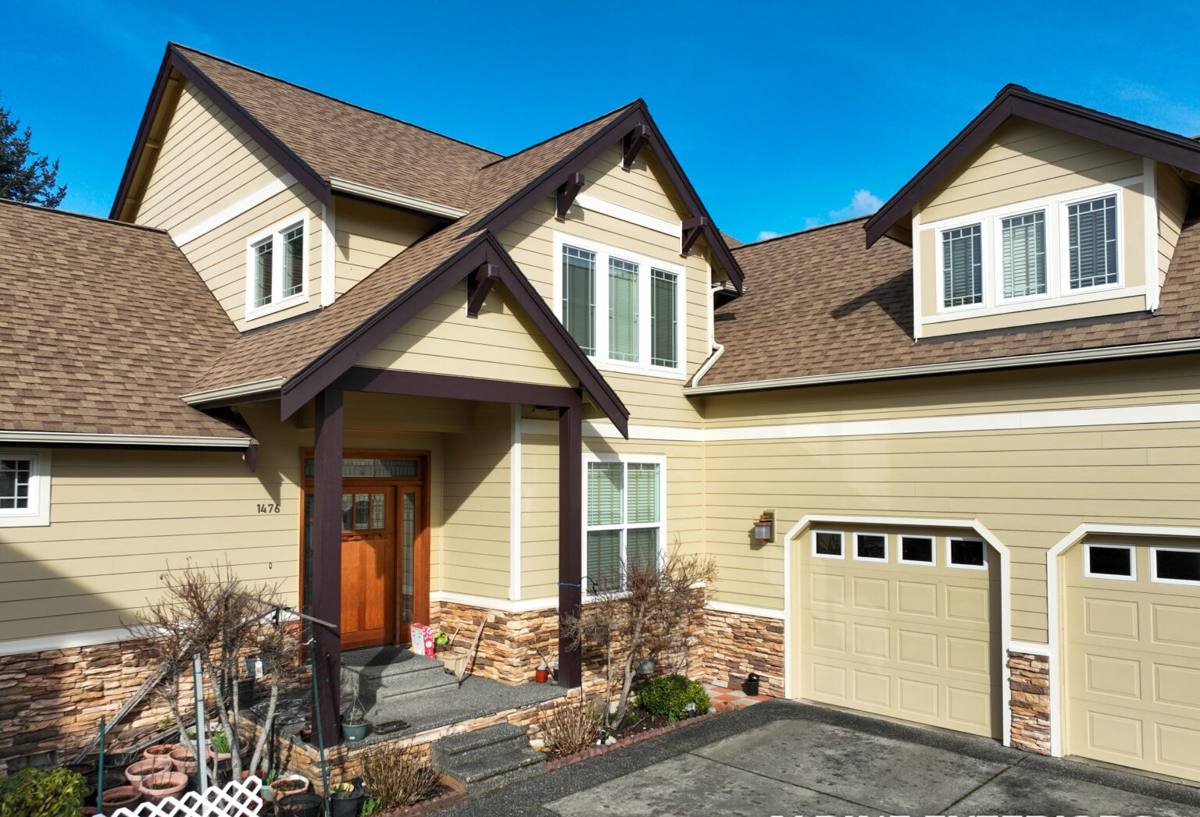
New Construction vs. Replacement: Different Job, Different Standards
Nailing-Fin Windows, Not Retrofit Frames
New-construction windows use a nailing flange that fastens directly to the wall sheathing before the weather-resistive barrier (WRB) and siding go on. That's different from a replacement window, which gets set into an existing, already-clad opening. New construction gives you full access to the rough opening — which is an advantage, but only if the crew uses it correctly.
One Shot at the Flashing
Once siding covers the wall, the flashing underneath is out of sight for the life of the house. Any shortcuts — a missing sill pan, sealant used in place of proper flashing, fasteners that skip the manufacturer's pattern — don't show up as a problem right away. They show up years later as a soft spot in the sheathing or a stain on the interior drywall, usually long after the crew that built it has moved on. In a wet, salt-exposed location like Point Roberts, that timeline is shorter than it would be somewhere drier.
Water Management: The Detail That Actually Prevents Rot
Sealant is not a water barrier — it's a backup. The primary defense against water intrusion at a window opening is mechanical: a sloped sill pan that carries any water that gets past the glass back out to the exterior, head flashing with a drip cap integrated shingle-style into the WRB so water sheds down and over the window rather than behind it, and end dams at the sill to stop lateral migration into the wall cavity.
With driving rain coming off the water for a large share of the year, wall assemblies in Point Roberts see more incidental wind-driven moisture at window openings than a typical inland lot. That makes the shingle-lap sequencing of building paper or synthetic WRB over the flange, and flashing tape over that, worth getting right rather than rushing. It's the least visible part of the job and the most important one.
Choosing a Frame Material for a Salt-Air Environment
Frame material matters more here than it would inland. Salt spray accelerates corrosion on hardware and fasteners, and UV plus damp cycling stresses different frame materials in different ways. There's no single right answer for every home — it depends on budget, the home's exposure to open water, and how much upkeep an owner wants to take on.
| Frame Material | Salt-Air Behavior | Maintenance | Typical Cost Tier |
|---|---|---|---|
| Vinyl | Won't corrode; can become brittle over many years of UV and cold-cycling | Low — occasional rinse to clear salt film | Lower |
| Fiberglass | Very stable dimensionally, strong corrosion resistance, holds paint well if refinished | Low to moderate | Mid to upper |
| Aluminum-clad wood | Good exterior durability if cladding and seals stay intact; interior wood needs protection from moisture | Higher — depends on seal integrity over time | Upper |
Whatever material we're installing, we make sure the fasteners, hinges, and locking hardware are corrosion-resistant — stainless steel or a comparable coated fastener — rather than the standard-grade hardware that's fine in a drier, inland location but starts showing rust streaks on a waterfront wall within a few seasons.
Glass and Performance Ratings for This Climate
Western Whatcom County, including Point Roberts, falls under Washington's marine climate zone for energy code purposes — mild temperatures but persistent moisture and overcast skies. That changes the priority list compared to a sunnier or colder climate:
- U-factor matters more than solar heat gain here — keeping heat inside the house is the bigger job than blocking sun, since direct sun is limited much of the year.
- Argon-filled double-pane glazing meets Washington State Energy Code requirements for most new construction; triple-pane is worth discussing on north- or water-facing walls with heavy exposure.
- Condensation resistance is worth asking about given the humidity — a well-rated window resists interior condensation better through the damp months.
- Whatever specs you land on, the window schedule needs to satisfy the energy code path your builder or designer is using for the permit — we coordinate with whoever is managing that on the project.
Sequencing: How Windows Fit Into the Build Timeline
Windows typically go in right after the wall sheathing and WRB are on, and before siding starts. On a Point Roberts build, we try to install during a stretch of dry weather rather than mid-storm — flashing tape and sealants need dry, clean substrate to bond properly, and rushing that step in the rain to keep a schedule is how call-backs get created. That sometimes means a few days of flexibility built into the schedule rather than a fixed date, which is easier to manage when the crew already expects that kind of weather window in this location.
We also coordinate directly with the framer and siding crew so the rough openings are sized and squared correctly before we show up, and so the WRB detailing lines up with how the siding will be installed over it. Gaps between trades are where flashing mistakes usually happen.
Why Hiring a Crew That Already Works in Point Roberts Matters
Point Roberts is a U.S. exclave — by land, it's reached only by driving through Canada, since it's cut off from the rest of Washington by water and by the international border. That has real, practical effects on a construction schedule that a crew unfamiliar with the area won't plan around: material deliveries, extra equipment, and even crew members need to account for a border crossing each way, which can add unpredictable time compared to a job on the mainland.
Building permits and inspections for Point Roberts are handled through Whatcom County, since the community doesn't have its own separate municipal government. A crew that's worked here before already knows how inspections typically get scheduled for this location and doesn't lose days figuring that out mid-project. Combine that with the site-specific issues covered above — salt exposure, wind-driven rain, moss — and the value of hiring someone who's already solved these problems on other Point Roberts builds becomes pretty clear. It's not a knock on any other contractor; it's just a different job than a standard inland install, and experience here shows up in fewer surprises and a schedule that actually holds.
What a Correct Installation Includes
Whether you're a homeowner watching the process or a builder checking a subcontractor's work, here's what should happen at every window opening on a new build in this area:
- Rough opening checked for square and correct size before the window ever gets set
- Sloped sill pan flashing installed to shed water outward, not sealant alone
- Head flashing with a drip cap, integrated shingle-style with the WRB above the window
- End dams at the sill to stop water from migrating sideways into the wall cavity
- Corrosion-resistant fasteners and hardware throughout, given the salt exposure
- Manufacturer-specified shimming and fastening pattern so the frame stays square under wind load
- Interior perimeter sealed against air leakage, not just the exterior joint
- Photos taken before siding covers the flashing, kept on file for warranty and future reference
Living With It Afterward: Simple Maintenance in a Salt-Air, Moss-Prone Climate
A correctly installed window in Point Roberts still needs a little seasonal attention because of where it sits. A periodic rinse of frames and glass clears salt film before it can etch or dull the finish. Weep holes at the base of the frame should stay clear of moss, algae, and debris so water can drain the way it's designed to. It's also worth a quick annual look at exterior sealant joints — not because they're the primary water barrier, but because a cracked bead is an early, easy-to-fix warning sign rather than something to ignore until it's a bigger problem. None of this is heavy maintenance, but skipping it in this climate shortens the life of even a well-installed window.
If you're building new in Point Roberts and want windows installed by a crew that already understands the site conditions and the logistics of working out there, we're happy to take a look at your plans and walk through the options. Reach out for a free, no-pressure estimate using the form below.