 Ferndale
 Metal Roofing for Kendall Homes
Kendall sits back from the coastline in the Whatcom County foothills, but that doesn't mean the roof over your head has it easy. Between the tree canopy, the long wet stretch from fall through spring, and the humidity that settles into low-lying yards near the Nooksack drainage, a roof here works overtime. Add in the salt-tinged air that moves inland off the Strait on windy days, and you've got a climate that rewards roofing materials built to shed water fast and resist slow corrosion, not just survive a single hard storm.
Metal roofing has become a popular answer for homeowners in this area, and for good reason. It isn't the right fit for every house or every budget, but where it fits, it solves problems that asphalt shingles in this climate never quite get ahead of.
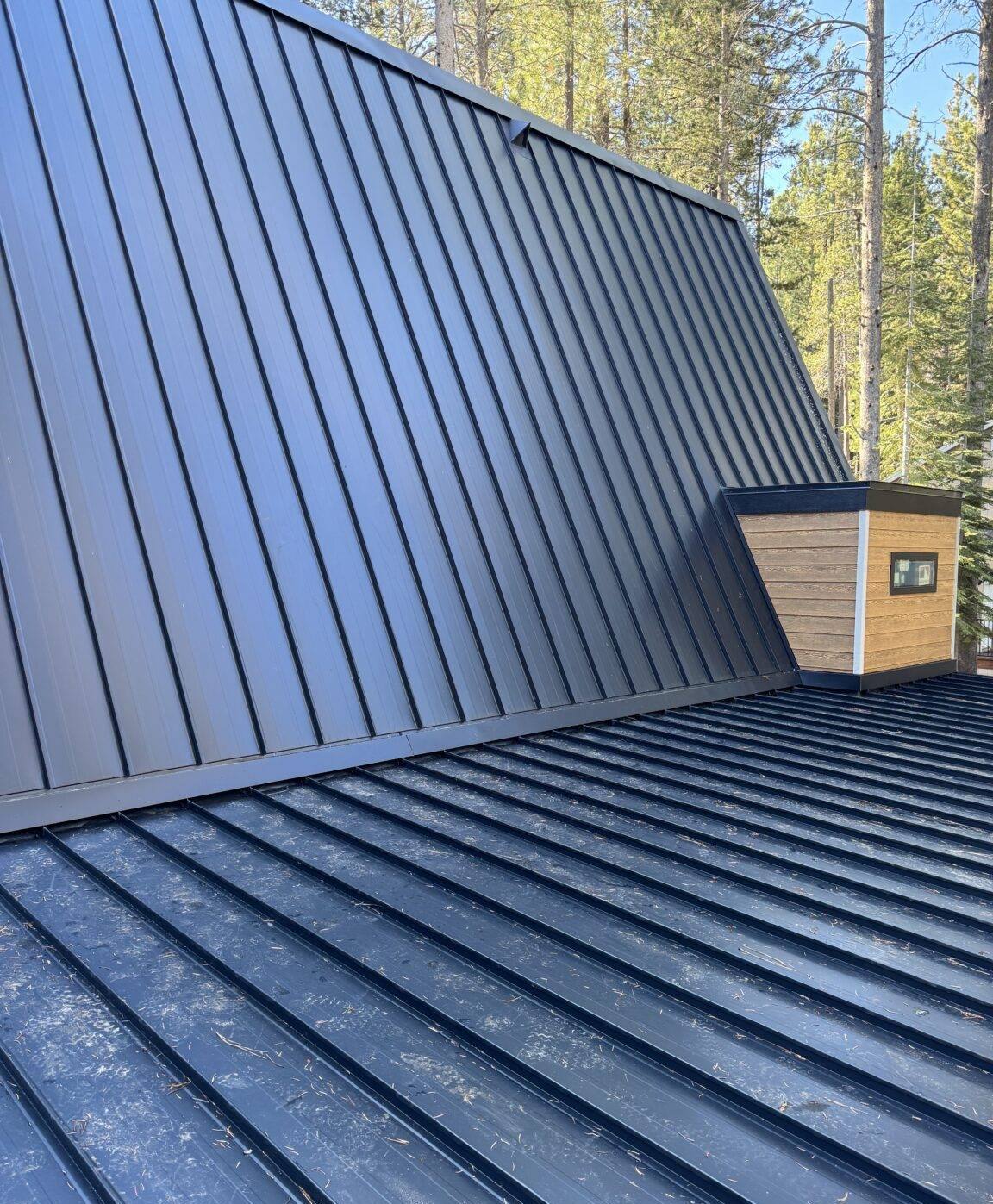
What Kendall's Climate Actually Does to a Roof
Moss and Moisture
Kendall's tree cover keeps a lot of roofs in partial shade for large parts of the day, especially through the shorter daylight months. Shade plus moisture is exactly what moss needs. On asphalt shingles, moss roots into the granule layer and lifts edges, which is how small leaks start. Metal sheds moss far more effectively because there's no rough surface for it to grab onto, and the smooth, sloped panels drain quickly instead of holding a film of water.
Driving Rain
Whatcom County storms don't always come straight down — wind-driven rain pushes water sideways and up under laps, seams, and flashing. A metal roof's resistance to this comes down to installation details as much as the material itself: seam design, underlayment choice, and flashing at every penetration all matter more than the panel type on the spec sheet.
Salt Air and Slow Corrosion
Kendall isn't beachfront, but Whatcom County as a whole sees salt-laden air move inland on windy days off the Strait of Georgia and the Sound. Over years, that air accelerates corrosion on unprotected or poorly coated metal, particularly at cut edges, fasteners, and fastener heads. It's a slow process, which is exactly why it gets overlooked — the damage doesn't show up until a roof is a decade old and the coating has already broken down.
Why Metal Roofing Makes Sense Here
- Sheds moss and standing water instead of trapping it against shaded, tree-covered roof planes
- Handles heavy, wind-driven Pacific Northwest rain without relying on granule wear-down like asphalt
- Coated steel and aluminum resist the slow corrosion that salt-tinged coastal air causes over time
- Sheds snow load cleanly on the occasional heavy winter event instead of holding weight
- Long service life reduces how often a homeowner has to deal with tear-off and disposal
None of that means metal is automatically the right call for every house. Roof pitch, existing structure, budget, and the look you want for the home all factor in — which is part of why we walk the roof in person before recommending anything.
What a Correct Metal Roof Installation Involves
A metal roof is only as good as the details underneath it. Panels that look identical on the surface can perform completely differently depending on what's happening below them.
Underlayment
In a climate as wet as this one, we don't treat underlayment as an afterthought. A high-temp synthetic or self-adhered underlayment gives a second line of defense if wind-driven rain ever gets past a seam or flashing detail, which matters most at valleys, eaves, and low-slope sections.
Fasteners and Flashing
Exposed-fastener systems live or die on the quality and placement of their screws — the wrong washer or an over-driven screw is a future leak point. Standing seam systems avoid exposed fasteners altogether by using concealed clips, which is one reason they hold up longer in a corrosive coastal air environment. Flashing at chimneys, vents, and wall transitions has to be formed and lapped correctly, not just caulked — caulk is a maintenance item, not a permanent seal.
Ventilation
Metal roofs need proper intake and exhaust ventilation in the attic space just as much as any other roof type. Without it, trapped moisture condenses on the underside of the panels, which can cause problems that have nothing to do with the roofing material itself and everything to do with attic design.
Comparing Metal Roofing Options
| System | How It's Fastened | Typical Lifespan | Best Fit |
|---|---|---|---|
| Standing seam steel or aluminum | Concealed clips, no exposed fasteners | 40-60+ years | Homes wanting the longest service life and lowest long-term maintenance |
| Exposed-fastener steel panels | Screws through the panel face | 25-40 years | Budget-conscious projects, outbuildings, simpler rooflines |
| Stone-coated steel shingles/shakes | Concealed nailing under coated stone granules | 40-50 years | Homeowners wanting a traditional shingle or shake look with metal's durability |
We install based on the roof and the homeowner's priorities, not a single default product. On steeper, more visible rooflines, standing seam is usually worth the added cost because there's nothing exposed for salt air or moss to work on over the decades. On simpler structures or lower-visibility roofs, exposed-fastener panels can be a smart, honest value choice as long as the fastener quality and spacing are done right.
Our Process, Start to Finish
- On-site evaluation — we walk the roof, check the decking, ventilation, and existing flashing, and talk through what's actually going on before recommending anything.
- Written estimate — a clear scope covering tear-off (if needed), underlayment, panel system, flashing, and cleanup, with no vague allowances.
- Tear-off and deck prep — old roofing removed, decking inspected and repaired where moisture has done damage.
- Underlayment and flashing — installed to handle wind-driven rain, not just a straight-down downpour.
- Panel installation — set to manufacturer spec, with attention to expansion and contraction so seams and fasteners hold over decades of temperature swings.
- Final walkthrough and cleanup — magnetic sweep for stray fasteners, full site cleanup, and a walk-through of what was done.
Maintenance in Moss Season
Metal roofing is low-maintenance, not zero-maintenance. In a shaded, tree-heavy area like Kendall, a simple annual check makes a real difference:
- Clear leaves and needles out of valleys and off panel laps before they hold moisture through winter
- Check gutters are draining freely — a backed-up gutter can push water up under the eave edge
- Look for any moss gaining a foothold in low-slope or shaded sections and remove it early, before it spreads
- Have flashing around chimneys, vents, and skylights checked periodically, since that's where most roof leaks actually originate
- Watch for any fastener heads showing rust bleed, which is an early sign a coating has failed at that point
What Drives the Cost
| Factor | Why It Matters |
|---|---|
| Roof pitch and complexity | Steeper roofs and more valleys, hips, and penetrations take more labor and material |
| Panel system chosen | Standing seam costs more upfront than exposed-fastener panels but needs less long-term upkeep |
| Tear-off vs. overlay | Removing old roofing and inspecting the deck adds cost but avoids covering up hidden damage |
| Accessibility | Steep grades, tree cover, and tight access around a home affect setup time and safety measures |
| Ventilation and decking repairs | Rot or inadequate venting found during tear-off needs to be corrected before panels go on |
We give a firm, itemized number after seeing the roof in person — not a phone estimate. Anyone quoting a metal roof without walking it is guessing.
Signs It's Time to Look at Your Roof
- Moss building up along shaded slopes or in valleys, even after cleaning
- Granules collecting in gutters, a sign an asphalt roof is wearing down
- Daylight visible through the attic, or damp insulation after a storm
- Rust staining or streaking on an existing metal roof or flashing
- A roof original to the home and past 20-25 years old, regardless of visible damage
Why Hire a Crew That Already Works Kendall
Roofing crews that mostly work drier, more open areas don't always account for what shaded, moisture-heavy properties in this part of Whatcom County actually need — the moss pressure, the wind-driven rain angles, the slower corrosion from air moving in off the coast. We work this area regularly, which means we're not learning the local conditions on your roof. That shows up in the details: where we add extra underlayment, how we flash around penetrations, and which panel system we actually recommend instead of defaulting to whatever's easiest to install.
If you're weighing a metal roof for a Kendall property, we're glad to come take a look. The estimate is free, there's no pressure to sign anything on the spot, and you'll get a straight answer about whether metal is the right call for your specific roof — use the form below to get started.