 Ferndale
 Why Windows Take a Different Kind of Beating in Sudden Valley
Sudden Valley sits in a wooded, lake-adjacent pocket of Whatcom County, and that setting is a mixed blessing for the windows on your home. The tree canopy and shoreline humidity that make the neighborhood pleasant also mean windows here deal with more sustained moisture exposure than a house sitting out in the open. Add in the marine air that moves inland off Bellingham Bay and the Salish Sea, and you get a slow, steady exposure to salt-laden moisture that works into hardware, weep holes, and seals over the years — not dramatic, but cumulative.
Then there's the rain itself. Whatcom County doesn't get hammered by short violent storms as much as it gets long stretches of driving rain pushed sideways by wind off the water. That kind of weather finds every weak point in a window's flashing and sealant before it ever shows up as a visible leak. And because so many Sudden Valley lots are shaded by mature trees, moss season runs longer here than it does on an open, sun-exposed lot — moss and algae hold moisture against sills, tracks, and cladding for months at a time instead of drying out between rains.
None of this means Sudden Valley homes need exotic products. It means the windows need to be sized, sealed, and installed with this specific combination of shade, moisture, and salt air in mind — which is a different job than replacing windows on a dry, sunny lot on the other side of the county.
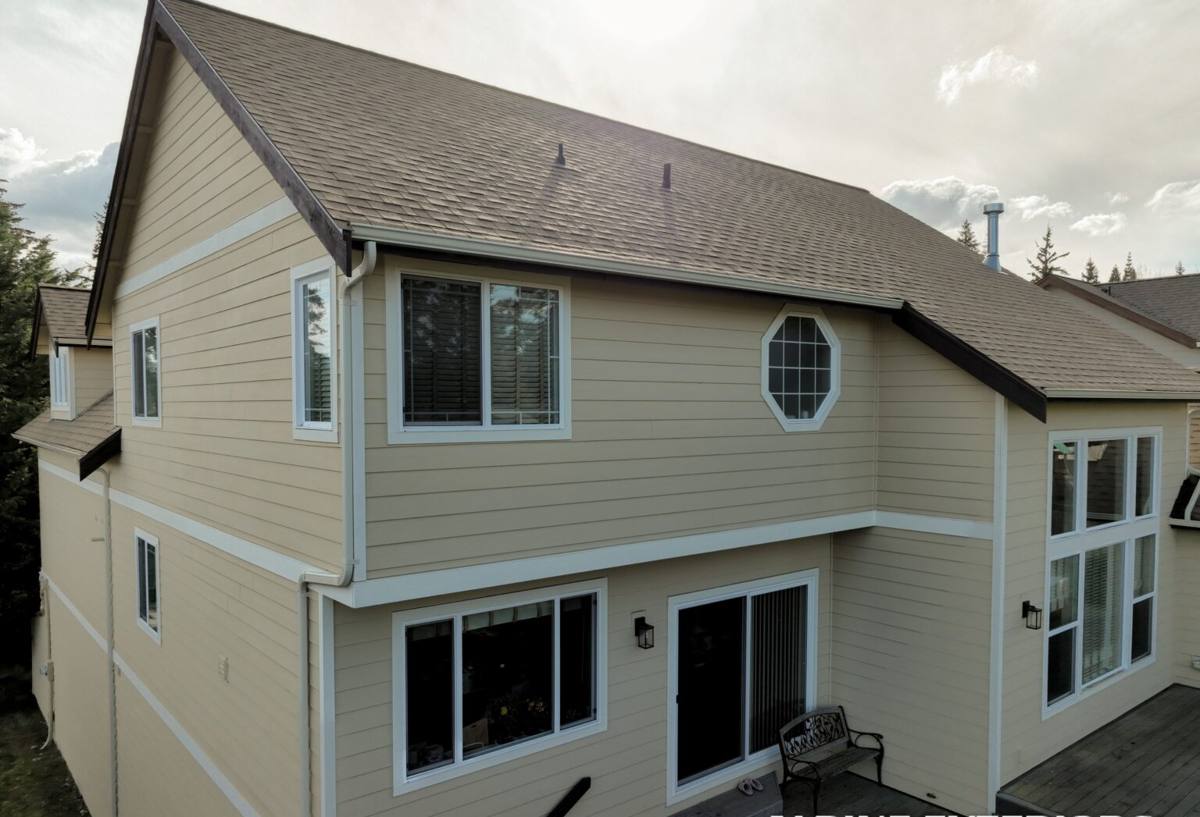
What a Correct Window Replacement Actually Involves
Homeowners are often surprised how much of a window job happens before the new window ever goes in the opening. The window itself is only part of the system — the rest is how it's tied into the wall.
- Removing the old unit without tearing up surrounding siding or trim more than necessary.
- Inspecting the rough opening for rot, soft framing, or old flashing that's already failed — common in older Sudden Valley homes where moisture has had years to work in.
- Installing a proper sill pan that sheds any water that gets past the window to the outside, not into the wall cavity.
- Flashing the head, jambs, and sill in the correct shingle-style order so water is always directed outward and downward, never trapped behind the siding.
- Sealing and insulating the gap between the window frame and the rough opening — too little insulation wastes energy, too much expanding foam can bow the frame and cause the sash to bind.
- Setting the window plumb, level, and square so weatherstripping seals evenly and the sash doesn't drag over time.
Skip any one of these steps and the window can look fine for a year or two while moisture quietly works into the framing behind it. This is where most window problems in this region actually start — not with a bad window, but with an installation that didn't account for how much water this area sees.
Choosing the Right Window for a Whatcom County Home
There's no single "best" window — the right choice depends on your home's exposure, your budget, and how long you plan to own it. For a shaded, moisture-prone site like Sudden Valley, we generally steer conversations toward frame materials and glass packages that hold up well under sustained damp conditions rather than short bursts of heavy weather.
| Frame Material | Upfront Cost | Moisture Resistance | Maintenance |
|---|---|---|---|
| Vinyl | Lowest | Good — won't rot, but seams and welds need to be quality-built | Low — occasional cleaning |
| Fiberglass | Mid-to-high | Excellent — very stable in wet/dry cycling | Low |
| Wood-clad (exterior vinyl or aluminum clad) | Highest | Good on the exterior; interior wood still needs protection from condensation | Moderate |
On glass, double-pane with a low-E coating and argon fill is the standard baseline for energy performance in this climate and covers most homes well. Triple-pane adds real value mainly on north- and west-facing walls that take the brunt of wind-driven rain and winter chill, or in rooms where noise or comfort near the glass has been a persistent complaint. It's a meaningful upgrade in cost, so we only recommend it where it will actually earn its keep.
Frame Color and UV Exposure
Under a heavy tree canopy, UV degradation of frames is less of an issue than it is on open, sun-baked lots — which is one advantage of Sudden Valley's setting. That said, darker frame colors absorb more heat, which can matter for vinyl expansion and contraction. It's worth discussing if you're set on a specific exterior color.
Signs Your Current Windows Are Working Against You
Not every problem window announces itself with a visible leak. Some of the most common issues we see on service calls in this area show up as smaller, easy-to-dismiss symptoms:
- Fogging or a permanent haze between the panes (a failed seal, not a cleaning problem)
- Soft or discolored wood trim around the frame, especially at the bottom corners
- Persistent condensation on the inside of the glass in cooler months
- A noticeable draft when standing near the window on a windy day
- Moss or dark streaking building up on the sill or exterior trim faster than the rest of the siding
- Windows that are hard to open, close, or latch — a sign the frame has shifted or swollen
- A visible gap between the window frame and the siding or trim
Any one of these is worth a look. Several at once usually means moisture has already gotten past the surface and into the assembly behind it.
How We Handle a Sudden Valley Window Project
- On-site assessment. We look at each window individually — sun exposure, tree cover, current condition of the opening — rather than quoting a blanket number for the whole house.
- Product selection. We walk through frame and glass options based on what that specific wall actually faces, not a one-size pitch.
- Written estimate. Clear line items, no vague allowances, so you know what you're paying for before work starts.
- Opening inspection at removal. If we find rot or damaged framing once the old window is out, we stop and show you before proceeding — no surprises buried in the invoice.
- Correct flashing and sealing at every opening, following manufacturer specifications so the warranty stays intact.
- Final walkthrough. We test operation, check seals, and clean up the work area before we consider the job finished.
What Affects the Cost
Window pricing varies enough between homes that a per-window average isn't very useful on its own. These are the factors that actually move the number:
| Factor | Why It Matters |
|---|---|
| Frame material and glass package | Vinyl vs. fiberglass, double vs. triple pane are the biggest line-item differences |
| Window size and configuration | Large picture windows, bays, and custom shapes cost more than standard sliders or double-hungs |
| Condition of the existing opening | Rot repair or reframing adds labor and materials beyond the window itself |
| Access and site conditions | Second-story or hard-to-reach openings take longer to complete safely |
| Trim and siding work | Matching or repairing exterior trim disturbed during removal adds to the scope |
We'd rather walk your home and give you real numbers than throw out a broad range that doesn't hold up once we open the wall.
Why Hiring a Crew That Already Works This Neighborhood Matters
Sudden Valley has its own rhythms — gated access, HOA expectations, narrower roads for equipment and material delivery — and a crew that's already familiar with them spends less of your project time working that out for the first time. More importantly, a contractor who's replaced windows on several homes in this specific setting has already seen how the shade, humidity, and moss buildup here plays out over a few years, not just at the moment of installation. That's the kind of pattern recognition that leads to catching a rot problem early instead of after it's spread.
It also matters for warranty follow-through. If a seal fails or a window needs adjustment two years down the road, you want a local outfit that's still around and familiar with your specific job — not a crew that came through once from out of the area and moved on.
Caring for New Windows Through Whatcom County's Wet Season
Even well-installed windows benefit from a little seasonal attention in a climate like this one:
- Clear debris and moss buildup from sills and tracks before it holds moisture against the frame
- Check weep holes at the base of the frame periodically to make sure they're draining, not clogged
- Wipe down interior condensation during cold snaps to protect sills and trim
- Inspect exterior caulking annually — it's the cheapest insurance against water intrusion
- Rinse salt-laden grime off glass and hardware a couple of times a year, especially on walls facing open exposure
None of this is heavy maintenance — it's the kind of five-minute check that keeps a good installation good for the long run.
If your windows are fogging, drafting, sticking, or just costing you more on heating than they should, we're happy to take a look and give you a straightforward, no-pressure estimate. Use the form below to get in touch.