 Ferndale
 Marietta Sits Right Where Whatcom County's Climate Gets Serious About Siding
Marietta is close enough to the water that homes here deal with a different set of conditions than a house ten miles inland in Ferndale proper. Salt-tinged marine air off Bellingham Bay, wind-driven rain that comes in sideways during fall and winter storms, and a wet season long enough to grow a healthy crop of moss on anything that stays damp — that combination is hard on exterior materials. It's especially hard on siding that wasn't engineered with any of that in mind.
We install fiber cement siding in Marietta and the surrounding Ferndale area because it's one of the few claddings that holds up to salt exposure, sustained moisture, and biological growth without turning into a maintenance project every couple of years. This page covers what that climate actually does to a house, what a correct fiber cement installation looks like here, and how our process works from first estimate to finished job.
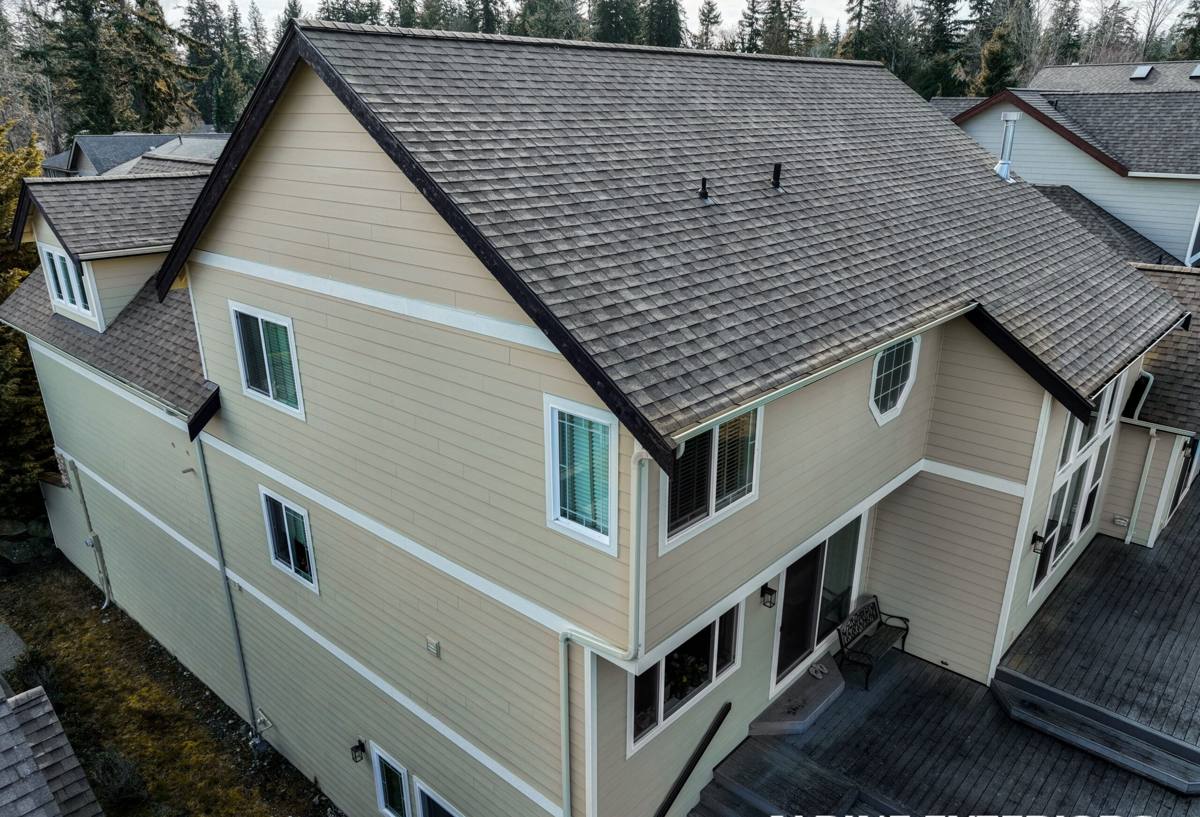
What Salt Air, Rain, and Moss Actually Do to a House
Salt Air and Corrosion
Airborne salt doesn't just affect boats and metal railings. It settles on siding surfaces and fasteners, and over years it accelerates corrosion on anything not rated for coastal exposure — cheap fasteners, unprotected trim edges, and finishes that weren't formulated to resist it. Homes in Marietta are close enough to the bay that this isn't a hypothetical; it's a design constraint.
Wind-Driven Rain and Water Intrusion
Whatcom County gets plenty of rain, but the kind that does damage to siding is the kind that comes in at an angle during a windstorm and gets pushed up under laps, around trim, and behind poorly flashed openings. A siding system with a weak drainage plane or improper overlap doesn't fail immediately — it fails quietly, over seasons, as water works its way behind the cladding and into the wall assembly.
Moss and Prolonged Moisture
The long wet season here means anything that holds moisture against its surface — low-sloped trim, tight-to-grade siding, poorly ventilated wall sections — becomes a place where moss and mildew get a foothold. On some materials that's cosmetic. On others, particularly wood-based or wood-fiber products, prolonged moisture contact against organic material is exactly the condition that leads to swelling, softening, and eventual rot.
Why We Standardized on James Hardie and Nothing Else
We install James Hardie fiber cement exclusively. We don't install vinyl, LP SmartSide, Cemplank, Allura, or unprimed cedar or spruce siding, and we're upfront about why: fiber cement made from Portland cement, sand, and cellulose fiber doesn't have an organic wood component for moisture to attack, and it doesn't soften or warp the way wood-based composite products can when they take on water repeatedly. Hardie backs its siding with a factory-applied ColorPlus finish that's baked on and warranted separately from the substrate, which matters in a marine climate where finish failure from salt and UV exposure is a real concern with field-applied paint.
Hardie also builds its HardieZone system specifically around regional climate demands — HZ5 products are engineered for wetter, harsher climates like the Pacific Northwest, with moisture management built into the product specification rather than left entirely to installation technique. That's a meaningful difference from products where performance depends almost entirely on getting every caulk joint and paint coat right, year after year, for the life of the house.
None of this means other products are without merit for the right project and budget. Vinyl is inexpensive and low-maintenance in mild conditions. LP SmartSide is easier to install and lighter than fiber cement. But in a location like Marietta, where salt air, driving rain, and a long moss season stack up against whatever's on the wall, we've made fiber cement our standard because it's the product we're willing to warranty our workmanship against.
What a Correct Fiber Cement Installation Actually Involves
Fiber cement siding is only as good as the installation underneath it. A lot of the failures we get called out to inspect on other contractors' work aren't product failures — they're installation shortcuts. A correct job in a climate like this includes:
Drainage Plane and Rain Screen Detailing
Siding is a rain-shedding layer, not a waterproof membrane. Behind it needs to be a properly lapped weather-resistant barrier, and in high-exposure locations, a rain screen gap that lets any water that does get behind the siding drain and dry rather than sit against the sheathing.
Flashing at Every Penetration
Windows, doors, hose bibs, light fixtures, and roof-to-wall intersections are where wind-driven rain finds its way in. Each one needs proper flashing integrated with the water-resistive barrier — not just caulk, which degrades and is never a substitute for mechanical flashing.
Fastening and Clearances
Hardie specifies fastener type, placement, and penetration depth for a reason — get it wrong and you either compromise the siding's fire and moisture performance or create call-backs down the line. Ground clearance and clearance from roof lines also matter more here, where sustained dampness at the base of a wall is what feeds moss and mildew growth.
Caulking Kept to a Minimum
A well-detailed installation uses flashing and lap geometry to shed water, with sealant used sparingly at specific joints — not as the primary defense against intrusion. Installations that rely heavily on caulk are the ones that need the most attention a few years in.
Our Process for a Marietta Fiber Cement Project
- Site walk and assessment — we look at existing siding condition, moisture issues, trim and flashing details, and any signs of past water intrusion before we talk product or price.
- Product and color selection — we walk through Hardie's plank, shingle, and panel options and ColorPlus color line so the finished look fits the house and the neighborhood.
- Written estimate — scope, materials, and timeline in writing, with no pressure to sign on the spot.
- Prep and moisture barrier work — removal of failing siding, sheathing repair where needed, and installation of the water-resistive barrier and rain screen components.
- Installation to manufacturer spec — correct fastening, flashing, and clearances throughout, not just at the parts that show.
- Final walkthrough — we go over the finished work with the homeowner before calling the job done.
Comparing Siding Options in Marietta's Climate
| Factor | James Hardie Fiber Cement | Vinyl | Wood / LP SmartSide |
|---|---|---|---|
| Salt air resistance | Strong — non-organic substrate, factory finish | Moderate — can become brittle over time | Weaker — finish and substrate both vulnerable |
| Wind-driven rain tolerance | Strong when properly flashed and rain-screened | Depends heavily on installation quality | Moisture-sensitive substrate raises the stakes of any gap |
| Moss/mildew resistance | Non-organic — growth stays surface-level, easily cleaned | Non-organic, but seams and laps can trap moisture | Organic substrate — sustained dampness risks rot |
| Finish longevity | Factory-baked ColorPlus, separately warranted | Color molded through, can fade | Field-applied paint, needs recoating over time |
| Fire performance | Non-combustible | Combustible | Combustible |
What Affects the Cost of a Fiber Cement Job Here
Every house is different, but the same handful of factors move the price up or down on most Marietta and Ferndale-area projects:
- Total square footage and number of stories
- Condition of the existing sheathing — whether it needs repair once old siding comes off
- Amount of trim, corner detail, and architectural features versus flat wall runs
- Product line chosen (lap siding, shingle-style, or panel systems) and color
- Extent of moisture damage found during tear-off, which isn't always visible beforehand
- Access and site conditions — tight lots, landscaping, or elevation changes
We give a firm written number after seeing the house in person — not a phone estimate — because guessing at sheathing condition or trim complexity from a photo does homeowners a disservice either way.
Why It Matters That We Already Work in This Area
A contractor who mostly works inland doesn't always think about rain screen detailing or fastener corrosion resistance the same way a crew that works Marietta and the rest of the Ferndale coastline does, because inland houses don't punish those shortcuts as quickly. We know what this specific stretch of Whatcom County does to a wall over ten or twenty years, and we detail every job — flashing, fastening, clearances — with that in mind rather than treating it as an afterthought.
If your siding is showing moss buildup, soft spots, peeling paint, or you're planning ahead for a full replacement, we're happy to take a look and give you a straight answer about what's going on and what it would take to fix it right. Reach out for a free, no-pressure estimate using the form below.