 Ferndale
 Roof Repair for Kendall, Built Around Whatcom County Weather
Kendall sits inland from our Ferndale base, but the roofs out that way deal with the same core problem every roof in Whatcom County deals with: too much moisture, for too much of the year, with not enough sun in between to dry things out. Whether a roof is closer to the water in Ferndale or further inland toward Kendall, the pattern is the same — driving rain that gets pushed sideways under trim and flashing, a moss season that can run eight or nine months, and salt-laden air near the coast that speeds up corrosion on metal components. Roof repair out here isn't just patching a leak. It's understanding why that leak started in a climate that never really gives a roof a break.
This page covers what roof repair actually looks like for homes in and around Kendall — what tends to go wrong, what a correct fix involves, and why it matters to work with a crew that already knows this area instead of a contractor who's never been past Bellingham.
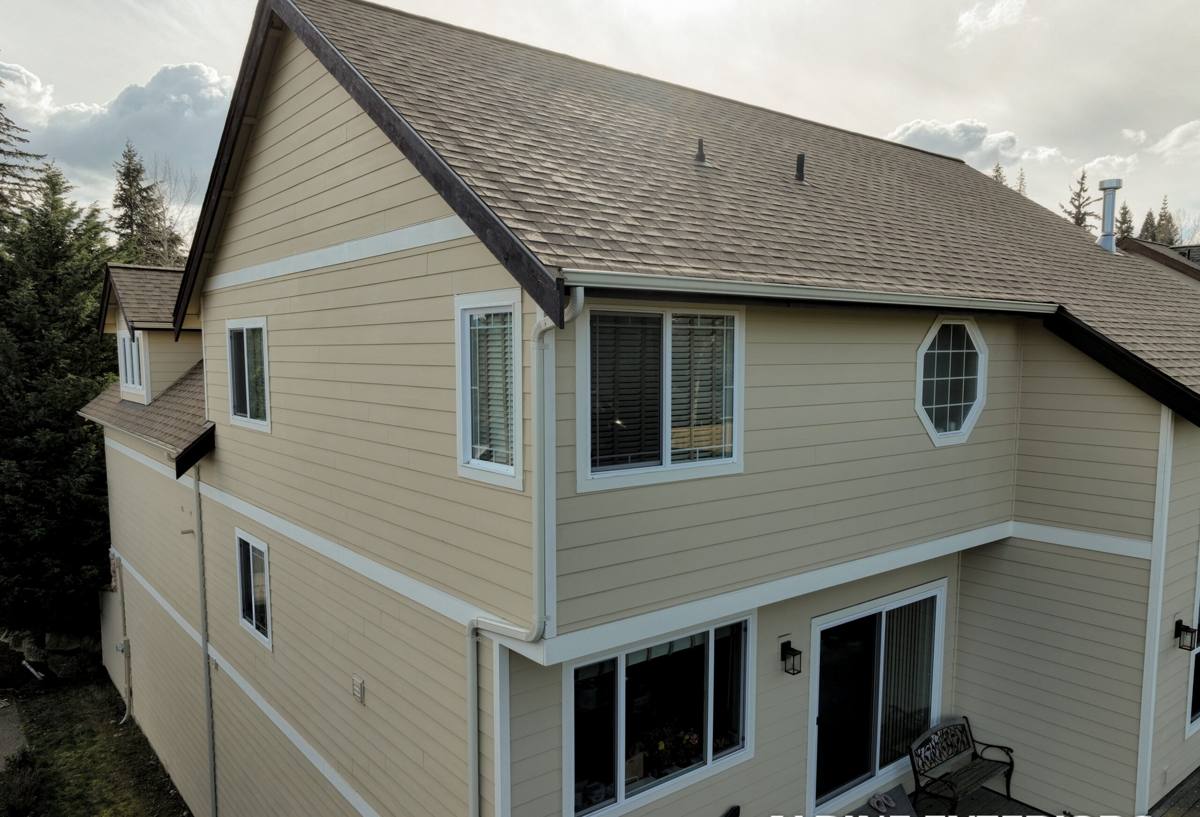
What Kendall Roofs Are Up Against
A Long Moss Season
Moss doesn't just make a roof look neglected — it holds moisture against the roofing material for weeks at a time, works its way under shingle tabs, and lifts edges just enough to let wind-driven rain in behind them. In Whatcom County's mild, wet climate, moss growth can start in fall and keep going well into spring, especially on north-facing slopes and anywhere overhanging trees keep a section of roof shaded and damp. Once moss gets established, it's not a cosmetic issue anymore — it's the front edge of a moisture problem that eventually shows up as a leak.
Driving Rain and Wind-Driven Water
Rain in this region rarely falls straight down. Wind off the water and through the valleys pushes it sideways, which means water finds its way into gaps that would never leak in a calmer climate — under step flashing, around chimney counterflashing, along the edges of skylights, and at any point where two roof planes meet. A repair that only addresses the spot where water is dripping inside, without tracing it back to the entry point, tends to fail again within a season or two.
Salt Air and Metal Fatigue
Homes closer to the coast deal with airborne salt that accelerates rust on exposed fasteners, flashing, and any unpainted metal. Even inland toward Kendall, the general dampness of the region shortens the working life of unprotected metal roofing components. It's one more reason we pay attention to what fasteners and flashing metals go back on a roof during a repair, not just what's fastest to install.
Signs a Kendall Roof Needs Repair, Not Just a Watchful Eye
Most roof problems give some warning before they become an active leak. Homeowners in this area should treat any of the following as a reason to have a roof looked at:
- Dark streaking or thick moss growth, especially on north- or shade-facing slopes
- Granules collecting in gutters or at downspout outlets
- Curling, cupping, or lifted shingle edges you can see from the ground
- Soft or discolored spots on ceilings or in the attic after a heavy rain
- Daylight visible through the roof deck from inside the attic
- Rusted, loose, or missing flashing around chimneys, vents, and skylights
- Sagging sections along the roofline or at valleys
- Water stains around interior chimney chases or exterior wall tops
Any one of these is worth a call before the next heavy rain event, not after.
What a Correct Repair Actually Involves
Diagnosing the Real Problem, Not Just the Symptom
A leak inside a house often shows up several feet from where water is actually entering the roof — it travels along rafters, sheathing, or insulation before it drips somewhere visible. A repair that just seals the spot above the ceiling stain, without getting on the roof and tracing the actual entry point, is a repair that's likely to come back. Our approach starts with finding the real source: checking flashing, checking underlayment condition, checking for wind-driven intrusion points, and confirming that what's failing is isolated rather than a sign of broader wear across the roof.
Matching Materials and Flashing Details
Patching in new shingles that don't match the surrounding material's age, profile, or granule wear is a common shortcut that leaves a roof looking inconsistent and can create a slightly different water-shedding pattern at the seam. Flashing gets the same attention — step flashing, counterflashing, valley metal, and pipe boots all need to be reinstalled correctly, not just caulked over. Caulk and roofing cement have their place as a short-term or supplemental seal, but they're not a substitute for flashing that's properly lapped and fastened.
Addressing the Moisture, Not Just the Hole
If moss or trapped debris contributed to the failure, a proper repair includes clearing that material and addressing what's holding moisture against the roof — whether that's overhanging branches, poor ventilation, or a low spot where water pools. Sealing a leak without addressing why moisture was sitting there in the first place is a repair that buys a year or two, not a lasting fix.
Common Roof Repair Types We See in Kendall
| Repair Type | Typical Cause | What's Involved |
|---|---|---|
| Flashing repair | Wind-driven rain, aged or rusted metal, poor original install | Remove and reinstall flashing with correct laps and fasteners |
| Shingle replacement (isolated) | Wind damage, granule loss, impact damage | Matched-material patch, underlayment check beneath |
| Moss and debris remediation | Shade, overhanging trees, poor drying conditions | Careful removal, treatment, and inspection for underlying damage |
| Valley and penetration repair | High water volume points, aging pipe boots or seals | Reflashing or reseating penetrations, valley metal inspection |
| Deck and sheathing repair | Long-term undetected leak, rot | Cut back to sound wood, replace sheathing, reflash and reroof section |
Cost on any of these depends on how much of the roof is affected, how accessible the roof is, the pitch, the age and material of the existing roof, and whether the underlying decking is sound or needs replacement. A straightforward flashing repair is a very different job — and a very different cost — than a deck repair following a long-term hidden leak, which is exactly why an accurate diagnosis matters before anyone quotes a price.
Our Process for a Kendall Repair Call
- Initial conversation about what you're seeing — stains, drafts, visible damage, or just general age
- On-site roof and attic inspection to trace the actual source of the problem
- A clear explanation of what's failing and why, in plain terms, before any work starts
- A written scope and estimate that separates the repair itself from anything else we notice while we're up there
- The repair, done with matched materials and correctly reinstalled flashing
- A final check to confirm the fix addresses the source, not just the symptom
We don't upsell a full replacement when a repair is the honest answer. If a roof's condition means a repair genuinely isn't the right long-term call, we'll say that plainly and explain why — but that's a judgment made after inspection, not before.
Why a Local Ferndale Crew Matters for Kendall
A crew that works Whatcom County regularly has already seen how moss builds up on shaded slopes in this area, how wind pushes rain into flashing during the kind of storms that roll through here every fall and winter, and what happens to roofs that get patched with shortcuts instead of proper flashing work. That familiarity shortens the diagnosis step and means fewer surprises once work is underway. It also means a crew that's still local next season if a repair needs a warranty follow-up — not a company that showed up from out of the area for one job and moved on.
Being based in Ferndale, we're a short drive from Kendall for both the initial inspection and any follow-up, which matters when a leak needs a look before the next storm rather than a week from now.
Maintenance That Keeps a Repair From Becoming a Recurring Job
A well-done repair should last, but a few habits extend that further in this climate:
- Keep gutters and downspouts clear so water doesn't back up under the roof edge
- Trim back branches that keep sections of roof shaded and slow to dry
- Have moss treated before it thickens, not after it's visibly widespread
- Check attic ventilation — poor airflow traps moisture and speeds up deck and shingle wear
- Schedule a roof check after any major windstorm, even if nothing looks obviously wrong from the ground
None of this replaces a professional inspection, but it reduces how often you need one on an emergency basis.
Get an Honest Look at Your Kendall Roof
If you're dealing with a leak, visible moss buildup, or just want a second opinion on a roof's condition before it becomes a bigger problem, we're happy to take a look. The estimate is free and there's no pressure to move forward — fill out the form below and we'll set up a time to come out.