 Ferndale
 Kendall Decks Need More Planning Than a Catalog Build
A deck built from a generic plan works fine in a dry climate. It does not work as well in Whatcom County, where a deck spends most of the year wet, shaded part of the day, and exposed to the kind of driving rain that finds every gap in a poorly detailed structure. Homes in and around Kendall deal with this every winter and shoulder season. A deck that looks right the day it's finished but wasn't built for local conditions will show its age fast — soft boards, rusted fasteners, slick green film on the walking surface, and a substructure that's rotting quietly underneath before anyone notices from above.
Custom deck work here means starting from the climate and working backward to material and structure, not starting from a picture in a catalog and hoping it holds up.
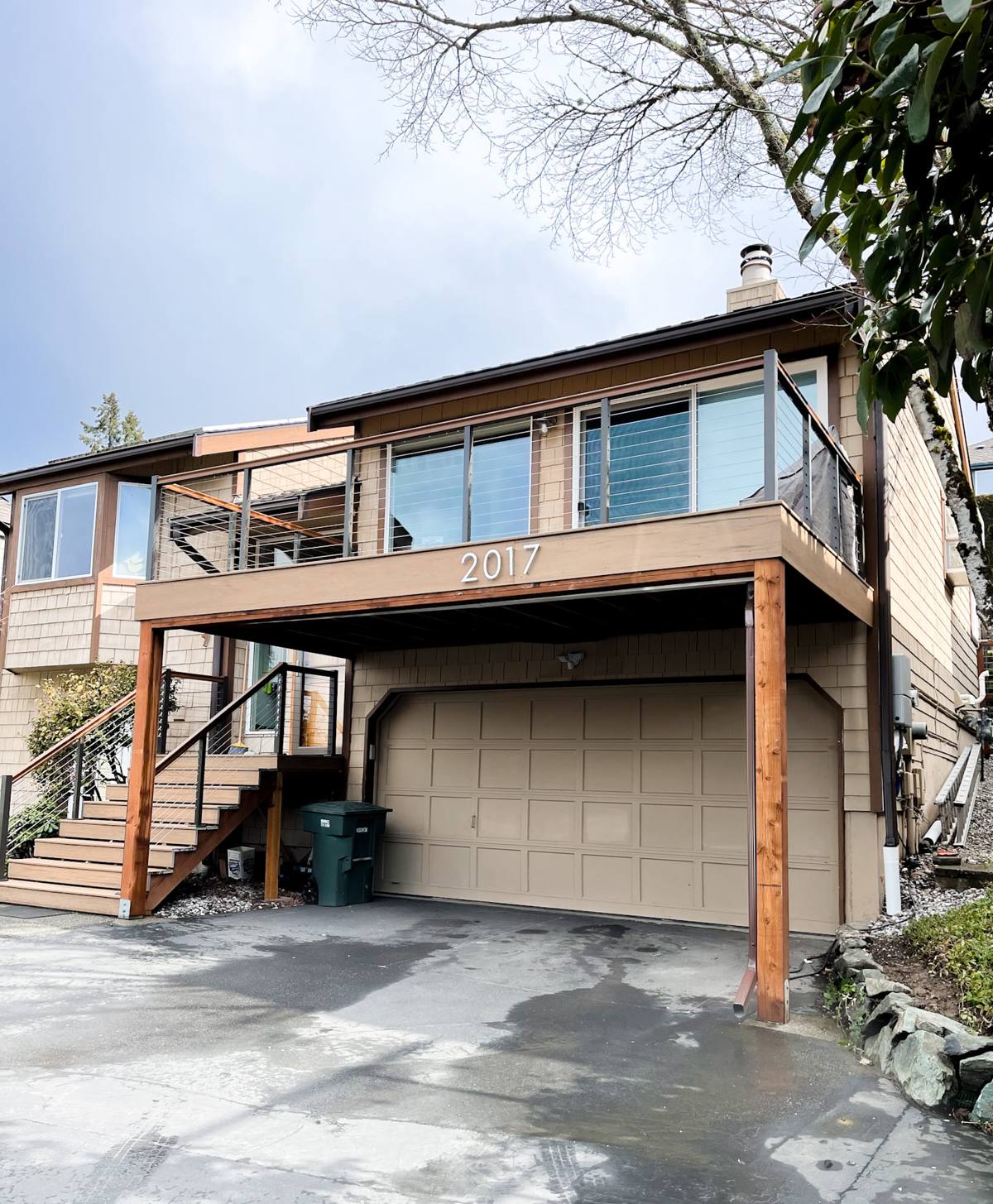
What Salt Air, Rain, and Moss Actually Do to a Deck
These three factors show up on almost every deck we build or repair in this part of Whatcom County. Each one attacks a different part of the structure, and each one is preventable with the right choices at the build stage.
Salt Air and Metal Fasteners
Coastal-influenced air carries moisture and salt content that accelerates corrosion in anything metal — screws, joist hangers, bolts, and post bases. A deck built with standard hardware can start showing rust streaks and fastener failure years before the wood itself is a problem. This is one of the most common mistakes we see in decks that weren't built with local conditions in mind: the wood was fine, but cheap or mismatched hardware corroded and let the structure move.
Driving Rain and Water Intrusion
Rain here doesn't fall straight down — wind-driven rain gets pushed sideways into ledger boards, under flashing, and into any joint that wasn't sealed correctly. Where a deck attaches to the house is the single most important detail on the whole project, because a poorly flashed ledger board is how water gets behind siding and into framing, often for years before anyone sees a stain.
The Long Moss Season
Whatcom County's moss season runs long — shaded, north-facing, and low-airflow deck areas can stay damp for weeks at a time in fall, winter, and early spring. Moss and algae aren't just cosmetic. On a walking surface they're a genuine slip hazard, and moss that's allowed to sit on boards holds moisture against the wood, which speeds up rot in materials that aren't rated for it.
Choosing the Right Decking Material for Kendall Properties
There's no single "best" decking material — there's a best material for a given budget, sun exposure, and how much upkeep a homeowner actually wants to do. We walk through this honestly with every customer rather than pushing whatever has the best margin.
| Material | Upfront Cost | Maintenance | Moss/Moisture Resistance | Typical Lifespan |
|---|---|---|---|---|
| Pressure-treated pine | Lowest | Needs re-staining/sealing every 1-2 years in this climate | Fair — needs upkeep to stay ahead of moss and checking | 15-20 years with regular maintenance |
| Cedar | Moderate | Periodic cleaning and sealing; naturally rot-resistant but not maintenance-free | Good, better in sun-exposed areas than shaded ones | 20-25 years with care |
| Composite decking | Higher | Occasional washing; no staining or sealing | Very good; won't rot, though surface algae can still grow if never cleaned | 25-30+ years, manufacturer-backed |
| PVC/capped decking | Highest | Lowest of all — soap and water | Excellent; fully moisture-sealed board | 30+ years |
For heavily shaded lots or decks under tree cover — common on larger Kendall-area properties — we lean homeowners toward composite or capped boards even when the upfront cost is harder to swallow, because the maintenance savings and moss resistance pay for themselves over a decade of PNW winters. For sunnier, more open sites, cedar or a well-sealed pressure-treated deck can be a smart, honest budget choice as long as the homeowner is realistic about the annual upkeep it needs.
The Structure Underneath Matters More Than the Surface
The decking boards are the part everyone sees. The part that actually determines whether a deck lasts is underneath, and it's where corner-cutting shows up years later as a safety issue, not just a cosmetic one.
- Footings: Sized and set below frost depth and on stable, well-draining soil — not just poured on grade.
- Ledger attachment: Properly flashed with a water-resistant barrier behind it, lag-bolted (not just nailed) into solid framing.
- Joist hardware: Corrosion-resistant, coated hangers and fasteners rated for treated lumber contact — not generic hardware that will react with the chemicals in treated wood.
- Airflow underneath: Enough clearance and joist spacing to let the structure dry out between rain events instead of staying damp.
- Board gaps: Correct spacing between decking boards so water sheds through instead of pooling on the surface.
None of this is visible once the deck is finished, which is exactly why it's the part worth asking a contractor about directly before work starts.
Design Choices That Work With the Weather, Not Against It
A well-designed deck for this area accounts for drainage, sun exposure, and how the homeowner actually plans to use the space year-round — not just in the two or three driest months.
Drainage and Slope
A deck surface should have a slight slope away from the house so water doesn't pool against the ledger or siding. It's a small detail that's easy to get wrong and expensive to fix later.
Covered Areas
A partial roof or pergola over at least part of the deck extends the usable season significantly in a climate where it rains a large share of the year, and it keeps the boards underneath drier, which slows moss growth in that zone.
Railings and Fasteners
Railing posts and hardware are exposed to the same salt air and rain as the deck itself. We spec corrosion-resistant fasteners and connectors here too — a railing is a safety component, and it's the last place to cut corners on hardware quality.
How We Build a Custom Deck for a Kendall-Area Home
- Site visit and assessment: We look at sun exposure, drainage, tree cover, and how the deck will tie into the existing structure before talking materials.
- Design and material selection: We walk through the honest trade-offs — cost, maintenance, and how the site's shade and moisture exposure should influence the choice.
- Permitting: Deck permits and inspections are part of the job, not an afterthought; we handle the paperwork so the structure is built to code from footings up.
- Build: Footings, framing, flashing, and decking installed in that order, with each stage built to hold up to Whatcom County's wet season, not just look good on install day.
- Final walkthrough: We go over the finished deck with the homeowner, including what maintenance the chosen material actually needs going forward.
A Practical Deck Maintenance Checklist for This Climate
Whatever material a deck is built from, a little seasonal attention keeps it safe and extends its life considerably in a climate like ours.
- Sweep debris and standing organic matter off the surface regularly, especially in fall when leaves and needles collect and trap moisture.
- Scrub shaded and low-airflow areas for moss and algae buildup before it gets established — it's far easier to remove early than after it's taken hold.
- Check fasteners and hardware annually for early rust or corrosion, particularly on railings and stair connections.
- Re-seal or re-stain wood decking on the schedule appropriate to the material — don't wait until it visibly needs it.
- Confirm gaps between boards are clear so water keeps draining through rather than pooling.
- Inspect the ledger board area and flashing once a year for any sign of staining or water intrusion into the siding.
Why It Matters That the Crew Already Works Kendall
A deck built by a crew unfamiliar with this specific climate often looks correct on paper — right lumber grade, right fastener count — but misses the details that only show up after a full wet season: the wrong hardware coating for salt-influenced air, decking spacing that doesn't account for how much this area's moss season demands, or a ledger detail that works in a drier climate but not here. A crew that already builds and repairs decks throughout Whatcom County has already seen what fails in this specific environment and builds around it from the start, rather than learning the hard way on a customer's project.
We also know the local permitting process and inspection expectations, which keeps a Kendall-area project moving instead of stalling on paperwork.
Get an Honest Look at Your Deck Project
If you're planning a new custom deck or replacing one that hasn't held up to the weather here, we're glad to come take a look and talk through what makes sense for your property, your budget, and how you actually want to use the space. The estimate is free, there's no pressure, and you'll get a straight answer about materials and cost — just fill out the form below to get started.