 Ferndale
 Building New in Everson Means Getting the Windows Right the First Time
If you're framing a new home or outbuilding in Everson, the windows are one of the few components on the exterior where a mistake doesn't show up right away — it shows up two, five, or ten winters later, as a stain on the drywall or a soft spot under a sill. New-construction window installation is a different job than swapping out an old window in an existing wall. It happens before the siding goes on, while the wall is still open to the weather-resistive barrier, and it's the last real chance to get the water management right before everything gets covered up. We install new-construction windows for homes going up around Everson and the rest of Whatcom County, and we treat that sequencing as the whole point of the job, not a formality.
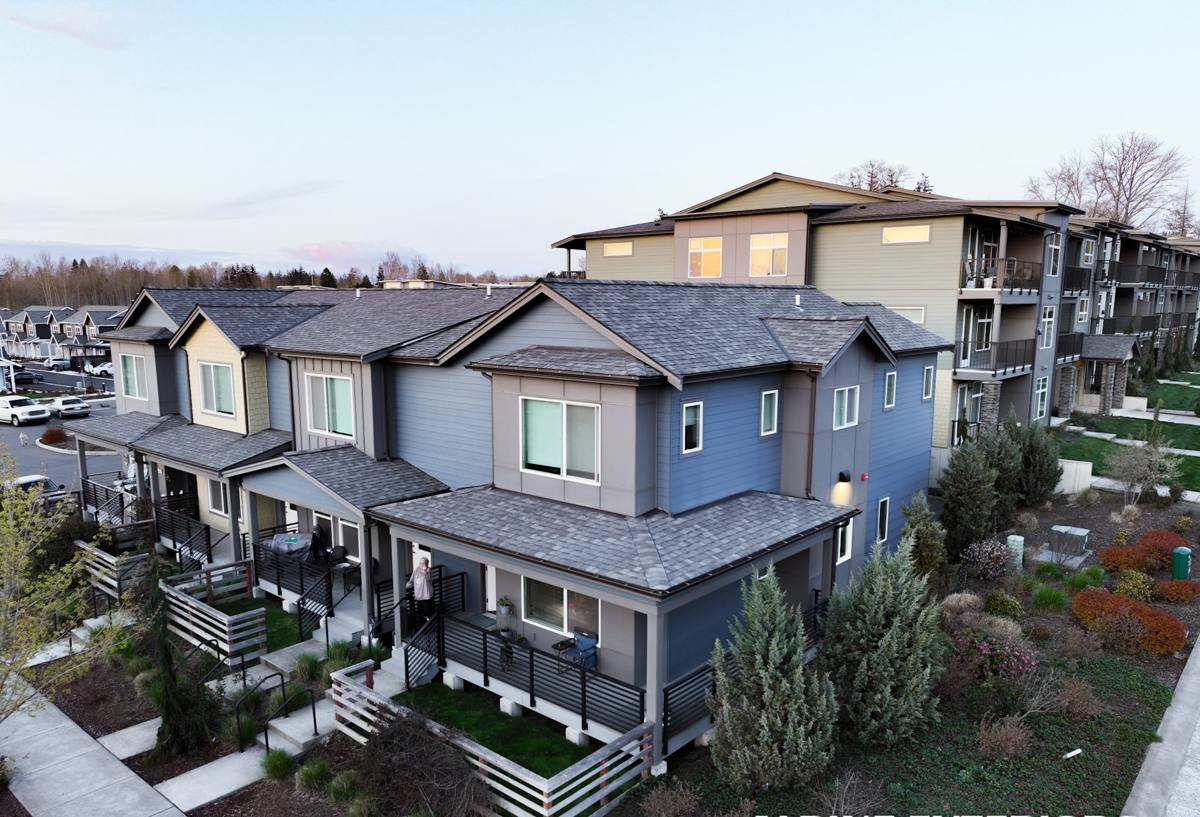
New-Construction vs. Replacement: Why the Install Method Is Different
A lot of homeowners and even some builders use "new-construction window" loosely, but it's a specific product and a specific method. New-construction windows have a nailing flange around the perimeter that gets integrated directly into the wall's water-resistive barrier before siding or trim goes on. Replacement windows, by contrast, are built to slide into an existing frame without disturbing the surrounding wall — a completely different set of trade-offs.
- New-construction windows are set into a rough opening with the flange fastened to the sheathing and lapped correctly with housewrap.
- The flashing sequence — sill pan first, then jambs, then head, shingle-style — has to happen in the right order or water gets trapped instead of shed.
- Once siding closes up the wall, the flashing details underneath are no longer visible or serviceable without tearing into the siding.
- Because the wall is open, this is also the point where insulation gaps around the window buck can be caught and corrected — something a replacement job can't touch.
That last point matters more than people expect. A window unit itself can be excellent and still perform poorly if the rough opening around it wasn't air-sealed and insulated correctly before the interior finish went in.
What Whatcom County's Climate Actually Demands From the Install
Whatcom County doesn't get the kind of violent storms some parts of the country deal with, but it makes up for that with persistence. Driving rain off the Pacific pushes moisture sideways into wall assemblies for months at a stretch, and the long moss season here means anything that stays damp — a sill, a trim board, a poorly lapped piece of housewrap — has a head start on decay before you'd even notice a problem. Closer to the water, salt-laden air adds another layer of wear on fasteners and finishes over time, and that same marine-influenced weather pattern moves inland across the county. For a home going up in Everson, that means the wall assembly needs to assume it will get wet repeatedly over its life and be built to dry out quickly, not just to keep water out in the first place.
In practice, that changes a few specific decisions on a new-construction window job:
- Sill pans are non-negotiable, even on a brand-new opening — they give any water that does get past the window somewhere to go besides the framing.
- Flashing tape needs to be rated for the temperature range and UV exposure it'll see during construction, not just the finished wall.
- Sealants at the flange and trim need to stay flexible through our wet winters and drier summers instead of cracking after a season or two.
- Drainage gaps behind siding matter more here than in drier climates, because the wall needs to shed bulk water and still dry out between rain events.
The Flashing and Water-Management Details That Actually Matter
Most window leaks don't come from the window unit failing — they come from the flashing sequence being installed out of order or with gaps. On a correct install, every layer laps over the one below it, the same way roof shingles do, so water is always directed outward and down rather than behind the layer in front of it.
The order we follow on every opening
- Housewrap or building paper is cut and prepped at the rough opening, with the sill flap left free.
- A sloped sill pan is installed so any water that reaches the sill drains back out, not into the wall.
- The window is set, leveled, shimmed, and fastened through the nailing flange per the manufacturer's schedule — this isn't a place to skip fasteners to save time.
- Jamb flashing goes on next, followed by head flashing with a drip cap, each one lapping the piece below.
- The housewrap is folded back down over the flange and taped, restoring a continuous drainage plane before siding starts.
- Interior air-sealing and insulation around the buck happens before drywall closes the opening.
Skip step two or reverse the lap order on step four, and the window can look perfect for years before a problem surfaces — usually as rot in framing that's expensive to open back up and fix.
How the Window Install Fits Into Your Build Schedule
Because new-construction windows go in before siding, timing with your builder or GC matters. We coordinate directly with the framing and siding crews so the sequence isn't rushed: openings need to be square and properly sized before we set units, and siding shouldn't start until the flashing and taping around each window has had a chance to be inspected. On a typical Everson build, that means:
- Confirming rough opening sizes against the ordered window schedule before units arrive, so nothing gets force-fit on install day.
- Setting windows once the wall is sheathed and wrapped, but before exterior trim or siding starts.
- Leaving flashing visible for a walk-through with the builder or homeowner before it's covered — this is the point where problems are cheap to fix.
- Handing off a wall that's ready for siding without any window-related delays holding up the schedule.
Choosing Window Frame Materials for This Climate
Frame material affects how a window handles years of damp weather, not just how it looks on day one. There's no single right answer for every project — it depends on budget, the home's design, and how much upkeep the owner wants to take on.
| Frame Material | Moisture Performance | Maintenance | Typical Use |
|---|---|---|---|
| Vinyl | Won't rot; handles constant damp well | Low — rinse as needed | Most cost-conscious new builds |
| Fiberglass | Excellent — dimensionally stable across our wet/dry swings | Low | Higher-end new construction, larger openings |
| Wood-clad | Good if flashing and finish are maintained; vulnerable where cladding is damaged | Higher — finish upkeep matters | Homes prioritizing interior wood trim look |
| Aluminum | Prone to condensation without a thermal break; can corrode faster near salt air | Moderate | Limited use, usually with thermal-break upgrades |
For most new-construction jobs in Everson, we steer homeowners toward vinyl or fiberglass simply because they tolerate our climate with the least ongoing maintenance. We'll walk through the trade-offs honestly rather than push whatever has the best margin — the right call depends on your budget and how the rest of the exterior is being finished.
What Drives Cost on a New-Construction Window Job
Pricing on new-construction windows depends less on the number of windows and more on a handful of variables that change from project to project.
| Factor | Why It Matters |
|---|---|
| Window count and size mix | Larger units and specialty shapes (transoms, picture windows) take more time to flash correctly |
| Frame material chosen | Vinyl, fiberglass, and wood-clad carry different unit costs and lead times |
| Wall height and access | Second-story and vaulted openings need staging or lift access |
| Energy code requirements | Washington's energy code sets minimum U-factor performance, which affects unit selection |
| Coordination with other trades | Tight scheduling with framers and siding crews keeps labor efficient |
We give straightforward estimates once we know the window schedule and rough opening sizes — no padded numbers, no pressure to upgrade beyond what the project actually needs.
Why Hire a Crew That Already Works in Everson
Flashing details that work in a dry climate aren't automatically right for Whatcom County. A crew that installs windows here regularly knows how much lap and how many rows of flashing tape actually hold up through a wet winter, which sealants stay flexible instead of cracking, and how to sequence the job so builders aren't waiting around. That local repetition is what keeps callbacks low — not a certification on a wall, but having done this exact job, in this exact weather, enough times to know where the shortcuts show up later.
Before your siding crew shows up, it's worth confirming a few things about whoever is setting your windows:
- They install a sill pan on every opening, not just on units they consider "problem-prone."
- They can explain their flashing lap order without hesitating.
- They coordinate directly with your framer or GC instead of just showing up on a random day.
- They'll let you or your builder see the flashing before siding covers it.
- They stand behind their installation work in writing, separate from the manufacturer's product warranty.
If you're planning a new build in Everson and want the windows handled by a crew that treats the flashing details as seriously as the finished look, we're happy to walk the plans with you and provide a free, no-pressure estimate — just fill out the form below.