 Ferndale
 Replacing a Deck in Everson, WA
Everson sits inland from the coast, along the Nooksack River in the agricultural flatlands of eastern Whatcom County. It's a different setting than the towns closer to Bellingham Bay or the Strait — there's no salt air working on hardware and railings here the way there is on a shoreline property. But Everson shares the rest of the weather pattern that wears down exterior structures across this part of the Pacific Northwest: driving rain that comes in with real force during storm events, a moss season that stretches across most of the year, and a valley setting that holds ground moisture longer than higher, better-drained lots elsewhere in the county.
A deck is one of the first things on a property to show what that combination does over time, because it sits outside year-round with no roof over it and usually less protection than the house itself gets. This page is about deck replacement specifically — what tells you an aging Everson deck has crossed the line from repairable to done, what a correct replacement build involves in this valley setting, and how our process works when you call us.
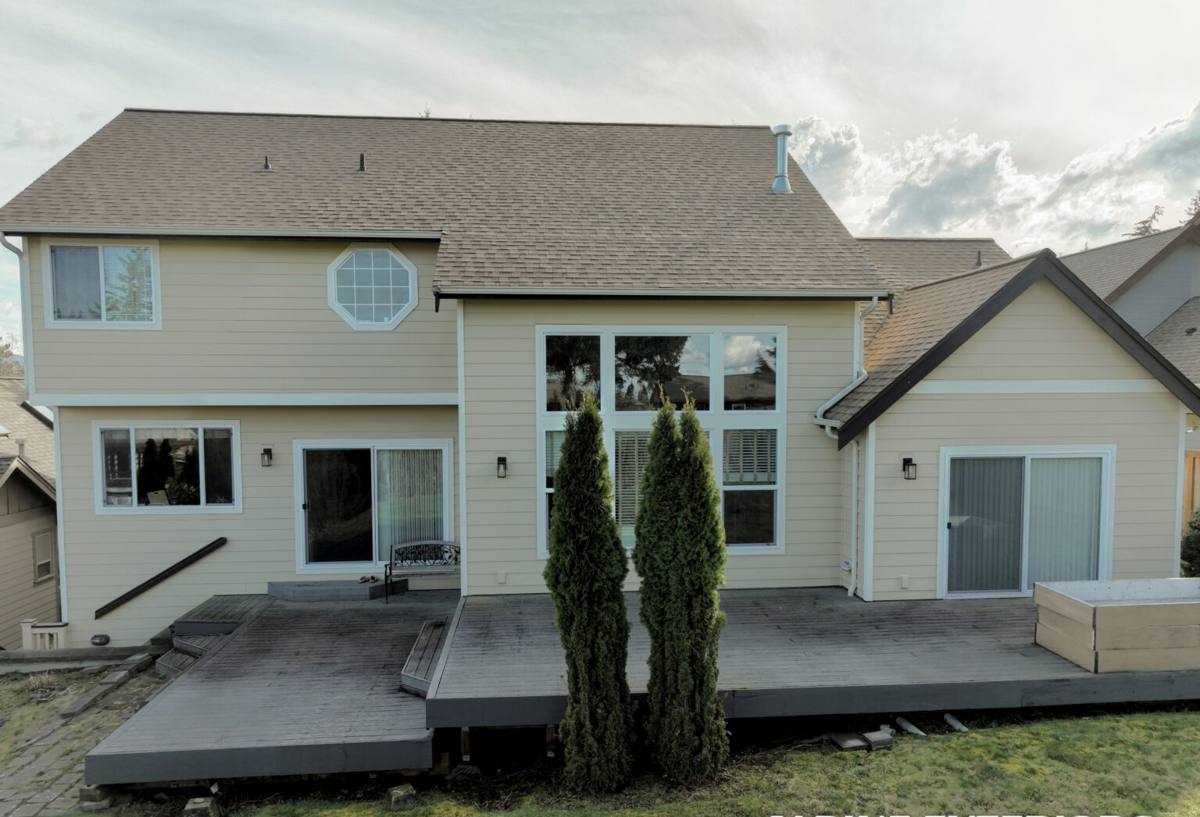
Signs Your Everson Deck Needs Replacing, Not Just Repair
Not every tired-looking deck needs to come out. But there's a real difference between cosmetic wear and structural failure, and knowing which one you're looking at matters before spending money either way.
Signs Pointing Toward Full Replacement
- Soft or spongy spots in the decking, joists, or ledger area when you walk or press on them
- Visible rot or discoloration where the ledger board meets the house
- Posts or footings that have shifted, settled unevenly, or feel loose when the deck is in use
- Fasteners that have corroded to the point of losing grip, with rust staining spreading around them
- A deck built before current attachment and flashing standards were common practice, especially at the ledger connection
- Railings that flex or feel unstable under normal weight
Signs Repair Can Still Handle
A few isolated boards showing wear, surface graying on an otherwise sound structure, loose railing hardware that just needs tightening or replacing, or a single damaged joist that hasn't spread to the surrounding framing — these are usually repair situations, not full tear-out jobs. We'll tell you honestly which category your deck falls into rather than defaulting to the bigger, more profitable answer.
What This Climate Does to an Aging Deck
Driving Rain and Wind-Driven Moisture
Storms moving through this part of Whatcom County don't just drop rain straight down — wind pushes it sideways, up under railings, and into gaps between boards that weren't spaced correctly to begin with. On an older deck, that wind-driven moisture finds its way into places a calm, dry-climate deck design never had to account for, particularly around the ledger board where the structure ties into the house.
A Moss Season That Runs Most of the Year
Mild temperatures and near-constant dampness give moss and mildew a long growing season here, and a horizontal deck surface is one of the first places it takes hold — it holds water longer than a vertical wall and stays damp between rain events. Shaded decks and boards with any surface porosity are usually first to show it, and once moss gets a foothold it keeps the wood or composite surface wetter than it would otherwise be, which speeds up whatever decay process is already underway underneath.
Valley Damp and Freeze-Thaw Cycling
Sitting in the Nooksack River valley means Everson holds ground moisture longer after a storm than a well-drained hillside lot would, and that saturated ground sits right under most deck substructures. Add in the harder frosts this part of the county sees compared to milder areas closer to the water, and you get real freeze-thaw cycling on top of the moisture — water that's soaked into a joist, post base, or ledger connection expands when it freezes, which accelerates cracking and rot in wood that's already compromised.
Choosing Decking Material for the Replacement
When a deck comes out entirely, it's a chance to reconsider the decking material itself, not just rebuild with whatever was there before. The three main categories homeowners weigh are pressure-treated wood or cedar, capped composite, and cellular PVC.
Wood
Pressure-treated lumber and cedar remain the traditional choice and can look good when new, but both need regular sealing or staining to hold up against sustained valley moisture, and both show moss, graying, and soft spots faster than the alternatives once maintenance lapses.
Capped Composite
Capped composite boards have a plastic shell around a wood-fiber core, which resists moisture absorption and staining far better than wood or uncapped composite. In a valley setting with a long wet season, that cap layer is doing real work — it's the difference between occasional washing and ongoing sealing.
Cellular PVC
PVC decking has no wood fiber to absorb moisture in the first place, even at cut edges or fastener holes. It costs more than composite and can flex more under heavy point loads, but for a deck that stays shaded or damp most of the year, some homeowners find the added moisture resistance worth it.
| Material | Handling Valley Damp & Rain | Moss Resistance | Upkeep |
|---|---|---|---|
| Cellular PVC | Excellent — no wood fiber to absorb moisture | Strong, smooth non-porous surface | Occasional washing |
| Capped composite | Strong — cap layer resists moisture and staining | Good on most product lines | Occasional washing |
| Uncapped composite | Moderate — some absorption at exposed fiber | Fair; prone to buildup over time | Periodic cleaning |
| Cedar | Moderate — natural resistance, but needs sealing | Fair when sealed and maintained | Regular oiling or sealing |
| Pressure-treated wood | Weak against sustained ground moisture over time | Poor without regular treatment | Regular sealing or staining |
What a Correct Replacement Involves Here
The decking surface is what homeowners notice, but in this valley setting, the framing, fasteners, and drainage underneath are what actually decide how long the new deck lasts. A replacement done right for an Everson property includes:
- Full removal of the old structure so hidden rot at the ledger, posts, and joists gets found and dealt with instead of built over
- Pressure-treated framing lumber rated for ground contact where applicable, sized correctly for the span and load
- Corrosion-resistant fasteners throughout, since standard hardware left in sustained ground moisture corrodes faster than most homeowners expect
- Correctly flashed ledger board connection where the deck ties into the house — the single most common failure point on an older deck
- Proper board gapping for drainage and material movement, so wind-driven rain and standing moisture can actually drain and dry
- Post footings set to current frost-depth and load requirements, not just matched to whatever depth the old footings happened to be
- Grading and airflow underneath the deck so ground moisture doesn't sit against the framing between storms
Skip any one of those on a rebuild and the new deck can still look right for a season or two. The problems that show up later — a soft joist, a loosening post, staining around a corroding fastener — usually trace back to a shortcut taken at the framing stage, not a flaw in the decking material itself.
Our Process: Assessment, Permitting, and Rebuild
Site Visit and Honest Assessment
We start by walking the existing deck to see what's actually going on — soft spots, ledger condition, post and footing stability, drainage and grade around the site. That assessment is what tells us whether you're really looking at a full replacement or whether targeted repair could still get you several more years out of the existing structure.
Permitting
Deck replacement in Everson and the rest of Whatcom County generally falls under standard structural and setback permitting requirements, and elevated decks or ones near property lines can have additional considerations. We handle that as part of the job rather than leaving it for the homeowner to sort out with the county.
Tear-Off and Rebuild
Once permitted, the old structure comes out completely so we can see the ledger, framing, and ground condition underneath rather than guessing at what's hidden. From there the rebuild follows the sequence above — framing and fastening sized for this site's actual moisture exposure, then decking, railing, and stairs. We walk through the finished deck with you and cover what the specific material you chose actually needs going forward.
Cost Factors for a Deck Replacement in Everson
| Factor | What It Affects | Why It Matters Here |
|---|---|---|
| Extent of hidden rot found at tear-off | Framing and ledger repair scope | Valley ground moisture and past freeze-thaw cycling can hide damage that isn't visible from the surface |
| Decking material chosen | Material cost and long-term upkeep | Composite and PVC cost more upfront but need less ongoing maintenance in a long wet season |
| Deck size and height | Labor, framing material, and railing requirements | Elevated decks need engineered footing and railing attention that a low, grade-level deck doesn't |
| Ledger and structural connection condition | Framing repair at the house wall | A poorly flashed original ledger is the most common source of hidden rot we find on tear-off |
| Site access | Labor time and equipment needs | Rural and larger agricultural lots around Everson can have different staging needs than an in-town yard |
Exact pricing depends on what we find once the old deck comes off, which is why we walk the site and give a real number rather than quoting off a generic price sheet over the phone.
Caring for Your New Deck
A correctly built replacement still needs some routine attention to get its full lifespan out of this climate:
- Rinse or wash the deck surface periodically to clear pollen, organic buildup, and standing debris before it works into the surface or cap layer
- Keep gaps between boards clear of leaves and debris so water and airflow can move through as designed
- Check railing posts and hardware once a year for early corrosion or loosening, especially heading into the wet season
- Watch for moss on shaded sections and clean it off before it holds moisture against the surface long-term
- Address any soft framing or standing water underneath right away — that's a structural issue, not a cosmetic one
Why It Matters That We Already Work Everson
A crew that mostly builds and replaces decks closer to the water can still do competent work, but an Everson property has variables that don't come up the same way elsewhere in the county — ground moisture that lingers longer in a river valley setting, harder frosts than the milder coastal towns see, and older homes where the original ledger connection was never flashed to a modern standard. Working this part of Whatcom County regularly means we're not guessing at those conditions on your job. We know what a deck built on valley ground actually needs to hold up, and we're straightforward about which fastener grades, footing depths, and drainage details are worth the extra time versus which ones are just an upsell.
If your Everson deck is showing soft spots, a shaky railing, or you just want an honest read on whether it's a repair or a full replacement, we're glad to walk the site with you and lay out the options plainly. Reach out using the form below for a free, no-pressure estimate.