 Ferndale
 Why Everson Decks Wear Out Faster Than the Rest of the House
A deck in Everson lives outside in a way no other part of your home does. It has no siding to shed water sideways, no roof overhang to keep rain off, and in most cases it sits low to the ground where moisture lingers longest. Add Whatcom County's long wet season, the marine air that pushes inland off Bellingham Bay, and the moss that takes hold on anything shaded or north-facing, and you have a structure that's fighting the elements almost year-round.
Everson also sits in the lower Nooksack River valley, which means many yards hold moisture in the soil longer after a storm than properties on higher, better-drained ground. That doesn't mean every deck here has a problem — it means the ground contact points, the areas under the deck, and anywhere water can pool or splash back onto framing deserve closer attention than they would in a drier climate.
None of this is a reason to panic about a deck that's a few years old. It's a reason to have it looked at by someone who knows what "normal wear" looks like here versus what's actually a structural problem starting to form.
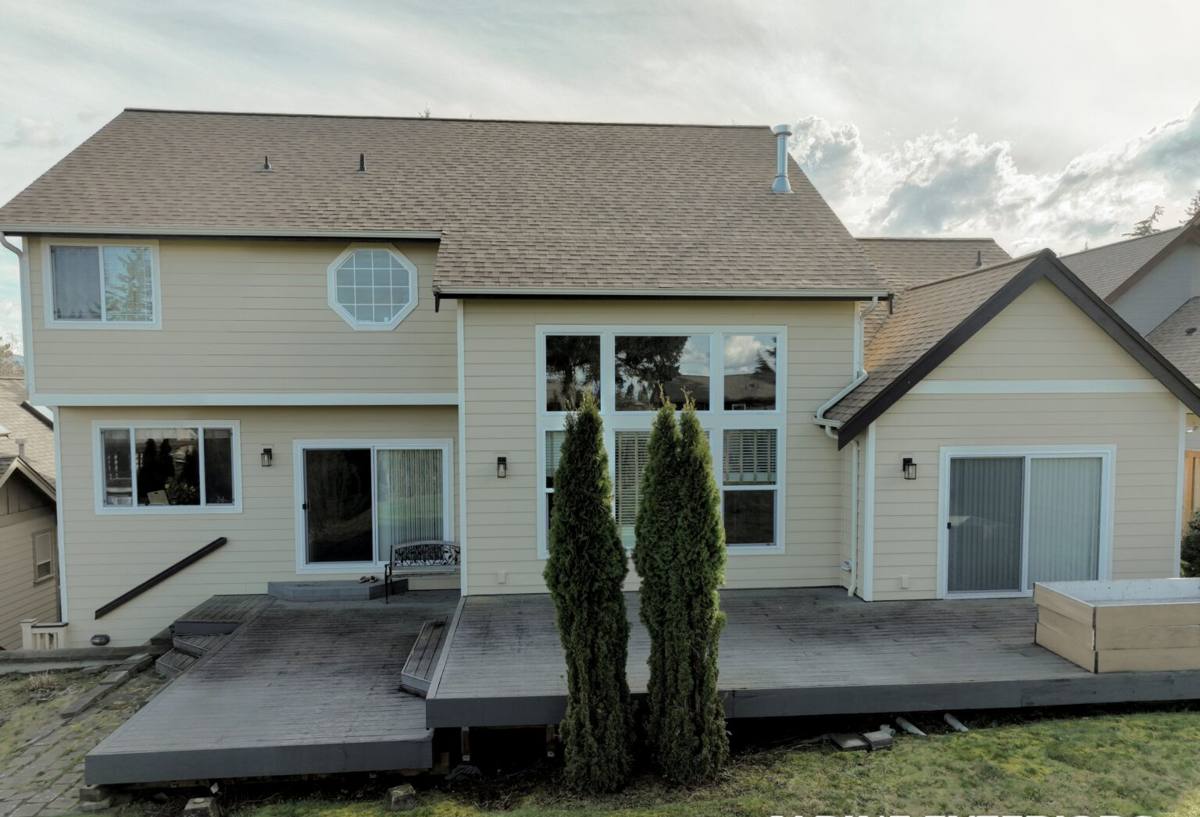
Signs Your Deck Needs Repair — And Signs It Needs More Than That
Most deck problems don't start with a dramatic collapse. They start small and get ignored because the deck still "feels fine" to walk on. By the time a board visibly sags, the damage underneath is usually further along than it looks.
Repair-level signs
- Individual boards that are soft, cupped, or splintering while the rest of the deck is solid
- Rust streaks around fasteners or nail heads that have started to pop up
- A railing or post that wiggles more than it should when you lean on it
- Moss or algae buildup making the surface slick, especially in shaded corners
- Stairs that feel slightly bouncy or a tread that's cracked
Signs the problem runs deeper
- Soft or spongy spots that flex noticeably underfoot across a wider area
- Visible rot, discoloration, or fungal growth at the ledger board (where the deck attaches to the house)
- Gaps opening up between the deck and the house siding or trim
- Posts that show rot at the base where they meet the concrete footing or the ground
- Any noticeable movement in the whole structure when several people are on it at once
The first list is usually a straightforward repair. The second list means the framing, ledger connection, or footings need a real inspection before anyone decides what to fix.
What a Correct Deck Repair Actually Involves
A lot of deck "repairs" are really just cosmetic patches — a board swapped here, a coat of stain there — while the framing underneath never gets looked at. That's how a small problem turns into a full rebuild two years later. A correct repair works from the structure outward.
1. Framing and structure first
Joists, beams, and posts are checked for rot, insect damage, and proper spacing. Any framing member that's compromised gets sistered or replaced — not just covered up with new decking screwed on top.
2. The ledger board connection
This is where the deck bolts to the house, and it's the single most important safety point on the whole structure. Flashing that's failed, missing lag bolts, or rot at this connection is one of the most common causes of deck failure, and it's often hidden behind the decking boards where nobody looks until there's a problem.
3. Fasteners and hardware
Everson's damp climate is hard on standard fasteners. Repairs should use corrosion-resistant, code-rated hardware matched to the wood treatment being used — mismatched metals can accelerate corrosion in a wet climate.
4. Decking and railings
Only after the structure is sound does it make sense to replace individual boards, re-secure railings, or address surface wear. Fixing the surface before the structure is backwards, even though it's the cheaper-looking option in the short term.
Repair or Replace? A Straightforward Way to Decide
Homeowners often assume any deck problem means a full replacement, or the opposite — that everything can be patched. Neither is usually true. The honest answer depends on where the damage is and how far it's spread.
| Condition | Usually a Repair | Usually a Replacement |
|---|---|---|
| Rot location | Isolated to a few boards or one post | Spread through multiple joists or the ledger |
| Deck age | Under 15-20 years, built to a reasonable standard | Older structure with outdated framing or fastening methods |
| Footings | Solid, no movement or cracking | Settled, cracked, or undersized for the structure |
| Ledger connection | Flashing intact, minor fastener issues | Flashing failed, wood rot at the house connection |
| Overall movement | Localized bounce in one spot | Whole-structure sway or racking |
If you're not sure which column your deck falls into, that's exactly what a real inspection is for — not a guess based on how the surface looks.
How the Deck Repair Process Works
- On-site inspection. We check framing, the ledger connection, footings, fasteners, and the decking surface — not just the parts that are easy to see.
- Honest scope and estimate. You get a clear picture of what's actually wrong, what it takes to fix it correctly, and what it would cost to do the job right — no upselling a full rebuild when a targeted repair will hold up.
- Structural work first. Any framing, ledger, or footing issues get addressed before anything cosmetic.
- Board and hardware replacement. Damaged decking, railings, and fasteners are replaced with materials suited to our climate.
- Final check. We walk the deck with you, point out what was done, and flag anything worth keeping an eye on going forward.
Materials: What We Use and Why
Pressure-treated framing lumber
For structural repairs — joists, beams, posts — pressure-treated lumber rated for ground contact where applicable is the standard. It's the material most likely to hold up under Whatcom County's extended wet season without needing attention again in a few years.
Cedar
Cedar has a natural resistance to rot and insects and a look a lot of homeowners want for visible decking and railings. It does need regular sealing or staining to perform well here — left untreated, it will gray and take on moisture faster in a climate this wet.
Composite decking
Composite boards resist moss and moisture damage better than wood on the surface, which makes them a reasonable option for repair projects where reducing future maintenance matters. The trade-off is a higher material cost and less flexibility if only a few boards ever need replacing — matching an older composite board's color and profile years later isn't always possible. We'll walk you through this trade-off honestly rather than push one option.
Fasteners and connectors
We match fastener and connector metal to the lumber treatment being used. Using the wrong combination in a damp climate is a common, avoidable cause of premature corrosion and loosening hardware.
Maintaining Your Deck After the Repair
A repair only lasts as long as the upkeep behind it. In this climate, that upkeep matters more than in drier parts of the country.
- Sweep leaves and debris off the deck regularly, especially in fall — trapped debris holds moisture against the boards
- Clean moss and algae off the surface each season before it gets a foothold, particularly on shaded or north-facing sections
- Reseal or restain wood decking on the schedule appropriate for the product — usually every 1-3 years depending on sun and shade exposure
- Check for standing water after storms and confirm the deck still drains the way it's supposed to
- Inspect the ledger board area and any spots where the deck meets the house once a year
- Keep vegetation and mulch pulled back from posts and the area under the deck so airflow can keep it dry
Why It Helps to Hire a Crew That Already Works in Everson
Deck problems in this part of Whatcom County follow patterns — where moss builds up fastest, which ledger connections tend to show flashing failure first, how the local soil moisture affects footings and post bases. A crew that's already worked on decks in Everson and the surrounding Ferndale area has seen those patterns repeat and knows where to look first instead of guessing.
That local familiarity also means honest scoping. We're not incentivized to sell you a full rebuild when a targeted structural repair will genuinely hold up, and we're not going to patch over a ledger board problem just to keep the estimate low. Our reputation in this area depends on the repair still being solid five years from now, not just looking finished on the day we leave.
Get a Straightforward Look at Your Deck
If your deck has a soft spot, a wobbly railing, or you just want a second opinion before winter rains set in again, we're glad to come take a look. The estimate is free, there's no pressure to do more than what's actually needed, and you'll get a clear explanation of what we find. Fill out the form below to get started.