 Ferndale
 Custom Windows Built for Nooksack's Climate
Nooksack sits inland from the salt air of Bellingham Bay but still gets the full brunt of Whatcom County's wet season — long stretches of driving rain, heavy cloud cover, and moss and mildew pressure that lasts most of the year. Windows here don't fail because of one bad storm. They fail slowly, from years of moisture finding its way into gaps that were never sealed right the first time. When we go out to look at a window replacement or a custom window install in this area, we're not just measuring glass — we're looking at how water moves around the whole opening, where the old flashing has given up, and whether the framing underneath is still sound.
"Custom" doesn't mean fancy shapes or a showroom upgrade. It means the window is built and installed to fit the actual opening, the actual wall assembly, and the actual exposure of that specific side of the house — not a generic stock size forced into a rough opening and caulked around the edges.
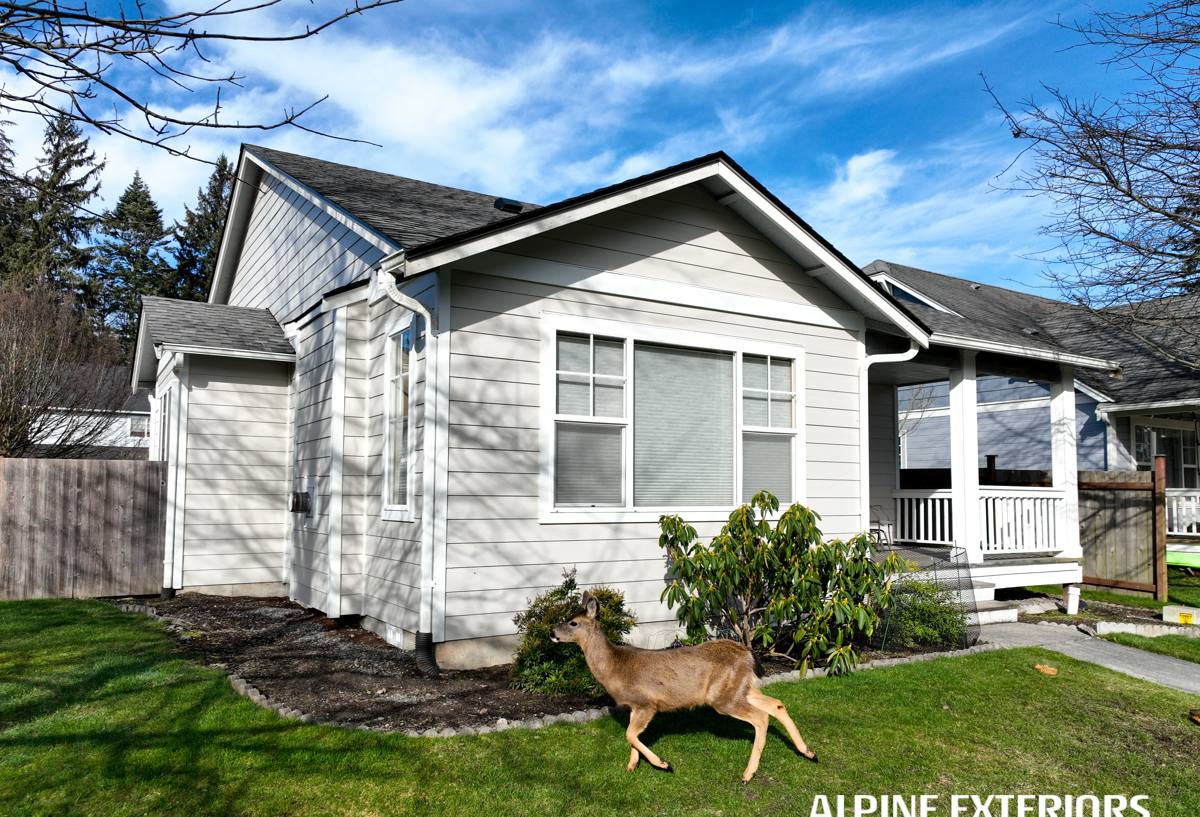
What Nooksack Homes Actually Need From a Window
Most of the homes we work on in and around Ferndale and the Nooksack area fall into a few categories: older farmhouses and ranch-style homes with original single-pane or early dual-pane windows, newer construction from the last couple decades where the windows are aging out of their warranty life, and homes that had a "budget" replacement job done at some point that's now showing its age. Each of these has different problems, but the climate factor is the same across all of them.
Moisture Is the Real Enemy
Whatcom County doesn't get the intense freeze-thaw cycling that some inland climates deal with, but it makes up for that with sheer duration of wet exposure. Wood trim and sills that stay damp for weeks at a time will eventually soften, and moss doesn't need much of a foothold to start working into a seam. A window that's slightly out of level, or that was installed without proper flashing integration into the wall's water-resistive barrier, becomes a slow leak point long before anyone notices staining on the inside.
Driving Rain and Exposure
Wind-driven rain doesn't just hit windows straight on — it gets pushed sideways and up under trim on the exposed faces of a house, which around here is usually the west and south sides. Homes with less overhang protection see this more. That's part of why we look at orientation, not just the window itself, when we're scoping a job.
Quick Reference: Symptoms and What They Usually Mean
| What you're seeing | Likely cause | Urgency |
|---|---|---|
| Fogging between the glass panes | Failed seal, lost inert gas fill | Not urgent, but efficiency is dropping |
| Soft or spongy wood at the sill or trim | Water intrusion behind or under the window | Address soon before rot spreads |
| Moss or dark staining on trim | Prolonged moisture retention, poor drainage | Cosmetic now, structural risk over time |
| Drafts even when the window is latched | Worn weatherstripping or frame movement | Comfort and energy cost issue |
| Difficulty opening or closing | Frame racking, swelling, or settling | Can indicate wall or foundation movement |
What a Correct Custom Window Install Involves
A window is only as good as the opening it sits in. We treat every custom install as a chance to correct whatever the last install (or the original builder) got wrong, not just swap glass and frame.
- Remove the old window fully and inspect the rough opening for rot, soft framing, or missing sheathing
- Repair or replace any damaged framing before the new unit goes in — never install over a compromised opening
- Integrate new flashing with the existing water-resistive barrier so water sheds outward and down, not behind the siding
- Set the window level, plumb, and square, shimmed correctly so it isn't relying on fasteners alone to hold shape
- Seal and insulate the gap between the frame and the rough opening with the right materials for the space — not just spray foam everywhere
- Finish exterior trim and caulking in a way that sheds water rather than trapping it
- Test operation — every sash should open, close, and lock smoothly before we call the job done
Choosing the Right Window for This Area
We don't push one brand or material as the universal answer, because the right choice depends on the specific wall, the exposure, and the homeowner's priorities. What we do insist on is materials and glazing packages that are proven to hold up under sustained Pacific Northwest moisture — vinyl and fiberglass frames that won't rot, low-E glass packages that help with both heat retention in winter and glare control in summer, and hardware rated for coastal-adjacent humidity even though Nooksack itself isn't right on the water.
Frame Material Trade-Offs
| Frame type | Moisture behavior | Maintenance | Typical trade-off |
|---|---|---|---|
| Vinyl | Won't rot or absorb water | Low — occasional cleaning | Fewer custom color/finish options |
| Fiberglass | Very stable, minimal expansion/contraction | Low | Higher upfront cost |
| Wood-clad | Good if cladding stays intact; interior wood still needs protection | Moderate to high | More sensitive to installation quality |
| Aluminum | Prone to condensation without thermal breaks | Low | Not our first recommendation for this climate |
We steer most Nooksack-area homeowners toward vinyl or fiberglass for the simple reason that they don't give moisture anything to work with over time. That's not a knock on wood-clad windows — they can look great and perform well — but they demand more consistent upkeep and a flawless install, and we'd rather set honest expectations up front than sell something that needs babying.
Our Process for a Nooksack Window Job
- On-site assessment: We look at every window being discussed, not just the ones the homeowner flagged, because problems on one side of the house often show up on another side first.
- Honest scope and estimate: We tell you what's cosmetic, what's a real moisture risk, and what can wait. No pressure to replace everything at once if it's not needed.
- Material selection: We walk through frame and glazing options suited to the specific exposure of each opening, not a one-size answer for the whole house.
- Removal and opening repair: Old units come out, framing gets inspected and repaired as needed before anything new goes in.
- Installation: Proper flashing integration, leveling, insulation, and sealing — the steps that actually determine whether the window lasts.
- Final check and walkthrough: Every window is operated and inspected before we consider the job finished.
Why Local Installation Experience Matters Here
A crew that only works in drier climates can do a technically fine install and still leave a house exposed, because they're not thinking about how water behaves against a wall that stays damp for days at a stretch. Working around Ferndale and Whatcom County day in and day out means we've seen how moss establishes on north-facing trim, how driving rain behaves against exposed gable ends, and which flashing details actually hold up over a full wet season versus just looking right on install day. That local pattern recognition is the difference between a window that's sealed correctly and one that just looks sealed.
It also means we're not guessing at code requirements or typical wall assemblies in this region — we know what we're going to find when we open up a wall in a Nooksack-area home, and we plan the job accordingly instead of discovering surprises mid-install.
Maintenance That Actually Extends Window Life
Even a well-installed window needs some upkeep in this climate. A short seasonal routine goes a long way:
- Clear debris and moss from sills and tracks before it holds moisture against the frame
- Check caulking and exterior trim seals once a year, ideally before the wet season sets in
- Operate every window at least a few times a year so seals and hardware don't seize up
- Watch for soft trim or bubbling paint near the frame — early signs of moisture getting in
- Keep gutters and downspouts clear so roof runoff isn't dumping extra water near window openings
None of this replaces a correct install, but it protects the investment once the work is done.
Get an Honest Look at Your Windows
If you're dealing with drafty, foggy, or sticking windows in the Nooksack area, or you're planning ahead for a full replacement, we're happy to come take a look. We'll give you a straight read on what's actually going on and what it would take to fix it right — no pressure, no upsell. Reach out through the form below for a free estimate.