 Ferndale
 Point Roberts Decks Live in a Different Climate Than Most of Whatcom County
Point Roberts sits out on its own peninsula, exposed to open water on three sides. That gives homeowners incredible views, but it also means decks here take a beating that inland Ferndale properties never see. Salt-laden air off the water accelerates corrosion on fasteners, hinges, and any exposed metal hardware. Wind-driven rain gets pushed sideways under railings and against ledger boards in a way that straight-down rain doesn't. And because this corner of Whatcom County stays cool, damp, and shaded through much of the fall, winter, and spring, moss and algae get a long runway to take hold on any decking surface that doesn't drain and dry quickly.
None of that means a deck is a bad investment in Point Roberts — it means the material choice and the build details matter more here than they would somewhere drier. That's the lens we bring to every composite decking project in this community.
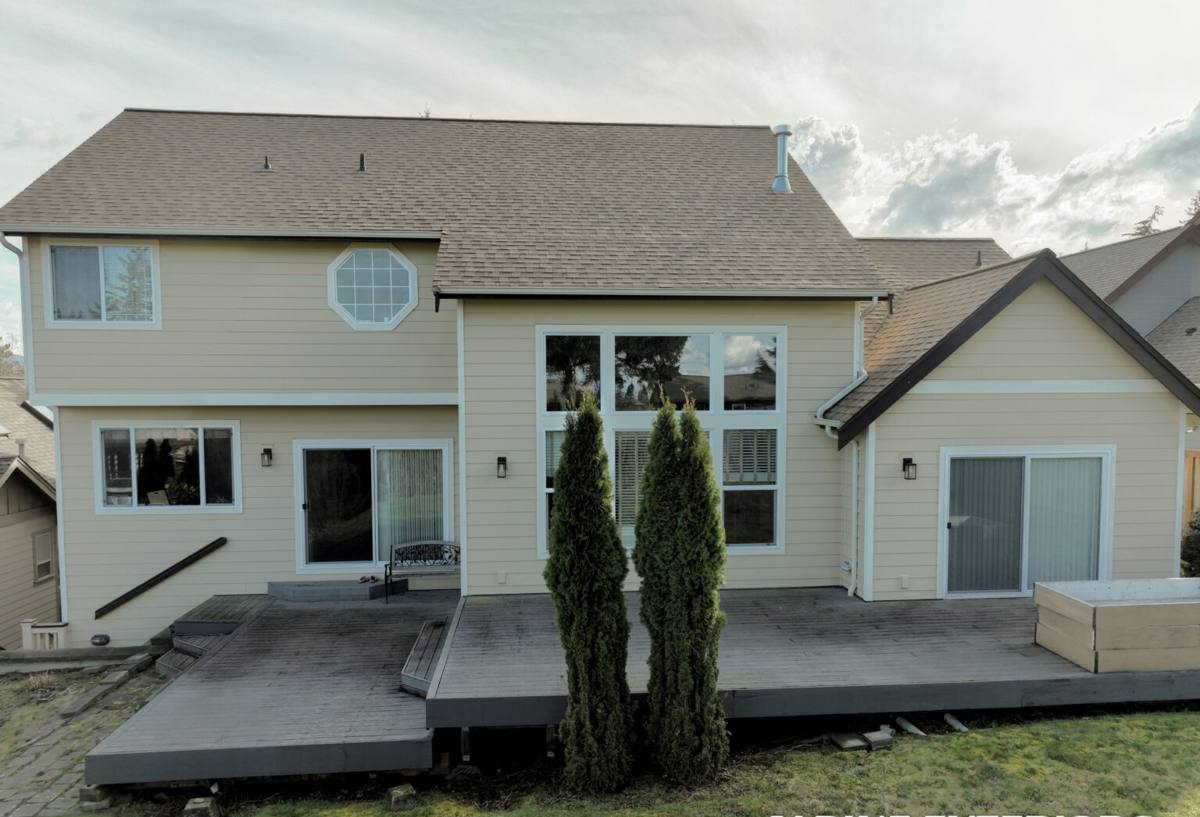
Why Composite Makes Sense for This Environment
Wood decking can absolutely be built well, and we still install it for homeowners who want that look. But wood asks for a maintenance schedule — sanding, staining, sealing — that's harder to keep up with when salt air and moss pressure are working against you year-round. Skip a season of sealing on a wood deck out here and you'll usually see it: gray, checking boards, softer spots near fasteners, and moss creeping into the grain.
Composite decking, properly installed, holds up to that cycle with far less upkeep. The boards don't absorb moisture the way wood fibers do, so they aren't as prone to swelling, cupping, or rot at fastener points. Capped composite products in particular resist staining and don't need refinishing. That doesn't mean composite is maintenance-free — moss and organic buildup will still land on any horizontal surface near the water — but the material itself isn't degrading every time it gets wet, which is the real advantage in a climate that stays wet as long as this one does.
What Composite Doesn't Solve on Its Own
Composite decking is only as good as what's underneath it. A composite deck built over a poorly ventilated substructure, with the wrong fastener spacing, or without proper drainage detailing will still trap moisture, grow moss in the joints, and develop problems — just more slowly than a wood deck would. The board is one part of the system; the build is the other.
What a Correct Composite Deck Build Involves
A lot of the difference between a deck that looks good for fifteen years and one that starts showing problems in three comes down to details most homeowners never see once the project is finished.
- Ledger flashing and waterproofing at the house connection, sealed to shed water away from the structure rather than trapping it against the wall.
- Adequate substructure ventilation so air can move underneath the deck and dry it out between rain events instead of holding damp.
- Correct joist spacing for the specific composite board being used — composite manufacturers spec tighter joist spans than typical for wood, and undersized framing leads to bounce and long-term sagging.
- Stainless or coated fasteners rated for coastal/salt-air exposure, not standard galvanized hardware that will corrode faster this close to the water.
- Proper board gapping for expansion and drainage, so water and debris don't sit trapped between boards where moss gets a foothold.
- Railing post attachment engineered to code and sealed at every penetration point, since a poorly sealed post base is one of the most common places we find hidden water damage on older decks.
Composite Board Options and What Drives Cost
Not every composite board is built the same way, and the differences matter more in a wet, salty climate than they would somewhere mild and dry. Here's a general breakdown of what homeowners are usually choosing between:
| Factor | What It Means | Why It Matters in Point Roberts |
|---|---|---|
| Capped vs. uncapped composite | Capped boards have a protective outer shell; uncapped are composite material through and through | Capped resists moss/algae staining and moisture intrusion far better in a wet, shaded climate |
| Board profile (solid vs. grooved/hidden-fastener) | Grooved boards use hidden clips; solid boards are typically face-screwed | Hidden-fastener systems reduce exposed metal, which matters where salt air corrodes hardware faster |
| Color and texture | Lighter colors show less heat absorption; darker colors can show moss/algae more visibly | Lighter, textured boards tend to hide organic buildup better between cleanings |
| Warranty structure | Ranges from basic material warranties to longer fade/stain and structural warranties | Coastal exposure is exactly the condition these warranties are meant to cover — worth reading the fine print |
| Substructure material | Pressure-treated wood joists vs. composite/aluminum framing | Composite or coated framing reduces long-term rot risk underneath the deck in a persistently damp environment |
Cost for a composite deck depends on square footage, framing condition, railing style, stairs, and board tier — we don't publish flat per-square-foot pricing because those variables swing the number too much to be honest about it in general terms. What we can say is that the biggest cost driver isn't usually the board itself, it's the substructure work required to do the job right, especially on an older deck footprint.
Our Process, Start to Finish
We keep the process straightforward because most homeowners just want to know what's happening and when.
- On-site assessment. We look at the existing structure (if there is one), grading and drainage around the deck area, sun/shade exposure, and how close the deck sits to salt spray or standing moisture.
- Honest scope and estimate. We tell you what needs to be rebuilt versus what can stay, and what board options make sense for the location and your budget.
- Permitting. Deck work typically requires permitting through Whatcom County — we handle that as part of the project so it's not left on your plate.
- Build. Framing and ventilation first, then decking, then railings and any stairs or lighting.
- Final walkthrough. We go over care basics for your specific board choice before we consider the job done.
Maintaining a Composite Deck in a Salt Air, Moss-Heavy Climate
Composite cuts down on maintenance — it doesn't eliminate it. Here's what actually keeps a Point Roberts deck looking good year to year:
- Sweep debris (leaves, needles, salt residue) off the deck regularly rather than letting it sit and compost in board grooves.
- Rinse with a garden hose periodically, especially after wind-driven rain events that carry salt spray.
- Use a soft-bristle brush and a mild soap/water solution for moss or algae film — avoid pressure washing directly into board seams, which can force water into the substructure.
- Check railing posts and fastener points once a year for any sign of corrosion or loosening, particularly going into the wet season.
- Keep gutters and downspouts near the deck clear so runoff isn't draining directly onto or under the decking.
Why Local Experience in Point Roberts Actually Matters
Point Roberts is a genuine exclave — the fastest route for materials and crews is through the border crossing, not a straight shot from the rest of Whatcom County. A contractor who hasn't built here before often underestimates that logistics reality, which shows up as delayed material deliveries, scheduling surprises, or crews who aren't used to planning around border-crossing hours. We factor that into how we schedule and stage material for Point Roberts jobs so it doesn't become your problem mid-project.
There's also a practical building-science reason local experience matters: a crew that's only built decks in drier, inland conditions may not default to the ventilation, fastener, and flashing choices that this specific salt-air, high-moisture environment calls for. We've built and repaired decks up and down this coastline long enough to know which shortcuts show up as problems in year two, not year twenty.
Signs an Existing Deck Needs Attention
If you're deciding between repair and full replacement, a few things are worth checking before you decide:
- Soft, spongy spots in decking or framing, especially near the house ledger.
- Visible rust streaking from fasteners or hardware.
- Persistent moss or dark staining that comes back quickly after cleaning.
- Railing posts that flex or feel loose at the base.
- Gaps or separation where the deck meets the house.
Some of these are simple fixes. Others point to substructure damage that's cheaper to address now than after another wet season adds to it.
Get a Straightforward Estimate
If you're weighing a new composite deck or replacing an aging one, we're happy to take a look and give you a straight answer on what it needs — no pressure, no inflated scope. Use the form below to request a free estimate for your Point Roberts property.