 Ferndale
 Point Roberts Windows Face a Tougher Job Than Most
Point Roberts sits out on its own peninsula, exposed to open water on three sides. That means more direct salt-laden wind, more wind-driven rain hitting window assemblies at an angle instead of straight down, and a longer damp season than homes further inland in Whatcom County get. Old aluminum-frame windows and original wood sashes from decades past were not built with this kind of sustained exposure in mind, and it shows up as pitting on hardware, chalky or corroded frames, and glass units that have gone cloudy between the panes.
Add in a moss season that runs long here, and you get windows sitting under near-constant moisture for stretches of the year. Moss and algae hold water against wood trim and sills, and that moisture doesn't just sit on the surface — it works into any gap in the caulking or flashing and stays there. Over years, that's how a fifteen-minute caulk job gets skipped and turns into a full window and sill replacement.
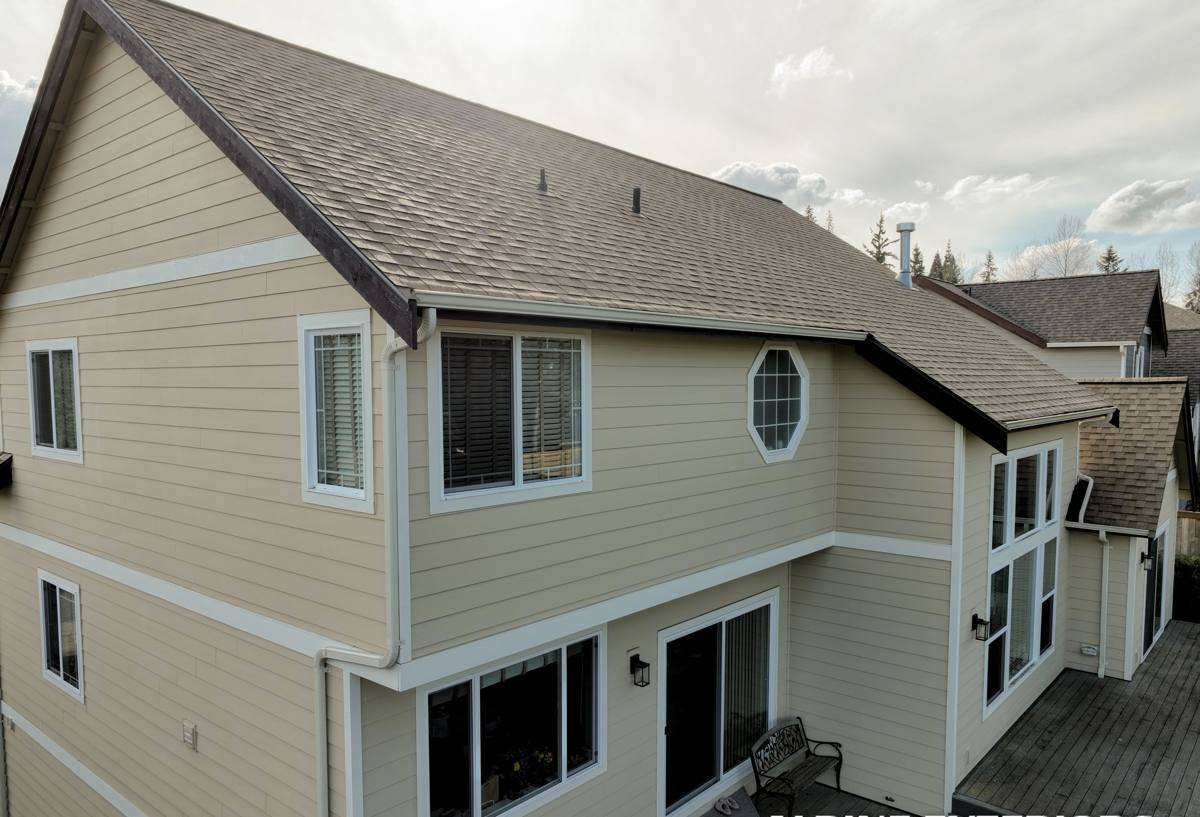
Why the Peninsula Location Changes How This Job Gets Done
Point Roberts is a bit unusual to service: it's physically cut off from the rest of Whatcom County by land, so getting a crew, materials, and equipment out there takes real planning — you can't just run back to the shop mid-day for a forgotten part. That means the contractor doing your windows needs to show up with everything measured, ordered, and staged correctly the first time, because a second trip for a missing item costs everyone real time.
This is one of the biggest practical reasons to hire a crew that already works this area regularly rather than a contractor who's never made the trip. Familiarity with the logistics — what to bring, how long the day realistically takes, how weather off the water can change a install schedule — keeps your project on track instead of stretching into extra visits.
Signs Your Current Windows Are Past Their Service Life
Not every window that looks rough needs full replacement, but in a marine climate like this, certain symptoms mean the frame or seal has already failed rather than just needing a cleaning:
- Fog or moisture trapped between the panes of a double-pane unit — the seal is gone and can't be repaired
- Soft or spongy wood around the sill or lower frame corners
- Windows that are hard to open, close, or lock, especially after damp weather
- Visible daylight or a noticeable draft along the frame edge
- Paint or finish that's bubbling or peeling specifically at the bottom corners, where water sits longest
- Frames that feel cold to the touch on the inside during winter, even with the heat running
If you're only seeing surface grime or light moss staining on the glass and exterior trim, that's often a cleaning and re-caulking situation, not a replacement one. Part of an honest estimate is telling you which category your windows actually fall into.
What a Correct Window Replacement Actually Involves
Swapping in a new window is easy to do badly and takes real care to do right, especially where wind-driven rain is a regular event. The parts that matter most are the ones you won't see once the job is finished:
Sill Pan and Flashing
A sloped sill pan under the new window gives any water that gets past the exterior seal somewhere to go — out, not into the wall cavity. Flashing tape integrated with the house wrap, lapped correctly so water sheds downward and outward, is what actually keeps a wall assembly dry over the long run. This step gets skipped more than homeowners realize, because it's invisible once trim goes back on.
Air Sealing and Insulation
The gap between the new window frame and the rough opening needs a proper backer rod and sealant, or a compatible low-expansion foam — not just caulk smeared around the trim. Done wrong, this gap becomes both an air leak and a path for moisture to track into the wall.
Exterior Sealant
In a high-salt, high-moisture environment, sealant choice and application matter more than they would somewhere drier. A bead that's under-applied or the wrong product for the substrate will fail years before it should, right when the window itself is otherwise in good shape.
Frame Material Comparison for This Climate
| Frame Material | Salt Air / Moisture Behavior | Upkeep |
|---|---|---|
| Vinyl | Won't rust or rot; consistent performance in salt air | Low — occasional cleaning |
| Fiberglass | Very stable, holds up well to sustained moisture and temperature swings | Low |
| Aluminum | Can pit and corrode over time in salt-heavy air; conducts cold | Moderate |
| Wood-clad | Good performance if cladding and seals stay intact; exposed wood is vulnerable | Higher — needs monitoring at joints and sills |
We don't push wood-frame windows with exposed exterior wood for homes out here as a rule. It's not that the product is bad — it's that unclad wood exposed to this much sustained moisture and salt puts more maintenance burden on the homeowner than most people want, and the failure point (rot at the sill or corner joints) is exactly the kind of thing this climate accelerates.
Our Process, Start to Finish
- On-site assessment — we look at every window in scope, check framing condition, and note which openings have existing water damage that needs addressing before a new window goes in
- Measurement and product selection — exact rough opening measurements, plus a conversation about frame material, glass package, and grille style based on the house and your budget
- Scheduling built around the trip out — we plan the visit with materials fully staged, so the crew isn't waiting on parts mid-job
- Removal and inspection — old windows come out carefully so we can check the rough opening and sill framing for hidden rot before anything new goes in
- Correct flashing and sill pan installation — this is the step that protects the wall for the next few decades, not just the next few years
- Window set, shimmed, and secured — leveled and squared before any fastening
- Air sealing and exterior sealant — done to hold up against wind-driven rain, not just look finished
- Interior and exterior trim, cleanup, and final walkthrough — including a check that every window opens, closes, and locks properly
Choosing Glass and Performance Specs for a Marine Environment
Frame material is half the equation — glass package is the other half. For homes exposed to steady wind and salt air, we typically talk through:
- Double or triple pane with argon fill — better thermal performance for a house that takes wind off the water regularly
- Low-E coatings — help with both heat retention in winter and reducing solar gain in the brighter months
- Corrosion-resistant hardware — locks, hinges, and cranks rated for coastal exposure hold up longer than standard-grade hardware
- Reinforced weatherstripping — matters more here than in a sheltered inland location, since wind pressure against the window is more constant
What Affects the Cost of a Point Roberts Window Project
| Factor | Why It Matters |
|---|---|
| Number and size of openings | Larger picture windows and multiple openings add material and labor time |
| Existing wall or sill damage | Rot repair before installation is a separate line item from the window itself |
| Frame material chosen | Vinyl, fiberglass, and clad options carry different upfront costs |
| Glass package | Triple pane, upgraded Low-E, and specialty coatings all add cost over a basic double-pane unit |
| Access and site conditions | Second-story or hard-to-reach openings add setup time |
| Trip and scheduling logistics | Getting a full crew and materials out to the peninsula efficiently is part of a fair, honest quote |
We give straightforward, itemized estimates so you can see what's driving the number — no vague lump-sum pricing that hides what you're actually paying for.
Keeping New Windows Performing Long-Term
A correctly installed window in this climate still needs a little attention to get its full lifespan:
- Rinse salt residue off exterior frames and glass a few times a year, more often if the house takes direct wind off the water
- Keep gutters and nearby moss growth clear of window trim so water isn't sitting against the frame
- Check exterior sealant beads annually for cracking or separation, especially after a hard winter
- Test locks and operating hardware each season — salt air can stiffen mechanisms before it visibly corrodes them
- Wipe down interior sills after heavy condensation events to prevent long-term moisture buildup
Why a Ferndale Crew That Knows Point Roberts Is the Right Call
Window replacement done right in this part of Whatcom County isn't just about the product you choose — it's about flashing details, sealant choices, and scheduling that account for a genuinely different exposure level than a sheltered inland lot gets. A crew that's already made the trip out to Point Roberts, planned around it, and installed windows built to hold up against salt air and driving rain isn't learning on your house. That familiarity shows up in fewer callbacks and windows that actually perform the way they're supposed to for years, not just the first season.
If you're seeing drafts, fogged glass, or sticking hardware on a Point Roberts home, we're happy to take a look and give you a straightforward, no-pressure estimate — just fill out the form below and we'll get in touch.