 Ferndale
 Siding Replacement for the Sumas Area, Done by a Crew That Knows Whatcom County
Homes out toward Sumas deal with a different set of pressures than a house sitting in a dry, sunny climate. Long wet seasons, persistent humidity, driving rain that comes in sideways during winter storms, and a moss season that seems to start earlier every year all work against whatever is on your exterior walls. We're a Ferndale-based crew, and Sumas is inside our regular service area — not a stretch job we take once and never see again. That matters more than it sounds like it should, because siding is a long-term system, and a contractor who's still local in ten years is a contractor who stands behind the work in ten years.
This page is specifically about siding replacement for Sumas-area properties — not a general overview of siding options. If your current siding is cracking, delaminating, holding moisture, or just past its useful life, here's what actually goes into doing the job correctly in this climate, and what to expect from working with us.
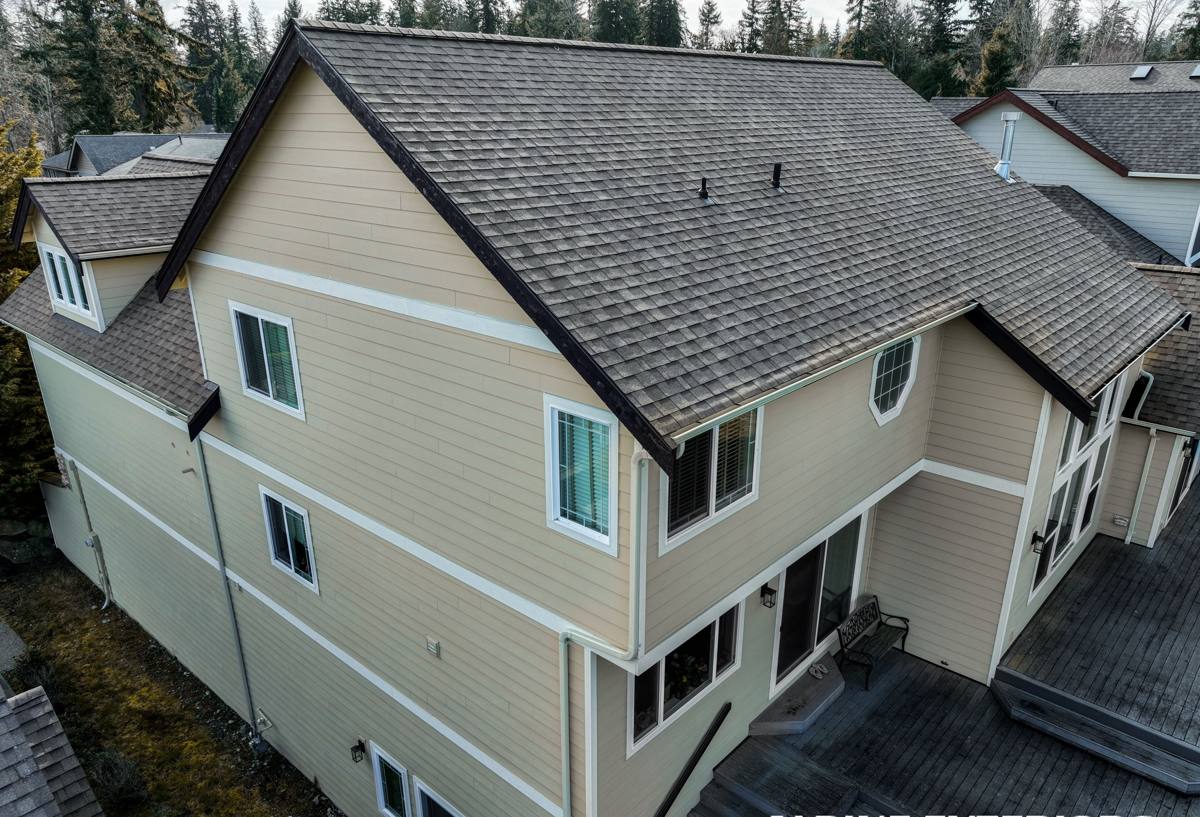
Why Whatcom County Weather Is Hard on Siding
The Pacific Northwest gets talked about as "rainy," but the specific combination that wears out siding around here is rain plus humidity plus limited direct sun on north- and east-facing walls. That combination keeps wall surfaces damp longer than most siding materials are designed to tolerate, especially older wood-based products and lower-grade composites. A few specific mechanisms show up again and again on older homes in this area:
- Moss and algae growth on shaded walls and anywhere water sits or sheets slowly, which holds moisture against the surface long after a storm passes
- Swelling and softening at butt joints, corners, and any spot where caulking has failed and water is getting behind the siding instead of running off it
- Paint and finish failure from repeated wet-dry cycling, which is faster and harder on site-painted or field-finished products than on factory-cured finishes
- Freeze cycles in colder snaps that can crack already-saturated wood fiber or trap moisture that later causes rot
None of this is unique to Sumas specifically — it's the reality across inland and coastal Whatcom County alike — but it's exactly why "what siding is on the house" matters more here than it would in a drier climate. Material choice isn't a cosmetic decision in this region; it's a durability decision.
What Failing Siding Actually Looks Like
Homeowners often notice the wrong signs first — fading color, for instance, which is mostly cosmetic. The signs that actually indicate it's time to replace rather than patch or repaint include soft or spongy spots when you press on the siding, visible cracking or splitting along panel edges, boards that have pulled away from the wall, persistent black or green staining that won't come off with cleaning, and paint that's bubbling or peeling in sheets rather than just chalking. If you're seeing two or more of these, patching individual boards is usually a short-term fix on a longer-term problem.
Why We Install Only James Hardie Fiber Cement
We standardized on James Hardie fiber cement siding for every home we side, including replacements out in the Sumas area, and we're upfront about why. We don't install vinyl, LP SmartSide, Cemplank, Allura, or unfinished cedar or spruce siding — not because those products have no legitimate use anywhere, but because after years of doing this work in this specific climate, we settled on one system we trust to hold up and we'd rather do one thing exceptionally well than several things adequately.
Fiber cement is cement, sand, and cellulose fiber — it doesn't rot, it isn't a food source for insects, and it's non-combustible, which matters for insurance considerations as much as for peace of mind. James Hardie's HardieZone system further engineers specific product lines for regional moisture and temperature conditions rather than selling one generic product everywhere, which is directly relevant in a climate defined by sustained dampness. Their ColorPlus finish is baked on at the factory under controlled conditions, rather than relying on a field-applied coat of paint that has to cure correctly on-site in whatever weather shows up that week — a real variable here given how often a paint crew loses a dry window.
None of this means other products are junk. Vinyl is inexpensive and low-maintenance in mild climates. Cedar has a genuine, warm appearance that some homeowners specifically want. LP SmartSide and other engineered wood products have improved over the years. But each comes with a trade-off we've decided isn't worth carrying on a Whatcom County exterior: vinyl can warp and become brittle with UV and temperature swings and it's a petroleum product that doesn't handle direct impact well; cedar and other wood-based sidings need real, recurring maintenance to keep moisture out over decades of exactly the wet-dry cycling described above; engineered wood composites are better than they used to be but still rely on factory sealing at cut edges and joints staying intact to resist moisture intrusion. We'd rather tell you that plainly than sell you a product we're not confident will still look right in fifteen years.
What a Correct Siding Replacement Involves
Replacing siding is not just pulling off old boards and nailing up new ones. Done correctly, especially in a wet climate, most of the real work happens in the layer you don't see once the job is finished.
Tear-Off and Inspection
We remove the old siding down to the sheathing and actually look at what's underneath before anything new goes up. This is where hidden problems surface — soft sheathing, old moisture damage around windows and penetrations, or trim that's been rotting quietly behind intact-looking siding. You can't fix what you can't see, and skipping this step is how new siding ends up covering an existing problem instead of solving it.
Water-Resistive Barrier and Flashing
A correctly installed weather-resistive barrier, properly lapped and taped, along with correct flashing at windows, doors, and every roof-to-wall intersection, is what actually keeps water out of the wall assembly. Siding itself is the visible layer, but the barrier and flashing behind it are what do most of the work in a climate that sees this much sustained rain.
Fastening and Clearances
James Hardie siding has specific fastening patterns and clearance requirements — ground clearance, roof-line clearance, gaps at butt joints — that are engineered into the manufacturer's installation instructions for a reason. Installed too tight to the ground or with panels butted with no gap, siding can wick or trap moisture regardless of how good the material itself is. This is also where the difference between a crew that installs Hardie regularly and one that occasionally does shows up most.
Finish Details
Corner trim, caulking at penetrations, and touch-up at any field-cut edges (which need to be sealed since the factory finish doesn't extend into a fresh cut) round out the job. These are small line items on an invoice but they're often where a rushed installation starts failing first.
Our Process for a Sumas-Area Replacement
- On-site assessment — we walk the exterior, check for moisture damage and problem areas, and measure for material
- Written estimate — a clear scope and price, including which HardieZone product line fits your specific exposure
- Scheduling around weather windows — we plan tear-off in sections so open wall time is minimized, which matters more here than in a dry climate
- Tear-off, inspection, and any sheathing repair — done before a single new panel goes up
- Barrier, flashing, and siding installation — to manufacturer spec, not shortcuts
- Final walkthrough — we go over the finished job with you before calling it done
Cost Factors for a Sumas Siding Replacement
Every home is different, and we won't quote a number without seeing the property, but the variables that actually move the price are consistent from job to job:
| Factor | How It Affects Cost |
|---|---|
| Home size and wall complexity | More corners, gables, and dormers mean more cutting, trim, and labor time |
| Condition of existing sheathing | Hidden rot or moisture damage found during tear-off adds repair scope |
| Siding profile and product line | Lap, shingle, and panel styles and specific HardieZone lines vary in material cost |
| Trim and detail work | Corner boards, window trim, and fascia detail add labor beyond the flat wall areas |
| Access and site conditions | Multi-story walls, tight lot lines, and staging needs affect crew time |
| Tear-off and disposal | Volume of old material to remove and haul away |
Signs You're Ready for Replacement, Not Repair
- Soft, spongy, or crumbling siding when pressed
- Visible gaps, warping, or boards separating from the wall
- Recurring moss or algae staining that returns quickly after cleaning
- Peeling or bubbling paint across multiple wall sections rather than isolated spots
- Interior signs — musty smell, staining, or soft drywall — near exterior walls
- Siding installed 20+ years ago with no major maintenance history
Why Local Matters for This Kind of Work
A siding replacement is a warranty commitment, not just a transaction. James Hardie's product warranty is meaningful, but it's paired with an installation that has to be done to spec for it to mean anything, and that's where a local, accountable crew matters. We're not driving in from out of the area for one job — we're a Ferndale operation that already services the Sumas area regularly, which means if something needs a look after the fact, we're not hard to reach. We've also seen firsthand what does and doesn't hold up on homes in this specific climate, which shapes how we detail flashing, clearances, and finish work on every job, not just the ones someone happens to be watching.
Ready to Talk About Your Home
If your siding is showing its age or you're just planning ahead, we're happy to come take a look and give you a straightforward, no-pressure estimate — including an honest opinion on whether you're looking at a replacement job or something less involved. Fill out the form below and we'll get in touch.