 Ferndale
 Roof Repair Built for the Sudden Valley Climate
Homes in Sudden Valley deal with a roofing environment that's tougher than most people realize until they're standing in the attic with a flashlight looking at a water stain. The combination of heavy tree cover, proximity to Lake Whatcom, and the driving rain that moves through Whatcom County for much of the year creates conditions where roofs age faster and fail in different ways than they would in a drier, more open part of the state. Add in the marine, moisture-heavy air that settles across this whole corner of Washington, and you get a roofing climate that rewards careful, honest repair work and punishes shortcuts.
We've spent enough time on Sudden Valley rooflines to know the patterns: the north-facing slopes that never fully dry out, the valleys that collect needles and leaves faster than open-lot roofs, and the long moss season that starts earlier and ends later here than it does on sunnier lots closer to town. This page is about what a correct roof repair looks like for this specific area — not a generic rundown of roofing services.
Why Sudden Valley Roofs Wear Differently
Shade and Moisture Retention
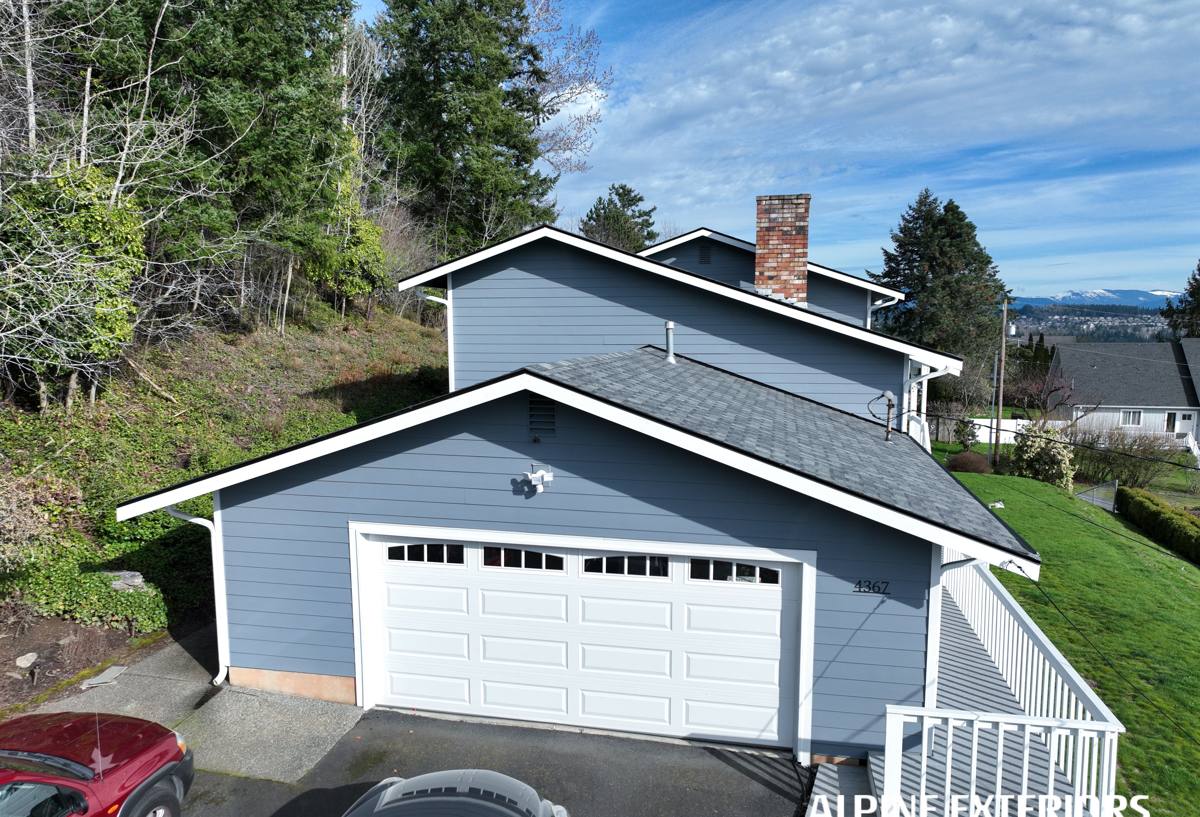
Many Sudden Valley lots are wooded and sloped, with mature trees shading large sections of the roof for most of the day. Shaded shingles and shakes stay damp longer after rain, which is exactly the condition moss, moss spores, and algae need to take hold. Once organic growth establishes itself on a roof, it holds even more moisture against the surface, and that cycle accelerates wear on shingles, underlayment, and eventually the roof deck itself.
Driving Rain and Wind-Driven Water
Whatcom County doesn't just get rain — it gets long stretches of steady, wind-driven rain that finds every weak point in flashing, valleys, and roof penetrations. On a well-maintained roof this isn't a problem. On a roof with aging flashing or a repair that was never sealed correctly, it's how small leaks turn into rot, stained ceilings, and insulation damage over a single wet season.
Salt Air and Fastener Corrosion
Sudden Valley sits inland from the water, but this whole region carries a marine influence that affects exposed metal over time — nail heads, flashing seams, and gutter hardware corrode faster here than they would in a dry inland climate. It's a slower issue than moss or leaks, but it's part of why we inspect fasteners and flashing metal on every repair call, not just the shingles.
Common Roof Repair Issues We See in Sudden Valley
- Moss and organic growth along shaded slopes, ridge lines, and anywhere debris collects
- Valley and flashing leaks where roof planes meet chimneys, skylights, or dormers
- Clogged or overflowing gutters from needle and leaf drop, which backs water up under the roof edge
- Granule loss on asphalt shingles from years of standing moisture and freeze-thaw cycles
- Soft or rotting decking discovered under a section that's been leaking longer than the homeowner realized
- Storm damage from wind-lifted shingles or falling branches, common on tree-lined lots
What a Correct Roof Repair Actually Involves
Diagnosis Before Patching
A leak stain on a ceiling almost never sits directly under the actual entry point — water travels along rafters and sheathing before it shows up inside. A correct repair starts with tracing the leak to its real source, which sometimes means checking flashing several feet away from where the stain appears. Patching the visible spot without finding the source is the single most common reason a "fixed" roof leaks again the next season.
Matching Materials, Not Just Covering the Gap
Repairs should match the existing roofing material in type, weight, and where possible, color and age-appropriate wear — a mismatched patch stands out and can behave differently in wind and rain than the surrounding roof. When exact matches aren't available, we explain the trade-offs honestly rather than installing something that looks fine from the ground but performs differently under stress.
Flashing Done Right
Most roof leaks trace back to flashing, not the shingles themselves. Flashing around chimneys, skylights, vents, and valleys needs to be properly layered with the roofing material — not just caulked over — so water sheds correctly instead of finding a new path underneath. Caulk-only "repairs" are one of the most common shortcuts we see undone within a year or two, especially in a climate with this much sustained rain.
Addressing the Moss, Not Just the Leak
If moss or organic growth contributed to the damage, a repair that ignores it is temporary. We treat and remove growth as part of the repair, and where it makes sense, we talk through longer-term prevention so the same section doesn't fail again in a year or two.
Repair vs. Replacement: How We Make That Call
Not every roof problem in Sudden Valley needs a full replacement, and not every leak can be fixed with a patch. Here's how we generally think through it:
| Factor | Leans Toward Repair | Leans Toward Replacement |
|---|---|---|
| Age of roof | Well within expected lifespan for the material | Near or past the end of its typical service life |
| Extent of damage | Localized — one valley, one flashing point, one storm-damaged section | Widespread granule loss, multiple failed areas, or repeated leaks in different spots |
| Decking condition | Solid, dry sheathing under the damaged area | Soft, rotted, or delaminated decking found during inspection |
| Moss/organic history | First occurrence, caught early | Long-term, repeated growth that's already degraded the surface |
| Repair history | Roof hasn't needed frequent patching | Multiple past repairs in different areas, suggesting broader failure |
We'll always tell you honestly which side of that line your roof falls on, including when a repair is the right and more cost-effective call — we're not trying to sell a replacement a roof doesn't need.
Our Roof Repair Process for Sudden Valley Homes
1. Inspection and Diagnosis
We inspect the roof surface, flashing, valleys, and — when accessible — the attic or roofline from inside, since interior signs often tell us more than what's visible from the ground or a ladder.
2. A Clear, Written Scope
Before any work starts, you get a plain-language explanation of what's actually wrong, what needs to be repaired, and why — along with an honest cost range. No surprise add-ons once the crew is already on the roof.
3. The Repair Itself
We remove and replace damaged materials, correct flashing, address any moss or organic growth involved, and make sure the repaired section ties into the surrounding roof properly rather than sitting as an obvious patch.
4. Cleanup and Debris Check
Old shingles, flashing, and any moss debris are cleared from the roof, gutters, and ground — we don't leave a job site with the very debris that contributed to the original problem still sitting in the gutters.
5. Follow-Up
We stand behind the work we do and are reachable if anything about the repair doesn't hold up the way it should through the next wet season.
Materials and Methods We Use — and Why
Our standard on repair jobs is to use materials and methods that hold up specifically in a shaded, wet, moss-prone environment like Sudden Valley — not just whatever's fastest to install.
- Proper underlayment and ice-and-water shield at valleys and vulnerable transitions, not just surface shingles
- Corrosion-resistant flashing and fasteners given the marine air that moves through this region
- Correctly layered flashing rather than caulk-dependent patches, which tend to fail under sustained rain
- Moss treatment appropriate to the roofing material, since the wrong treatment or a pressure washer can strip granules and shorten a shingle roof's life rather than help it
We avoid shortcuts like pressure washing asphalt shingles or relying on sealant alone to close a flashing gap — not because those methods are unheard of, but because they tend to trade a quick fix now for a repeat call in a year, and that's not the standard we hold repair work to.
Roof Maintenance Checklist for Sudden Valley Homeowners
Between repairs, a few habits go a long way toward stretching the life of a roof in this climate:
- Clear gutters and valleys of needles and leaves at least twice a year, more often under heavy tree cover
- Look for dark streaking or green/black patches on shaded slopes — early moss is far easier to treat than established growth
- Check attic insulation and rafters after major storms for any sign of new moisture
- Trim back branches that overhang or brush against the roof surface
- Have flashing around chimneys, skylights, and vents checked every couple of years, since it wears out well before the shingles do
- Don't ignore a small ceiling stain — trace it before it becomes a decking problem
Why Hiring a Crew That Already Works Sudden Valley Matters
Sudden Valley's wooded, hilly lots and gated, HOA-managed layout come with logistics that a crew unfamiliar with the neighborhood has to figure out on the fly — gate access, tight or shared driveways, and roof lines shaped by mature trees on nearly every lot. A crew that's already worked this community knows to plan for that instead of losing half a morning to it.
More importantly, a contractor who's repaired roofs across Sudden Valley and the rest of Whatcom County has seen how this specific combination of shade, rain, and lake-area humidity actually plays out on real roofs over years, not just in a training manual. That's the difference between a repair that's built to hold through another wet Whatcom County winter and one that's patched to look fine until the next storm finds the same weak spot.
Get a Free, No-Pressure Estimate
If you're dealing with a leak, moss buildup, storm damage, or just want an honest opinion on the condition of your roof, we're happy to take a look. Fill out the form below for a free estimate — no pressure, no obligation, just a straight answer about what your roof actually needs.