 Ferndale
 Composite Decking in Sudden Valley: Built for the Setting You Actually Have
Sudden Valley sits in the kind of Whatcom County terrain that's beautiful to live in and hard on exterior wood: mature tree cover, lake-adjacent humidity, and long stretches of the year where a deck simply doesn't dry out between rain events. Add in the broader region's salt-tinged marine air and the moss season that starts early and lingers into late spring, and you've got a set of conditions that will find every weak point in a deck build — the fastener that wasn't set right, the board gap that was too tight, the joist that wasn't flashed. Composite decking doesn't eliminate those risks on its own. A correct installation does. This page is about what that looks like for homes in this specific area.
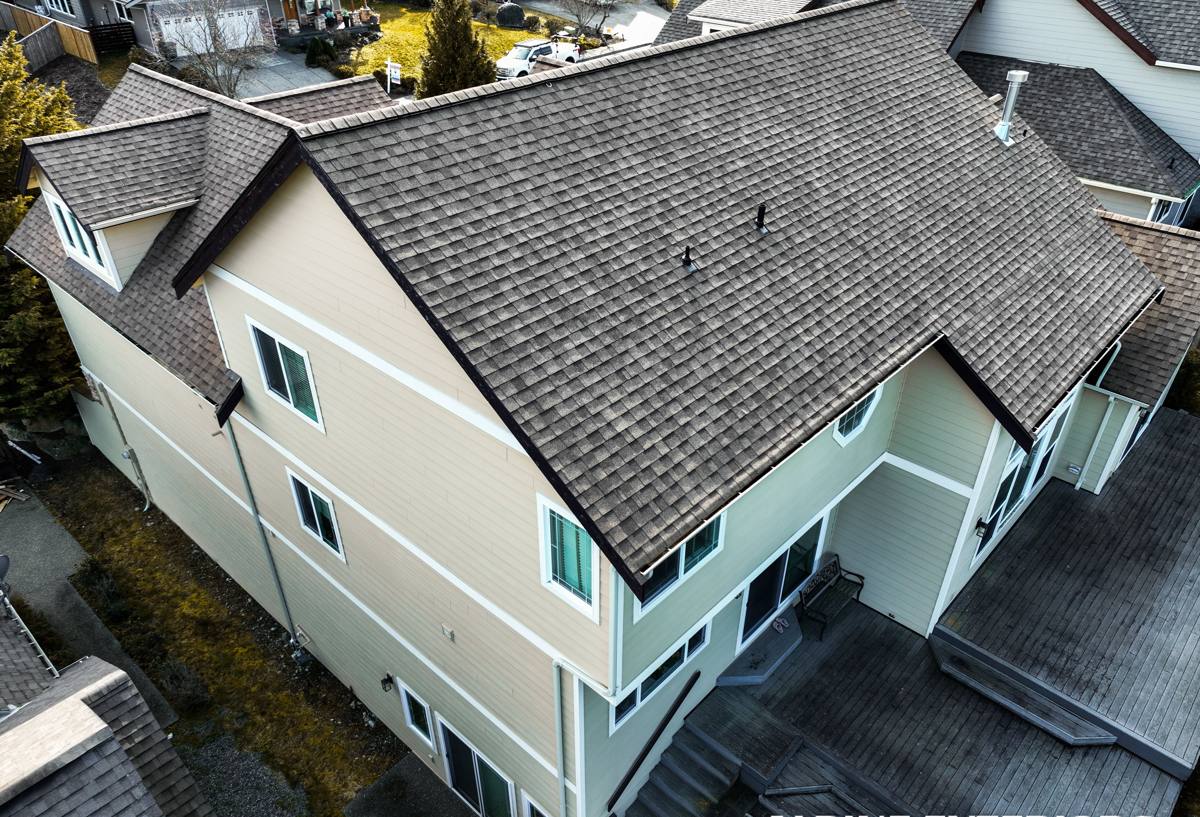
What Sudden Valley's Climate Actually Does to a Deck
Every deck in Whatcom County deals with rain. What makes a shaded, tree-lined, lake-proximity setting like Sudden Valley different is how slowly things dry out once they get wet.
Shade and Moisture Retention
Mature conifers and the lake's microclimate keep a lot of Sudden Valley lots shaded for large parts of the day, especially in fall and winter when the sun angle is already low. A deck that never gets direct afternoon sun stays damp longer after every rain, which is exactly the condition moss, algae, and mildew need to establish themselves on any surface — wood or composite.
Moss Season
Moss doesn't need standing water, just consistent dampness and something to grip. Composite board surfaces, especially older or lower-grade uncapped products, have enough texture for spores to take hold if the deck isn't shedding water and drying between storms. Once moss gets a foothold in the grain texture of a board, it's a maintenance problem for the life of the deck, not a one-time fix.
Driving Rain and Wind-Blown Water
Storms coming off the Strait of Georgia and through the county don't always fall straight down. Driving rain gets pushed sideways into ledger connections, under rail posts, and into any gap where flashing was skipped or done wrong. On a deck attached to the house, that's the single most common source of hidden rot in the framing underneath — not the decking surface itself, which is what most homeowners assume they need to worry about.
Salt Air's Role
Whatcom County's proximity to Puget Sound and the Strait means fasteners, brackets, and any exposed metal hardware on a deck are working against slow corrosion even at inland sites like Sudden Valley. It's a smaller factor here than it is for a waterfront deck in Ferndale proper, but it's still a reason we don't cut corners on hardware grade.
Why Composite Makes Sense for This Kind of Lot
We install wood decks too, and for some homeowners and budgets that's still the right call. But on a shaded, moss-prone, high-moisture lot, composite has real practical advantages that matter more here than they would on a sunny, open, south-facing site.
- Composite boards don't absorb water into the wood grain the way lumber does, so they don't swell, cup, or splinter from repeated wet-dry cycles under tree cover.
- They don't need annual staining or sealing — a real advantage on a deck that's shaded enough that it never fully dries out for the maintenance window most stain products need.
- Capped composite resists moss and algae staining far better than raw wood, though it isn't immune and still needs periodic cleaning.
- Color and texture stay consistent over the deck's life instead of graying unevenly the way wood does when parts of the deck get more sun than others.
The trade-off is upfront cost and the fact that composite still depends entirely on correct substructure work — it doesn't forgive a bad frame the way people sometimes assume.
What a Correct Composite Deck Build Involves
Composite decking fails for the same reasons any decking fails: bad framing decisions made before the first board goes down. On a Sudden Valley lot, we pay particular attention to a few things.
Joist Spacing and Direction
Composite boards generally need tighter joist spacing than wood — usually 16 inches on center, sometimes closer for diagonal patterns or lower-tier boards. Manufacturer spec sheets vary by product, and we follow them exactly, because under-spanned composite decking sags and flexes in ways that show up within a couple of seasons, not decades.
Ventilation Under the Deck
A deck sitting low to the ground, or boxed in on multiple sides, traps humid air underneath — which is common on sloped or wooded Sudden Valley lots where the ground drops away from the house. We build in airflow wherever the site allows it, because trapped moisture under the deck accelerates rot in the framing even when the composite surface above looks fine.
Ledger Flashing
Where the deck attaches to the house, the ledger board and its flashing are the single most important detail on the whole project. Done wrong, driving rain works its way behind the ledger and rots the rim joist and sheathing from the inside, often for years before it's visible. We flash every ledger connection to shed water away from the house, not toward it.
Hardware and Fasteners
We use hot-dip galvanized or stainless structural hardware and hidden composite-rated fasteners rather than mixed-metal or bargain-grade screws. In a marine-influenced climate, the wrong hardware corrodes long before the boards themselves show any wear, and a corroded connector is a structural problem, not a cosmetic one.
Framing and Fastener Reference
| Component | What We Use | Why It Matters Here |
|---|---|---|
| Joists | Pressure-treated, spaced to board manufacturer spec | Under-spanning causes flex and premature board fatigue in wet, shaded conditions |
| Ledger flashing | Metal flashing with drip edge, sealed to sheathing | Blocks driving rain from reaching the rim joist |
| Structural hardware | Hot-dip galvanized or stainless | Resists corrosion from salt-tinged, humid regional air |
| Deck fasteners | Hidden composite-rated clips or coated screws | Prevents mineral streaking and loosening from repeated wet cycles |
| Under-deck clearance | Maximum airflow the site allows | Reduces trapped humidity that speeds rot below the surface |
Choosing the Right Composite Board for a Shaded, Moss-Prone Lot
Not all composite decking performs the same way in this environment, and this is where a lot of homeowners get steered wrong by a showroom sample instead of a real-world assessment of their lot.
Capped vs. Uncapped Composite
Capped composite has a polymer shell wrapped around the wood-plastic core, which sheds water and resists staining far better than uncapped composite, where the core is more directly exposed. On a lot with as much shade and standing moisture risk as Sudden Valley, we generally steer homeowners toward capped products even though they cost more upfront, because the maintenance burden of uncapped composite in this setting adds up over the years.
Board Texture and Color
Deeply textured, wood-grain-embossed boards look great in a showroom but hold onto grime, pollen, and moss spores more than a smoother, lower-texture profile. Darker board colors also show mineral and tannin staining from surrounding conifers less than very light colors do — worth factoring in before you fall in love with a sample chip.
Ventilated vs. Solid Board Profiles
Grooved or ventilated composite board profiles allow a little more airflow around the underside of each board, which helps drying time in shaded areas. Solid boards are stronger and quieter underfoot but hold water longer against the joist. We'll walk through both with you based on where the deck sits relative to sun and tree cover.
Our Process for a Sudden Valley Composite Deck
- Site walk-through. We look at sun exposure, tree cover, slope, drainage, and how the deck will attach to the house before we talk products.
- Honest product recommendation. We'll tell you which composite lines make sense for your specific amount of shade and moisture exposure, and why — not just what's in stock.
- Written estimate. Clear scope, materials, and price range before any work starts. No surprise change orders for things we should have caught on the walk-through.
- Permitting. Whatcom County and local jurisdiction permitting handled as part of the job where required, particularly for attached decks and guardrails.
- Build. Framing first, inspected before decking goes down, then boards, fascia, and railing.
- Final walkthrough. We go over the finished deck with you, including what maintenance it actually needs given where it sits on your property.
Maintenance That Actually Matters Here
Composite decking is lower-maintenance than wood, not maintenance-free — and on a shaded, moss-prone lot the difference between those two claims matters. A little seasonal attention keeps a composite deck looking and performing the way it should for its full service life.
- Sweep debris — needles, leaves, pollen — off the deck regularly rather than letting it pile in corners and against rail posts, where it holds moisture longest.
- Rinse the deck surface a few times a year with plain water or a mild composite-safe cleaner; avoid pressure washers on high settings, which can damage the cap layer.
- Check and clear gaps between boards each fall, before the heaviest rain sets in, so water and debris keep draining instead of packing in.
- Address any moss or algae as soon as it appears with a composite-safe cleaner rather than letting it establish — it's much easier to remove early than after a full season.
- Inspect ledger flashing and railing connections annually for any sign of water intrusion or loosening hardware.
- Trim back overhanging branches where practical to increase sun exposure and airflow across the deck surface.
Why a Crew That Already Works Sudden Valley Matters
Composite decking installation isn't complicated in the abstract, but doing it right on a lot like the ones in Sudden Valley means understanding how shade, slope, tree cover, and Whatcom County's rain patterns actually interact on the ground — not just following a generic install guide. A crew that's already worked in this specific area knows which lots need extra attention to under-deck ventilation, which slopes need different footing approaches, and where driving rain tends to cause the most flashing problems locally. That local pattern recognition is the difference between a deck that needs a warranty call in year three and one that's still performing exactly as installed a decade out.
What This Typically Costs
Every deck is different once you factor in size, height off the ground, railing style, and site access, so we don't quote a number without seeing the lot. In general terms, composite decking runs higher upfront than pressure-treated wood and lower than most exotic hardwoods, with the gap narrowing over time once you account for wood's ongoing staining and sealing costs.
| Factor | Impact on Cost |
|---|---|
| Board tier (uncapped vs. premium capped) | Largest single driver of material cost |
| Deck height and railing requirements | Taller decks need more substructure and code-required guardrails |
| Site access and slope | Difficult access or steep grade adds labor time |
| Ledger vs. freestanding attachment | Attached decks require flashing work; freestanding decks need more footings |
| Existing structure removal | Tear-off and disposal of an old deck adds to the timeline and cost |
If you're weighing composite decking for a Sudden Valley property, we're glad to walk your lot, talk through what your specific shade and drainage situation calls for, and put together a straightforward, no-pressure estimate — just fill out the form below.