 Ferndale
 Storm Damage Roof Repair in Marietta, Ferndale
Marietta sits close to the water on the edge of Ferndale, which means the roofs here take a different kind of beating than roofs a few miles inland. Wind off Bellingham Bay, driving winter rain, and a moss season that can run eight months out of the year all work against asphalt shingles, flashing, and fasteners in ways that aren't always obvious from the ground. When a storm rolls through Whatcom County, the damage isn't always a missing shingle you can spot from the driveway. Sometimes it's a lifted tab, a bent flashing edge, or a fastener that's started to back out — small things that turn into leaks a few rainstorms later.
This page covers what storm damage roof repair actually looks like for homes in and around Marietta, what a correct repair involves, and why it matters to hire a crew that already knows this part of Ferndale rather than one working from a generic checklist.
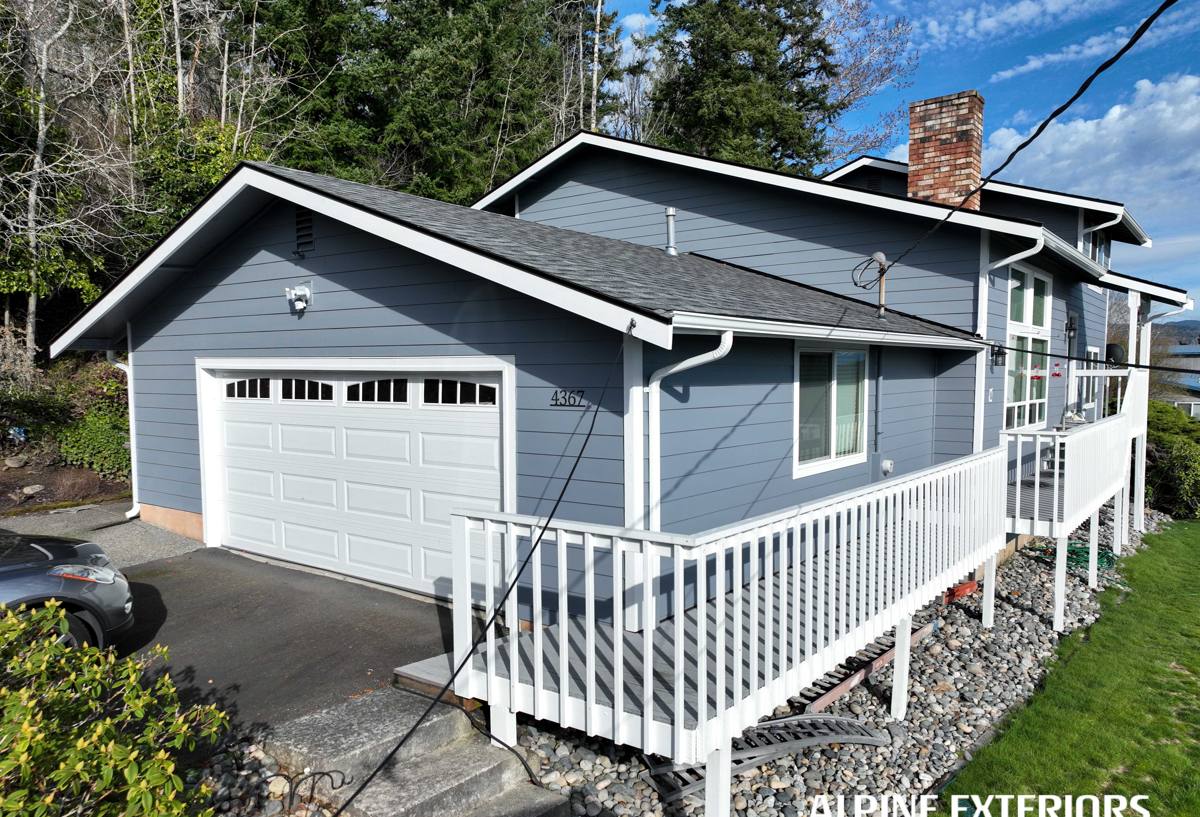
What Local Weather Does to a Marietta Roof
Three things define roofing conditions in this part of Whatcom County, and they compound each other:
Salt Air
Proximity to Bellingham Bay means a steady low-level exposure to salt-laden air. Salt accelerates corrosion on exposed metal — nail heads, flashing, vent caps, and gutter hardware age faster here than they would twenty miles inland. Corroded fasteners lose their grip on shingles, which is exactly the weak point wind gets under during a storm.
Driving Rain
Storms coming off the water tend to bring rain sideways, not straight down. That matters because a roof can be in fine shape for vertical rain and still leak under wind-driven rain, because water gets pushed up and under laps, flashing edges, and vent boots that were never designed to shed water horizontally. After a windstorm, this is usually where the actual water intrusion is happening — not through a missing shingle, but through a lifted edge that lets wind-driven rain in underneath.
Long Moss Season
Ferndale's wet, mild climate is close to ideal for moss growth on north-facing and shaded roof slopes. Moss holds moisture against the shingle surface for months at a time, which softens the mat, lifts edges, and gives wind something to grab onto. A roof with heavy moss going into a storm is far more likely to lose shingles than a clean one, because the moss has already done half the work of prying them loose.
Signs of Storm Damage Worth Checking For
Not all storm damage is visible from the ground, and not all of it needs a full inspection to spot. After a windstorm or heavy rain event, it's worth looking for:
- Shingles that look curled, cracked, or torn at the tab, especially on the side of the roof that faced the wind
- Granules collecting in gutters or at downspout outlets — a sign shingles are wearing thin or were impacted
- Bent, lifted, or missing flashing around chimneys, skylights, and roof-wall intersections
- Visible daylight or water stains in the attic after a storm, particularly near valleys or penetrations
- New or worsening ceiling stains inside the home following heavy rain
- Debris — branches, cones, needles — built up in valleys where it traps water
- Gutters pulling away from the fascia or sagging under debris and water weight
Any one of these on its own might be minor. Several together, especially after a named storm system, usually means it's time for an actual inspection rather than a wait-and-see approach.
Why "Storm Damage" Repair Is Different From Routine Repair
A routine roof repair usually addresses one known problem — a leak over the kitchen, a cracked pipe boot. Storm damage repair starts from a different assumption: something happened to the whole roof system, even if only one spot is currently leaking. The wind that lifted three shingles on the windward slope likely stressed fasteners on shingles nearby that haven't failed yet. A correct storm repair checks the surrounding field, not just the visibly damaged spot, because the next storm will find whatever was missed the first time.
This is especially true in Marietta's exposure, where salt air has already been working on fasteners before the storm even hit. A shingle that looks fine today may already have a corroded nail underneath it that the next wind event will finish off.
What a Correct Repair Involves
Storm damage repair done right isn't just swapping out the shingles that are obviously gone. It typically includes:
- Full-slope inspection, not just the visibly damaged area, including the roof faces that took the direct wind load
- Decking check at the damaged area — water intrusion can soften OSB or plywood sheathing, and covering rotten decking with new shingles just hides a bigger problem
- Flashing evaluation at chimneys, valleys, and wall intersections, since flashing failure is a more common leak source than shingle loss in wind-driven rain
- Underlayment repair or replacement in the affected section, since torn or saturated underlayment won't protect the deck even with new shingles on top
- Matching materials as closely as possible to the existing roof, both for appearance and so the repair ages at the same rate as the rest of the field
- Fastener quality appropriate for a salt-air environment — this is one area worth not cutting corners on, given how much faster standard fasteners corrode this close to the bay
Repair vs. Replacement: What Drives the Decision
Not every storm-damaged roof needs to be replaced, and not every damaged roof should just be patched. The right call depends on a few honest factors:
| Factor | Leans Toward Repair | Leans Toward Replacement |
|---|---|---|
| Age of roof | Under 12-15 years, otherwise in good condition | Already near or past expected service life |
| Extent of damage | Isolated to one slope or section | Spread across multiple slopes or the whole field |
| Decking condition | Solid, no rot found on inspection | Soft spots or rot found under damaged shingles |
| Moss and granule loss | Minimal, localized to the storm-damaged area | Widespread moss or granule loss across most slopes |
| Material availability | Matching shingles still available | Discontinued profile or color, patch would stand out |
Cost for a targeted storm repair — replacing a section of shingles, flashing, and underlayment — generally runs from a few hundred dollars for minor flashing or shingle work up to a couple thousand for a larger section with decking replacement. A full re-roof is a different scope and cost entirely, and we'll tell you plainly which situation you're in rather than defaulting to the bigger job.
Our Process
When we get a storm damage call from a Marietta homeowner, the process is straightforward:
- Phone or on-site conversation about what you're seeing — a leak, missing shingles, debris, or just a request to check the roof after a bad storm
- On-roof inspection of the damaged area and the surrounding field, plus a look in the attic if there's any sign of water intrusion
- Plain-language explanation of what we found, what caused it, and whether it's a repair or something bigger — no upsell, no scare tactics
- Written estimate covering materials, labor, and timeline before any work starts
- Repair work matched to your existing roofing material wherever possible, with attention to flashing and fastener quality given the local salt-air exposure
- Cleanup including magnetic sweep for nails and removal of old material and debris
A Note on Insurance
Many storm damage repairs in this area are covered in part by homeowner's insurance, particularly when the damage traces to a specific wind or storm event. We can document the damage with photos and a written scope that homeowners can submit to their carrier, but we're not adjusters and don't make coverage promises — that call belongs to your insurance company. What we can do is give you an honest, itemized description of the damage and the repair needed, which tends to move claims along faster than a vague verbal estimate.
After a Storm: What to Check Before You Call
A little homeowner-level assessment helps us help you faster, and keeps you safe in the meantime:
- Do not get on the roof yourself, especially right after a storm when surfaces are wet and debris may be unstable
- Check the attic (if accessible) for daylight, water spots, or a musty smell after heavy rain
- Look at ceilings and around chimneys or skylights inside the home for new stains
- Photograph any visible damage from the ground — missing shingles, dented gutters, debris on the roof
- Clear debris away from downspouts and drains so water isn't backing up while you wait for repair
- Note the date and general conditions of the storm, which helps if you file an insurance claim
Why a Crew That Already Works Marietta Matters
Roofing in a bay-adjacent, moss-heavy climate rewards experience with the specific conditions, not just general roofing skill. A crew that regularly works Ferndale and the surrounding Whatcom County communities already knows which flashing details tend to fail first in wind-driven rain, how fast moss builds back on shaded slopes here, and which fastener choices hold up against salt air over years rather than months. That familiarity shows up in fewer callbacks and repairs that actually last through the next storm season, instead of just getting the roof watertight until the next big blow.
If your roof took damage in a recent storm, or you just want an honest look after a rough winter, we're happy to come out, take a straight look at what's going on, and walk you through your options. Use the form below to request a free, no-pressure estimate.