 Ferndale
 Why Sandy Point Siding Wears Faster Than Inland Ferndale Homes
Sandy Point sits right on the water, and that changes what siding has to survive. Homes a few miles inland in Ferndale deal with Whatcom County's wet winters and mossy shade, but they aren't getting salt-laden air pushed directly at their exterior walls day after day. Sandy Point homes get both problems at once — marine air working on fasteners and finishes, plus the same driving rain and long moss season as everywhere else in the county, often worse because there's less tree cover here to break the wind before it reaches the house.
Salt Air and Fastener Corrosion
Salt in the air settles on every exposed surface, including nail heads, trim screws, and any exposed metal flashing. Over years, that accelerates corrosion in a way inland siding never experiences. Rust stains bleeding down from a nail head or a streaking trim screw are one of the more distinctive Sandy Point calls we get — it's rarely a sign the siding itself failed, but it does mean the fastening detail needs attention before the surrounding material gets damaged too.
Wind-Driven Rain at Seams and Laps
Waterfront exposure means rain doesn't just fall straight down — wind off the water drives it sideways into laps, corner boards, and butt joints that would stay mostly dry on a sheltered inland lot. Any gap, undersized lap, or missing sealant becomes a water-entry point faster here than almost anywhere else in our service area.
Moss, Algae, and Prolonged Moisture
Whatcom County's moss season runs long, and Sandy Point's higher humidity near the water stretches it further. Moss and algae hold moisture against the siding surface for weeks at a time, which is hard on paint film, caulking, and any wood-based product. It's cosmetic at first, but left alone it keeps the surface damp enough to accelerate whatever's going on underneath it.
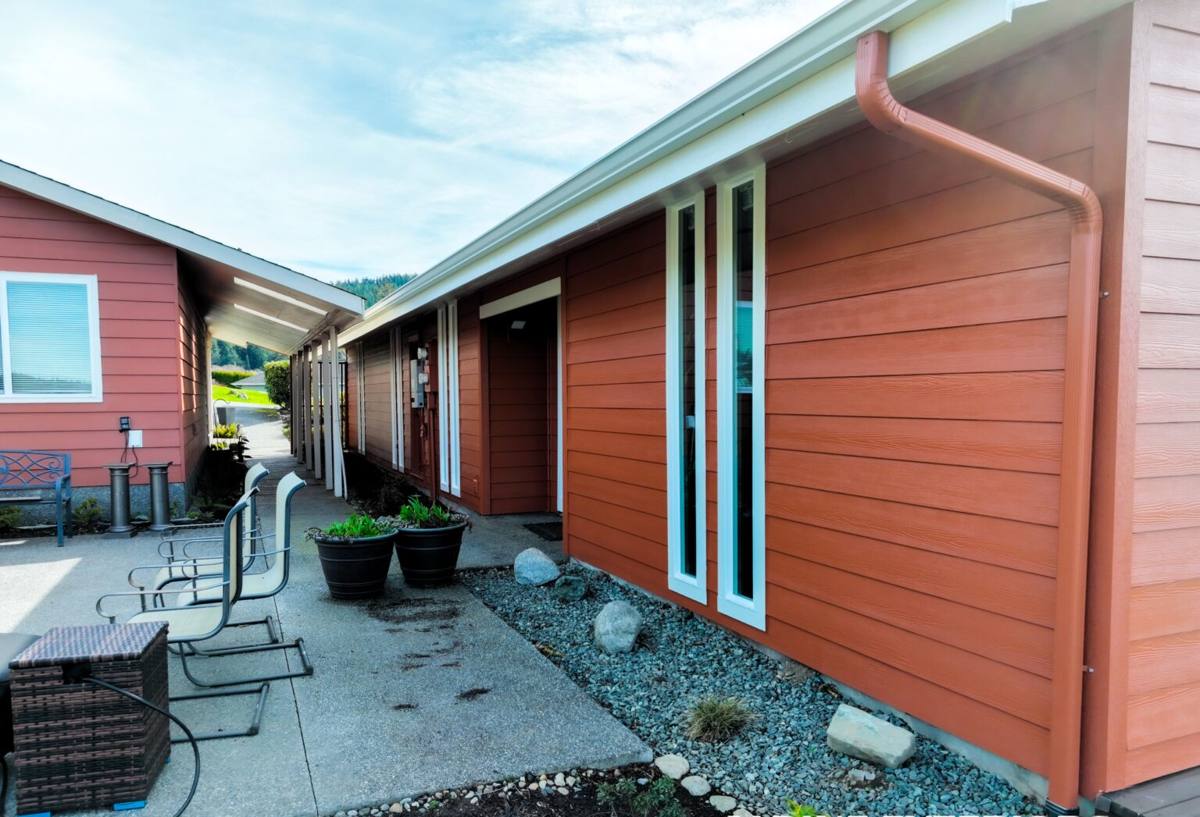
Signs a Sandy Point Home Needs Siding Repair, Not Just Paint
Homeowners often assume peeling paint or a dark patch of moss is a cosmetic problem. Sometimes it is. But on a waterfront property, those same symptoms are also the earliest visible sign of something happening behind the siding. Worth a closer look if you notice:
- Soft or spongy spots when you press on a wall, especially near the bottom courses or below windows
- Boards that have started to cup, bow, or pull away from the wall
- Paint or factory finish failing in one concentrated area rather than evenly across the wall
- Rust streaks running down from nail heads, screws, or metal trim
- Persistent moss or algae that comes back within a season of cleaning
- Visible gaps or cracks at corner boards, butt joints, or around window and door trim
- Staining or discoloration concentrated at horizontal seams
- Any give or movement in the siding when you push on it near grade level
Any one of these on its own can be minor. Several together, especially on the wall facing the water, usually means it's time for an inspection rather than another coat of paint.
What a Correct Siding Repair Actually Involves
A repair that just replaces the visibly damaged board and moves on is a patch, not a repair. On a property exposed to the amount of moisture and salt Sandy Point sees, that approach tends to fail again within a couple of seasons because it never addressed why that board failed in the first place.
Diagnosing the Cause Before Touching the Siding
Before anything gets pulled off the wall, we want to know whether the damage is surface-level or whether moisture has already reached the sheathing or weather-resistive barrier underneath. That means checking the framing and sheathing behind any section that's soft, stained, or showing signs of prolonged water contact — not just swapping the board and hoping the cause is gone.
Matching Material and Finish
Repairs need to blend, not just function. On factory-finished fiber cement, that means matching the exact profile, exposure, and color line so the patched section doesn't stand out as a different shade a year later once everything's weathered slightly. On older or discontinued colors, an honest conversation about whether a perfect match is realistic is part of the job.
Flashing, Fastening, and Sealant Details That Matter Here
This is where waterfront repairs differ most from an inland job. Flashing at butt joints and penetrations needs to actually shed water outward, not just cover the gap. Fasteners should be corrosion-resistant and set correctly — overdriven or underdriven fasteners are a common failure point we find during Sandy Point repairs. Any sealant used has to be rated for continuous exposure to moisture and salt air, not a general-purpose caulk that will fail again within a year or two of coastal weather.
Repair or Replace? How We Help Sandy Point Homeowners Decide
Not every problem area needs a full re-side, and not every repair is worth doing if the rest of the siding is close behind it. We look at the extent of the damage, the age and condition of the remaining siding, and whether the underlying moisture problem is isolated or spread across the wall.
| Factor | Repair Usually Makes Sense | Replacement Usually Makes Sense |
|---|---|---|
| Extent of damage | Isolated to one wall, corner, or a handful of boards | Recurring across multiple walls or the whole water-facing elevation |
| Age of existing siding | Siding is well within its expected service life | Siding is old, discontinued, or already showing widespread wear |
| Moisture behind the cladding | Sheathing and framing test dry once the damaged section is opened | Moisture has already spread to sheathing, framing, or insulation |
| Color and material match | Current product line and color are still available | Original siding is a discontinued product or a material we don't install |
| Cost over time | Repair cost is well below the cost of re-siding the affected elevation | Repeated repairs are approaching the cost of replacing the wall outright |
We'll walk you through where your situation falls before recommending either option — a repair we don't believe will hold up isn't a repair worth selling you, and a full re-side we don't believe is necessary isn't one we'll push.
Why We Only Repair Into James Hardie Fiber Cement
We install James Hardie exclusively, and that shapes how we handle repairs too. If your home already has Hardie siding, matching an existing repair is straightforward: the HZ5 product line was engineered for exactly this kind of high-moisture, wind-driven climate, the ColorPlus factory finish is consistent from batch to batch, and the material itself doesn't rot, absorb water, or feed moss the way wood-based products can.
Repairing Into Existing Hardie Siding
Because Hardie's profiles and ColorPlus colors are a standardized, ongoing product line, a well-matched repair on a Hardie home can be close to invisible once it weathers in. That's a real advantage over discontinued or regionally limited products, where finding an exact match years later is often impossible.
What Happens When the Existing Siding Isn't Hardie
We regularly get called to repair homes sided in vinyl, LP SmartSide, cedar, or primed spruce. We'll always give you an honest assessment of the repair itself, but we don't install replacement sections in those materials — it's a standard we hold company-wide, not a judgment on your home. For a small, isolated repair, that sometimes means a compatible short-term fix with a clear recommendation on when re-siding with fiber cement makes more sense. For anything larger, we'll usually recommend re-siding the affected elevation or section in Hardie rather than continuing to patch a product that struggles more with this particular climate than fiber cement does.
Our Process for a Sandy Point Repair Call
- On-site inspection of the affected area, including a check of the wall behind the visible damage where soft spots or staining suggest moisture has moved past the surface
- A written scope explaining what we found, what caused it, and what the repair will involve — no surprise add-ons once work starts
- Sourcing a matching Hardie profile and ColorPlus color, or discussing options if an exact match isn't available
- Removing only the affected material, correcting any flashing, fastening, or moisture-barrier issue found underneath
- Installing and fastening the repair to manufacturer spec, with corrosion-resistant fasteners and sealant rated for coastal exposure
- Cleanup and a final walk-through so you can see exactly what was done and why
Why Local Experience in Sandy Point Specifically Matters
A repair crew that only occasionally works waterfront properties will often treat a Sandy Point call the same as any inland Ferndale job — same fasteners, same sealant, same assumptions about how much rain exposure a wall actually gets. Crews who work this specific area regularly know which elevations take the brunt of wind-driven rain, how much faster moss returns this close to the water, and where salt-air corrosion tends to show up first. That experience shows up in small decisions — which side of the house to inspect most carefully, what sealant actually holds up here, how much clearance to leave at grade on a lot with limited drainage — that add up to a repair that lasts rather than one that needs revisiting in a year. If your property is part of a homeowners' or community association with its own exterior standards, it's also worth confirming color and material requirements before finalizing a repair plan.
Maintenance That Keeps Sandy Point Siding Ahead of the Weather
Good repairs last longer with basic upkeep between them, especially in this environment:
- Rinse salt residue and grime off exterior walls a couple of times a year, particularly the side facing the water
- Keep gutters and downspouts clear so roof runoff isn't dumping extra water down the siding face
- Treat moss and algae early rather than letting it establish for a full season
- Walk the exterior after major windstorms and check for loose trim, open joints, or fresh staining
- Have caulking and sealant at trim and penetrations inspected every year or two — it's usually the first thing to fail in salt air, and it's cheap to redo before it lets water in
If you're seeing any of the warning signs above, or you just want an honest opinion on whether a section of your Sandy Point home needs a repair or something more, we're happy to take a look. Estimates are free, there's no pressure to sign anything on the spot, and you'll get a straight answer about what your siding actually needs.