 Ferndale
 Windows Built for Semiahmoo's Coastal Exposure
Semiahmoo sits close enough to saltwater that it plays by different rules than a typical Whatcom County build. Homes here take on salt-laden air, wind-driven rain off the water, and long stretches of gray, damp weather that keep siding and window trim wet for days at a time. That combination is hard on window installations that weren't built for it. Seals fail early, frames corrode or swell, and moss and algae take hold in shaded corners that never fully dry out. When we install windows in Semiahmoo, we're not just swapping glass — we're accounting for how this specific stretch of coastline behaves across a full year.
Ferndale Siding works window and siding jobs throughout Ferndale and the surrounding Whatcom County coastline, and Semiahmoo's microclimate is one we see regularly. That familiarity changes how we flash, seal, and detail a window opening, and it's the difference between an installation that looks fine on day one and one that's still performing in year ten.
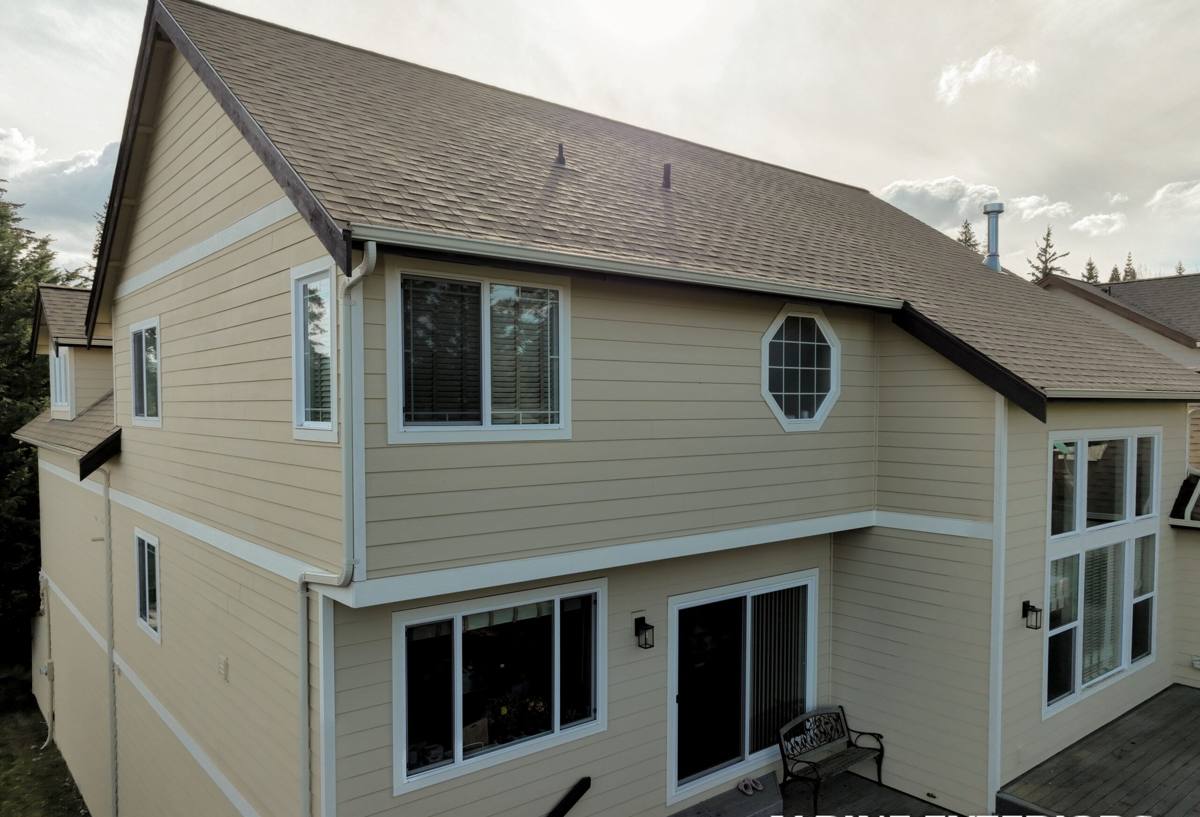
What Salt Air and Driving Rain Do to a Window Opening
Three environmental factors define window performance in this area, and each one attacks a different part of the installation.
Salt Air and Corrosion
Airborne salt accelerates corrosion on fasteners, hardware, and unprotected metal flashing. Cheap or mismatched hardware can start showing pitting and staining well before it should. We use corrosion-resistant fasteners and flashing components on coastal-exposed jobs rather than whatever's standard inland — it costs a little more up front and saves a callback five years out.
Wind-Driven Rain
Rain that comes in sideways off the water doesn't behave like a normal downpour. It gets pushed up and under trim, into laps that would shed water fine in a calm rain, and into any gap in the weather-resistive barrier around the window. A window that's caulked well but not properly flashed will still leak in these conditions — caulk is a backup, not the primary water management layer, and it's the first thing that treating it as the primary layer gets wrong.
Extended Moss and Damp Season
Whatcom County's moss season runs long, and shaded or north-facing window walls near Semiahmoo can stay damp for extended stretches. That moisture doesn't just grow moss on the siding — it sits against window trim and sills, and if the assembly underneath isn't sealed and drained correctly, that dampness works its way into the wall.
What a Correct Installation Actually Involves
A window installation is only as good as what's underneath the trim. The visible parts — the sash, the frame, the caulk line — matter, but the water management details behind them are what determine whether the job holds up through a coastal winter.
- Removing the old window and inspecting the rough opening for rot, soft framing, or prior water intrusion before anything new goes in
- Correcting any framing or sheathing damage found, rather than installing over it
- Installing a sill pan to direct any water that gets past the window back outside instead of into the wall cavity
- Properly lapping flashing tape and the weather-resistive barrier in the correct shingle-style order — top layer over the one below it, always
- Setting the window plumb, level, and square, with proper shimming so the frame isn't stressed and the sash operates smoothly
- Sealing and insulating the gap between the frame and rough opening without over-packing it, which can bow the frame
- Finishing exterior trim and caulk joints designed to shed water, not trap it against the wall
Skip any one of these steps and the window can still look correct for a while. The failures that show up later — stained drywall, soft trim, mold behind the wall — almost always trace back to a shortcut taken here, not to the window unit itself.
Choosing Materials for a Coastal Whatcom County Home
Not every window product handles salt air and constant moisture equally well, and the right choice depends on your home's exposure, budget, and how much upkeep you want to take on.
| Frame Material | Coastal Performance | Maintenance | Typical Trade-Off |
|---|---|---|---|
| Vinyl | Good — won't corrode or rot; UV-stable options hold up well | Low | Frame profiles are thicker than wood or fiberglass |
| Fiberglass | Very good — dimensionally stable, resists moisture and salt exposure | Low | Higher upfront cost than vinyl |
| Wood (clad exterior) | Fair — the interior wood look is nice, but any gap in the exterior cladding exposes wood to moisture | Moderate to high | Requires more careful detailing and inspection near saltwater |
| Aluminum | Poor to fair unless marine-grade and properly finished — prone to pitting in salt air | Moderate | We steer clients away from standard aluminum on direct coastal exposure |
We don't push one brand or one material on every job. What we do insist on is matching the product to the exposure — a window that's fine two miles inland isn't automatically the right call for a home facing open water. When we walk a Semiahmoo property, we'll tell you honestly which options make sense for that specific wall and orientation, and which ones we'd steer you away from and why.
Our Process for a Semiahmoo Window Installation
1. On-Site Assessment
We look at each window opening individually — sun and wind exposure, current condition of the framing and siding around it, and any signs of past water intrusion or moss buildup. Coastal homes rarely have uniform exposure on every elevation, so the water-side windows often need different detailing than the sheltered side.
2. Product Selection
Based on that assessment, we walk through frame material, glass package, and hardware options suited to the exposure and your budget, with straight talk about maintenance expectations for each.
3. Removal and Opening Prep
Old windows come out carefully to avoid damaging surrounding siding or trim we're not replacing. Any rot or moisture damage found in the opening gets repaired before the new window goes in — not covered up.
4. Flashing, Sealing, and Installation
This is where coastal jobs differ most from inland ones. We build the water management detail — sill pan, flashing laps, barrier integration — to handle sustained wind-driven rain, not just an average storm.
5. Trim, Cleanup, and Walkthrough
Exterior trim gets finished and sealed, the site is cleaned up, and we walk the job with you so you know exactly what was done and what to keep an eye on.
Why Hiring a Crew That Works This Area Matters
Semiahmoo's exposure isn't something you can fully account for from a general installation checklist. A crew that mainly works drier, inland areas may not think twice about a detail that's genuinely optional there but is the difference between a dry wall and a wet one on a home facing open water. We've done window and siding work throughout Ferndale and the surrounding coastline enough to know which elevations need extra attention here, which materials hold up and which don't, and how the moss and moisture season actually plays out on homes in this area — not in general, but on this stretch of Whatcom County coast specifically.
That local knowledge also shows up in smaller ways: knowing which detailing choices matter more on a north-facing wall that never gets sun, recognizing early moss growth as a signal to check the assembly underneath rather than just pressure-washing it away, and understanding how salt air ages hardware over time so we spec accordingly from the start.
Signs Your Current Windows May Be Struggling With Coastal Exposure
- Visible corrosion, pitting, or staining on window hardware or metal trim
- Persistent moss or algae growth on trim or siding around a window, even after cleaning
- Soft or discolored trim, especially on north-facing or wind-exposed walls
- Fogging between glass panes, indicating a failed seal
- Drafts or water intrusion during wind-driven storms
- Windows that are difficult to open, close, or lock — a sign the frame may have shifted or swelled
Any one of these is worth a look before it turns into a larger repair. Catching a failing seal or an early corrosion issue is a straightforward fix; letting it sit through another wet season usually isn't.
Getting an Honest Estimate
Every home in Semiahmoo sits a little differently relative to the water, the wind, and the tree line, and that affects what your windows actually need. We'd rather walk your property and give you a straight answer on materials and scope than quote a generic package that doesn't account for your specific exposure. If you're planning a window replacement or want a second opinion on an installation that isn't holding up, reach out for a free, no-pressure estimate using the form below.