 Ferndale
 Semiahmoo's Climate Is Harder on Siding Than Most Homeowners Realize
Semiahmoo sits close enough to the water that homes there deal with a different set of stresses than siding a few miles inland in Ferndale proper. Salt-laden air moves off the water and settles on exterior surfaces year-round, driving rain comes in sideways during winter storms, and the long, damp Whatcom County shoulder seasons keep north-facing walls and shaded corners wet for weeks at a stretch. That combination — salt, moisture, and shade — is exactly the environment where cheaper siding materials start showing problems early: swelling seams, chalking paint, fastener corrosion, and moss creeping up from the bottom courses.
None of that means siding here is a lost cause. It means the material and the installation both have to be chosen for this specific environment, not for a generic Pacific Northwest job. That's the whole reason we're a James Hardie–only crew, and it's why we're writing this page specifically for Semiahmoo rather than just pointing people to a general siding page.
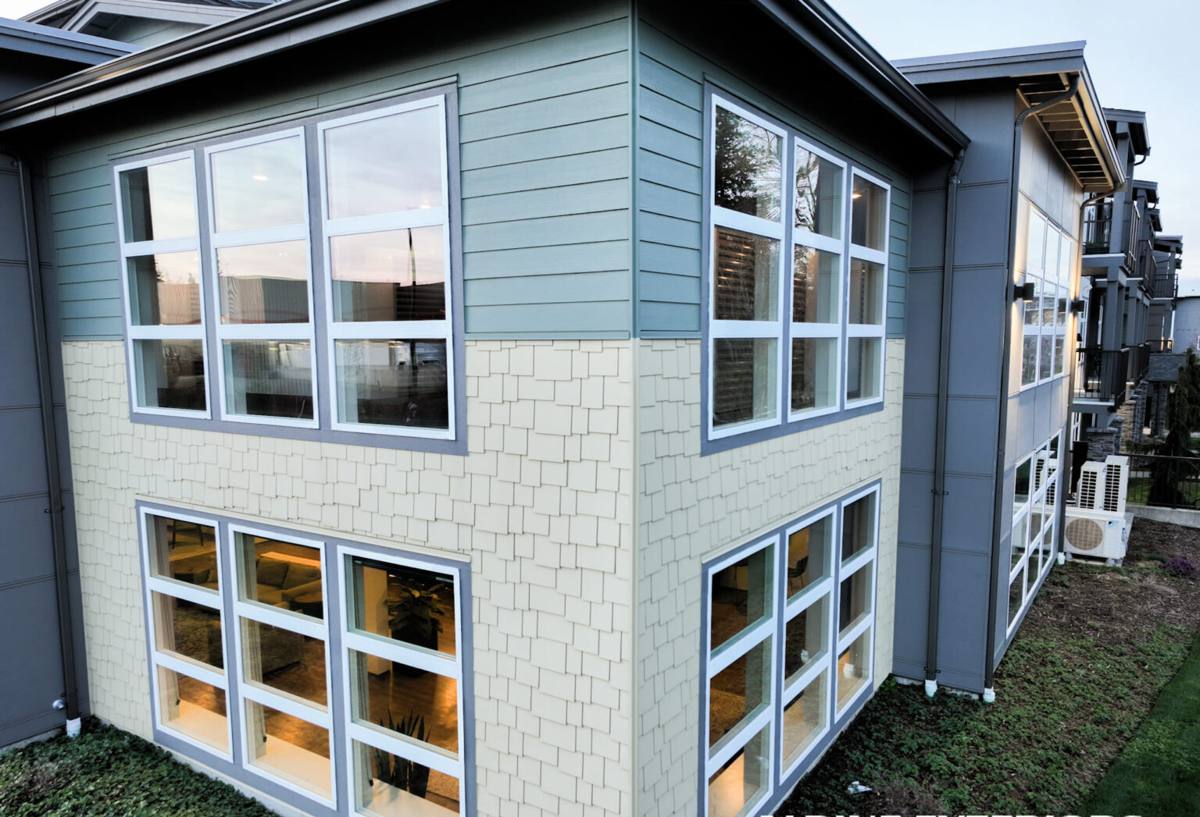
Why We Install Only James Hardie in This Area
James Hardie fiber cement is cement, sand, and cellulose fiber — it doesn't absorb water the way wood-based products do, and it doesn't have the thermal expansion and contraction issues that cause vinyl to warp, gap, or crack in temperature swings. In a salt-air coastal pocket like Semiahmoo, that matters more than it would in a drier, inland climate.
The HZ5 Product Line
Hardie engineers its siding by climate zone. Homes in our region qualify for the HZ5 line, which is built specifically for areas with sustained moisture exposure — freeze-thaw cycling, prolonged damp periods, and higher humidity. HZ5 boards are formulated to resist moisture-related damage better than a generic, one-size-fits-all fiber cement product would. For a Semiahmoo home taking direct weather off the water, that climate-specific engineering isn't a marketing detail — it's the reason the product holds up.
ColorPlus Factory Finish
Most of the color failure we see on old siding — chalking, fading, peeling at the seams — traces back to field-applied paint that was never meant to handle constant salt and UV exposure. Hardie's ColorPlus finish is baked on at the factory under controlled conditions, with a finish formulated to resist fading and hold color longer than a job-site paint job. It also comes with its own finish warranty separate from the substrate warranty. Near the water, where UV and salt both accelerate finish breakdown, that factory-cured coating is doing real work.
What a Correct Installation Actually Involves Here
Fiber cement is only as good as the installation behind it. A rushed or generic install on a Semiahmoo home will fail in the same ways a cheaper product would, just more slowly. Here's what we treat as non-negotiable on every job in this area.
Drainage and Moisture Management
- A rainscreen gap (drainage plane) behind the siding so any moisture that gets past the surface can drain and dry instead of sitting against the wall sheathing
- Proper weather-resistive barrier lapped correctly, shingle-style, so water sheds outward at every seam
- Flashing at every window, door, and roofline intersection — the majority of siding failures we're called to inspect start at a missed or undersized flashing detail, not at the siding field itself
- Correct clearance at the bottom of the wall so the siding isn't wicking moisture off grade, decking, or roof surfaces below it
Fastening and Coursing
Hardie specifies fastener type, placement, and spacing for a reason — get it wrong and you get nail pops, cracked boards, or premature edge damage exactly where a coastal home can least afford it. We use corrosion-resistant fasteners appropriate for a salt-air environment and follow Hardie's fastening schedule to the letter, not a generic "close enough" spacing. Cut edges get sealed or primed before installation, since a raw, unsealed cut edge is the fastest way for moisture to get into the board itself.
Comparing Options for a Salt-Air, High-Moss Environment
We only install James Hardie, but homeowners deserve an honest picture of why, not just a sales pitch. Here's how the common exterior options actually perform in a Semiahmoo-type environment.
| Material | Salt Air Behavior | Moss/Algae Resistance | Maintenance Burden |
|---|---|---|---|
| James Hardie fiber cement (HZ5, ColorPlus) | Non-combustible, dimensionally stable, factory finish resists chalking | Doesn't feed moss growth the way organic materials can; still needs the usual periodic cleaning | Low — repaint intervals are long, no rot risk |
| Cedar / primed wood | Absorbs moisture, prone to swelling and finish failure near salt spray | Organic material, more prone to moss and algae colonization if not maintained | High — recoating, caulking, and rot inspection on a regular cycle |
| Vinyl | Can warp or become brittle with temperature swings and UV over time | Doesn't feed moss, but seams and J-channels trap moisture and debris | Low upfront, but limited repair options if damaged |
| LP SmartSide (engineered wood) | Wood-strand core is more moisture-sensitive than fiber cement at cut edges and seams | Engineered core can be vulnerable if edge sealing isn't maintained | Moderate — edge and seam inspection matters more than with fiber cement |
This is why we standardized on Hardie rather than carrying multiple product lines: in a climate like this one, the material differences aren't cosmetic, they show up as callbacks five and ten years down the road.
Moss, Algae, and Salt Staining: What Actually Prevents Them
Moss doesn't grow on siding because of the siding material alone — it grows where moisture lingers. That means prevention is mostly about the details around the siding, not the siding itself.
Design and Airflow Factors
- Adequate soffit and roof venting so moist air isn't dumping onto exterior walls
- Gutters sized and maintained so overflow isn't running down the siding face
- Trimmed vegetation and adequate clearance so shaded, damp wall sections get some airflow and sun
- Lighter or mid-tone ColorPlus finishes show less staining between cleanings than very dark tones in constantly damp, shaded areas
Ongoing Maintenance
Even the right material benefits from a periodic gentle wash — a soft brush or low-pressure rinse to knock off salt residue and organic buildup before it takes hold. We're happy to walk homeowners through a maintenance schedule appropriate to how exposed a given wall is; a shaded, water-facing wall in Semiahmoo needs more attention than a sun-facing wall on the same house.
Our Process on a Semiahmoo Job
- On-site assessment — we look at wall exposure, existing moisture damage, flashing condition, and how much salt/wind exposure each elevation actually gets, since it's rarely uniform on one house
- Product and color selection — HZ5 boards in the profile and ColorPlus finish that fits the home, with extra attention to how a given color performs in shaded, damp zones
- Tear-off and sheathing check — we don't cover up rot or compromised sheathing; if we find it, we address it before the new siding goes on
- Drainage plane and flashing install — the part of the job that determines whether the siding lasts 10 years or 40, done before a single board goes up
- Siding installation — correct fastening schedule, sealed cut edges, proper clearances
- Final walkthrough — we go over caulking, trim, and touch-up needs with the homeowner directly
Why It Matters That We Already Work This Area
A crew that's installed siding around Semiahmoo and the rest of the Ferndale service area already knows which walls tend to take the worst weather, how local moisture patterns behave through a Whatcom County winter, and what flashing and drainage details actually hold up here versus what looks fine on paper. That local pattern recognition is worth more than a generic install checklist — it's the difference between a crew that's guessing and one that's already seen how this exact climate treats a wall over years, not just during the install.
Cost Factors Homeowners Should Understand
| Factor | Why It Affects Cost |
|---|---|
| Extent of tear-off / existing damage | Rotted sheathing or hidden moisture damage found during tear-off adds repair scope before new siding goes on |
| Home size and wall complexity | More corners, dormers, and trim detail mean more flashing and labor time |
| Siding profile and finish choice | Lap width, texture, and ColorPlus color all affect material pricing |
| Exposure level | Waterfront and highly exposed walls may warrant extra flashing or drainage detailing, which adds labor |
| Access and site conditions | Tight lots, slopes, or limited staging area can add time to any exterior project |
We give straightforward, honest numbers up front rather than a lowball estimate that grows once work starts — especially important on older homes where hidden moisture damage isn't visible until the old siding comes off.
What to Check Before You Hire Anyone for This Job
- Are they installing to Hardie's actual fastening and clearance specifications, or just "close enough"?
- Do they address drainage plane and flashing as part of the bid, or treat siding as a cosmetic wrap?
- Can they explain how they'll handle any rot or sheathing damage found during tear-off?
- Do they have experience with homes in similar coastal/salt-air conditions, not just inland installs?
- Is the warranty structure — both manufacturer and workmanship — clearly explained before you sign anything?
If you're weighing siding options for a home in or around Semiahmoo, we're glad to come take a look and give you a straightforward, no-pressure estimate — no guesswork, no upsell, just an honest read on what your walls actually need.