 Ferndale
 Why Sandy Point Is a Different Window Job Than Inland Ferndale
Sandy Point sits right on the water, and that changes what a window has to survive day to day. Homes a few miles inland in Ferndale deal with Whatcom County's wet winters and windy shoulder seasons, but they're not fighting constant salt-laden air off the strait. Out at Sandy Point, that salt air gets into everything — hardware, seals, exterior trim, even the finish on some vinyl and metal components. Add driving rain that comes in sideways during winter storms, and a long moss and algae season that keeps north-facing surfaces damp for months at a time, and you've got a climate that's genuinely tougher on windows than most of the county.
Old aluminum-frame windows and worn wood windows from decades past weren't built with today's weatherproofing standards, and on a waterfront lot that shows up early — as pitting on hardware, chalky or corroded frames, and fogged glass from failed seals. If you're looking at window replacement in Sandy Point, the climate isn't a side note. It should drive nearly every material and installation decision you make.
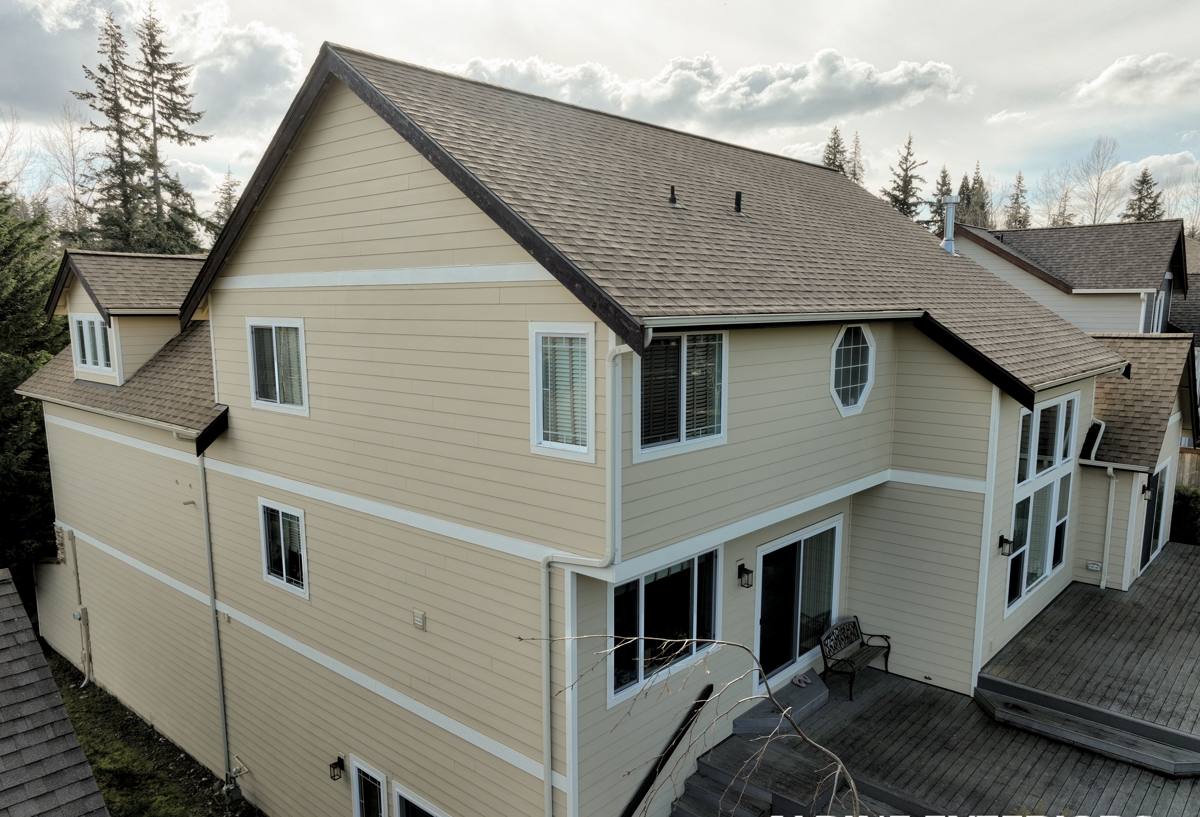
What "Energy-Efficient" Should Mean for a Coastal Whatcom County Home
Energy efficiency gets marketed as a single number, but for a house like yours it's really three separate jobs the window has to do well at once:
Keep Conditioned Air In
Low-E coated, properly gas-filled insulated glass units reduce heat loss through the glass itself. That matters here because Whatcom County winters are long and mild but persistently damp and windy — the house is losing heat through convection and infiltration as much as through the glass.
Keep Wind-Driven Water Out
This is the part that's easy to overlook and the part that fails first near the water. A window can carry a great energy rating on paper and still let water past the frame if the flashing, sill pan, and sealant details aren't done right. On a site exposed to driving rain off open water, water management at the rough opening matters as much as the glass package.
Resist Salt, Moisture, and UV Over Time
A window that performs well the first winter but corrodes, pits, or loses its seal by year five isn't actually efficient — it's a problem deferred. Material choice and hardware finish need to be picked with this specific exposure in mind, not a generic spec sheet.
Frame Materials: What Actually Holds Up Near Salt Water
We get asked a lot whether vinyl, fiberglass, or wood-clad is the "right" choice for a place like Sandy Point. The honest answer is that it depends on your budget and how much upkeep you want to sign up for, but here's how they generally compare in this environment:
| Frame Type | Salt Air Performance | Maintenance | Notes for This Area |
|---|---|---|---|
| Vinyl | Good — won't corrode | Low | Look for UV-stabilized vinyl and marine-grade hardware; cheaper vinyl can chalk faster under coastal sun and salt exposure |
| Fiberglass | Very good — dimensionally stable, resists pitting | Low | Handles temperature swings and moisture well; higher upfront cost, less long-term fuss |
| Aluminum | Poor unless marine-rated and well-finished | Moderate to high | Standard residential aluminum corrodes visibly near salt air over time; we don't recommend it for waterfront exposure |
| Wood-Clad | Fair — depends entirely on the cladding and sealing | Higher | Beautiful interior look, but any gap in the exterior cladding invites moisture into the wood core |
Hardware finish matters just as much as the frame. Standard hinges, locks, and cranks can start showing corrosion within a couple seasons on a waterfront property. We spec corrosion-resistant hardware on Sandy Point jobs as a matter of course, not as an upsell — it's what actually lasts out here.
Glass Packages: Matching the Unit to a Wet, Windy Site
Most homeowners assume all double-pane windows are basically the same. They're not, and the differences matter more on an exposed site.
- Low-E coatings — reduce heat transfer and cut glare off the water; worth having on every unit, not just south-facing ones
- Argon or krypton gas fill — improves insulation value; argon is the standard cost-effective choice for most homes here
- Warm-edge spacers — the material separating the two panes of glass affects how well the seal holds up over years of temperature swings and moisture cycling; this is a detail worth asking your contractor about directly
- Impact or laminated glass — not required by code here, but some Sandy Point homeowners choose it for added storm and wind resistance given the direct water exposure
Seal failure — the fogging you see between panes — is one of the most common issues we find on older coastal windows. It happens when the edge seal breaks down from constant moisture cycling. A better warm-edge spacer and a quality installation both slow that clock down considerably.
Installation Details That Matter More Than the Window Itself
We say this on every window job, but it's especially true at Sandy Point: the best window on the market will leak, drip, and lose efficiency if it's installed wrong. The window itself is maybe half the equation.
Sill Pan Flashing
A properly sloped, sealed sill pan gives any water that does get past the window a way out instead of a way into your wall framing. This is non-negotiable on a site that takes direct, wind-driven rain.
Continuous Flashing Integration
The window's flashing needs to tie into your home's existing weather-resistive barrier correctly — lapped in the right order, sealed at every penetration. Get this wrong and you can have a water problem that doesn't show up for a year or two, by which time it's inside the wall.
Proper Shimming and Air Sealing
A window that's not shimmed square will stress the frame and seals over time, and gaps around the rough opening that aren't properly air-sealed undercut the efficiency rating you paid for. Spray foam or backer rod and sealant, applied correctly, closes that gap without trapping moisture.
Exterior Trim and Caulking
All the sealant joints on the exterior need to be rated for continuous UV and moisture exposure — not general-purpose caulk that will crack and open a path for water within a couple of seasons.
How We Approach a Sandy Point Window Job
- On-site assessment. We look at your current windows, the condition of the framing around them, and how exposed each elevation of the house is to wind and rain off the water.
- Frame and glass recommendation. Based on your budget and exposure, we recommend a frame material and glass package suited to that specific side of the house — a sheltered elevation doesn't always need the same spec as one facing open water.
- Removal and inspection. When we pull the old windows, we check the rough opening and sheathing for hidden moisture damage before anything new goes in. This is often where coastal homes reveal problems that have been building for years.
- Correct flashing and sealing. Sill pans, flashing integration, and sealant are done to hold up against direct wind-driven rain, not just standard code minimums.
- Final check and cleanup. We test operation, confirm weatherproofing, and walk you through basic care specific to a salt-air environment.
What Drives the Cost of This Job
Every home and every opening is different, so we won't quote a number without seeing your windows, but these are the factors that move the price up or down:
| Factor | Why It Matters |
|---|---|
| Frame material chosen | Vinyl is typically the most affordable; fiberglass and wood-clad cost more upfront but may offer longer service life in this climate |
| Number and size of openings | Larger units and more openings mean more material and labor |
| Condition of existing framing | Hidden rot or water damage found during removal adds repair work before the new window can go in |
| Exposure of the elevation | Sides of the house facing open water may call for upgraded sealant details or impact-rated glass |
| Access and site conditions | Second-story or hard-to-reach windows take more time and equipment |
Signs Your Current Windows Are Working Against You
- Fogging or haze between the panes of glass — the seal has failed
- Visible corrosion or pitting on frames, tracks, or hardware
- Drafts you can feel near the frame on a windy day
- Difficulty opening, closing, or locking a window that used to operate smoothly
- Soft or discolored trim or sill material around the window
- Moss or persistent green staining building up on north-facing frames and sills
- Noticeably higher heating bills compared to similar homes nearby
Any one of these on its own isn't necessarily an emergency, but a few of them together usually means the window — or its installation — has reached the end of its useful life on this site.
Why It Matters to Hire a Crew That Already Works Sandy Point
Window replacement isn't a one-size-fits-all job, and a coastal Whatcom County property has real requirements that inland installers don't think about daily — flashing details for driving rain, hardware and frame choices that resist salt exposure, and sealing work that has to hold up through a long, damp moss season year after year. We work throughout the Ferndale area, including waterfront communities like Sandy Point, and we build every window job around the exposure of the specific house, not a generic checklist. That's the difference between windows that perform well for one winter and windows that still seal, operate, and look right a decade from now.
If your windows are drafty, fogged, or just old, we're glad to come take a look. We offer free, no-pressure estimates — walk us through what you're seeing and we'll give you a straight assessment of what your home actually needs, using the form below.