 Ferndale
 Why Custer Roofs Wear on a Different Schedule
Custer sits close enough to the water and open farmland that roofs here take a different kind of beating than roofs twenty miles inland. You've got salt-laden air blowing in off the Strait and Drayton Harbor area, driving rain that comes in sideways during winter storms, and a moss season that runs long because the shade and moisture never fully let up between fall and spring. None of these things ruin a roof overnight. They work slowly, and that's exactly what makes them dangerous — a roof can look fine from the driveway for years while the underlayment, fasteners, and flashing underneath are quietly failing.
Salt air is corrosive to exposed metal — nails, flashing, vent boots, and even some low-grade fastener coatings break down faster here than they would in a dry inland climate. Driving rain finds every weak seam, every under-lapped shingle, and every place where flashing was cut short to save time. And moss doesn't just look bad — it holds moisture against the roofing material, lifts shingle edges as it grows, and slowly works its roots into the granule surface, shortening the life of an otherwise sound roof by years.
None of this means Custer is a bad place to own a home. It means a roof here has to be built and installed with those three factors in mind from the start, not treated the same as a roof going on a house in a dry, sheltered subdivision.
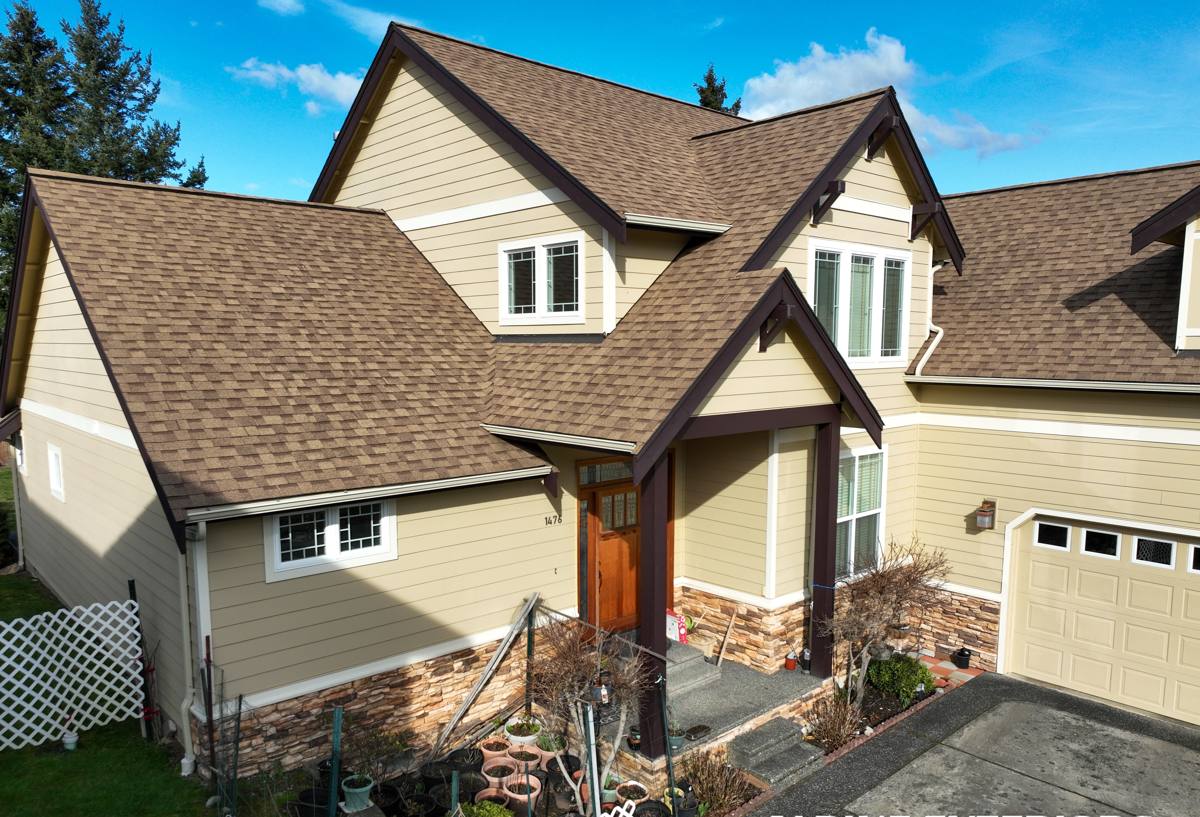
Signs a Custer Roof Needs Replacement, Not Another Patch
We get plenty of calls for repairs, and plenty of them are the right call — a cracked boot, a lifted ridge cap, a section of flashing that pulled loose in a windstorm. But there's a point where patching stops making financial sense and a full replacement becomes the honest answer. Here's what tells us a roof has crossed that line:
- Granule loss heavy enough that you can see bare, shiny patches on multiple shingle courses, not just one or two spots
- Moss coverage that's spread across large sections of the roof rather than isolated to a shaded corner
- Soft or spongy decking felt underfoot in the attic, which means water has already reached the wood
- Multiple past repairs in different areas — a sign the roofing system as a whole is aging out, not just one section
- Shingles that are curling, cupping, or cracking across the field of the roof, not just at one exposed edge
- Daylight visible through the roof deck from inside the attic
- A roof already past 20-25 years old (for standard asphalt composition) that's now showing any of the above
If a roof shows one or two of these in a small area, a repair is usually the right, cost-effective move. If it shows several at once, or the damage is spread across the roof rather than contained, replacement is almost always the cheaper option in the long run — because at that point you're not fixing a roof, you're delaying the same job while water damage spreads underneath it.
What a Correct Roof Replacement Actually Involves
A roof replacement is more than stripping old shingles and nailing down new ones. In a climate like Whatcom County's, the parts you don't see matter as much as the parts you do. A correct job includes:
Full tear-off and deck inspection
We remove the old roofing down to bare decking so we can actually see the plywood or OSB underneath. Any soft, delaminated, or water-stained decking gets replaced before anything new goes down — layering new shingles over a compromised deck just hides the problem for another year or two.
Underlayment built for wind-driven rain
Given how often rain comes in sideways here, underlayment choice and installation matter more than in drier climates. Synthetic underlayment with properly lapped seams, plus self-adhering ice-and-water membrane at eaves, valleys, and other vulnerable transitions, gives the roof a second line of defense if wind ever drives water up under a shingle edge.
Flashing that's actually sealed, not just covered
Chimneys, skylights, vent pipes, and roof-to-wall transitions are where the vast majority of leaks start — not in the open field of shingles. Corrosion-resistant flashing, properly stepped and sealed, is non-negotiable in a salt-air environment where cheaper or improperly installed flashing corrodes and fails years before the shingles around it do.
Balanced attic ventilation
Intake at the eaves, exhaust at the ridge, sized and balanced to the attic space. Good ventilation controls moisture buildup that leads to premature decking rot and helps limit the damp, shaded conditions moss thrives in. It also protects the shingle warranty — most manufacturers require adequate ventilation to honor their coverage.
Fasteners and hardware rated for coastal exposure
Given the salt content in the air this close to the water, we don't cut corners on fastener quality. Corrosion-resistant nails and hardware cost a little more up front and save a homeowner from premature fastener failure down the road.
Material Options for Custer Homes
Most homes in this area do fine with a quality asphalt composition shingle, but the right choice depends on the home's exposure, roof pitch, and how long you plan to stay in it. Here's an honest comparison of what we install most often:
| Material | Typical Lifespan | How It Handles Moss & Moisture | Considerations for Custer |
|---|---|---|---|
| Architectural asphalt shingle | 25-30 years | Good with proper ventilation; algae-resistant granules help slow moss growth | Best value; wide color range; solid performance if installed with the right underlayment and flashing detail |
| Standing seam metal | 40-50+ years | Sheds moisture fast; moss struggles to gain a foothold on a smooth metal surface | Higher upfront cost; use marine-grade or coated fasteners given salt air exposure; excellent for steep or heavily shaded roofs |
| Impact-rated/laminate shingle | 30+ years | Similar to standard architectural shingle, with added durability | Good middle ground; heavier wind and rain resistance for exposed lots |
| Cedar shake | 20-30 years with upkeep | Requires regular treatment and cleaning to resist moss and moisture rot | We're honest that this is the highest-maintenance option in a climate with this much sustained moisture — it can look great, but only with a real upkeep commitment |
We're not going to push a premium product on a roof that doesn't need it, and we're not going to recommend cedar shake to someone who wants a low-maintenance roof and never wants to think about it again. We'll walk through what fits your home, your budget, and how long you plan to own it.
Cost Factors That Actually Move the Number
Every roof replacement quote should be able to explain itself. The biggest factors we account for on a Custer estimate are roof size and pitch, the number of layers being removed, deck condition once we open it up, the complexity of valleys/dormers/chimneys, and material choice. We'll give you a written, itemized estimate before any work starts — no vague lump sum, no surprise add-ons buried in fine print.
Our Process, Start to Finish
- On-site inspection. We walk the roof and the attic, not just look from the ground, and give you a straight assessment of repair vs. replace.
- Written estimate. Itemized, with material options and a clear scope of work — you know exactly what you're paying for.
- Scheduling around weather. Whatcom County winters mean we plan tear-off days around dry windows whenever possible, and we tarp and protect any exposed sections if weather turns mid-job.
- Tear-off and deck repair. Full removal, deck inspection, and replacement of any compromised sheathing.
- Underlayment, flashing, and ventilation installed to spec. This is where a roof's real lifespan gets decided.
- New roofing installed per manufacturer specification. Correct nailing pattern, exposure, and sealing — the details that keep a warranty valid.
- Final walkthrough and cleanup. Magnetic sweep for debris, full site cleanup, and a walkthrough so you can see the finished work before we call it done.
Why It Matters to Hire a Crew That Already Works This Area
A roofing crew that works Whatcom County regularly already knows how much ice-and-water membrane to use at the eaves, how to size ventilation for a moss-prone, shaded lot, and which flashing and fastener grades hold up against salt air instead of corroding out in five years. That local knowledge shows up in details a homeowner won't notice until they don't have a problem with them — a roof that doesn't leak in the first big wind-driven storm, a roof that doesn't grow moss back within two seasons because ventilation and sun exposure were accounted for from the start.
A few things worth checking before hiring any roofing contractor in this area:
- Washington state contractor license and current liability insurance, verifiable and in writing
- A written estimate that itemizes materials, labor, and scope — not a single vague number
- A clear explanation of underlayment and flashing plans, not just shingle brand and color
- Manufacturer certification if you're considering a product with an enhanced warranty
- Local references or completed work in the Ferndale/Custer area they can point to
- A straight answer on ventilation and moss prevention specific to your roof's exposure
If a contractor can't speak clearly to how they'll handle salt air, wind-driven rain, and moss on your specific roof, that's worth noticing before you sign anything.
Ready When You Are
If your roof is showing wear, or you just want a straight opinion on whether it's a repair or a replacement, we're happy to take a look. The estimate is free, there's no pressure attached to it, and you'll get a clear, written answer either way. Use the form below to get started.