 Ferndale
 Windows in Point Roberts Face a Different Kind of Weather
Point Roberts sits out on its own peninsula, surrounded almost entirely by water, which means every window on the house is doing more work than a window fifteen miles inland. Salt-laden air off the bay reaches hardware and finishes that would never see it in a typical Whatcom County subdivision. Driving rain comes in sideways during winter storms and finds any gap in flashing or sealant. And the long, damp moss season here doesn't just grow on your roof — it creeps onto sills, tracks, and trim, holding moisture against wood and vinyl for months at a stretch. A window that's a fine choice in a sheltered inland yard can underperform fast in this environment if it wasn't chosen and installed with these conditions in mind.
We're a Ferndale-based crew, and Point Roberts is part of our regular service area, not a special trip. That matters more than it sounds like it should — we'll get into why further down. First, let's talk about what actually holds up out there, and what a correct custom window job looks like.
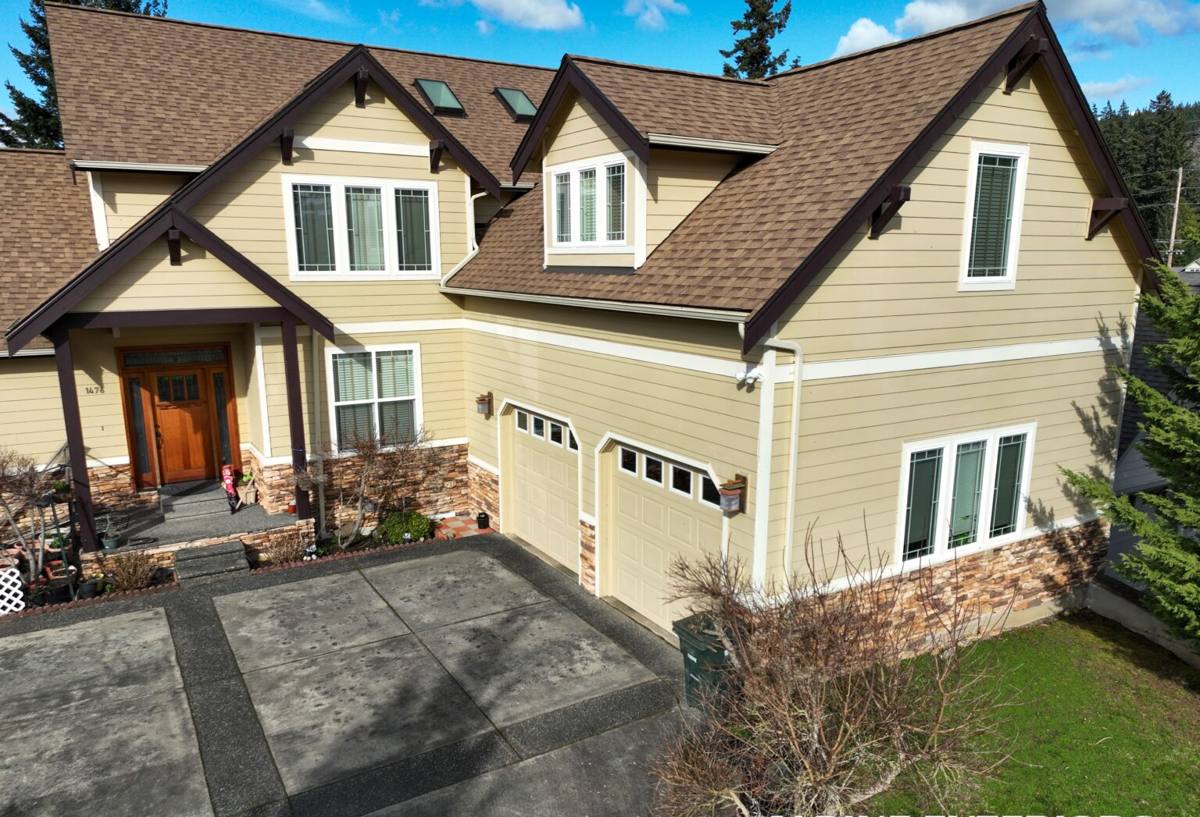
What Point Roberts Homes Need From Their Windows
Salt Air and Corrosion
Airborne salt accelerates corrosion on anything metal — hinges, cranks, locks, and screws. Cheap or mismatched hardware pits and seizes years before it should. On a coastal exclave like Point Roberts, we pay close attention to hardware finish and material, not just the frame material, because a beautiful window with corroded hinges after five winters isn't a good outcome for anyone.
Wind-Driven Rain
Rain that's being pushed sideways by wind off the water behaves differently than a normal downpour. It gets pressure-driven into gaps that would stay dry in calmer conditions. That means flashing details, sill pans, and sealant joints have to be done right the first time — there's very little margin for a "close enough" install when the wind is doing the work of pushing water uphill and sideways into a wall assembly.
Moss, Algae, and Sustained Moisture
The long wet season in this part of Washington keeps organic growth active on north-facing and shaded elevations for much of the year. Moss and algae on sills and trim hold moisture against the surface long after the rain has stopped, which is hard on wood trim, degrades sealants faster, and can hide early rot if nobody's looking closely. Window trim and sills in these conditions need finishes and details that shed water and dry out quickly, not surfaces that trap it.
Frame Material: What Actually Holds Up Out Here
There's no single "best" window material for every house — it depends on your home's style, budget, and how exposed a particular wall is to wind and salt spray. Here's how the common options generally perform in this kind of coastal, high-moisture climate.
| Frame Material | Coastal Performance | Maintenance | Relative Cost |
|---|---|---|---|
| Vinyl | Good — won't corrode or rot, handles moisture well | Low — occasional cleaning | Lower |
| Fiberglass | Excellent — very stable in temperature swings and moisture, strong against wind load | Low | Higher |
| Wood-clad | Good if detailing and finish are maintained; cladding protects the wood core from direct weather | Moderate — finish and joints need periodic attention | Higher |
| Aluminum | Fair — strong and slim, but bare aluminum is more prone to corrosion near salt air unless properly finished | Moderate | Mid-range |
For most Point Roberts homes on exposed elevations, we steer clients toward vinyl or fiberglass for the straightforward reason that they don't give corrosion or rot anything to work with. Wood-clad windows can still be the right call for a specific architectural look, but we're honest about the added upkeep that comes with maintaining the finish and joinery in a wet, salty climate — it's not that the product fails, it's that it demands more attention than the alternatives.
What a Correct Custom Window Installation Actually Involves
The window unit itself is maybe half the job. The other half — the part that determines whether it performs for twenty years or leaks in three — is the installation detailing around it. In a high-exposure area like this, we don't skip steps.
- Full removal of the old unit and inspection of the rough opening for hidden rot or water damage before anything new goes in
- Sill pan flashing installed to direct any water that gets past the window back outside, not into the wall
- Properly lapped flashing tape at the head, jambs, and sill, shingled so water always sheds downward and outward
- Correct shimming and squaring so the sash operates smoothly and weatherstripping seals evenly all the way around
- Low-expansion foam or backer rod and sealant at the frame gap — sized correctly so it insulates without bowing the frame
- Exterior sealant joints tooled and rated for the exposure, not just whatever caulk was on the truck
- Interior air-sealing so conditioned air isn't leaking out around the frame, which also helps prevent condensation
- Final operation check and a walk-through so you understand how to maintain the hardware and finish
Skip the flashing details or rush the sealant work, and a brand-new, expensive window can still leak into the wall cavity — sometimes for a year or more before anyone notices, because the damage happens behind the drywall, not on the visible sill.
Our Process
- On-site assessment. We look at each window opening individually — exposure, existing damage, and what the wall assembly looks like once the old unit is out.
- Honest product recommendation. We'll tell you what material and glass package makes sense for that specific wall, not just push the highest-margin option.
- Written estimate. Clear scope, materials, and timeline before any work starts — no surprise add-ons mid-project.
- Careful removal and opening inspection. If we find rot or water damage behind an old window, we address it before the new one goes in, not after.
- Installation to full flashing and sealing standards, regardless of whether it's one window or a whole-house replacement.
- Cleanup and walk-through so you know how the new hardware and finish should be cared for in this climate.
Cost Factors for Custom Window Projects
Every home and opening is different, so we don't quote sight-unseen — but these are the main things that move the number up or down.
| Factor | Why It Matters |
|---|---|
| Frame material | Vinyl is generally the most affordable; fiberglass and wood-clad cost more up front but bring different durability and maintenance trade-offs |
| Glass package | Double vs. triple pane, and coatings like low-E, affect both price and comfort/energy performance |
| Opening condition | Hidden rot or water damage found during removal adds repair work before the new window can go in correctly |
| Size and configuration | Custom shapes, larger spans, or operable specialty units (casement, awning, sliders) cost more than standard sizes |
| Number of openings | Whole-house projects typically bring a better per-window price than single replacements |
| Exterior trim work | Rebuilding or upgrading sills and trim alongside the window adds scope but protects the new unit long-term |
Signs Your Current Windows Are Losing the Fight
In a coastal exposure like Point Roberts, window failure is often gradual and easy to miss until it's significant. Watch for these:
- Hardware — hinges, cranks, or locks — that's stiff, corroded, or leaves rust streaks on the sill or wall
- Sashes that no longer close snugly or that let in a draft you can feel by hand along the edges
- Condensation or fogging between panes on a double- or triple-pane unit, which means the seal has failed
- Soft or discolored trim and sill wood, or moss holding damp against the frame for weeks at a time
- Visible daylight or water staining on the interior wall below or beside a window after a storm
Any of these is worth a look before it turns into a wall repair on top of a window replacement.
Why It Matters That We Already Work Point Roberts
Point Roberts is a peninsula community that's logistically its own thing — getting a crew and materials out there takes planning that a contractor unfamiliar with the area often underestimates, which shows up as delays, rescheduled visits, or rushed work to make up time. We build Point Roberts jobs into our schedule the way we would any other stop in our regular Whatcom County service area, which means fewer surprises for you and a crew that shows up prepared the first time. We've also seen firsthand how salt air, wind-driven rain, and moss season treat windows out there over time, so we're not guessing at what holds up — we're applying what we've already watched work and not work on homes like yours.
That local familiarity also means straightforward scheduling and follow-up. If something needs a second look after a big storm, we're not treating that as a special out-of-area trip.
Ready to Talk About Your Windows?
If your Point Roberts home has windows that are struggling with salt air, drafts, stuck hardware, or moisture damage, we're happy to take a look and give you a straight, no-pressure assessment. Fill out the form below for a free estimate — we'll tell you honestly what your windows need and what it'll take to get them right for this climate.