 Ferndale
 Roofing Built for the Nooksack Area's Marine Climate
Homes in and around Nooksack sit in a stretch of Whatcom County where Pacific marine weather, river-valley humidity, and heavy tree cover all work against a roof at the same time. A shingle roof out here isn't just shedding rain for a few months a year — it's dealing with salt-tinged air moving in off the Strait and Bellingham Bay, long stretches of overcast damp that never quite dry the roof deck out, and moss that gets a running start every fall and doesn't let up until late spring. None of that means asphalt shingles are the wrong choice; it means the installation has to account for conditions that a roof in a drier climate never has to handle.
Salt-Laden Air and Metal Component Wear
Whatcom County's proximity to the water means the air carries a fine amount of salt even well inland, and that air moves through soffit vents, settles on flashing, and sits against exposed fasteners. Over years, untreated or low-grade metal — cheap roofing nails, unsealed flashing edges, bargain-grade ridge vents — corrodes faster here than it would in most of the country. It's a slow problem, which is exactly why it gets ignored until a nail head rusts through or a flashing seam starts leaking during a hard rain.
Moss, Shade, and Trapped Moisture
A lot of Nooksack-area lots carry mature fir and cedar cover, which is great for privacy and terrible for a north-facing roof slope. Shade keeps shingles damp longer after every rain, and that moisture is exactly what moss spores need to take hold. Once moss establishes itself, it works its way under shingle tabs, lifts them slightly, and holds water against the mat instead of letting it run off — which accelerates granule loss and, eventually, leaks.
Driving Rain and Wind-Driven Exposure
This isn't a hail or hurricane climate, but it is a climate with long, low-pressure systems that push rain sideways for days at a time. That kind of driving rain finds every shortcut in a roof system — an under-lapped shingle course, a valley without enough ice-and-water membrane, a pipe boot with a dried-out gasket. A roof that would perform fine somewhere with brief, vertical downpours can fail here simply because it wasn't detailed for sustained, wind-driven wet weather.
What a Correct Asphalt Shingle Installation Requires Here
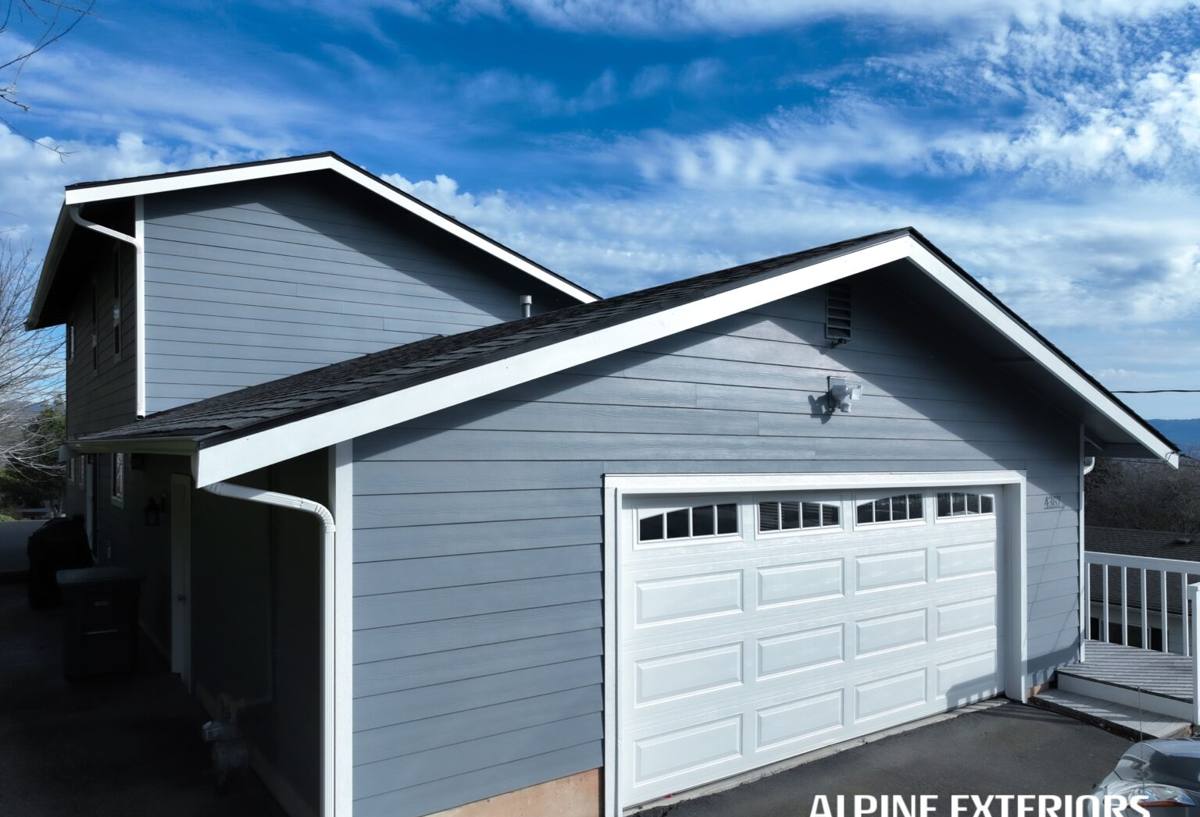
Asphalt shingle roofing is a mature, well-understood product, and most of the "it failed early" stories we see locally trace back to installation shortcuts, not the shingles themselves. Doing it right in this climate means a few things get extra attention that wouldn't matter as much in a milder or drier region.
Underlayment and Ice-and-Water Protection
We treat synthetic underlayment as the real first line of defense, not a formality under the shingles. Valleys, eaves, and any low-slope transitions get self-adhering ice-and-water membrane, because those are the spots where wind-driven rain and slow-draining moss debris cause the most trouble. In a climate that stays wet for weeks at a stretch, a roof deck that's protected only by felt paper is a roof deck that's one lifted shingle away from a stain on the ceiling.
Attic and Roof Ventilation
Ventilation gets undersold constantly, and it's one of the biggest factors in how long a shingle roof actually lasts here. A balanced system — intake at the soffits, exhaust at the ridge — keeps the attic close to outdoor temperature and moisture level. Without it, humid indoor air condenses against the underside of the deck all winter, which rots sheathing from below while the shingles on top still look fine. We check existing ventilation on every re-roof rather than assuming what's there is adequate.
Flashing at Valleys, Chimneys, and Penetrations
Step flashing at walls, counter-flashing at chimneys, and properly sized boots at every pipe penetration matter more here than the shingle brand does. We use new flashing on every replacement rather than reusing old metal — it's a small material cost against a much bigger risk of a leak showing up two winters later at a seam nobody checked.
Choosing the Right Shingle for This Climate
Most manufacturers sell three general tiers of asphalt shingle, and the right pick depends on how much shade and moss exposure your roof gets, not just budget.
| Shingle Type | Typical Lifespan | How It Handles This Climate | Trade-offs |
|---|---|---|---|
| 3-Tab | Shorter end of the range | Basic wind and rain protection; no built-in algae/moss resistance | Lowest upfront cost, but shows moss and streaking sooner in shaded yards |
| Architectural / Dimensional | Mid-to-long range | Heavier mat sheds water better and holds up longer under sustained rain | Higher material cost than 3-tab; still benefits from algae-resistant granules in shaded spots |
| Impact-Resistant / Premium | Longest range, often with the strongest manufacturer warranty | Reinforced mat resists granule loss and handles wind-driven debris well | Highest material cost; best justified on exposed or heavily treed lots |
Almost every line worth installing now offers algae-resistant granules — copper-infused granules that slow the growth that causes those dark streaks. On a shaded Nooksack lot, we consider that upgrade close to mandatory rather than optional, since the alternative is a roof that looks prematurely aged within a few years regardless of how well it's actually performing structurally.
Our Installation Process, Start to Finish
The steps don't change much from job to job, but the order and attention to each one is what separates a roof that lasts from one that doesn't.
- On-site inspection and measurement, including a look at attic ventilation and any visible deck damage from the interior.
- Tear-off down to the deck — we don't install over existing layers, since that traps moisture and hides rot.
- Deck inspection and repair of any soft or delaminated sheathing before anything new goes down.
- Synthetic underlayment installed across the field, with ice-and-water membrane at valleys, eaves, and any low-slope sections.
- New flashing set at all valleys, walls, chimneys, and penetrations.
- Shingles installed to manufacturer nailing pattern and exposure specs — not shortcuts on nail count or placement.
- Ridge vent and intake ventilation confirmed balanced before final courses go on.
- Full site cleanup, including a magnetic sweep for stray nails, and a final walkthrough with the homeowner.
Keeping a Nooksack Roof Sound Between Services
A well-installed shingle roof still needs some basic upkeep in this climate to hit its full lifespan. None of this requires a contractor visit every time — most of it is homeowner-level maintenance.
- Keep overhanging branches trimmed back so shaded sections of roof get more light and air movement.
- Clean gutters at least twice a year — clogged gutters back water up under the eave line during driving rain.
- Have moss removed by soft-washing or manual methods, never a pressure washer, which strips granules along with the moss.
- Ask about zinc or copper strips near the ridge on shaded slopes — they release trace metal ions with every rain that discourage new moss growth.
- Schedule a walk-through inspection before the wet season starts each fall, and again after the worst of it passes in spring.
- Check the attic once a year for musty smells, dark staining, or frost on the underside of the roof deck in winter — early signs of a ventilation or moisture problem.
Warning Signs Worth a Second Look
Most roof failures out here don't show up as a dramatic leak on day one — they show up as smaller signals first. Granules collecting in the gutters, shingle tabs that look slightly curled or lifted, dark streaking that doesn't wash off, or a slightly spongy feel to the roof deck underfoot are all reasons to get a professional look rather than wait. Catching flashing or ventilation problems early is almost always a repair; ignoring them for a couple more wet seasons is almost always a full replacement.
What Drives the Cost of a Shingle Roof Here
Every roof is different, so we don't quote sight-unseen, but a few factors consistently move the price up or down on jobs in this area.
| Factor | Why It Matters Locally | Typical Price Impact |
|---|---|---|
| Roof pitch and access | Steeper, harder-to-access roofs take longer and need more safety setup | Moderate to significant |
| Deck condition under old shingles | Rot from years of trapped moisture or poor ventilation isn't visible until tear-off | Variable — depends on how much sheathing needs replacing |
| Shingle tier chosen | Algae-resistant and impact-resistant lines cost more but last longer in shade | Moderate |
| Number and complexity of valleys/penetrations | Each one needs individual flashing and membrane detail — more labor, more material | Moderate |
| Ventilation upgrades needed | Adding proper intake/exhaust venting where none existed is extra work but pays off in roof life | Low to moderate |
We'd rather walk a homeowner through these factors on their actual roof than throw out a number that doesn't hold up once we're up there measuring and inspecting the deck.
Why a Crew That Already Works This Area Matters
A roofing crew that only occasionally works in Whatcom County tends to detail a roof the way they would anywhere else — standard underlayment, standard ventilation, standard flashing. A crew that works the Ferndale and Nooksack area regularly already knows which slopes hold moss longest, which older homes tend to have marginal attic ventilation, and which details actually matter once driving rain and salt air are part of the equation year after year. That local pattern recognition is what shows up ten years later as a roof that's still tight, not just a roof that looked good on installation day.
If you're weighing a repair against a full replacement, or just want an honest read on how much life is left in your current roof, we're glad to come take a look. The estimate is free, there's no pressure attached to it, and you'll get a straight answer either way — use the form below to get started.