 Ferndale
 A New Roof in Fairhaven Has to Answer to the Bay
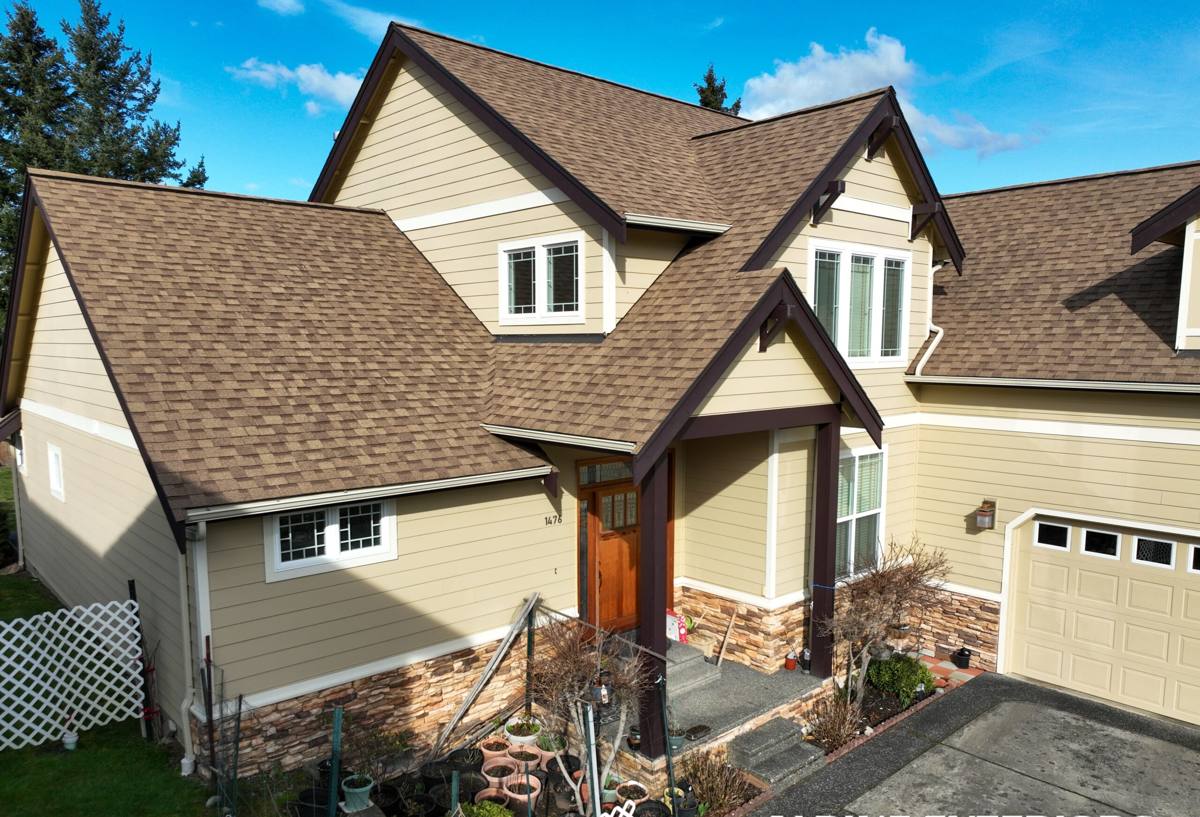
Fairhaven sits close to Bellingham Bay, on a mix of hillside and level lots that range from early-century homes to newer infill tucked into the same terrain. Whatever the age of the house, a roof in this neighborhood is dealing with a specific combination of stresses that a roof forty miles inland simply doesn't see as often: salt-laden marine air moving off the water, rain that arrives sideways as much as it falls straight down, and a moss season that can run for most of the year on shaded, tree-covered slopes. A new roof installation here isn't just about swapping old material for new — it's about building a roof system that's specifically detailed for those three things from the decking up.
We're based in Ferndale and work throughout Whatcom County, and Fairhaven is one of the areas where we see that climate pressure show up earliest on roofs that weren't detailed with it in mind. Ridge caps loosen sooner, valleys collect debris faster, and shaded slopes stay damp longer than homeowners expect. None of that means Fairhaven is a hard place to roof correctly — it just means the install has to account for conditions that a generic spec sheet doesn't.
What Bellingham Bay Does to a Roof Over Time
Salt Air and Fastener Corrosion
Homes close to the bay sit in a steady drift of mildly corrosive, moisture-laden air, not just during storms but as a year-round background condition. That exposure works slowly on exposed fasteners, flashing, and lower-grade metal components. It's rarely dramatic and rarely visible from the ground — it shows up years later as rust streaking below nail heads, a corroded drip edge, or flashing that's lost its seal at a joint that used to be tight.
Wind-Driven Rain
Rain near open water doesn't just fall on a roof, it gets pushed into it. Wind-driven rain finds its way under shingle tabs, into valleys, and around any penetration — vent stacks, chimneys, skylights — from angles a roof system built for calmer weather was never really tested against. Fairhaven's exposure to weather coming off the bay means these details get tested more often and harder than they would on a roof set further inland.
A Long Moss and Debris Season
Mild temperatures, consistent dampness, and mature tree cover common on Fairhaven's older residential lots add up to a moss and organic-debris season that can run most of the year, especially on north-facing slopes and anywhere shade keeps a roof surface from drying out between rain events. Moss doesn't just look bad on a roof — it holds moisture against shingles and underlayment longer than it would otherwise sit there, and it can work under tabs and lift them over time.
Hillside Terrain and Roof Pitch
A fair amount of Fairhaven's housing sits on sloped ground rising from the waterfront, and that terrain often shows up in the roof itself — steeper pitches, more roof-to-roof intersections, and valleys that concentrate water flow more than a simple gable roof would. Those details change how water moves off a roof and where it tends to collect, which affects both the install and the long-term maintenance a roof needs.
What a Correct New Roof Installation Actually Involves
A roof is a layered system, and the shingles or panels on top are only the most visible part of it. A correct install in this climate means every layer underneath is doing its job, not just the finish coat.
Tear-Off Versus Overlay
Overlaying new shingles over an existing layer is sometimes allowed by code and can lower upfront cost, but it also hides the condition of the decking underneath and traps whatever moisture damage is already there. In a climate this wet, we generally recommend a full tear-off so the decking can actually be inspected and any soft or rotted sheathing replaced before new material goes down — otherwise a new roof can be installed directly over a problem that keeps getting worse out of sight.
Underlayment and Ice-and-Water Protection
Synthetic underlayment forms the roof's real water barrier beneath the visible shingles or panels, and in a marine climate that sees sustained wind-driven rain, the quality and lap sequencing of that underlayment matters as much as the shingle brand on top of it. Self-adhered ice-and-water membrane at eaves, valleys, and penetrations adds a second line of defense exactly where wind-driven rain and moss are most likely to test the roof.
Flashing at Every Penetration
Chimneys, skylights, vent stacks, and any wall-to-roof transition need step flashing, counter-flashing, or apron flashing installed in the correct sequence with the underlayment, not caulked over as an afterthought. These are the single most common failure points we find on roof leaks in this area, and they're also the details that are easiest to get wrong on a rushed job because they take more time than running field shingles.
Ventilation
A roof deck that can't breathe traps heat and moisture in the attic space, which shortens shingle life from underneath and can contribute to condensation issues that have nothing to do with the weather outside. Balanced intake and exhaust ventilation is part of a correct install, not an optional upgrade, especially on a roof that's already managing this much exterior moisture.
Choosing Roofing Materials for Fairhaven's Climate
There's no single "right" roofing material for every Fairhaven home — pitch, budget, architectural style, and how long you plan to stay in the house all factor in. What matters is understanding how each option actually behaves under salt air, wind-driven rain, and a long moss season, rather than choosing on appearance or price alone.
| Material | Behavior in This Climate | Trade-off to Understand |
|---|---|---|
| Architectural asphalt shingle | Good wind ratings on quality product lines; performs well with correct underlayment and flashing | Needs periodic moss treatment and inspection on shaded slopes; service life depends heavily on install quality |
| Standing seam metal | Sheds wind-driven rain efficiently; naturally resistant to moss growth on most slopes | Higher upfront cost; requires a crew experienced with metal-specific flashing and fastener details |
| Synthetic/composite shake | Mimics traditional shake appearance with better dimensional stability in sustained moisture | Product quality varies significantly by manufacturer; installer experience matters more than with standard shingle |
| Cedar shake | Traditional appearance suited to older Fairhaven homes | Requires ongoing treatment and is more sensitive to moss and moisture retention in a climate this consistently damp |
Whatever material fits your home and budget, the flashing, underlayment, and ventilation details above matter more to how long that roof actually lasts than the brand name on the shingle wrapper.
How Our Process Works on a Fairhaven Roof
We start with an in-person walk of the roof and attic, not a satellite measurement or a price over the phone. That's the only way to see actual decking condition, existing ventilation, valley and penetration detail, and how the specific slopes on your home have been handling moss and rain exposure. From there:
- We document roof condition, pitch, and problem areas, including anything visible from the attic side.
- We provide a written scope that names the underlayment, ice-and-water coverage, flashing approach, and material — not just a square-footage number.
- We schedule tear-off and decking inspection first, before committing to a final material order, so any hidden rot gets addressed rather than covered over.
- We install flashing, underlayment, and ventilation as one sequenced system, then the finish material on top.
- We walk the finished roof with you before we consider the job done.
Signs a Fairhaven Roof May Be Due for Replacement
- Granule loss showing up in gutters or at downspout outlets
- Curling, cupping, or cracked shingles, especially on slopes that face prevailing wind
- Moss or dark streaking that returns quickly after cleaning, particularly on north-facing slopes
- Soft spots or noticeable sagging along the roofline or in valleys
- Daylight visible through the roof deck from inside the attic
- Rusted or lifting flashing around chimneys, vents, or skylights
- Water staining on interior ceilings or in the attic after a wind-driven storm
- A roof that's approaching or past the manufacturer's rated service life for its material
Cost Factors for a Fairhaven Roof Replacement
| Factor | What It Affects | Why It Matters in Fairhaven |
|---|---|---|
| Roof pitch and complexity | Labor time and staging needs | Older homes and hillside lots often have steeper pitches and more valleys where wind-driven rain concentrates |
| Tear-off vs. overlay | Labor scope and decking access | Tear-off exposes moisture damage that's common on decades-old roofs this close to the bay |
| Decking condition | Repair costs before new material goes on | Sustained moisture and past moss growth can rot sheathing before it's visible from the ground |
| Site access and slope | Equipment and staging time | Hillside terrain common in Fairhaven can add setup time and safety equipment |
| Penetration count | Flashing labor and material | Chimneys, skylights, and multiple roof intersections each need individually detailed flashing |
A real number depends on walking your specific roof, which is why we quote in person rather than off a satellite photo or square footage alone.
Why It Matters That This Crew Already Works Fairhaven
A crew that roofs this stretch of Whatcom County regularly has already seen how salt air, wind-driven rain, and moss actually behave on real Fairhaven roofs across a full year, not just how a shingle performs on a manufacturer's spec sheet. That translates into practical decisions on install day — which slopes need extra ice-and-water coverage, where flashing deserves more time than the minimum, and which valleys tend to collect debris fastest. Fairhaven's hillside terrain, older housing stock, and proximity to the bay aren't identical to conditions elsewhere in Whatcom County, and a crew with real experience in the neighborhood accounts for that instead of treating every roof the same way.
If you're planning a new roof, dealing with an aging one, or just want a straight answer about whether repair or replacement makes more sense for your Fairhaven home, we're glad to take a look. Reach out using the form below to schedule a free, no-pressure estimate.