 Ferndale
 Building New in Sumas? Get the Windows Right the First Time
New-construction window installation is one of those jobs that looks simple from the driveway and gets complicated fast once you're standing at the rough opening. For homes going up near Sumas, in Whatcom County, the stakes are higher than in a lot of the country. This is a corner of Washington that sees a long, wet winter season, persistent moss growth on north-facing surfaces, and enough wind-driven rain off the surrounding lowlands and coastal air to punish any window that isn't flashed and sealed correctly from day one. Get it right during framing and rough-in, and you've got windows that perform for decades. Get it wrong, and you're chasing rot, fogged glass, and drafts within a few winters.
We install new-construction windows for builders and homeowners throughout the Ferndale and Sumas area, and this page walks through what that job actually involves, what the local climate demands, and how we approach it so it holds up.
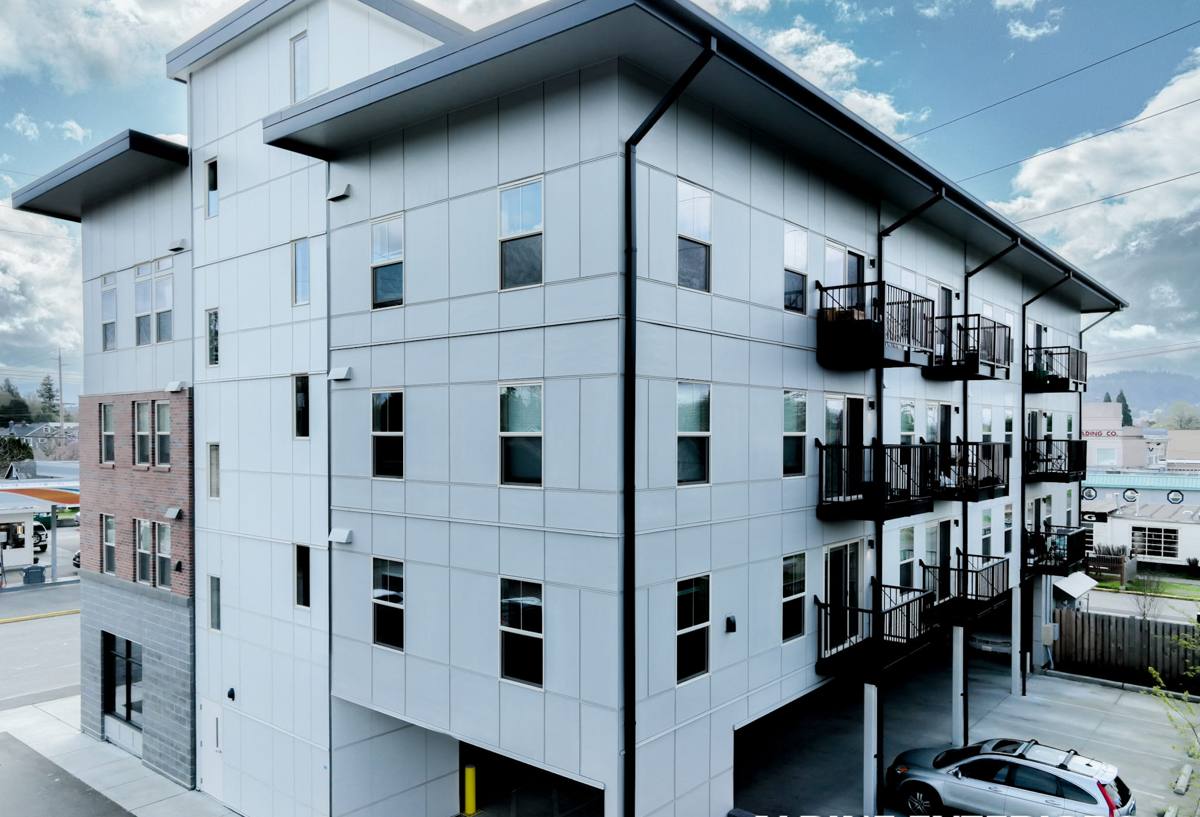
Why Sumas' Climate Is Hard on New Windows
Sumas sits close to the Canadian border in a stretch of Whatcom County that catches a distinct weather pattern: long stretches of low-pressure rain systems, cool damp air for much of the year, and enough moisture sitting in the landscape that moss and algae take hold on anything shaded or north-facing. None of that is exotic for the Pacific Northwest, but it does mean new-construction windows here are working against conditions that drier parts of the state never deal with.
What that means for a new window opening
- Driving rain pushes water sideways against the building envelope, not just straight down — flashing details that would be fine in a dry climate can fail here.
- Extended damp seasons mean any water that gets behind the window has weeks, not hours, to do damage before things dry out.
- Moss and organic growth thrive in shaded, moisture-retentive areas — sill details and drainage paths need to actively shed water, not just tolerate it.
- Salt-influenced air moving inland off the Strait of Georgia and Puget Sound lowlands accelerates corrosion on cheaper fasteners, flashing, and hardware over time.
A window unit itself is rarely the point of failure. It's almost always the installation — how the opening was prepped, how the flashing was layered, and whether the window was sealed to actually drain water back out instead of trapping it.
What Correct New-Construction Window Installation Involves
"New construction" windows are a different category from replacement windows — they use a nailing flange that gets integrated directly into the wall's water-resistive barrier (WRB) during framing, rather than being retrofitted into an existing wall. That gives us more control over the details, but it also means there's no room for shortcuts, because everything gets buried behind siding once the job is done.
The sequence we follow
- Rough opening check. We verify the opening is square, level, and sized correctly before anything else happens — a slightly-off opening causes problems that show up years later as operational issues or seal failures.
- Sill pan flashing. A sloped, sealed sill pan goes in first so that any water that does get past the window has a built-in path back to the exterior instead of soaking into the framing.
- Window-specific flashing tape. Jamb and head flashing is layered in the correct shingle-lap order — head flashing over the WRB, side flashing overlapping the sill pan — so water always drains down and out, never into a seam.
- Setting the window. The unit is set plumb, level, and square in the opening, shimmed correctly so the frame isn't stressed, and fastened per the manufacturer's schedule.
- Air sealing and insulation. The gap between the window frame and rough opening is sealed with a proper low-expansion foam or backer rod and sealant — packed too tight and it can bow the frame, left too loose and it's a draft and moisture path.
- Final integration with the WRB and siding. The house wrap and drainage plane are lapped over the flashing correctly so the whole assembly works as one continuous water management system.
Every one of those steps depends on the one before it. Skip the sill pan or reverse the flashing lap order, and you've built a window that looks fine for the first year or two and then starts leaking into the wall cavity where nobody can see it until there's a problem.
What Homeowners in Sumas Should Ask For
Whether you're building new or doing a major addition, a few specific choices matter more here than they would in a drier climate.
Frame material trade-offs
| Frame Type | Moisture Performance | Maintenance | Typical Fit |
|---|---|---|---|
| Vinyl | Good — won't rot, but seams and welds need quality control | Low | Budget-conscious new builds |
| Fiberglass | Excellent — dimensionally stable in wet/cold swings | Low | Long-term durability priority |
| Wood-clad | Good exterior protection, but any cladding breach invites rot | Moderate to high | Interior wood aesthetic desired |
| Aluminum | Weak — prone to condensation and thermal transfer in our winters | Low | We generally steer clients away from this in our climate |
We don't push any one brand — we install what fits the home's design and the owner's budget — but we do push back on frame and flashing choices that we know will cause problems in this specific climate. If a spec calls for something we think will underperform against Whatcom County's rain and moss exposure, we'll say so before installation, not after.
Glass and drainage details worth specifying
- Low-E, argon-filled dual pane glazing as a baseline — it also helps with condensation control during our cold, damp mornings.
- Weep holes and drainage slots that are unobstructed and positioned to actually clear water, not just decorative gaps.
- Corrosion-resistant fasteners and flashing, given the salt-air influence this close to the coast.
- A documented flashing detail from the window manufacturer that we can follow and photograph for the builder's or homeowner's records.
Why Local Installation Experience Matters
Window flashing details aren't universal — the "right" approach in Arizona or even eastern Washington is often wrong here. A crew that mostly works dry-climate installs may treat sill pans and flashing laps as optional extras rather than the core of the job. In Whatcom County, and especially in a rain-heavy, moss-prone area like Sumas, those details are the difference between a window that lasts 30 years and one that's causing hidden rot by year five.
We work new-construction window installs throughout the Ferndale area, including Sumas, on a regular basis. That means we're not guessing at how the local weather behaves — we've seen what happens when flashing is done wrong here, and we build our process around avoiding it. We also coordinate directly with builders and general contractors on framing schedules, so window installation happens at the right point in the build sequence rather than being rushed or delayed against the rest of the crew's timeline.
A Simple Pre-Install Checklist
Whether you're a homeowner overseeing a build or a builder bringing in a window subcontractor, these are worth confirming before installation day:
- Rough openings have been verified square and correctly sized against the window schedule.
- Sill pan flashing is specified and included in the install plan — not assumed to be "built into" the window.
- The flashing sequence (sill, jamb, head) follows proper shingle-lap order tying into the WRB.
- Frame material has been chosen with this climate's moisture and cold exposure in mind, not just upfront cost.
- Fasteners and flashing components are corrosion-resistant given the area's salt-air influence.
- There's a clear plan for how the window ties into the siding and drainage plane once installed.
What This Costs and What Drives the Number
New-construction window pricing depends on unit size, frame material, glazing package, and how many openings are involved, so a firm number only comes from seeing the plans or the actual openings. In general, expect fiberglass and higher-performance glazing packages to sit at the upper end of the range, with standard vinyl units at the lower end. What we won't do is quote a flashing and sill-pan detail as an "upgrade" — that's baseline correct installation in this climate, not an extra.
Factors that move the price
- Number and size of window openings
- Frame material (vinyl, fiberglass, wood-clad)
- Glazing package (standard dual-pane vs. upgraded Low-E/argon)
- Access and site conditions during the build phase
- Coordination complexity with other trades on an active job site
Our Process, Start to Finish
We start with a walkthrough of the plans or the framed openings, confirm sizing and product selection with you, and give a written estimate before anything is ordered. Once units arrive, we schedule installation to align with your build timeline — window installation has a specific window in the framing sequence, and timing it right avoids delays for the trades that follow. During installation, we follow the flashing and sealing sequence outlined above on every opening, and we're glad to walk a builder or homeowner through the details on site if you want to see the process firsthand.
If you're building or adding on near Sumas and want windows installed by a crew that treats this climate's rain and moisture demands as the standard, not an upsell, we're happy to take a look at your plans and put together a straightforward estimate — no pressure, no obligation. Use the form below to get started.