 Ferndale
 Windows Built for Marietta's Weather, Not Just Its View
Marietta sits close enough to the water that homes here take a different kind of weathering than houses further inland in Whatcom County. Salt-laden air off the bay works into aluminum frames and steel hardware year-round, wind-driven rain finds every gap in old flashing during the fall and winter storm cycle, and the shaded, damp conditions that produce Ferndale's long moss season also feed condensation and slow-drying wood on the north and west sides of a house. A window that's a good fit in Bellingham's drier pockets or in the valley east of I-5 isn't automatically a good fit in Marietta. We treat this as a coastal-adjacent install every time, and that shapes the products we recommend and the way we detail the opening.
This page is specifically about window replacement for homes in and around Marietta — not a general overview of every siding or exterior service we offer. If you're weighing whether it's time to replace, what a correct install actually involves, and why local experience matters more here than in a lot of other parts of the county, this is written for you.
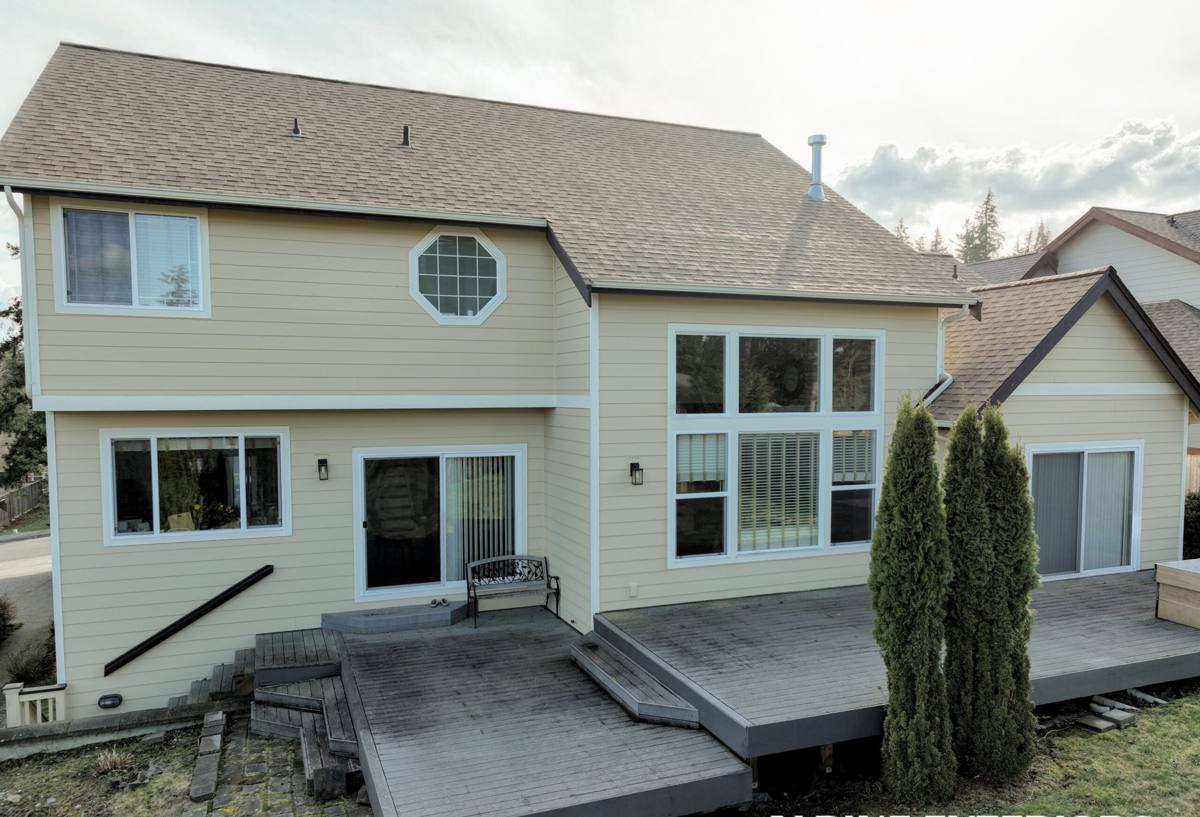
What Marietta Homes Are Actually Dealing With
Three conditions drive most of the window failures we see in this part of Ferndale:
- Salt air corrosion — aluminum frame corners, screen hardware, and unprotected fasteners degrade faster near the water than they do even a few miles inland.
- Driving rain — wind off the water pushes rain sideways into siding and window openings, which means flashing and sill details matter more here than in calmer, more sheltered lots.
- Extended moss and damp season — shaded exteriors and gutter overflow keep wood trim and sills wet longer into the year, which accelerates rot at any point where sealant has already failed.
Individually, none of these are unusual for Western Washington. Together, on a home close to Marietta's shoreline exposure, they compound. A window that would last 20+ years in a drier, more sheltered location may show frame fatigue, seal failure, or sill rot well ahead of that in a more exposed Marietta lot.
Signs It's Time to Replace, Not Just Repair
- Fogging or a visible film between the panes — the seal has failed and the insulating gas is gone
- Soft or spongy wood at the sill or lower frame corners
- Windows that are noticeably harder to open, close, or lock than they used to be
- Visible daylight or a draft around the frame when it's closed
- Chalky, pitted, or corroded aluminum hardware and screen frames
- Condensation forming on the inside of the glass regularly, even with normal ventilation
What a Correct Window Replacement Actually Involves
Swapping the sash and calling it done is how a lot of window failures start over again in five to seven years. A proper replacement in this climate is really an opening restoration, with the new window as one part of it.
1. Assess the Opening, Not Just the Window
Before anything comes out, we check the sill, framing, and surrounding siding for hidden rot or moisture damage. In Marietta this step matters more than in drier parts of the county — sill rot hides behind trim and paint for years in a damp, shaded exterior, and installing a new window over a compromised sill just moves the failure a few years down the road instead of fixing it.
2. Remove and Inspect
The old window comes out carefully so we can see the condition of the rough opening, the existing flashing (if any), and the sheathing behind it. This is usually the only point in a home's life when that area is fully visible, so we use it.
3. Flash and Seal Properly
This is the step that determines whether a window leaks in year two or lasts for decades. Correct flashing sheds water down and out, layered so that each piece overlaps the one below it — sill pan first, then side flashing, then head flashing integrated with the water-resistive barrier above. In a driving-rain environment like Marietta's, a shortcut here is the single most common cause of the "new window that leaks" complaint we get called out to fix on other contractors' work.
4. Set, Shim, and Fasten
The window gets shimmed level and plumb, fastened per the manufacturer's schedule, and insulated around the frame — not packed solid with expanding foam, which can bow vinyl frames, but filled correctly with a low-expansion product suited to the gap.
5. Trim, Caulk, and Match
Exterior trim gets reset or replaced, joints get sealed with a sealant rated for exterior movement and moisture, and everything is matched back to the surrounding siding so it doesn't look like a patch job.
Choosing the Right Window for a Marietta Exterior
Frame material matters more here than in a lot of inland installs, mainly because of the salt air and moisture exposure. Here's how the common options stack up for this specific location:
| Frame Material | How It Handles Salt Air & Moisture | Maintenance | Our Take for Marietta |
|---|---|---|---|
| Vinyl | Doesn't corrode; handles damp conditions well | Low — occasional cleaning | Our standard recommendation for most Marietta homes |
| Fiberglass | Excellent — very stable, resists moisture-driven expansion | Low | Good upgrade option, especially on more exposed elevations |
| Aluminum | Prone to corrosion and hardware fatigue near salt air over time | Higher — hardware needs monitoring | We steer away from it for this location; it's a better fit in drier, inland settings |
| Wood (unclad) | Needs consistent upkeep to resist rot in a long damp season | High — regular refinishing | Only recommended with cladding or for owners committed to upkeep |
We're not saying aluminum or bare wood windows are bad products everywhere — they're just not the right match for the moisture and salt exposure a lot of Marietta lots deal with. Vinyl and fiberglass simply ask less of the homeowner over the life of the window in this specific environment.
Glass and Performance Options Worth Discussing
- Double-pane with argon fill is the practical minimum for this climate
- Low-E coatings help with both summer heat gain and winter heat loss
- Laminated or slightly heavier glass packages can cut down on wind noise on more exposed sides of a house
- Proper weep hole placement and design so wind-driven rain drains back out instead of pooling
Why Local Experience in Marietta Specifically Matters
A lot of window crews can install a window correctly on a calm, sheltered lot. Fewer have spent real time detailing openings on homes that take direct wind and salt exposure the way parts of Marietta do. Working this area regularly means we already know which elevations tend to hide sill rot, which older flashing details fail first in driving rain, and how much moss and organic buildup typically accumulates on north-facing trim by the time a homeowner calls us. That's not something you learn from a manual — it's something you learn from being back on these same streets across different seasons.
It also means we're realistic with you about timing. Window replacement in Whatcom County is weather-dependent work, and a crew that knows the local rain patterns can plan installs to minimize the number of days an opening sits exposed.
Our Process, Start to Finish
- Free on-site assessment — we look at each window from both sides, check sills and framing where accessible, and note which windows are failing versus which still have life left
- Honest recommendation — full replacement where it's needed, and we'll say so plainly if a window doesn't need to be replaced yet
- Straightforward estimate — clear scope, clear materials, no vague allowances
- Scheduled install — timed around the weather window when possible, one opening at a time to limit exposure
- Proper flashing and sealing — the step most likely to be rushed elsewhere, done in full every time
- Final walkthrough — we check operation, look, and seal quality with you before we call it done
Questions Marietta Homeowners Often Ask Us On-Site
How many windows should I replace at once?
It depends on condition and budget. Some homeowners replace the most exposed side of the house first — often the side taking the most wind and rain — and phase the rest over a year or two. Others prefer to do it all at once to get one project instead of several. We'll give you our honest read on which windows are most urgent so you can decide.
Will new windows fix a moss or moisture problem on my siding?
Not directly, but a correctly flashed window replacement stops water from getting behind the siding at that opening, which is often a meaningful part of a broader moisture problem. If moss and damp conditions are affecting a wider area of your exterior, that's usually a separate siding conversation, and we're happy to look at both while we're on-site.
A Quick Pre-Estimate Checklist
Before we come out, it helps to have a rough sense of what you're seeing. Walk your exterior and note:
- Which windows feel drafty or hard to operate
- Any visible soft spots, staining, or peeling paint at sills and trim
- Whether fogging or condensation shows up between the panes
- Which elevation of the house takes the most direct wind and rain
- Whether you're aiming for a full-house replacement or a phased approach
None of this needs to be exact — it just helps us focus the assessment on what matters most to you.
If your Marietta home has windows showing any of these signs, or you'd simply like an honest read on their condition, we're glad to come take a look. The estimate is free, there's no pressure to move forward, and you'll get a straight answer about what actually needs to happen — use the form below to get started.