 Ferndale
 Why Lummi Island Window Installation Isn't a Standard Job
Lummi Island sits out in the salt water off the Whatcom County mainland, and that changes what "correct" window installation means. A window that performs fine on a sheltered lot in Ferndale can fail years earlier out on the island, where salt-laden air, wind-driven rain off the water, and a long stretch of damp, shaded moss season all work on a home at once. Getting windows right here isn't about upgrading to something fancier — it's about installing the right materials, correctly, with flashing and sealing details sized for what this specific exposure actually does to a house over time.
We work Ferndale and the surrounding Whatcom County coastline regularly, including Lummi Island, so this isn't a one-off trip for us. That matters more than it sounds like it should, and we'll explain why further down.
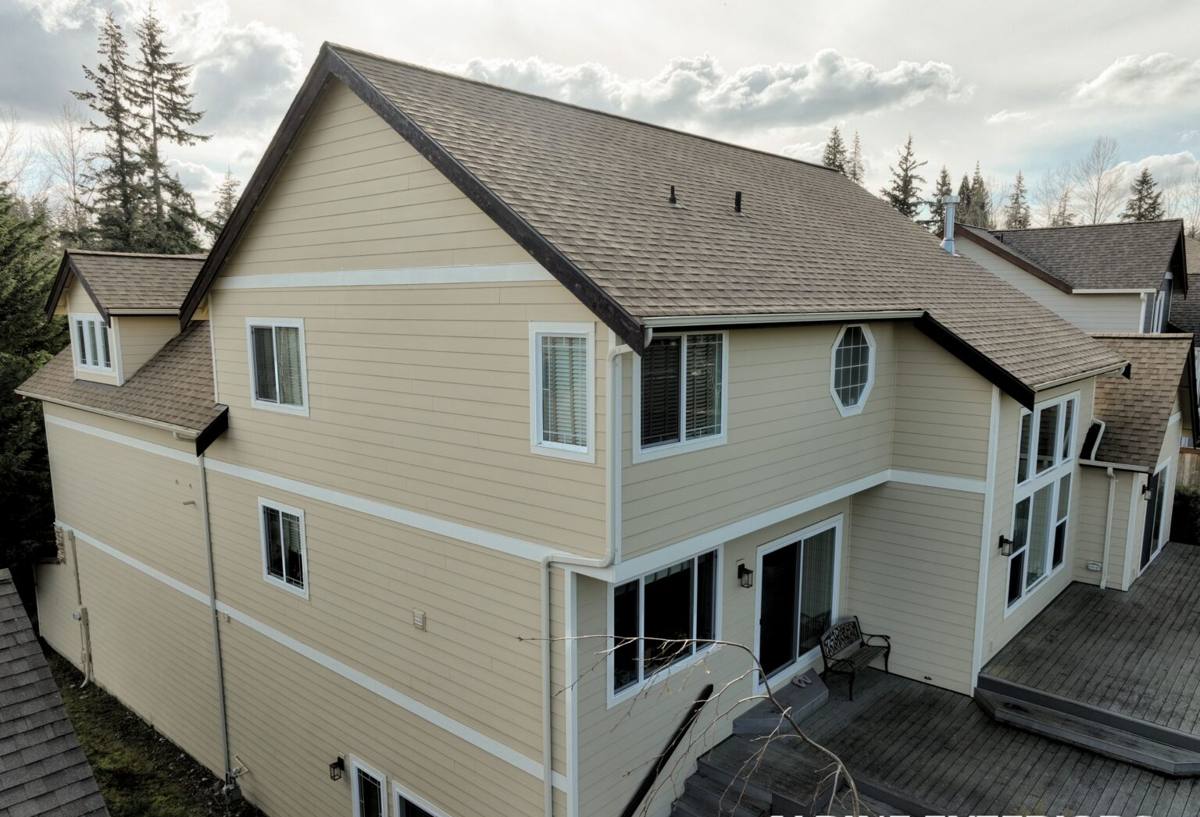
What Salt Air, Driving Rain, and Moss Season Do to Windows
Salt Air
Airborne salt settles on everything near the water, including window frames, hardware, and any exposed metal fasteners. Over time it accelerates corrosion in lower-grade hardware and can degrade certain finishes faster than a manufacturer's inland warranty testing accounts for. This is one of the biggest reasons material choice matters more on Lummi Island than it does a few miles inland.
Wind-Driven Rain
Rain that comes in sideways off open water doesn't just wet a window — it drives moisture up and under trim, into gaps, and behind poorly lapped flashing. A window that would stay dry in a straight-down rain can leak in a wind-driven storm if the flashing sequence around it wasn't built for that direction of water travel. This is a detail that shows up in the installation, not in the product spec sheet.
Moss and Constant Moisture
The long wet season here keeps north-facing and shaded window surfaces damp for extended stretches, which is exactly the environment moss and mildew need. On siding and trim that's mostly cosmetic upkeep, but around a window it's a signal worth paying attention to — persistent moss growth on sills or trim usually means water is sitting somewhere it shouldn't, which is often the first visible sign of a failing seal or degrading caulk joint.
What a Correct Window Installation Involves
A window install is not just "old one out, new one in." Done right, especially in this climate, it follows a specific sequence, and skipping steps is exactly how leaks show up two or three winters later:
- Remove the old unit and inspect the rough opening for hidden rot, soft framing, or existing water damage before anything new goes in.
- Repair or replace any compromised framing — installing a new window over damaged wood just hides the problem behind new trim.
- Install a properly lapped water-resistive barrier and flashing system, sequenced so water is always directed outward and downward, never trapped behind the window.
- Set the window level, plumb, and square, then shim and fasten per the manufacturer's structural requirements — not "close enough."
- Seal and insulate the gap between the frame and rough opening with the right materials, avoiding both gaps and over-packing that can bow the frame.
- Finish exterior trim and caulking with a bead sized and placed to shed wind-driven rain, not just look clean.
- Test operation and seal integrity before calling the job done.
Every one of those steps matters everywhere, but on Lummi Island the flashing sequence and sealant choice carry more weight than usual, because the margin for error against driving rain and salt exposure is smaller.
Choosing Window Materials for Island Exposure
There's no single "best" window material — the right choice depends on exposure, budget, and how much maintenance a homeowner wants to take on. Here's how the common options hold up in a coastal, salt-air environment like Lummi Island:
| Material | Coastal/Salt-Air Performance | Maintenance |
|---|---|---|
| Vinyl | Good — won't corrode or rot; hardware quality varies by manufacturer | Low; occasional cleaning |
| Fiberglass | Very good — dimensionally stable, resists corrosion well | Low |
| Wood (clad exterior) | Fair to good depending on cladding integrity; any breach in the exterior cladding exposes wood to moisture | Higher — cladding and seals need regular inspection |
| Aluminum | Prone to corrosion in salt air unless marine-grade and properly finished | Moderate to high |
Our standard for island and near-shoreline homes is to steer toward vinyl or fiberglass with quality corrosion-resistant hardware, and to be upfront when a homeowner is set on a wood-clad look about the added maintenance commitment that comes with it. That's not a knock on any product — it's just an honest trade-off worth knowing before you buy.
Signs Your Current Windows Are Already Failing
Before we talk replacement, it's worth knowing what to look for. If you're seeing any of these on a Lummi Island home, it's worth having someone look closer:
- Fogging or moisture between panes on double-pane units (a broken seal)
- Soft or discolored trim and sill wood around the frame
- Persistent moss or dark staining on sills, especially on shaded or north-facing walls
- Drafts you can feel with a hand near the frame on a windy day
- Windows that stick, won't latch fully, or have visibly warped frames
- Corroded or stiff hardware (locks, cranks, hinges) that used to move freely
- Paint or finish failing faster around the window than on the rest of the wall
How We Handle Logistics for Lummi Island Projects
Working on an island community brings a few practical realities that a mainland Ferndale job doesn't. Materials, crew, and equipment all move over on the county ferry, so scheduling is planned around ferry timing rather than just drive time. We stage materials and confirm the full order is on hand before a crew makes the crossing — the goal is to avoid a job sitting half-finished with an open wall or rough opening waiting on a part that missed a ferry run. We also plan weather windows carefully, since an exposed opening during a wind-driven rain event is exactly the scenario you want to avoid on this stretch of coastline. None of this is complicated, but it does require planning that a crew unfamiliar with island logistics may not think through in advance.
Cost Factors for Lummi Island Window Installation
We don't publish flat prices because window projects vary too much house to house, but these are the factors that actually move the number:
| Factor | Why It Matters |
|---|---|
| Number and size of windows | Larger units and full-home replacements involve more material and labor than a single-window swap |
| Frame material chosen | Vinyl, fiberglass, and clad-wood carry different material costs and installation time |
| Condition of the rough opening | Hidden rot or framing damage found during removal adds repair time before the new window goes in |
| Access and logistics | Ferry scheduling and site access on the island can affect crew time and trip planning |
| Trim and finish work | Matching existing trim profiles or repainting/staining adds finish labor |
| Disposal | Removal and disposal of old units and any damaged framing material |
We give a firm, itemized estimate after seeing the actual openings and windows in question — not a ballpark based on square footage alone.
Why Hiring a Crew That Already Works Lummi Island Matters
A window installer who mostly works dry, inland sites can still do competent work, but they may not default to the flashing sequence, sealant choice, or hardware grade that a salt-air, wind-driven-rain environment actually calls for — because they haven't had to solve for it repeatedly. A crew that regularly works Whatcom County's coastline and islands has already seen where standard installation practice falls short out here, and builds around it as a matter of habit rather than an afterthought. That experience shows up years later in whether the caulk joint is still doing its job and whether moss is creeping in around the sill.
Keeping Your Windows Performing After Installation
A correct install is most of the battle, but a little upkeep extends the life of any window on Lummi Island:
- Rinse salt residue off frames and glass periodically, especially after storms
- Keep weep holes (the small drainage openings on the bottom of the frame) clear of debris and moss
- Inspect exterior caulk lines once a year and re-seal any cracked or separated joints promptly
- Wipe down and lightly lubricate hardware if it starts to feel stiff
- Address any moss or staining on sills early rather than waiting for it to spread
If you're weighing a window project on Lummi Island — whether it's one failing window or a full-home replacement — we're happy to come take a look, walk the openings with you, and put together a straightforward, no-pressure estimate based on what your home actually needs. There's a form below to get that scheduled.