 Ferndale
 Lummi Island Siding Has to Answer to the Water on Every Side
Lummi Island sits out in Hale Passage and the Strait of Georgia, reachable only by a short county ferry crossing from the mainland near Ferndale. That geography is exactly why siding on the island takes more of a beating than siding a few miles inland in Whatcom County. Homes here face salt-laden marine air on every exposure, wind-driven rain that doesn't wait for a storm to come sideways, and long stretches of shaded, damp weather that keep moss and algae working on north- and west-facing walls for months at a time. Any siding product installed here has to hold up to all three at once, year after year, without babysitting.
We're a Ferndale-based crew and Lummi Island is part of our regular service area, not a one-off trip. That matters more than it sounds — island jobs have logistics, timing, and material-handling considerations that a contractor who's never worked the ferry schedule will underestimate. This page is about what fiber cement siding specifically needs to do right on a Lummi Island home, how we install it, and why we install James Hardie and nothing else.
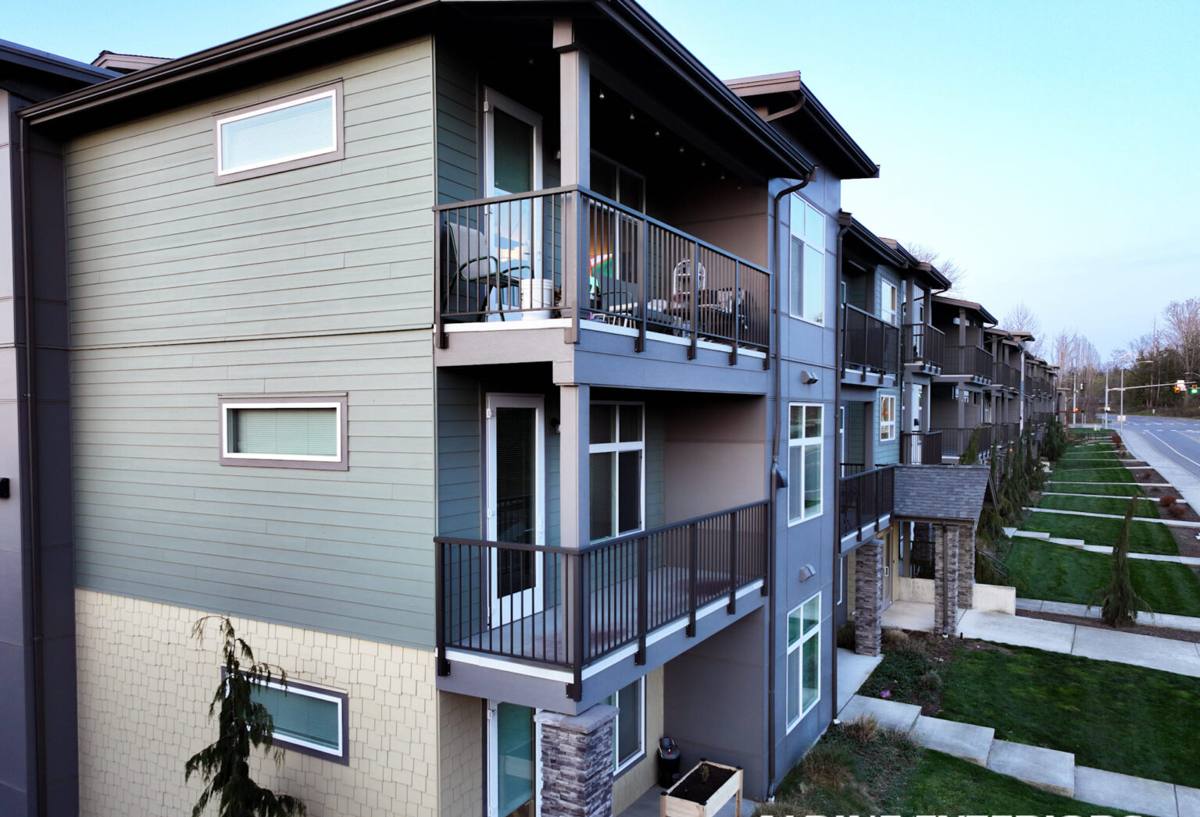
What Lummi Island's Climate Actually Does to Siding
Salt Air and Marine Exposure
Airborne salt is corrosive and it's persistent. It settles on siding, trim, and fasteners, and over time it accelerates the breakdown of finishes and metal components that weren't specified for coastal exposure. Paint film chalks and fails faster near saltwater. Uncoated or poorly coated fasteners can bleed rust streaks down a wall within a few seasons. None of this is dramatic — it's slow, cumulative wear, which is exactly why it gets ignored until a home is 10-15 years old and looking tired ahead of schedule.
Driving Rain and Wind-Driven Moisture
Lummi Island catches wind off open water with very little to break it. That means rain doesn't just fall straight down — it drives sideways into wall assemblies, laps, and trim joints. Siding systems depend on correct lap, flashing, and drainage detailing to keep that water moving down and out instead of finding its way behind the cladding. A product or installation that's marginal on moisture management inland becomes a real problem on an exposed island wall.
Moss, Algae, and a Long Shade Season
Much of Whatcom County deals with moss and algae growth on siding, but Lummi Island's tree cover, marine humidity, and long overcast stretches make north and west walls especially prone to green and black staining. Some materials absorb moisture into the substrate where organic growth can take hold and slowly degrade the material underneath the surface, not just the paint layer.
Why We Install Only James Hardie Fiber Cement
We made a standard early on and we stick to it: James Hardie fiber cement, and nothing else. We don't install vinyl, LP SmartSide, Cemplank, Allura, primed spruce, or cedar. That's not because those products have no merit — it's because, after years of installing and repairing siding in this exact climate, Hardie is the product we're willing to put our name behind for a coastal island exposure.
- Non-combustible core: fiber cement doesn't feed a fire the way wood-based or vinyl products can, which matters for insurance conversations and for homeowners who take wildfire and ember exposure seriously.
- ColorPlus factory finish: a baked-on finish applied and cured under controlled conditions holds color and resists fading and chalking far better than field-applied paint exposed to salt air from day one.
- Climate-engineered HZ formulations: Hardie's HZ5 product line is engineered for wetter, harsher climates — relevant to anything sitting this close to open saltwater.
- Dimensional stability: fiber cement doesn't swell, cup, or rot the way wood-based products can when moisture gets past the surface.
- A transferable warranty backed by a large manufacturer — worth more to a future buyer than a warranty tied to a smaller regional producer.
Vinyl is inexpensive and low-maintenance in mild climates, but it can distort in direct sun and become brittle in cold, and its seams and J-channels give wind-driven rain more places to work at over time. LP SmartSide and cedar are wood-based products; done right they perform well, but they depend on maintaining an intact paint or finish film indefinitely, and a breach in that film in a wet, salty, shaded environment invites rot faster than it would inland. Those are honest trade-offs, not knocks on the products — they're why we chose to specialize rather than install everything.
What a Correct Installation Actually Involves
Fiber cement performs the way it's supposed to only when it's installed to spec. A rushed or generic install undermines the product's advantages, regardless of what siding brand is on the wall. On a Lummi Island home, we pay particular attention to:
| Detail | Why It Matters Here |
|---|---|
| Weather-resistive barrier and rainscreen gap | Gives wind-driven rain a drainage path instead of trapping it against the sheathing |
| Flashing at windows, doors, and penetrations | Directs water out and away before it can reach fastener holes or laps |
| Correct lap and fastener placement | Keeps panels performing as a system, not just individually nailed boards |
| Ground and roofline clearances | Reduces splash-back moisture and moss/algae exposure at the most vulnerable edges |
| Corrosion-resistant fasteners and trim hardware | Marine air accelerates corrosion on anything under-spec'd |
| Factory-cut and sealed panel edges where possible | Field-cut edges need proper sealing to avoid moisture wicking into the cut face |
None of these are optional add-ons — they're the baseline for a fiber cement install anywhere on the water. Skipping them is how a good product ends up with a bad reputation.
Our Process for a Lummi Island Project
Working on the island means planning around the ferry, not around convenience, so we build that into scheduling from the start rather than treating it as a surprise.
- On-site assessment: we walk the exterior, check existing siding and sheathing condition, and note exposure differences wall by wall — the west and north faces usually need the most attention.
- Material staging: Hardie panels, trim, and accessories are ordered and staged on the mainland side in Ferndale, then moved over on the ferry in coordinated loads to avoid multiple crossings mid-job.
- Tear-off and prep: old siding comes off, sheathing is inspected and repaired as needed, and the weather-resistive barrier and rainscreen system go on before a single Hardie panel is hung.
- Installation: panels, trim, and flashing go in to manufacturer spec, with attention to the coastal-specific details above.
- Finish and walkthrough: caulking, touch-up, and a final walkthrough so you know exactly what was done and what maintenance to expect going forward.
Cost Factors on Lummi Island Projects
Every home is different, so we won't put a number on your project without seeing it — but the variables that move the estimate on an island job are worth understanding upfront:
| Factor | Effect on Project |
|---|---|
| Home size and wall complexity | More corners, dormers, and trim detail means more labor and cutting |
| Existing siding tear-off and disposal | Removal and haul-off logistics are different on the island than the mainland |
| Sheathing or framing repair needs | Found only once old siding is off; hidden moisture damage adds cost |
| Ferry-based material and crew logistics | Staging and crossing loads efficiently affects scheduling, not just cost |
| Siding profile and trim selection | Lap width, panel vs. shingle style, and trim complexity all vary in price |
| Access and staging area on the lot | Tighter or sloped lots can add setup time |
Keeping Fiber Cement Siding Looking Right After Install
James Hardie siding is low-maintenance compared to wood, but "low-maintenance" doesn't mean "no maintenance" — especially with moss and salt air in the mix. A little attention goes a long way toward getting the full lifespan out of the material and finish.
- Rinse siding with a garden hose once or twice a year, focusing on shaded north and west walls where moss and algae take hold first
- Avoid pressure washing directly into laps and seams — it can force water where it doesn't belong
- Trim back vegetation and tree cover that keeps walls shaded and damp longer than necessary
- Check and refresh caulking at trim joints and penetrations every few years
- Watch for chalking or dulling on ColorPlus finishes near the coast and address early rather than letting it progress
- Keep gutters and downspouts clear so roof runoff isn't adding extra wall exposure
Why Hiring a Crew That Already Works Lummi Island Matters
A siding job on the island isn't just a mainland job with an extra drive. Crews unfamiliar with the ferry schedule underestimate timelines, over-order or under-stage materials, and sometimes end up making unplanned extra crossings that slow the job down and add cost. We schedule Lummi Island work knowing the realities of getting people and materials there and back efficiently, and we've seen firsthand how the local exposure — salt, wind-driven rain, and shade-driven moss — affects siding differently wall by wall on island homes versus similar homes a few miles inland in Ferndale proper.
That local, repeated experience is also why we don't try to be everything to everyone on materials. We install James Hardie fiber cement because we've watched it hold up in this exact environment, and we'd rather do one thing right than offer five options and let you guess which one fits your walls.
If you're planning a siding project on Lummi Island, we're happy to come take a look and give you a straight assessment — no pressure, no upsell. Use the form below to request a free estimate.