 Ferndale
 Building Decks for Lummi Island's Marine Environment
Lummi Island sits out in the marine air of Whatcom County, and that changes what a deck needs to survive. A deck built to a generic mainland spec often struggles here within a few seasons: fasteners bleed rust, north-facing boards grow a felt of moss, and railings loosen as untreated wood swells and shrinks with the damp. None of that is inevitable. It's a function of material choices and construction details that either account for salt air, driving rain, and a long moss season, or don't.
We build custom decks for homes across Ferndale and the surrounding Whatcom County waterfront, and Lummi Island jobs get treated as their own category, not a copy-paste of a mainland deck. The island's exposure to wind off the water, the humidity that sits in low, shaded yards, and the practical realities of getting crews and materials to an island community all factor into how we plan and build.
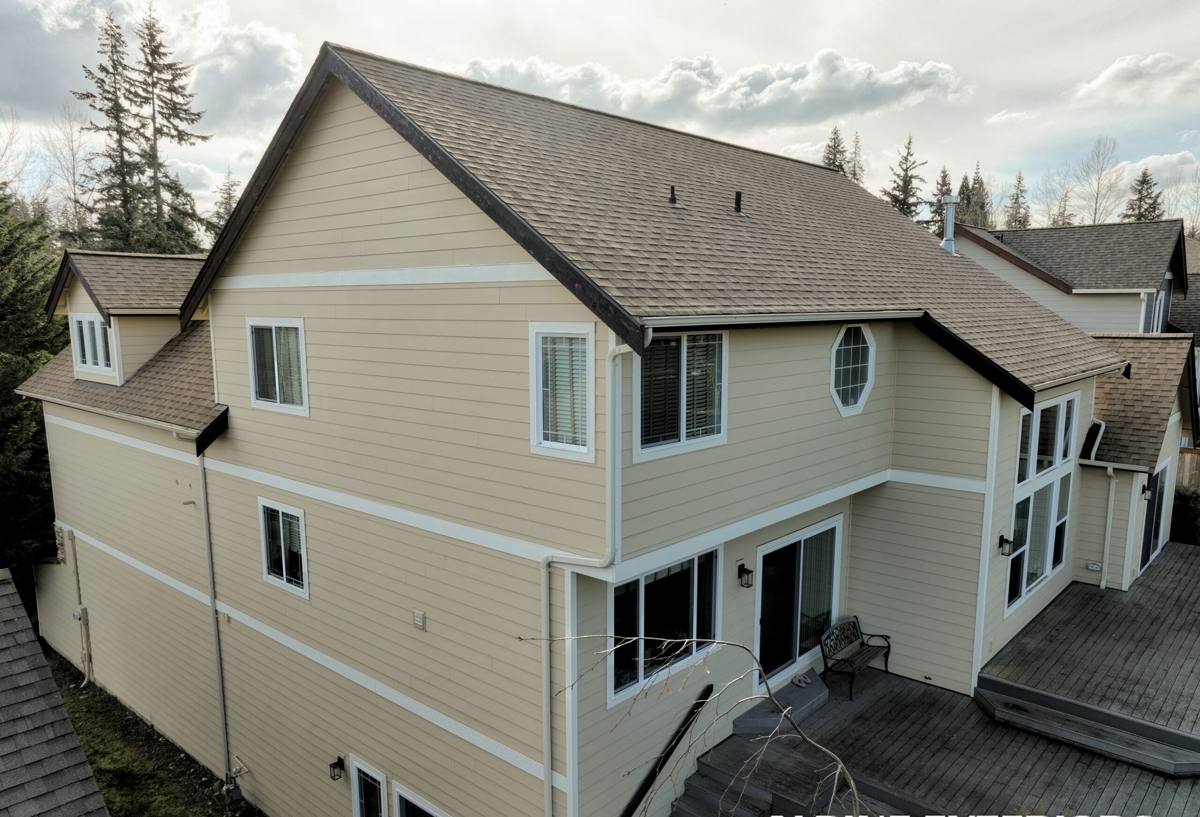
What Salt Air, Rain, and Moss Actually Do to a Deck
It helps to understand the specific failure modes before talking about the fix, because each one points to a different construction decision.
Salt Air and Corrosion
Airborne salt accelerates corrosion on any exposed metal — screw heads, joist hangers, bolts, and railing hardware. Standard electro-galvanized fasteners can start showing rust streaks in a single wet season near the water. Once a fastener starts corroding, it weakens exactly where the deck depends on it most: the connections holding joists to ledgers and posts to footings.
Driving Rain and Trapped Moisture
Whatcom County gets long stretches of steady, wind-driven rain rather than short downpours. That means water gets pushed sideways into gaps, ledger connections, and stair stringers, not just straight down onto the decking surface. A deck that isn't flashed and gapped correctly will trap moisture against the house or against framing members, which is where rot actually starts — not on the surface, but hidden in the structure underneath.
Moss and Algae Growth
Shaded, north-facing, or tree-covered decks on the island can stay damp for days after a storm passes. That's exactly the environment moss and algae need. Beyond looking bad, a mossy deck surface holds moisture against the boards constantly and gets slick and dangerous underfoot, especially on stairs.
Framing and Fastener Choices That Hold Up
The framing is the part of a deck nobody sees once it's finished, and it's also the part that determines whether the deck is still solid in fifteen years. For Lummi Island builds we standardize on a few non-negotiables:
- Stainless steel or heavy hot-dip galvanized fasteners and hardware rated for coastal/marine exposure — not standard exterior-grade coatings that are fine inland but undersized for salt air.
- Structural connectors (joist hangers, post bases, hurricane ties) matched in coating grade to the fasteners driven into them, so you don't pair a good bolt with a hardware piece that corrodes first.
- Proper ledger flashing where the deck ties into the house, with a drainage gap rather than a sealed-tight joint that traps water.
- Joist tape or a butyl flashing strip over framing members to keep standing water from soaking into end grain and fastener holes.
- Post bases set above the decking surface and off the ground, so wood posts aren't sitting in standing water after a rain event.
None of this is exotic. It's standard best practice that gets skipped when a builder is pricing to a mainland-average job rather than accounting for what island exposure actually does to a structure over time.
Choosing a Decking Material for This Climate
There's no single "right" decking material for every Lummi Island home — it depends on sun exposure, budget, and how much upkeep the homeowner wants to do. Here's how the common options actually compare once you factor in salt air and moss:
| Material | Moisture/Rot Resistance | Moss Resistance | Maintenance |
|---|---|---|---|
| Pressure-treated pine | Good with sealing, weakest of the group long-term | Low — porous surface holds moisture | Annual cleaning and re-sealing |
| Cedar | Naturally rot-resistant, but surface still needs upkeep | Moderate — needs regular cleaning | Periodic cleaning, oil/stain every 1-2 years |
| Tropical hardwood (e.g. ipe-type species) | Excellent, very dense and durable | Good with periodic cleaning | Occasional oiling to maintain color; low structural upkeep |
| Composite/PVC decking | Excellent — doesn't absorb water | Best — smooth, non-porous surface sheds moss growth easier | Occasional washing, no sealing or staining |
For homes with shaded, damp yards where moss has already been a fight, composite or PVC decking tends to be the lowest-maintenance long-term answer. For homeowners who want the look and feel of real wood and are willing to keep up with periodic cleaning and oiling, cedar or a dense hardwood still performs well — the key is matching the material to how much upkeep the homeowner actually wants to commit to, not just to upfront cost.
Getting Materials and Crews to the Island
Lummi Island is ferry-served, which is a detail that matters more for construction scheduling than most homeowners realize. Material deliveries, dumpster drop-offs, and crew transport all need to work around a limited ferry schedule rather than a normal truck route. That means:
- Material orders get planned and staged in advance rather than picked up as-needed mid-project, so a missed ferry slot doesn't stall the job for a day.
- Crews plan arrival and departure around ferry timing to make full use of the working day on-island.
- Deliveries of bulk items — concrete for footings, lumber packages, decking bundles — get consolidated to minimize the number of ferry trips required.
A crew that hasn't worked the island before often underestimates this and ends up losing days to logistics. It's a straightforward problem to solve, but only if it's planned for from the estimate stage rather than discovered mid-project.
Our Deck-Building Process
Every custom deck follows the same basic sequence, but the details at each step are where a marine-climate build differs from a standard one.
- Site visit and design. We look at sun exposure, drainage, prevailing wind and rain direction, and how the deck will tie into the house, then design footing layout and framing to suit the actual site rather than a generic plan.
- Permitting and engineering. Decks tied to the house or built above a certain height typically need a permit through the county; we handle that process and make sure footing depth and structural spans meet code for the site conditions.
- Footings and framing. Footings are set below frost depth and positioned to handle local soil and drainage conditions. Framing goes up with the marine-grade hardware and flashing details covered above.
- Decking and railing installation. Boards and railing system go in per the material's manufacturer specs — hidden fastener systems for composite, appropriate spacing and fastening for wood species, correctly flashed post attachments throughout.
- Final inspection and walkthrough. We walk the finished deck with the homeowner, check railing rigidity, stair safety, and drainage, and go over care and maintenance specific to the material chosen.
Railings and Hardware Standards
Railing Systems
Railings take a lot of abuse from wind and rain since they're the most exposed part of the structure. We build railing posts with through-bolted connections rather than surface-mounted brackets alone, and we use hardware rated to match the fastener standard used in the framing — so the railing doesn't become the first thing to corrode and loosen.
Stairs and Landings
Stair stringers see the worst combination of standing water and foot traffic, which is exactly where moss and algae get dangerous. We detail stair treads with a slight drainage slope and, where moss has been a recurring problem for a homeowner, will discuss decking surface textures or materials that shed water and resist slickness better than a smooth, flat board.
Ongoing Maintenance for a Salt-Air, Moss-Prone Deck
Even a well-built deck needs some upkeep in this climate. A simple seasonal routine keeps a deck performing for decades instead of needing early repairs:
- Rinse or sweep the deck surface periodically to keep organic debris (leaves, needles, pollen) from feeding moss growth in shaded spots.
- Check fastener heads and hardware once a year for early rust streaking, especially near the water-facing side of the house.
- Keep gutters and downspouts clear so roof runoff isn't dumping extra water onto or near the deck structure.
- Re-oil or re-stain wood decking on the schedule the material calls for — skipping a cycle lets moisture back into the wood fibers.
- Trim back overhanging branches where possible to cut down on shade and debris that feed moss on north-facing sections.
- Have railings and stair connections checked periodically for looseness, since that's often the first sign of hardware corrosion underneath.
Why Hire a Crew That Already Works Lummi Island
A deck built by a crew unfamiliar with island conditions can still look fine on installation day — the problems show up two or three winters later, once salt air has had time to work on undersized hardware or once a shaded section has had a full moss season to take hold. Hiring a crew that already accounts for ferry logistics, marine-grade fastening, and the region's specific moss and rain patterns means those problems get designed out from the start rather than discovered as a repair job later.
We're a Ferndale-based crew that works throughout Whatcom County, including Lummi Island, and we build every deck estimate around the actual site conditions — not a generic regional average. That includes being upfront about material trade-offs, realistic maintenance expectations, and honest cost ranges before any work starts.
If you're planning a new deck or replacing one that hasn't held up to the island's climate, we're happy to come take a look and put together a free, no-pressure estimate. There's a form below — reach out and we'll get a time on the calendar.