 Ferndale
 Why Siding Replacement in Kendall Is Its Own Job
Kendall sits in the part of Whatcom County where the weather doesn't ease up for long. Driving rain moves through for months at a stretch, humidity sits in the tree cover, and moss finds a foothold on anything that stays damp for more than a day or two. Add the salt-tinged marine air that reaches across this whole corner of the county, and you've got a climate that's genuinely hard on exterior building materials — not in a dramatic, one-time way, but in a slow, grinding way that shows up as swollen trim, peeling paint, and soft siding five or ten years earlier than it should.
That's the backdrop for every siding replacement we do out here. A product or installation method that works fine in a drier climate can fail quietly in Kendall, and the homeowner doesn't find out until the damage is already behind the wall. Our approach starts with treating this as a moisture-management project first, and a cosmetic upgrade second.
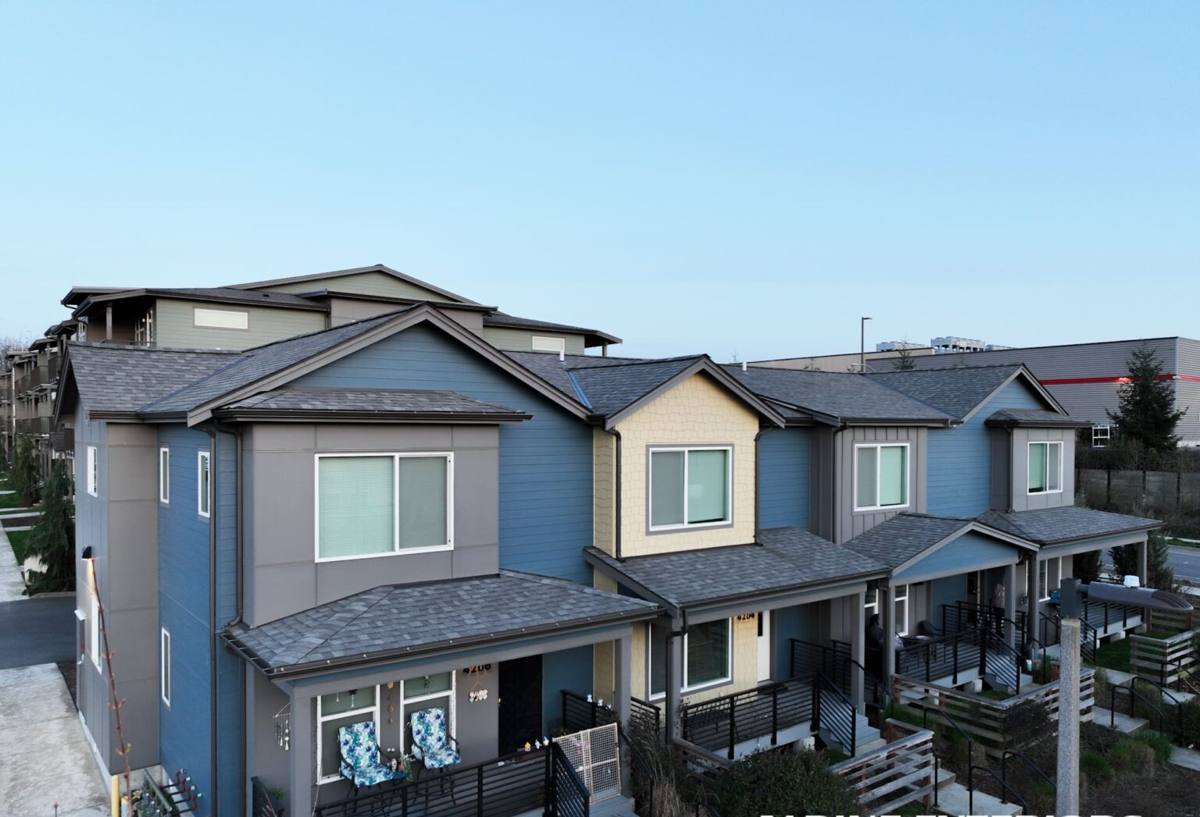
What Kendall Homes Actually Need From Their Siding
Moisture Has to Have Somewhere to Go
Siding in this climate isn't just a barrier — it's part of a drainage system. Rain will get behind the cladding eventually, whether through a hairline crack, a nail hole, or a joint that's opened up over time. What matters is whether that moisture can drain and dry out, or whether it gets trapped against the sheathing. Trapped moisture is what turns a cosmetic siding problem into a rot problem.
Moss and Algae Resistance
The long moss season in Whatcom County means anything with texture, shadow lines, or a porous surface becomes a growth surface if it's not built to shed water and resist organic growth. Cedar, primed wood, and some engineered wood products need regular cleaning and re-coating to keep moss and algae from taking hold. That upkeep is a real, ongoing cost that a lot of homeowners underestimate when they're comparing siding options.
Stability Through Temperature and Moisture Swings
Kendall sees real swings between soaked winter weather and drier, warmer stretches in summer. Siding that expands and contracts too much with those swings will eventually stress its fasteners and open up its seams — exactly where water gets in.
Why We Only Install James Hardie Fiber Cement
We don't install LP SmartSide, vinyl, Cemplank, Allura, primed spruce, or cedar on Kendall homes, and it's worth explaining why rather than just stating it.
Vinyl is inexpensive and low-maintenance in mild climates, but it expands and contracts significantly with temperature, its seams and butt joints are a long-term weak point for water intrusion, and it doesn't hold up structurally to the driving rain and wind exposure this area sees over decades. Engineered wood products like LP SmartSide perform reasonably well when installation and caulking are perfect and stay perfect, but they're wood-based, and wood-based siding in a climate this wet requires flawless maintenance to avoid moisture absorption at cut edges and panel joints. Cedar and primed spruce are genuinely attractive, but they're the most maintenance-intensive option in exactly the climate where maintenance gets skipped — repainting, moss treatment, and edge sealing on a schedule most homeowners don't keep up with.
James Hardie fiber cement is non-combustible, dimensionally stable across our temperature and humidity swings, and factory-finished with ColorPlus technology so the color coat is baked on and warrantied rather than applied on-site and left to weather unevenly. Hardie's HZ5 product line is engineered specifically for climates like ours — freeze-thaw cycling, sustained moisture exposure, and the kind of weather Whatcom County gets more days of than most. It's also backed by a transferable, non-prorated product warranty, which matters if a Kendall home changes hands before the siding's useful life is up.
None of this means the products we don't install are junk — they're just built around trade-offs that don't line up well with this specific climate and with the standard we hold our own work to.
What a Correct Siding Replacement Actually Involves
Tear-Off and Inspection
Removing the old siding is also the only real chance to see what's happening underneath it. We check the sheathing for soft spots, look at window and door flashing, and note any areas where past moisture intrusion has already done damage. On a lot of Kendall homes with older siding, this is where hidden rot around windows or at wall bottoms gets found — and it needs to be dealt with before new siding goes up, not covered over.
Weather-Resistive Barrier and Flashing
A correctly installed weather-resistive barrier, properly lapped and taped, combined with correct flashing at every window, door, and penetration, is what actually keeps water out of the wall assembly. The siding itself is the second line of defense, not the first. Skipping or rushing this step is the single most common cause of siding "failures" that actually have nothing to do with the siding product itself.
Installation to Manufacturer Spec
James Hardie publishes specific fastening patterns, clearances, and gapping requirements, and they exist for a reason — get them wrong and you create the exact moisture pathways the product is designed to avoid. That means correct nail placement and spacing, proper clearance from the ground, decks, and roof lines, and factory-caulked or properly sealed joints at every butt seam and corner.
Our Process for Kendall Projects
- On-site inspection and honest assessment of your current siding, sheathing, and any moisture damage
- Written estimate covering product line, color, trim details, and scope — no surprise add-ons buried in fine print
- Product and color selection, including a look at how ColorPlus finishes hold up under this area's light and moss exposure
- Tear-off, sheathing repair where needed, and correct weather barrier and flashing installation
- Hardie installation to manufacturer specification, including trim, fascia, and soffit work as needed
- Final walkthrough, cleanup, and warranty registration
Cost Factors for Kendall Siding Replacement
Every home is different, but these are the main variables that move the price on a Kendall siding replacement:
| Factor | Why It Matters Here | Effect on Project |
|---|---|---|
| Existing siding removal | Multiple layers or damaged sheathing behind cedar/vinyl add labor and repair time | Can add days and material cost |
| Hidden moisture damage | Common on older homes exposed to years of driving rain and moss | Sheathing or framing repair before siding goes on |
| Siding profile and trim complexity | Lap siding vs. shingle-style accents, plus soffit/fascia scope | More detail work, more labor hours |
| Home size and story count | More square footage and higher walls mean more material and staging | Straightforward material and labor scaling |
| Color and finish selection | Factory ColorPlus finishes vs. field-painted options | Minor cost difference, major long-term maintenance difference |
Broadly, a full siding replacement with James Hardie runs into a meaningful investment for most homes — think of it less as a cosmetic expense and more as replacing a major system on the house, similar in scale to a roof.
Signs a Kendall Home Needs Replacement, Not Just Repair
- Moss or algae that comes back within a season or two of being cleaned off
- Siding that feels soft, spongy, or crumbles at the edges when pressed
- Paint or finish that's failing every two to three years instead of holding for a decade or more
- Visible gaps, warping, or separation at seams, corners, and trim boards
- Staining or swelling near the bottom of walls, especially close to grade or downspouts
- Rooms that feel drafty or damp along exterior walls during winter rain
One or two of these on their own might mean a repair is enough. Several at once, especially combined with a home that's decades old, usually means the underlying material and moisture barrier are past the point where patching makes sense.
Why Hiring a Crew That Already Works in Kendall Matters
A lot of siding problems in this area trace back to installation decisions made by crews who don't regularly work in this specific climate — gapping that's wrong for our humidity swings, flashing details that work fine somewhere drier, or a product choice that was never a great fit for Whatcom County weather to begin with. A crew that's done this work in and around Ferndale and Kendall knows what the driving rain does to a wall over ten winters, how fast moss takes hold on a north-facing elevation, and where past builders in this area have historically cut corners on flashing and moisture barriers.
That local pattern-recognition is what turns a siding replacement from a cosmetic swap into something that actually holds up. It's also why we standardized on one product system installed one correct way, rather than offering a menu of options with wildly different long-term performance in this climate.
If your Kendall home's siding is showing its age, we're glad to take a look and give you a straightforward, no-pressure estimate — just fill out the form below and we'll get in touch.