 Ferndale
 Roofing for Kendall Homes: A Different Kind of Wear
Homes around Kendall and the greater Ferndale area take a steady beating from weather most of the country never deals with. It isn't one big storm that wrecks a roof out here — it's the slow grind of moisture that never fully dries out, wind-driven rain that finds every gap in flashing, and moss that gets a foothold on shaded, north-facing slopes and never lets go. A roof that's a poor match for this climate doesn't fail dramatically. It fails quietly, one soft spot in the decking at a time, until a homeowner is looking at rot damage instead of a simple shingle replacement.
When we install a new roof for a Kendall-area home, we're not just covering the house — we're building a system meant to handle Whatcom County's specific combination of salt-tinged coastal air, long stretches of driving rain, and a moss season that can run much of the year in shaded spots. That means paying attention to details that matter far less in a drier climate: ventilation balance, underlayment choice, flashing at every penetration, and how the roof sheds water when it's coming in sideways.
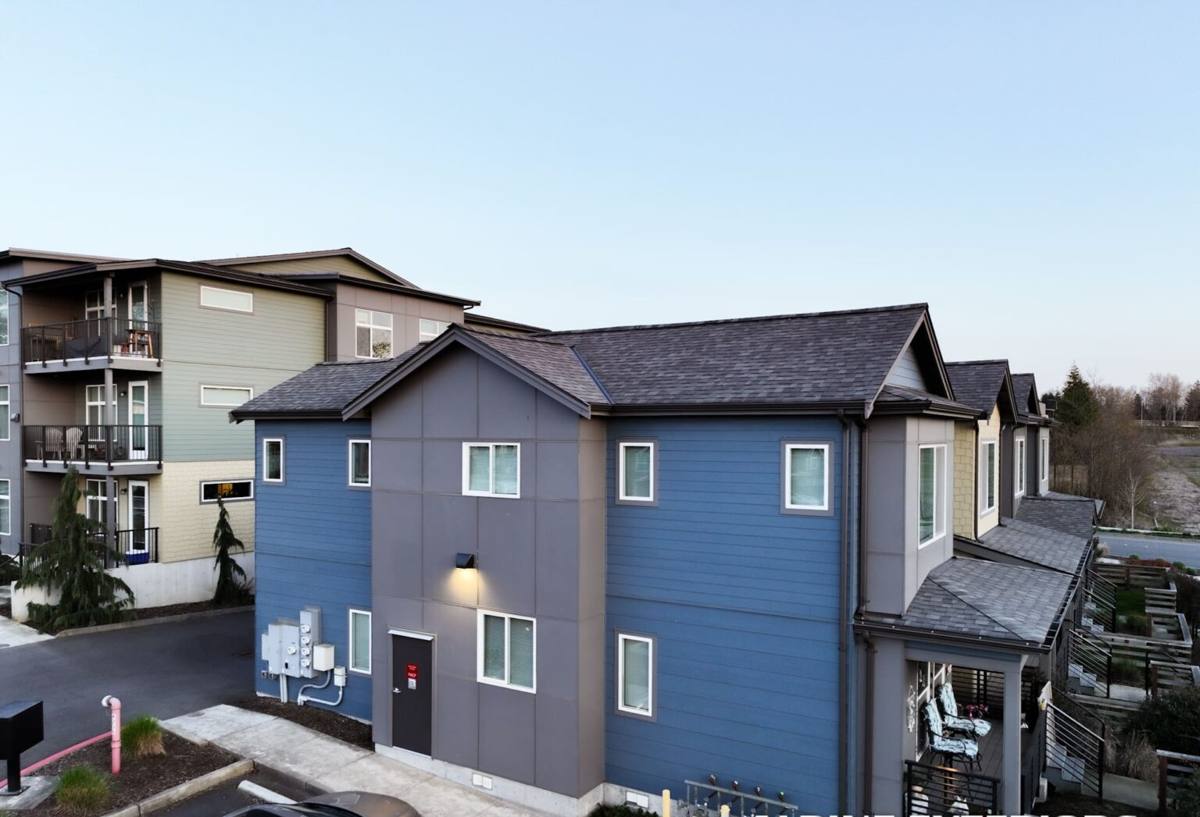
Signs a Roof Has Reached the End of Its Useful Life
Not every roof problem means a full replacement, and we'd rather tell a homeowner the truth than sell a job that isn't needed yet. That said, there are signs that point toward replacement rather than repair:
- Granule loss heavy enough to show bare, shiny patches on shingles, especially on south- and west-facing slopes
- Shingles that are curling, cupping, or cracking across large sections rather than in one isolated spot
- Moss or algae buildup thick enough that it's lifting shingle edges instead of just sitting on the surface
- Soft or spongy decking felt underfoot in the attic, or daylight visible through the roof boards
- Recurring leaks that show up in different spots after each repair — a sign the underlayment and flashing system is failing broadly, not just at one point
- A roof that's 20-plus years old with no documented history of underlayment or flashing upgrades
If a roof is showing one or two of these signs in isolation, a repair or partial re-roof may be the honest answer. When several show up together, that's usually the underlayment and decking telling you the whole system is compromised, not just the shingles on top of it.
Roofing Materials That Actually Hold Up Here
Material choice matters more in this climate than in most. A roof that performs fine in a dry, low-humidity region can struggle here simply because it doesn't shed moisture fast enough or resist moss and algae growth. Here's how the common options stack up for a Kendall-area home:
| Material | Moss/Moisture Resistance | Wind-Driven Rain Performance | Typical Lifespan Here |
|---|---|---|---|
| Standard 3-tab asphalt shingle | Fair — needs regular moss treatment | Fair; more vulnerable at edges in high wind | 15–20 years |
| Architectural (laminate) shingle | Good, especially with algae-resistant granules | Good; heavier profile seals better | 25–30 years |
| Standing seam metal | Excellent — moss struggles to grip smooth metal | Excellent; virtually no lifted-edge risk | 40–50+ years |
| Synthetic composite (shake-style) | Good, varies by product | Good | 30–40 years |
We don't push one material on every home. A steep, heavily shaded roof tucked under fir trees is a different problem than an open, exposed roofline catching wind straight off the fields. What matters is matching the material and detailing to the specific roof, not defaulting to whatever's cheapest per square.
What a Correct New Roof Installation Actually Involves
Full Tear-Off and Deck Inspection
We don't install new roofing over old, failing layers. A full tear-off lets us inspect the decking underneath — the plywood or plank sheathing that everything else depends on. Any soft, delaminated, or rotted decking gets replaced before anything new goes down. Skipping this step is the single most common reason a "new roof" fails early.
Underlayment Built for Wet Climates
In a region with this much sustained rain, we use synthetic underlayment as a baseline and ice-and-water shield membrane at vulnerable points — eaves, valleys, and around penetrations — where wind-driven rain is most likely to work its way backward under the shingles.
Flashing at Every Transition
Chimneys, skylights, vent pipes, sidewall intersections, and valleys are where the vast majority of roof leaks actually start — not in the open field of shingles. Correctly formed and properly lapped flashing at each of these points is non-negotiable, not an upsell.
Balanced Ventilation
A roof that can't breathe traps moisture in the attic, which speeds up decking rot and can void material warranties. We size intake (soffit) and exhaust (ridge or box) venting to work together, not just add vents wherever it's convenient.
Ventilation and Moisture: The Part You Don't See
This is worth its own section because it's the piece most often overlooked on lower-cost roofing jobs. Warm, moist indoor air rises into the attic year-round. In a climate that's already damp outside for much of the year, an attic that can't vent that moisture out ends up with condensation on the underside of the decking — which rots wood from the inside, invisible from the roof surface. Proper intake-to-exhaust balance is standard on every install we do, not an add-on.
Our Installation Process
- On-site inspection and estimate — we walk the roof, check the attic, and give a straightforward written estimate with no pressure to sign on the spot.
- Material selection — we walk through the trade-offs above so the choice fits the home's exposure, roofline, and budget.
- Scheduling around the weather — we plan installs to minimize how long decking is exposed to rain, and stage material delivery accordingly.
- Tear-off and deck repair — old roofing comes off, decking is inspected and repaired as needed.
- Underlayment, flashing, and ventilation installed — the system that actually keeps water out, before a single shingle or panel goes down.
- Roofing material installation — installed to manufacturer spec, including proper nailing patterns and exposure for wind resistance.
- Final walkthrough and cleanup — we inspect the finished roof with the homeowner and clear the site of debris and nails.
What Drives the Cost of a New Roof
Every roof is different, and we'd rather explain what moves the number than quote a flat figure that doesn't hold up once we're actually on the roof.
| Cost Factor | Why It Matters |
|---|---|
| Roof pitch and complexity | Steep, cut-up rooflines with multiple valleys and dormers take longer and need more flashing detail than a simple gable |
| Number of existing layers | Tearing off two layers of old shingles costs more in labor and disposal than one |
| Decking condition | Rotted or delaminated sheathing found during tear-off adds material and labor to replace |
| Material choice | Standing seam metal and premium architectural shingles cost more upfront than standard asphalt but last longer |
| Access and site conditions | Steep driveways, mature trees close to the roofline, or limited staging space can add time |
Before You Hire: A Practical Checklist
Whether you go with us or another contractor, these are worth confirming before any roof work starts:
- Are they licensed and insured to do roofing work in Washington State?
- Will they do a full tear-off and deck inspection, or install over the existing roof?
- What underlayment and flashing details are included, and where — not just "we use good materials"?
- Is ventilation being assessed and addressed, or just the visible roofing surface?
- Is the estimate written, itemized, and clear about what happens if decking repair is needed?
- Do they have local experience with this specific climate — moss, sustained rain, coastal-influenced exposure — rather than a generic regional approach?
Why Local Experience in the Kendall Area Matters
A crew that regularly works roofs in and around Ferndale and Whatcom County has already seen how moss builds up on shaded northern slopes here, how far wind-driven rain can push water up under poorly lapped flashing, and which decking failures show up most often in homes of a certain age in this area. That's not something a contractor coming in from outside the region picks up on the first job. It shows up in the small decisions — where extra ice-and-water membrane actually earns its keep, how much ventilation a particular roofline needs, which valleys are worth extra attention — that separate a roof that lasts two decades from one that starts leaking in five years.
If your roof in the Kendall area is showing its age, or you just want a straight answer about whether repair or replacement makes sense, we're happy to take a look. Reach out for a free, no-pressure estimate using the form below.