 Ferndale
 Roofing Built for Fairhaven's Marine Climate
Fairhaven sits close enough to Bellingham Bay that homes there deal with a different set of roofing stresses than properties further inland in Whatcom County. Salt-laden air off the water accelerates corrosion on fasteners, flashing, and unprotected metal. Driving rain off Puget Sound comes in sideways during fall and winter storms, testing every seam, flashing detail, and underlayment lap on a roof. And the long, wet moss season here — often stretching from October well into spring — means anything less than a properly ventilated, properly pitched, properly maintained roof turns green faster than most homeowners expect.
None of that means Fairhaven roofs need exotic materials. It means the installation details that get skipped on easier jobs — sealed fastener heads, correct underlayment layering, real ventilation — matter more here than they do in drier parts of the state. A roof replacement done right in this area should be built assuming wind-driven rain and moss pressure every single year, not as occasional bad luck.
Signs a Fairhaven Roof Needs Replacing, Not Just Patching
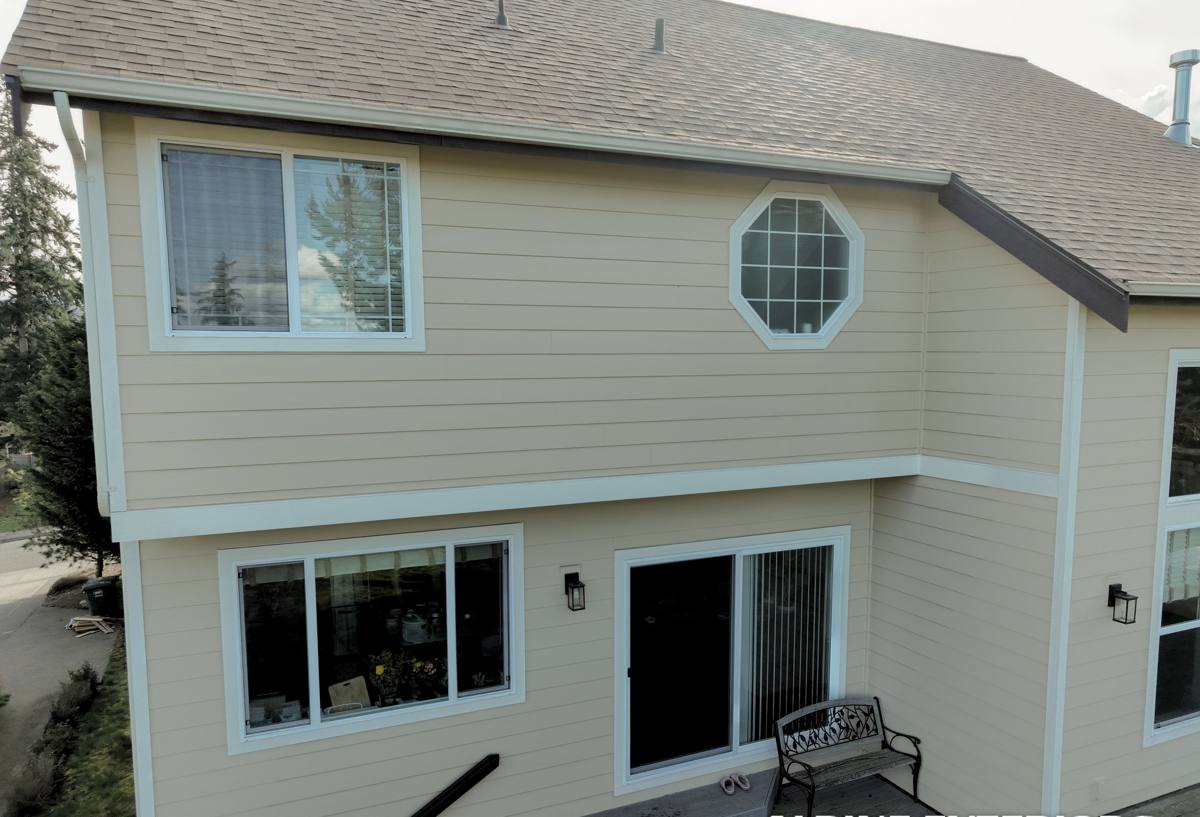
Roof repairs make sense when the damage is isolated and the underlying roof system is still sound. Replacement becomes the honest recommendation when the problems are systemic. In our experience working homes in this part of Whatcom County, the roofs that need full replacement usually show more than one of the following:
- Granule loss heavy enough that you can see bare asphalt mat on multiple slopes, not just one worn patch
- Moss and algae staining that keeps coming back within a season or two of cleaning, even after treatment
- Soft or spongy decking felt underfoot in the attic, or daylight visible through the roof boards
- Curling, cupping, or cracked shingles across the roof rather than in one storm-damaged section
- Chronic leaks that show up in different spots each winter as the underlayment fails more broadly
- Flashing around chimneys, vents, or valleys that's rusted, lifted, or was never properly stepped and counter-flashed
If a roof is past its expected service life and showing two or more of these signs, patching it usually just delays the same conversation a year or two later — often after more water has gotten into the decking or attic insulation.
What a Correct Roof Replacement Actually Involves
Full Tear-Off, Not a Layover
A second layer of shingles over an existing roof can be legal in some cases, but it hides the condition of the decking underneath, adds weight, and typically shortens the life of the new roof. On a marine-climate roof replacement, we tear off down to the deck so we can actually see what we're working with.
Deck Inspection and Repair
Once the old roofing is off, every section of decking gets inspected. Delaminated plywood, soft spots, and any wood that's held moisture over multiple wet seasons gets replaced before anything new goes down. Skipping this step is one of the most common shortcuts in the trade, and it's the one that causes early failures.
Underlayment That Matches the Climate
Given the amount of driving rain this area sees, we use synthetic underlayment across the field of the roof and self-adhering ice-and-water shield membrane at the vulnerable points — eaves, valleys, and around every penetration. That membrane seals around nail penetrations rather than just shedding water, which matters when wind is pushing rain sideways up under the shingle courses.
Ventilation and Moisture Control
A roof that can't breathe traps moisture in the attic, which shortens the life of the decking and encourages the kind of persistent dampness that feeds moss and mildew. We check and correct intake and exhaust ventilation as part of every replacement, not as an upsell — it's part of doing the job correctly in this climate.
Flashing Done the Slow Way
Chimneys, skylights, sidewalls, and valleys fail more often at the flashing than in the field of the roof. Correct step flashing and counter-flashing, properly integrated with the underlayment rather than just caulked over the top, takes longer than a quick fix — but caulk is a maintenance item, not a repair, and it doesn't hold up to years of salt air and freeze-thaw cycling.
Comparing Roofing Materials for Coastal Whatcom County Homes
There's no single "correct" material for every Fairhaven-area home — roof pitch, budget, and the look of the house all factor in. What matters is understanding the honest trade-offs of each option in a salt-air, high-moss environment.
| Material | Moss/Algae Resistance | Salt Air Durability | Typical Lifespan | Maintenance Burden |
|---|---|---|---|---|
| Architectural asphalt shingle (algae-resistant) | Good with AR-rated granules | Good with quality fasteners/flashing | 25-30 years | Periodic moss treatment/cleaning |
| Standing seam metal | Very good — sheds moss growth surface | Depends heavily on coating and fastener quality | 40-50+ years | Low, but coating and fastener checks matter near the bay |
| Cedar shake | Requires regular treatment to resist moss | Moderate — absorbs moisture, needs upkeep | 20-30 years with maintenance | Highest — treatment, cleaning, and inspection cycles |
| Synthetic/composite shingle | Good, low organic material for moss to grip | Good | 30-50 years | Low to moderate |
We don't install products we can't stand behind for this climate. Untreated cedar, for example, looks great on day one but demands a maintenance schedule most homeowners underestimate — regular cleaning, moss treatment, and periodic re-oiling — and skipping that schedule in a wet, salt-air environment shortens its life considerably. If a homeowner wants that look, we're upfront about what keeping it up actually requires rather than letting it be a surprise five years in.
What Drives Roof Replacement Cost Here
Broad ranges only — every roof is different, and the only accurate number comes from an on-site look. That said, these are the factors that move the price up or down on a typical Fairhaven-area home:
| Cost Factor | Why It Matters |
|---|---|
| Roof size and number of stories | More square footage and steeper access both add labor time |
| Pitch and complexity | Steep or cut-up roofs with many valleys and penetrations take longer to flash correctly |
| Layers to remove | Tearing off two layers of old roofing costs more than one |
| Decking condition | Rotted or delaminated plywood found underneath adds material and labor |
| Material choice | Standing seam metal and cedar cost more upfront than architectural asphalt or synthetic |
| Ventilation and flashing upgrades | Bringing an older roof system's ventilation up to current standards adds some cost but pays off in roof life |
We walk through each of these on-site during the estimate so the number makes sense, rather than handing over a flat quote with no explanation behind it.
How Our Process Works
- On-site inspection — we get on the roof (or use a lift/camera when pitch or access requires it), check the attic from inside, and document the actual condition rather than guessing from the ground.
- Written estimate — a clear breakdown of materials, scope, and price, with the reasoning behind each line item.
- Scheduling around the weather — we plan tear-offs for dry windows and keep the roof dried-in at the end of every work day, since an open roof and an unexpected Whatcom County downpour don't mix.
- Tear-off and deck repair — full removal, deck inspection, and replacement of any compromised sheathing before anything new goes on.
- Installation — underlayment, flashing, ventilation, and the finish material, installed to the manufacturer's specifications so the warranty is actually valid.
- Cleanup and walkthrough — magnetic sweep for nails, debris haul-off, and a final walkthrough so you know exactly what was done.
Why a Crew That Already Works Fairhaven Matters
A roofing crew that regularly works this stretch of Whatcom County isn't guessing at how the local climate behaves — they've seen how moss builds up on north-facing slopes in the shade, how quickly bare metal fasteners can start showing rust streaks near the water, and how a roof that's fine in July can leak the first hard rain in November if the flashing wasn't done right. That experience shows up in the small decisions during installation that a homeowner never sees but absolutely feels ten years later.
Being based in Ferndale also means we're not driving in from out of the area for a service call if something needs a look after a storm, and we're familiar with the permitting expectations of local jurisdictions in the county. That local presence matters more on a roof than almost any other exterior project, because a roof problem that gets ignored for a few extra days in this climate can turn into a much bigger repair.
After Your Roof Is Replaced: Keeping It That Way
- Clean gutters at least twice a year — clogged gutters back water up under the roof edge
- Have moss growth treated at the first sign of it rather than waiting for a full season of growth
- Trim back overhanging branches that keep shaded areas of the roof damp
- Check attic ventilation isn't blocked by insulation or storage after any attic work
- Walk the roofline visually after major windstorms and after your roof's first winter
- Keep a copy of your warranty and installation paperwork somewhere you can find it
A roof replacement is one of the larger investments a homeowner makes in a house, and it's not one you want to redo because of shortcuts that don't show up until the third or fourth wet season. If you're weighing repair versus replacement on a Fairhaven-area home, or you just want an honest look at what condition your roof is actually in, we're glad to come take a look. Fill out the form below for a free, no-pressure estimate — we'll tell you straight what we see, whether that means a full replacement or just some maintenance to buy you more time.