 Ferndale
 Building New in Fairhaven? The Windows Deserve as Much Attention as the Siding
When a home is going up from the studs out, it's easy to think of windows as a fixture you pick from a catalog and drop into a rough opening. They're not. On a new build, the window installation is really a water-management decision — it determines whether the wall assembly behind your siding stays dry for the next 30 years or starts hiding rot behind the drywall in year five. In a community like Fairhaven, sitting close to the water with salt-laden air, wind-driven rain, and a moss season that runs a good chunk of the year, that decision matters more than it would somewhere drier and inland.
We install new-construction windows as part of new home builds and additions throughout the Ferndale and Whatcom County area, working directly with builders, GCs, and owner-builders. This page covers what that work actually involves, what the local climate demands from the materials and the installation method, and how we run the job so it holds up.
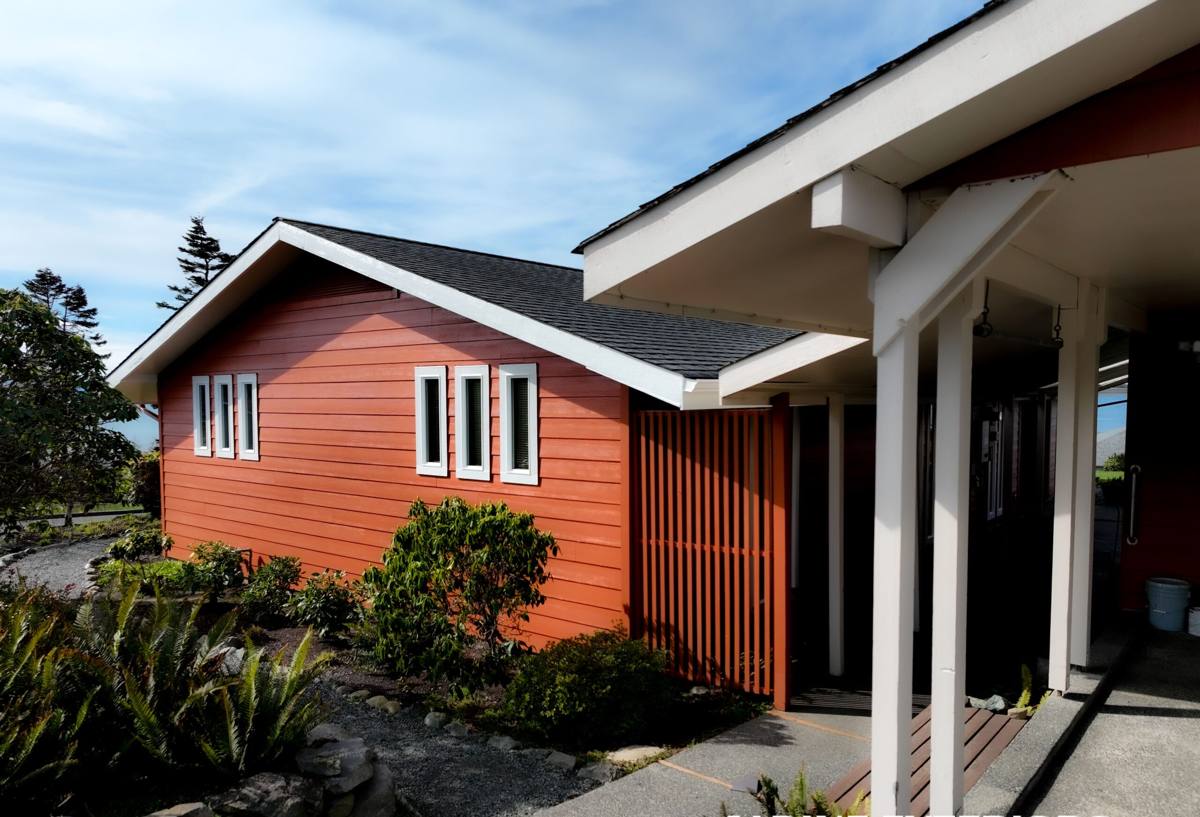
What Fairhaven's Climate Actually Does to a Window Opening
Three things define the environment here, and each one puts a different kind of stress on a window installation:
- Salt air: proximity to Bellingham Bay and the Strait means airborne salt settles on hardware, fasteners, and metal flashing. Untreated or low-grade metal corrodes faster here than it would 20 miles inland, and corroded flashing is a leak waiting to happen.
- Driving rain: Whatcom County storms don't just fall straight down — wind pushes rain sideways into wall assemblies, which means the flashing detail at the head, jambs, and sill has to shed water actively, not just sit there and hope gravity does the work.
- A long moss and algae season: cool, damp air for much of the year means anything that holds moisture — a poorly sloped sill, a clogged weep hole, a horizontal trim ledge — becomes a growth surface. Moss and algae hold moisture against the frame and finish long after the rain stops.
None of this means windows in Fairhaven fail — it means the installation has to account for conditions that a generic install in a drier climate can get away with ignoring.
Choosing a Frame Material That Fits the Environment
Frame material is a real decision here, not a style preference. We look at how each option behaves under salt exposure, sustained moisture, and the freeze-thaw swings that show up in colder snaps.
| Frame Type | How It Handles This Climate | Trade-Offs to Know |
|---|---|---|
| Vinyl | Won't corrode or rot; handles salt air and moisture well; low maintenance | Can expand/contract with temperature swings; quality varies a lot by manufacturer |
| Fiberglass | Very stable dimensionally, resists moisture and corrosion, holds paint/finish well over time | Higher upfront cost than vinyl |
| Wood-clad | Warm interior appearance; cladding protects exterior face from weather | Any breach in the cladding or sealant exposes wood to our wet climate — needs a disciplined install and ongoing upkeep |
| Aluminum | Strong and slim sightlines | Conducts cold and can corrode faster in salt air unless properly coated; needs thermal breaks in this climate |
We don't push one brand or line as the only "right" answer — we walk through the trade-offs against your budget, the home's design, and how exposed the elevation is to wind and salt, and let you make an informed call.
The Part That Actually Determines Whether the Windows Leak
Here's the honest truth about new-construction window failures: they almost never happen because the window itself was bad. They happen because the flashing and weather-barrier integration around the window was done out of sequence or skipped a step. This is the part of the job that doesn't show once the siding goes on, which is exactly why it has to be done right the first time.
The sequence we follow on every opening
- Sill pan first. A sloped, back-dammed sill pan under the window gives any water that does get past the frame somewhere to go — out, not into the wall cavity. This is non-negotiable in a driving-rain climate.
- Weather-resistive barrier prep. The housewrap or building paper around the opening is cut and prepped so it laps correctly with the window flange — water always has to move downward and outward, never behind a lower layer.
- Window set and fastened per the manufacturer's structural and warranty requirements, plumb, level, and square, with the nailing fin fully engaged.
- Flashing tape at jambs, then head — always in shingle-lap order, so each layer overlaps the one below it like roof shingles. Head flashing goes on last and laps over the jamb flashing and the WRB above it.
- Sealant used where it belongs — not smeared everywhere as a substitute for correct flashing. Over-sealing can trap moisture inside a wall assembly just as badly as under-sealing lets it in.
- Weep paths checked and left clear so any incidental water has an exit route, not a place to sit.
Get this sequence wrong — flash the head before the jambs, skip the sill pan, or bury the window flange under the WRB instead of over it — and you've built a funnel pointed at your framing. It won't show up at final walkthrough. It shows up in a moisture reading two or three winters later, right about the time moss is thickest on every north-facing surface in the neighborhood.
Our New-Construction Window Installation Process
On a new build, we're one trade in a sequence, and staying coordinated with the rest of the build matters as much as the install itself.
Before the windows arrive
We confirm rough openings against the approved window schedule, verify the WRB is installed and lapped correctly ahead of window set, and check that sill pan materials and flashing tape are on-site and compatible with the WRB and window flange (not all flashing tapes bond reliably to every housewrap — we check compatibility rather than assume it).
During installation
Each opening gets the full sill-pan-to-head-flashing sequence described above. We shim and fasten to the window manufacturer's spec, check for square and plumb on every unit (not just a sample), and set interior and exterior sealant only where the detail calls for it.
Before we hand off to the siding trade
We inspect every opening's flashing lap direction, confirm no exposed fasteners or gaps remain, and document anything that needs the builder's attention before siding closes the wall up for good. Once siding goes on, the flashing behind it is out of sight for decades — this is the last point anyone can catch a mistake without tearing something open.
Timing and Coordination With Your Builder or GC
Window installation on a new build sits in a tight window (no pun intended) between the WRB going on and the siding starting. Rushing this stage to keep a schedule is one of the most common ways corners get cut on new builds generally — not just by us, as a general trade issue. We'd rather flag a scheduling conflict early and hold the line on sequence than let a rushed install create a callback two years down the road. If you're an owner-builder managing your own trade schedule, we're glad to work directly with you on timing so the window stage doesn't get squeezed.
Energy Performance for a Whatcom County Winter
Washington's state energy code sets minimum performance requirements for new-construction windows, and Whatcom County's climate zone calls for solid thermal performance without needing extreme measures. A few things worth understanding before you finalize a window order:
- U-factor measures how much heat the window loses — lower is better for our cool, wet winters.
- Solar Heat Gain Coefficient (SHGC) matters less here than in sunnier climates, but orientation still affects which glass package makes sense on south- and west-facing elevations.
- Multi-pane glazing with a Low-E coating and gas fill is standard on new construction here and pays off in comfort near the glass, not just on the energy bill.
- Certified performance labels (look for NFRC ratings on any window you're considering) let you compare products on real numbers instead of marketing claims.
We can help you cross-check a window schedule against code minimums before it's ordered, which is a lot cheaper than discovering a shortfall at inspection.
What Drives the Cost on a New-Construction Window Job
| Factor | Why It Moves the Price |
|---|---|
| Frame material | Vinyl is typically the most affordable; fiberglass and wood-clad cost more upfront but differ in longevity and upkeep |
| Number and size of openings | More openings and larger units mean more labor and material per opening |
| Glass package | Upgraded Low-E coatings, gas fills, or triple-pane glass add cost but improve comfort and code margin |
| Elevation exposure | Wall faces taking the most wind-driven rain and salt air may warrant upgraded flashing tape or sealant systems |
| Site access and scheduling | Coordinating tightly with a builder's schedule on an active job site affects crew logistics |
We won't quote a number without seeing the window schedule and openings, but we're happy to walk through rough ranges and trade-offs during an estimate so there are no surprises.
A Few Things to Check Before You Sign Off on a Window Package
- Does the frame material match the exposure level of that elevation (more salt/wind facing water, more shelter on the lee side)?
- Are U-factor and SHGC numbers documented with an NFRC label, not just a sales sheet claim?
- Is a sill pan specified for every opening, not just the "problem" ones?
- Does the flashing tape brand have documented compatibility with your WRB brand?
- Is there a written sequence for who installs WRB, who sets windows, and who flashes — so nothing falls between trades?
Why a Crew That Already Works in Fairhaven Is Worth Having
Flashing details that work fine in a dry inland climate can fall short here. A crew that's already worked jobs in Fairhaven and the surrounding Ferndale area has seen firsthand how salt air ages hardware, how a north-facing sill collects moss faster than a south-facing one, and how a storm coming off the water hits a wall differently than a storm anywhere else. That's not something you can fully substitute with a spec sheet — it comes from doing the work in this specific environment, on this specific coastline, season after season.
We're not asking you to take our word for the details that matter most — sill pans, flashing sequence, material choice for a salt-air exposure — and that's exactly why we lay them out here. A contractor who can explain why they do something a certain way, in plain terms, is one worth trusting with an opening that's about to get closed up behind siding for good.
If you're planning a new build or addition in Fairhaven and want window openings done right the first time, we're happy to walk your plans, talk through frame and glass options for this climate, and give you a straightforward, no-pressure estimate. Use the form below to get started.