 Ferndale
 Building Decks for Fairhaven's Coastal Climate
Fairhaven sits close enough to the water that its weather behaves differently than a deck built ten miles inland. Homes here deal with salt-laden air off the Salish Sea, wind-driven rain that gets pushed sideways under eaves and railings, and a long stretch of the year where shaded or north-facing surfaces stay damp enough to grow moss. A deck built without those conditions in mind will look fine for a season or two and then start showing problems — soft spots, corroding hardware, slick green film on the boards — well before it should.
We build and repair decks throughout the Ferndale and Whatcom County area, and the decks closest to the water get treated differently from the start: different fasteners, different drainage details, different material recommendations. This page covers what actually matters when you're building a deck for Fairhaven's specific conditions, and how our process accounts for it.
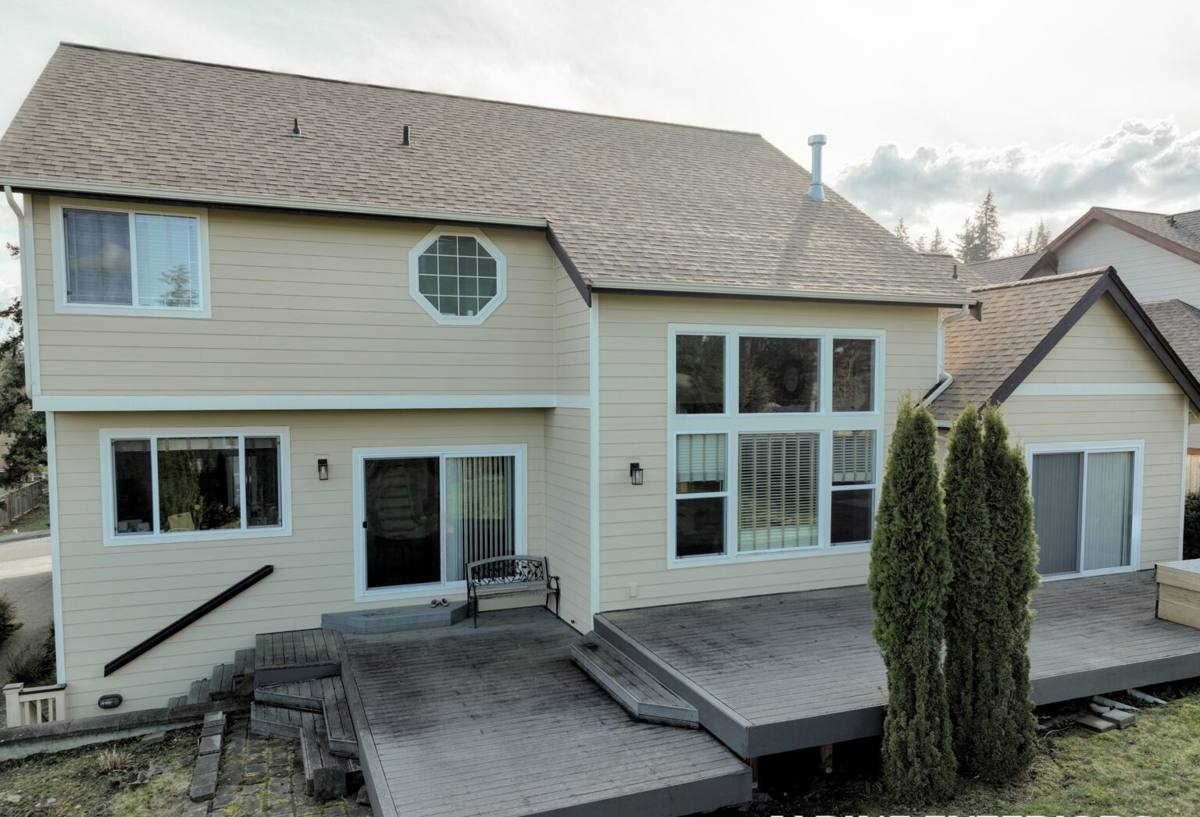
What Salt Air, Driving Rain, and Moss Actually Do to a Deck
Salt Air and Metal Fatigue
Airborne salt accelerates corrosion on anything metal — nails, screws, joist hangers, post bases, railing brackets. On a standard-grade fastener, that corrosion can start showing as rust streaks on the decking within a couple of years. The real damage is invisible: rust weakens the fastener from the inside, and a corroded joist hanger or ledger bolt is a structural problem, not a cosmetic one.
Wind-Driven Rain
Rain that falls straight down is easy to shed. Rain that's being pushed sideways by wind off the water finds its way into places a standard drainage plan doesn't account for — under railing posts, behind fascia boards, into the end grain of decking where boards butt against the house. Over time this is what causes rot at ledger connections and delamination in lower-grade composite products.
Moss and Shade
Whatcom County's damp, mild climate is close to ideal for moss growth, and decks with any shade — from trees, the house itself, or a neighboring structure — will grow it faster than an open, sun-exposed deck. Beyond looking bad, moss holds moisture against the deck surface and makes boards genuinely slippery, which is a real safety issue on stairs and ramps.
Choosing the Right Decking Material for This Environment
There's no single "best" decking material — the right choice depends on how exposed the deck is, how much maintenance you're willing to do, and your budget. Here's how the common options hold up specifically against salt air, driving rain, and moss:
| Material | Salt Air Resistance | Moss/Moisture Behavior | Maintenance |
|---|---|---|---|
| Pressure-treated wood | Good if fasteners are upgraded | Needs regular cleaning and re-sealing to resist moss | Annual cleaning, re-staining every 2-3 years |
| Cedar | Naturally decent resistance | Still grows moss in shaded, damp spots without upkeep | Regular sealing to maintain color and resist checking |
| Composite decking | Very good — no corrosion risk in the board itself | Resists rot but can still grow surface moss; needs periodic washing | Low — occasional cleaning, no staining |
| PVC/capped composite | Excellent — fully sealed surface | Best moss resistance of the group; smooth cap sheds moisture | Lowest — soap and water as needed |
For homes in exposed, close-to-the-water spots in Fairhaven, we often steer people toward composite or capped composite decking specifically because it removes wood's biggest weaknesses in this climate — rot at fastener holes and end grain — without asking for constant upkeep. That said, wood decking, done correctly with the right fasteners and a real maintenance routine, still holds up fine and remains the more affordable option. We'll walk through the honest trade-offs for your specific site rather than push one product line.
Framing, Fasteners, and the Parts You Don't See
The decking boards get all the attention, but the framing underneath is what determines how long a deck actually lasts. In a salt-air environment, we treat the substructure differently:
- Hot-dip galvanized or stainless steel hardware for joist hangers, post bases, and structural connectors — standard electro-galvanized hardware corrodes faster than it should this close to the water
- Stainless or coated deck screws instead of standard exterior screws, especially anywhere the fastener head is exposed to weather
- Proper ledger board flashing where the deck attaches to the house, since this is the single most common point of hidden rot on any deck, coastal or not
- Joist tape or flashing on top of framing members to keep moisture from wicking into the wood from the fastener holes
- Footings sized and set to local frost and soil conditions, not just minimum code depth
None of this is visible once the deck is finished, which is exactly why it matters where you have it done. A deck can look identical on the surface with completely different hardware underneath, and the cheaper hardware is the one that fails first.
Drainage, Airflow, and Keeping Moss Off Your Deck
Most moss and rot problems trace back to water that has nowhere to go. A few details make a real difference over the life of the deck:
Board Spacing and Slope
Decking needs consistent gapping so water drains through rather than pooling on the surface, and the frame itself should have a slight slope away from the house. On composite decking especially, correct spacing also allows the boards to expand and contract with temperature without buckling.
Under-Deck Ventilation
Low clearance decks that sit close to the ground trap moisture underneath and become a moss and mildew factory in the shade. Where grading allows, we build in enough clearance and, where needed, ventilation gaps to let air move underneath.
Sun Exposure and Landscaping
We can't move your trees, but during design we'll flag areas that are going to stay shaded and damp most of the year — those spots are worth extra attention in material choice and drainage, because they're where moss and algae will show up first regardless of what's installed.
Our Deck Building Process
- Site visit and assessment — we look at sun exposure, drainage, proximity to the water, existing structure (if replacing a deck), and how the space will actually be used
- Design and material selection — layout, railing style, and decking material chosen based on your budget and how exposed the site is to weather
- Permitting — pulling any required permits and confirming setback, guardrail, and footing requirements with the local building department before work starts
- Demolition (if replacing an existing deck) — including a check of the ledger and any framing that may already have hidden rot
- Framing — footings, posts, beams, and joists built with corrosion-resistant hardware suited to this climate
- Decking and railing installation — proper spacing, fastening, and flashing details throughout
- Final walkthrough — we go over the finished deck with you, including what maintenance it actually needs going forward
Permits and Code Basics
Most new decks and many deck replacements require a permit, with requirements around guardrail height, stair geometry, footing depth, and ledger attachment to the house. These requirements exist because deck failures are almost always structural, not cosmetic — an under-built ledger connection or undersized footing is what leads to a serious accident, not a squeaky board. We handle the permit process as part of the job so you're not left guessing whether your deck is actually up to code.
Deck Maintenance Checklist for This Area
Whatever material you choose, a little seasonal attention goes a long way in this climate:
- Sweep debris off the deck regularly, especially in fall when leaves and needles trap moisture against the boards
- Wash the surface at least once a year with a deck cleaner suited to your material to remove early moss and algae before it takes hold
- Check fastener heads and railing connections annually for rust or looseness
- Re-seal or re-stain wood decking on the schedule your product calls for — don't wait until it visibly needs it
- Keep an eye on shaded corners and under-railing areas, where moss tends to establish first
- Confirm gutters and downspouts near the deck aren't dumping extra water onto or under it
Why Local Experience Matters for This Job
A deck built to a generic spec sheet will often meet code and still underperform in a place like Fairhaven. Knowing which fastener grade actually holds up this close to salt air, which corners of a given lot stay damp longest, and how the local building department wants ledger flashing detailed all comes from having done this work in Whatcom County repeatedly — not from a manufacturer's install guide written for a dry inland climate. That's the difference between a deck that needs real attention in five years and one that's still solid in twenty.
If you're planning a new deck or need to replace one that's showing its age, we're happy to take a look and put together a free, no-pressure estimate — just fill out the form below.