 Ferndale
 Everson Is Inland, But Whatcom County Weather Still Wins
Everson sits up the Nooksack River valley, away from saltwater, so it doesn't take the direct salt spray that homes right on Bellingham Bay or Birch Bay deal with. That's a real difference, and we won't pretend otherwise. But Everson is still Whatcom County, which means the same wet Pacific weather pattern that soaks Ferndale rolls right up the valley: long stretches of driving rain from fall through spring, heavy cloud cover that keeps roof surfaces damp for days at a time, and a moss and algae season that runs far longer here than in drier parts of the state. Humidity sitting on a roof deck does its own kind of damage even without salt in the air — it just shows up as rot, fungal growth, and shortened shingle life instead of metal corrosion.
A roof built for a dry-climate spec sheet doesn't hold up out here. A roof built for how this valley actually behaves — wet, shaded by tree cover in a lot of yards, and slow to dry between storms — does. That's the standard we install to, whether the job is in Ferndale proper or out toward Everson, Nooksack, and Sumas.
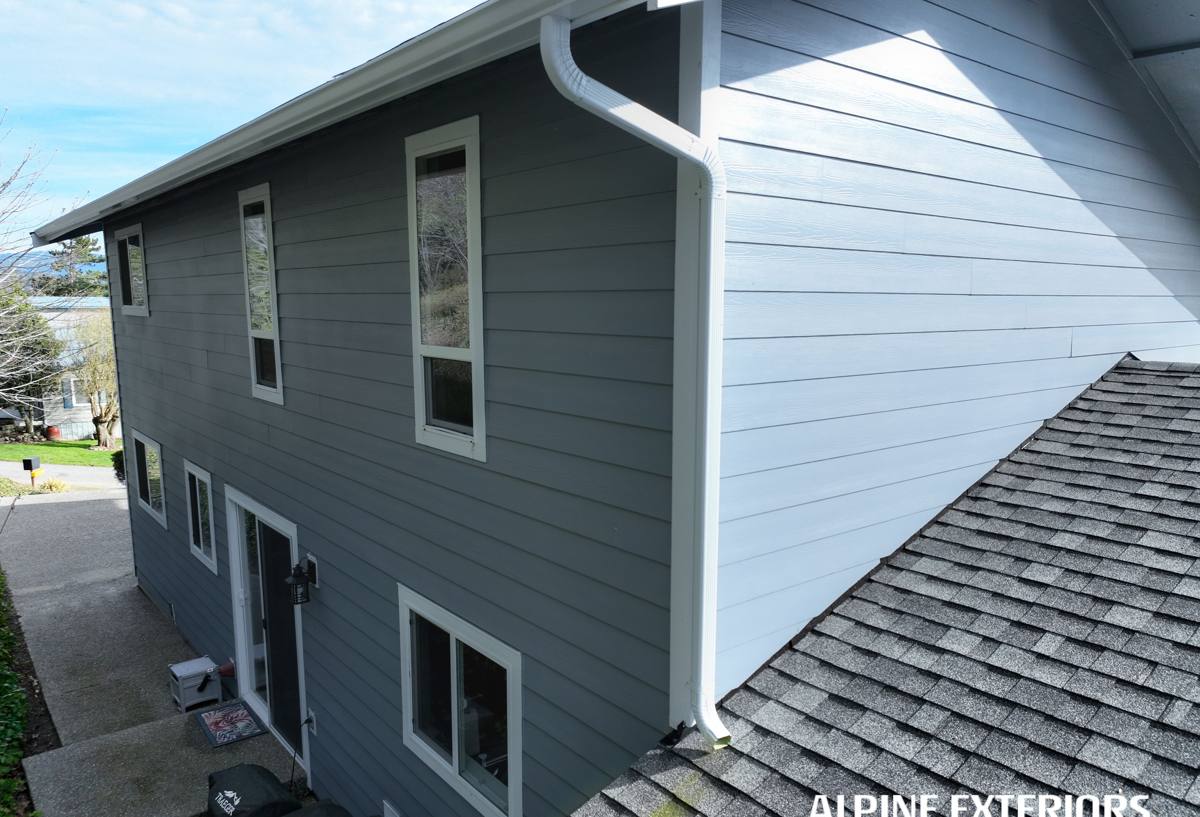
What "Correct" Actually Means on a New Roof Installation
A new roof is more than shingles nailed to a deck. In this climate, the parts nobody sees are what decide whether the roof lasts fifteen years or thirty-five.
Underlayment and Water Protection
We install synthetic underlayment as the primary water barrier across the whole roof, with self-adhering ice-and-water membrane at the eaves, valleys, and any low-slope transitions — the spots where wind-driven rain backs up under shingles instead of running off. In a valley climate with long soaking rains, valleys and eaves are where a cut-rate underlayment job fails first.
Ventilation That Matches the Attic
Intake at the soffits and exhaust at the ridge have to be balanced, not just present. Under-ventilated attics trap moisture from everyday household humidity, and that moisture condenses on the underside of the deck, which rots sheathing and feeds mold from the inside — completely separate from anything happening outside the shingles.
Flashing That Actually Sheds Water
Step flashing at walls, counterflashing at chimneys, and properly lapped flashing at any roof-to-wall or roof-to-roof transition matter more than the shingle brand. Most leaks we get called out on aren't shingle failures — they're flashing that was reused, undersized, or caulked instead of properly lapped.
Fastening for Wind
Whatcom County gets its share of windstorms off the Strait and down the valleys. We fasten to the shingle manufacturer's high-wind pattern, not the minimum pattern, and we check nail placement — high nailing is one of the most common defects we find on tear-offs of roofs that failed early.
Roofing Material Options for Everson Homes
Most Everson homes we work on land on architectural asphalt shingle or standing seam metal. Cedar shake still shows up on older or more rustic properties, and we'll discuss it honestly if that's what you're after.
| Material | Typical Lifespan | Moss/Moisture Behavior | Maintenance | Relative Cost |
|---|---|---|---|---|
| Architectural asphalt shingle | 25–30 years | Good with algae-resistant granules; still needs moss removal in shaded yards | Low | $ |
| Standing seam metal | 40–60 years | Sheds moisture fast; moss struggles to get a foothold on a hard, smooth surface | Very low | $$$ |
| Cedar shake | 20–30 years with upkeep | Absorbs moisture, needs active moss/moisture management | High | $$–$$$ |
| Synthetic/composite shake | 30–50 years | Doesn't absorb moisture like real cedar; better moss resistance | Low | $$–$$$ |
We don't push cedar shake as a first recommendation on shaded, tree-heavy lots typical of the river valley around Everson, and we're upfront about why: real wood shake in a damp, shaded setting needs consistent upkeep — moss removal, occasional treatment, and attention to ventilation underneath — to hit its expected lifespan. That's a maintenance commitment, not a defect in the product, and some homeowners are glad to take it on for the look. We just want you deciding with the full picture, not finding out after the fact.
Our New Roof Installation Process, Start to Finish
- Inspection and estimate. We walk the roof, check the attic from inside, look at flashing and ventilation, and give you a written scope — not just a price per square.
- Tear-off and deck inspection. Old material comes off down to the sheathing so we can actually see the deck, not guess at what's under it.
- Deck repair. Any soft, rotted, or delaminated sheathing gets cut out and replaced before anything new goes down. This is called out separately in the estimate — we don't bury it as a surprise mid-job.
- Underlayment and flashing. Ice-and-water membrane at vulnerable areas, synthetic underlayment across the field, new flashing at every wall, valley, and penetration.
- Roofing material installation. Installed to manufacturer spec and high-wind fastening pattern, with attention to exposure and alignment.
- Ventilation and accessories. Ridge vents, soffit vents, pipe boots, and any skylight or chimney flashing tied in correctly.
- Cleanup and haul-away. Magnetic sweep for nails, full tear-off debris removal, yard and gutters cleared.
- Final walkthrough. We go over the finished roof with you and leave you with warranty paperwork and documentation of what was installed.
Signs an Everson Roof Is Ready for Replacement
- Granules collecting in gutters or at downspout outlets
- Shingles curling, cupping, or looking "bald" in patches
- Moss forming mats rather than light surface growth, especially on north-facing or shaded slopes
- Daylight visible through the roof deck when viewed from inside the attic
- Soft or spongy spots felt when walking the roof
- Water staining or discoloration on ceilings or interior walls
- Missing or lifted shingles after a windstorm
- Roof age at or past the material's expected service life, even with no visible damage yet
Any one of these on its own isn't necessarily an emergency, but a few together are usually a sign it's time for a real inspection rather than another round of patching.
Moss, Algae, and the Long Wet Season Up the Valley
Moss doesn't just sit on a roof looking bad — it holds water against the shingle surface long after the rest of the roof has dried, which accelerates granule loss and, over time, works its way under shingle edges. In a river valley setting with mature tree cover, shaded roof slopes can stay damp for days after a storm passes, which is exactly the environment moss and algae need.
We install zinc or copper strips near the ridge on new roofs where moss has historically been a problem — rain washing over the metal releases trace amounts that inhibit growth downslope. We'll also talk through tree canopy trim where it's contributing to a shaded, slow-drying roof, since that's often a bigger lever than anything done to the roofing material itself. What we won't recommend is pressure washing an aging shingle roof to remove moss — it strips granules and shortens the roof's remaining life faster than the moss would have on its own.
Permits, Codes, and Structural Considerations
A full reroof in Whatcom County typically requires a permit, and inspections confirm the work meets current wind and snow load requirements for the area — not just whatever code applied when the house was originally built. Working this area regularly means we're used to the county's permit process and inspection expectations, so it doesn't turn into a delay on your project.
We also check for anything that isn't strictly code-driven but matters structurally: undersized ventilation on an older home, deck sheathing that was never up to current thickness standards, or additions where the roof framing was tied in without proper flashing. None of that shows up on a curb-level look — it comes out during tear-off, which is one more reason a full inspection down to the deck matters more than a quick shingle-only estimate.
Cost Factors for a New Roof in Everson
| Factor | Why It Moves the Price |
|---|---|
| Roof size (squares) | Material and labor scale directly with total square footage |
| Pitch and complexity | Steep or cut-up roofs with multiple valleys take longer and need more safety setup |
| Number of existing layers | Tearing off two layers of old shingles costs more than tearing off one |
| Deck condition | Rotted or delaminated sheathing found at tear-off adds repair cost |
| Access | Tree cover, steep driveways, or tight lots affect staging and disposal |
| Material choice | Standing seam metal costs more upfront than asphalt shingle but lasts far longer |
| Ventilation upgrades | Adding proper intake/exhaust venting where none existed is additional work, not an accessory |
Full roof replacements on typical single-family homes generally run somewhere in the low five figures into the high five figures depending on the factors above — we won't give you a number that isn't based on actually seeing your roof, but that's the honest range most homeowners in this area should expect to plan around before getting a firm quote.
Why a Crew That Already Works Everson Matters
We're based in Ferndale, and Everson is well within the area we work regularly — this isn't a job we'd be driving in from out of county for. That matters in a few concrete ways: we already know Whatcom County's permitting and inspection process, so a reroof doesn't stall waiting on paperwork we're unfamiliar with. We're close enough to respond quickly if a warranty question or storm-related concern comes up after the job is done, instead of you waiting on a crew that has to schedule a special trip. And because we're regularly on roofs throughout the county — from waterfront homes dealing with salt exposure to inland valley homes like Everson dealing with shade and moss — we bring the same attention to underlayment, flashing, and ventilation to every job, adjusted for what your specific property actually faces rather than a one-size-fits-all install.
If your roof is showing its age or you're planning ahead of a problem, we're glad to come out, walk the roof with you, and give you a straight assessment — no pressure, no hard sell. Use the form below to request a free estimate for your Everson property.