 Ferndale
 Building Decks for Custer's Coastal Climate
Custer sits close enough to the water and open farmland north of Ferndale that its decks take a different kind of beating than a deck built twenty miles inland. Salt-laden air off the Strait and Birch Bay, driving rain that comes in sideways during winter storms, and a moss season that can run from October well into April all work against wood, fasteners, and finishes. A deck built here needs to be designed for that reality from the framing up, not just from the surface down.
We build and repair decks throughout Whatcom County, and Custer projects get the same attention to substructure, drainage, and hardware selection as anywhere else we work. The difference between a deck that looks good for two summers and one that holds up for twenty almost always comes down to decisions nobody sees once the boards are down.
What Custer Homes Need From a Deck
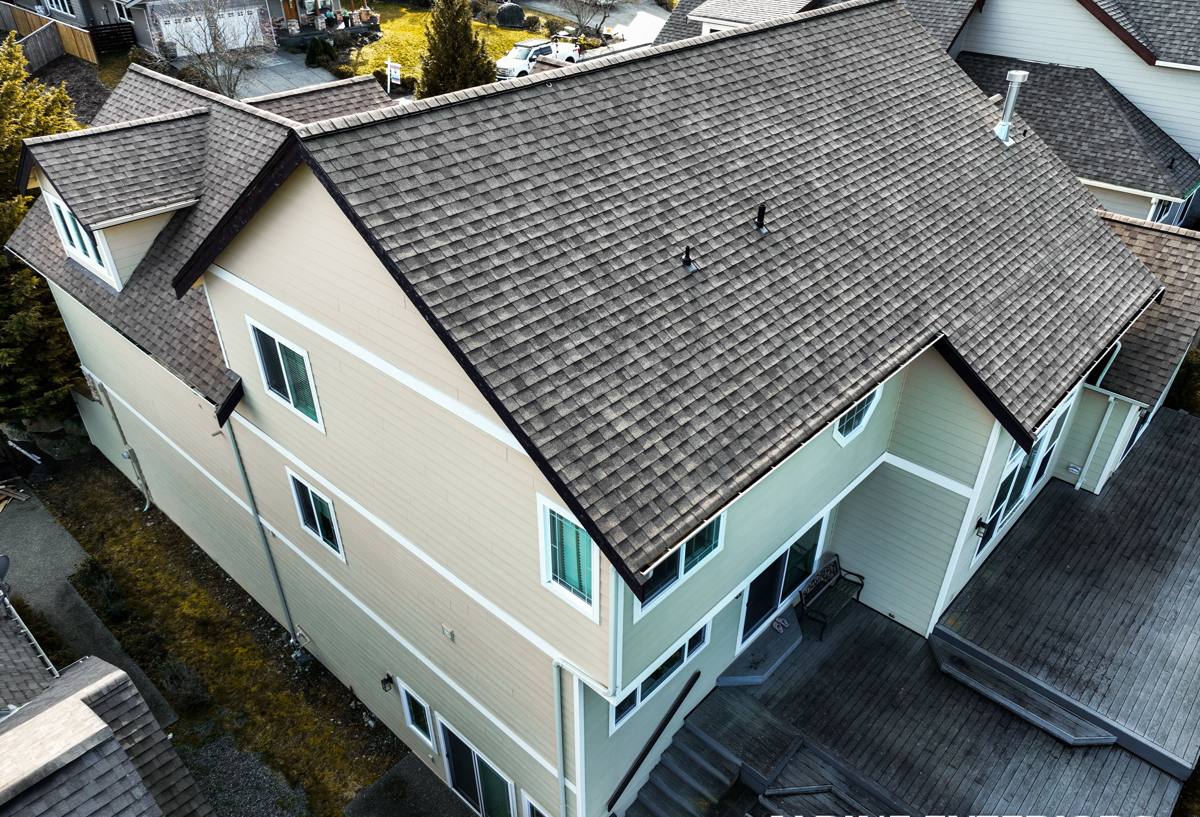
Most Custer properties sit on larger lots with more exposure to open wind and weather than a tightly packed neighborhood would see. That has real consequences for deck design:
- More direct exposure to wind-driven rain means ledger flashing and board spacing matter more, not less.
- Proximity to salt air accelerates corrosion on anything less than stainless or coated fasteners.
- Shaded or tree-lined lots hold moisture longer, which means moss and algae growth happens faster and more often than on an open, sun-exposed deck.
- Agricultural and rural surroundings can mean more standing debris — leaves, needles, grass clippings — that traps moisture against decking if it's not designed to shed it.
None of this means a deck in Custer has to be high-maintenance or short-lived. It means the build has to account for these conditions instead of ignoring them.
Choosing Decking Material for Salt Air and Moss Season
There's no single "best" decking material — there's a best material for a given budget, sun exposure, and how much upkeep a homeowner actually wants to do. Here's how the common options hold up under Custer's conditions specifically:
| Material | How It Handles Salt Air & Rain | Moss & Algae Resistance | Typical Maintenance |
|---|---|---|---|
| Pressure-treated fir/hem-fir | Good if fasteners and flashing are corrosion-rated; wood itself is durable when sealed | Needs regular cleaning and re-sealing to resist moss in shaded areas | Annual cleaning, re-sealing every 2-3 years |
| Cedar | Naturally rot-resistant; still needs sealing against driving rain | Better natural resistance than fir, but still grows moss if shaded and neglected | Cleaning and oil/sealant every 1-2 years |
| Composite (capped) | Excellent — doesn't absorb moisture, unaffected by salt | Can still grow surface algae/moss if shaded and never cleaned, but doesn't rot | Occasional washing, no sealing ever needed |
| PVC decking | Excellent — fully moisture-proof | Same surface-growth caveat as composite | Occasional washing |
We'll tell you honestly which option fits your budget and how much time you want to spend maintaining it. Composite and PVC cost more up front but remove wood rot from the equation entirely, which matters more here than in a drier climate. Cedar and treated wood cost less and can look great for decades — but only if they're maintained on a real schedule, not an occasional one.
A Note on Product Selection
We don't install every decking product on the market. Some composite lines have had documented moisture-intrusion problems at butt joints and fastener points when installed without proper gapping and drainage detailing. Rather than fight a product's design limitations on every job, we stick to lines with a track record in wet Pacific Northwest conditions and install them to the manufacturer's wet-climate specifications, including expansion gaps and proper ventilation underneath.
Framing and Substructure — Where Decks Actually Fail
Almost every deck failure we get called out to inspect starts below the decking boards, not on the surface. In a climate like Custer's, three things determine whether a frame lasts:
Ledger Attachment and Flashing
Where a deck attaches to the house is the single most common failure point in this region. Wind-driven rain finds any gap in ledger flashing and works its way into the rim joist and wall framing behind it. We flash every ledger connection with proper step and drip-cap flashing designed to shed water away from the house, not just seal a fastener hole.
Joist Protection
Untreated or poorly protected joist tops trap water at every deck-board fastener location, which is exactly where rot starts on older decks. We use joist tape or an equivalent moisture barrier on top of every joist before decking goes down, so water sits on a protected surface instead of soaking into raw lumber.
Airflow Underneath
A deck built low to the ground with poor airflow underneath stays damp far longer after rain, which is exactly the condition moss and rot need. Where grade and code allow, we build in enough clearance and skirting ventilation to let the substructure actually dry out between storms.
Fasteners and Hardware: Why Salt Air Changes the Spec
Standard galvanized fasteners corrode faster in coastal air than most homeowners expect, and a rusting fastener doesn't just look bad — it weakens over time and can stain the surrounding decking. For Custer builds we spec stainless steel or high-grade coated fasteners rated for coastal and treated-lumber exposure, along with structural hardware (joist hangers, post bases, ledger bolts) rated to match. It costs more than the hardware-store minimum. It also means we're not back out replacing rusted-out hangers in eight years.
How Our Deck-Building Process Works
- On-site consultation. We walk the property, look at sun exposure, tree cover, drainage patterns, and how the deck will actually get used, and talk through material options honestly against your budget.
- Design and permitting. We handle the structural design and pull the required permit through Whatcom County, including engineering sign-off where the size, height, or attachment method requires it.
- Site prep and footings. Footings are set below frost depth and sized to the deck's actual load, not a generic minimum.
- Framing with moisture protection. Ledger flashing, joist tape, and corrosion-rated hardware go in before a single decking board is placed.
- Decking, railing, and finish work. Boards are installed with manufacturer-specified gapping for drainage and expansion; railings and stairs are built to current code.
- Final walkthrough. We go over care and maintenance specific to the material you chose, so you know exactly what upkeep is actually required and what isn't.
Railings, Stairs, and Code Requirements
Any deck more than a certain height above grade needs a compliant guardrail, and stairs need proper rise, run, and handrail detailing under current building code. Beyond meeting code, railing choice affects how the deck performs in this climate — solid wood balusters need the same maintenance as decking, while metal or composite rail systems hold up with less upkeep. We'll walk you through the trade-offs for your specific layout rather than defaulting to whatever's easiest to install.
Realistic Maintenance for a Custer Deck
Every deck material needs some maintenance in this climate — the question is how much and how often. A simple annual routine keeps most problems from ever starting:
- Sweep debris (leaves, needles, grass clippings) off the deck regularly, especially in shaded corners where moisture collects.
- Clean the surface at least once a year with a deck-safe cleaner to remove early moss and algae growth before it takes hold.
- Check and re-seal wood decking every 1-3 years depending on species and sun exposure.
- Inspect fastener heads and railing connections annually for rust staining or looseness.
- Keep gutters and downspouts near the deck clear so roof runoff isn't dumping extra water onto or near the structure.
- Trim back overhanging branches to cut down on shade, debris, and the moisture that comes with both.
None of this is complicated, but it does need to actually happen on a schedule. A deck that's cleaned and checked once a year will outlast one that's ignored until something looks wrong.
Permits and Local Considerations
Most new decks and significant deck rebuilds in unincorporated Whatcom County, which includes Custer, require a building permit, and larger or elevated decks may need engineered footing and attachment details. We handle the permit process as part of the job so you're not navigating county requirements on your own, and we build to the load and attachment standards the inspector will actually check.
Why a Local Crew Matters for a Custer Deck
A deck built to a generic national spec sheet doesn't account for what actually happens to lumber and hardware in this specific stretch of coastline. We work in Custer and the surrounding Ferndale and Whatcom County area regularly, so we know which fastener grades hold up, which decking products perform in this humidity and salt exposure, and which framing details actually stop the driving rain that comes through here every winter. That's not something you get from a crew that treats every job site the same regardless of climate.
If you're planning a new deck or need an honest look at an existing one, we're happy to come take a look. Fill out the form below for a free, no-pressure estimate, and we'll walk the site with you and talk through what your home actually needs.