 Ferndale
 Siding Repair Built for Custer's Coastal Exposure
Custer sits close enough to the water and open farmland north of Ferndale that homes here take a different kind of beating than siding fifteen miles inland. Salt-laden air off the Strait of Georgia and Birch Bay drifts through on the prevailing winds, wind-driven rain comes in sideways during winter storms, and the tree cover and damp shade around many Custer properties keep moss and algae active for most of the year. Siding repair out here isn't just patching a dent — it's addressing what that combination of salt, moisture, and organic growth has already done to the wall behind the siding, and making sure the repair doesn't just fail again in two years.
We work Custer regularly as part of our Ferndale-area service territory, and the repair calls we get out here have a recognizable pattern: siding that looks fine from the road but is soft, delaminating, or hiding rot at the bottom courses, around window trim, and near ground contact. Catching that pattern early is the difference between a repair job and a full re-side.
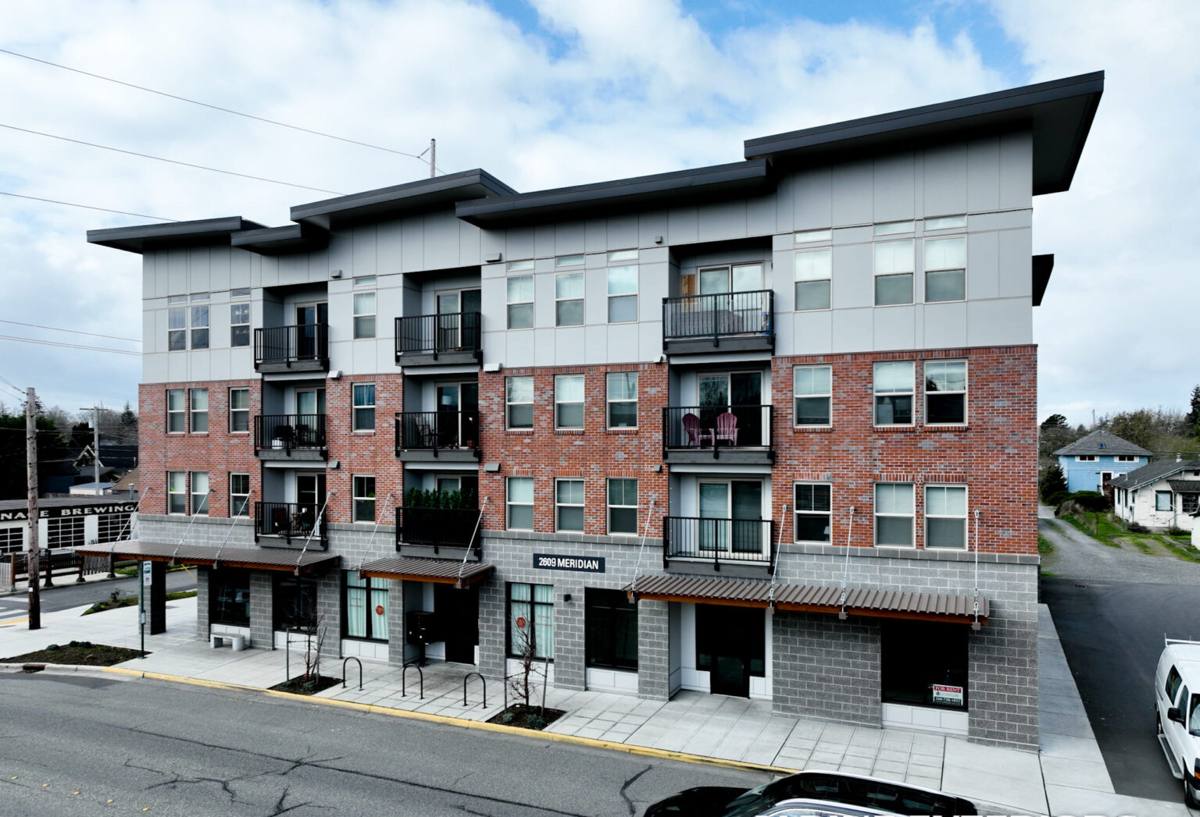
Why Custer Homes Wear Differently Than Other Whatcom County Homes
Every property in Whatcom County deals with rain. What sets Custer apart is the layering of a few specific stressors:
- Salt air corrosion — proximity to Birch Bay and the Strait means airborne salt reaches fasteners, flashing, and any exposed wood or metal trim faster than it does further inland, accelerating corrosion at nail heads and trim joints.
- Wind-driven rain — open exposure across farmland and fields means storms don't just drop rain, they push it horizontally into wall assemblies, forcing water into laps, seams, and butt joints that would stay dry in a more sheltered spot.
- Extended moss and algae season — shaded, damp conditions common on wooded and rural Custer lots keep moisture sitting against siding longer, feeding moss and mildew growth that traps additional water against the surface.
- Rural exposure and debris — larger lots and tree cover mean more branch strikes, blown debris, and lawn equipment contact than a tightly packed subdivision sees.
None of these individually is unusual for this part of Washington. Stacked together, they shorten the safe service life of the wrong siding material and make correct repair technique more important than it would be on a more sheltered site.
What "Correct" Siding Repair Actually Involves
A lot of siding repair in this region is done fast and cosmetic — caulk the gap, screw the panel back down, paint over it. That approach almost always fails again within a season or two out here because it treats the symptom, not the water path. A correct repair follows a different sequence:
1. Find the water path, not just the damage
Visible damage — a cracked panel, a stained patch, a soft spot — is where water showed up, not necessarily where it got in. We trace the path back: failed caulk joint, a gap in flashing, a nail that backed out, a butt joint that was never properly lapped or sealed. Repairing the visible spot without correcting the entry point just delays the next failure.
2. Check what's behind the siding
Any time we pull damaged panels, we inspect the water-resistive barrier, sheathing, and framing behind it. In Custer's climate, we regularly find soft or discolored sheathing behind siding that looked only mildly damaged from outside. If the substrate is compromised, patching over it is a waste of a homeowner's money — that section needs to be dried out, and in some cases sheathing needs to be replaced, before new siding goes back on.
3. Match material and install to spec
Repairs get tied into James Hardie fiber cement using Hardie-approved fasteners, proper flashing and drainage detailing, and factory-finished ColorPlus panels or trim so the patch doesn't stand out or become a new weak point. We don't mix in a different product to patch a Hardie wall, and we don't caulk-and-hope over a compromised area.
4. Address the moss and moisture source
If moss or algae growth contributed to the failure, we address the conditions causing it where practical — clearance from vegetation, drainage at grade, gutter and downspout function nearby — not just the stain on the siding itself.
Common Repair Scenarios We See in Custer
| Symptom | Likely Cause | What the Repair Involves |
|---|---|---|
| Soft or spongy siding near the bottom of the wall | Splash-back moisture, poor grade clearance, or long-term moss retention holding water against the panel | Remove affected panels, inspect and dry sheathing, correct clearance/drainage, reinstall with proper flashing |
| Cracked or lifted panel edges after a windstorm | Wind-driven rain forcing under a loose or under-fastened panel, or impact from blown debris | Replace the panel, verify fastening pattern and lap detail, reseal per manufacturer spec |
| Rust streaking at seams or trim | Salt-accelerated corrosion of fasteners or trim-grade metal flashing | Replace corroded fasteners/flashing with corrosion-resistant hardware, reseal affected joints |
| Persistent black or green staining that returns after cleaning | Moss/algae regrowth from shade and moisture retention, sometimes hiding trapped water beneath | Inspect substrate under stained area, treat cause of moisture retention, repair or replace panel as needed |
| Gaps opening at butt joints or trim over time | Caulk failure from age and UV/moisture cycling, or original installation error | Re-flash and reseal to spec, replace any panel that shows moisture intrusion behind the joint |
Our Repair Process, Start to Finish
- On-site inspection — we look at the visible damage and check adjacent areas, trim, and lower courses for related issues that haven't surfaced yet.
- Probe and assess — where damage suggests moisture intrusion, we check the substrate before quoting the scope, so the estimate reflects the real job, not just the visible patch.
- Honest scope and estimate — we tell you plainly whether this is a contained repair or whether the damage extends further than the original complaint, and why.
- Repair with matched materials — James Hardie fiber cement panels and trim, properly fastened and flashed, factory finish matched as closely as product lines allow.
- Cleanup and walk-through — we show you what was found, what was done, and what to watch for going forward.
Why We Only Repair With James Hardie Fiber Cement
We don't install or repair with vinyl, LP SmartSide, Cemplank, Allura, or bare cedar and primed spruce, and Custer's climate is a good illustration of why. Vinyl can warp and its seams are a chronic entry point for wind-driven rain in exposed rural settings. Engineered wood products and untreated wood trim are vulnerable to moisture absorption at cut edges and fastener penetrations, which is exactly the kind of damage salt air and standing moisture accelerate. Once a repair patch of a different material is on a Hardie wall — or vice versa — you've also created a seam between two materials that move, weather, and age differently, which becomes its own long-term maintenance problem.
James Hardie fiber cement is non-combustible, holds its factory ColorPlus finish for years without repainting, and is engineered specifically for wet Pacific Northwest climates through its HZ5 product line. When a Hardie wall is repaired correctly — matched panels, proper flashing, correct fastening — the patch performs the same as the surrounding original siding, not as a weaker point.
Signs It's Time to Call for a Repair Inspection
- Soft spots when you press on the siding, especially near the bottom of walls or below windows
- Paint or finish that's bubbling, peeling, or discolored in a localized area
- Visible gaps at panel seams, corners, or trim joints
- Persistent moss, algae, or dark staining that returns quickly after cleaning
- Rust streaks running down from fasteners or metal trim
- A musty smell near an exterior wall inside the home
- Any siding damage following a windstorm or heavy debris impact
Any one of these on its own might be minor. Several together, especially in a shaded or salt-exposed part of a Custer property, are worth a proper inspection before the next wet season adds to the damage.
Repair vs. Replace: How We Make That Call
Not every damaged section needs to become a full re-side, and we won't push a bigger job than the house needs. The deciding factors are usually how far the moisture damage extends behind the siding, how much of the wall is affected relative to the whole elevation, and how old and how well-maintained the existing siding is overall. A contained failure — one bad flashing detail, one storm-damaged section — is usually a straightforward repair. Widespread soft sheathing, repeated failures across multiple elevations, or siding that's simply reached the end of its service life is a conversation about replacement, and we'll tell you honestly which situation you're in rather than defaulting to the bigger job.
Why Local Experience in Custer Matters
A crew that only occasionally works this far north of Ferndale doesn't have a feel for which walls take the worst of the wind-driven rain in a given storm track, how fast moss reestablishes on shaded Custer lots, or how much faster salt air corrodes fasteners out here compared to more sheltered parts of Whatcom County. That local pattern recognition shows up in small but real ways — knowing to check the north and west exposures first, knowing which fastener and flashing upgrades are worth the extra cost in this specific environment, and not being surprised by what's found once a damaged panel comes off. It's the difference between a repair that's guessing and one that's informed by what actually happens to siding in this area, season after season.
If you've got a section of siding on your Custer property that's cracked, staining, soft, or just not looking right, we're happy to take a look. Reach out for a free, no-pressure estimate — we'll tell you plainly what we find and what it would take to fix it right.