 Ferndale
 Roof Repair Built for Custer's Weather, Not a Generic Climate
Custer sits close enough to the water and open farmland north of Ferndale that roofs here take a specific kind of punishment: salt-tinged air drifting in off the coast, long stretches of driving rain through fall and winter, and a moss season that can run nine months out of the year in shaded, north-facing sections of a roof. A roof repair that works fine in a drier inland climate can fail here within a season or two if it doesn't account for how much moisture this area holds onto. We repair roofs in Custer regularly, and the patterns we see are consistent enough that we know what to check first before we even get on the ladder.
This page is specifically about roof repair — patching, fixing, and restoring an existing roof — not full replacement. If your roof is sound but has isolated problems (a leak, a damaged section, aging flashing, moss buildup causing rot), repair is usually the right call, and doing it correctly the first time matters more here than almost anywhere else in Whatcom County because of how much moisture the area sees.
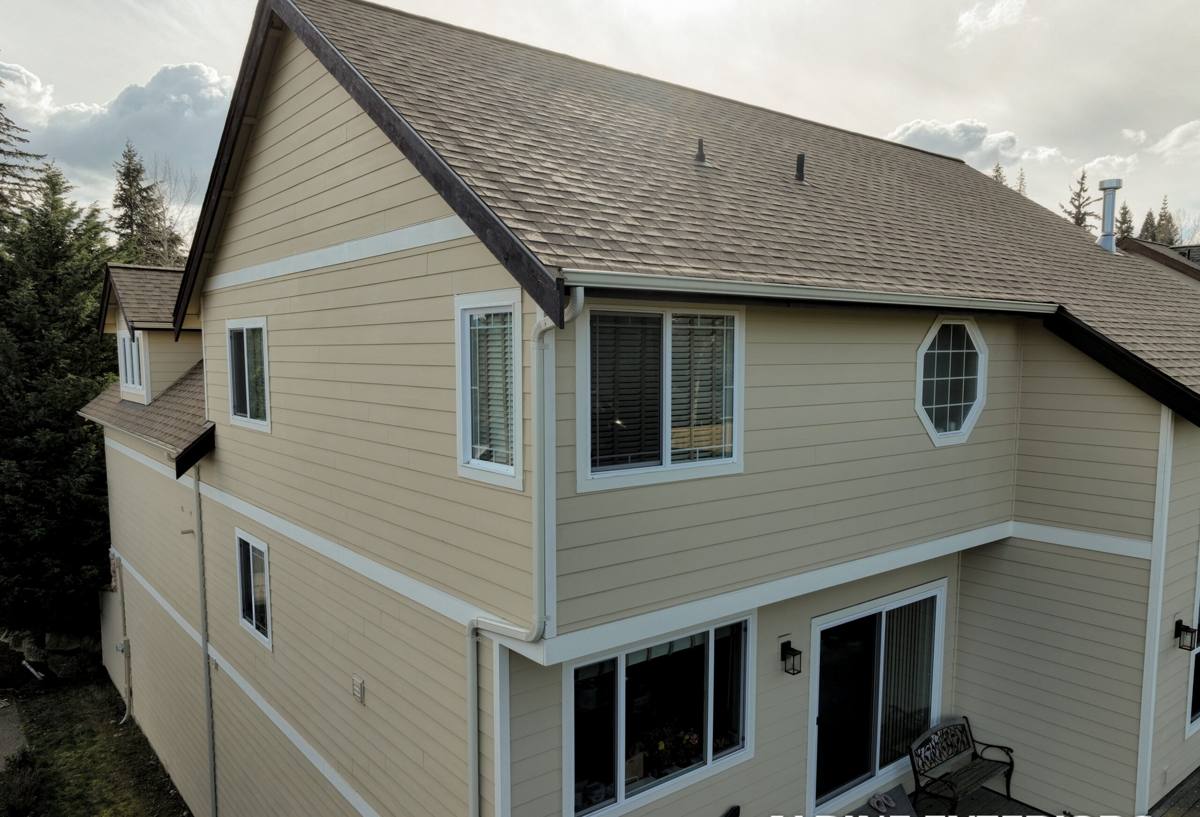
What Custer's Climate Does to a Roof Over Time
Salt Air and Metal Fatigue
Homes in Custer that sit closer to the water get a steady, low-grade dose of salt-laden air. Over years, that accelerates corrosion on exposed metal roofing components — flashing, drip edge, nail heads, and any exposed fasteners. Corroded flashing doesn't fail all at once; it thins gradually until a heavy rain finds the weak spot. This is one of the first things we inspect on a Custer repair call, even when the homeowner's complaint is something else entirely.
Driving Rain and Wind-Driven Water
Whatcom County storms often come with wind, and wind-driven rain behaves differently than a straight-down downpour. It gets pushed sideways and upward under shingle edges, around chimney flashing, and into valleys that would otherwise shed water fine. A repair that only addresses the visible leak point without accounting for wind direction and water path often leaks again in the next storm from a slightly different angle.
Moss: The Slow, Patient Damage
Moss doesn't just look bad — it holds moisture directly against the roofing material, works its way under shingle tabs and shakes, and lifts edges enough for water to get underneath. On north-facing slopes and roofs shaded by trees, which describes a lot of Custer properties, moss can establish itself within a year or two of the last cleaning. Left unaddressed, it turns a simple maintenance issue into a repair job, and an ignored repair job into a replacement.
Common Roof Repair Calls We See in Custer
- Moss-related shingle lift and granule loss — moss mats that have pried up shingle edges, exposing the underlayment
- Valley leaks — debris and moss clogging the valley, forcing water sideways under the shingles instead of down and off
- Flashing failure — around chimneys, skylights, and roof-to-wall transitions, especially where salt air has corroded the metal
- Nail pops and fastener backout — common after freeze-thaw cycles and wind events, leaving small entry points for water
- Soffit and fascia rot — a secondary problem when a roof leak has been running unnoticed for a while
- Gutter and drip edge separation — often from ice buildup or age, letting water run behind the fascia instead of into the gutter
How We Approach a Repair, Step by Step
1. Inspection First, Not a Guess
We start on the roof, not just from the ground. Photos from a ladder or drone don't always show whether flashing has thinned from corrosion or whether moss has already worked under the shingle mat. We check the suspected leak area and the areas around it, because water often travels before it shows up as a stain inside the house.
2. Tracing the Water Path
A leak inside a house rarely shows up directly below where the water is entering the roof. We trace the path — along rafters, through insulation, along a valley — before we start any repair, so we're fixing the actual entry point and not just the spot where the damage became visible.
3. Matching the Repair to the Roofing Material
Repairs on composition shingle, cedar shake, and metal roofing each require different techniques and materials. We match the repair to what's already on the roof so the patched section performs the same as the rest of the roof, rather than becoming its own future weak point.
4. Addressing the Cause, Not Just the Symptom
If moss caused the failure, we clean the affected area and the roof sections feeding moisture into it, not just the patch itself. If corroded flashing caused the leak, we replace the flashing rather than caulking over it — caulk is a short-term fix on a metal that's already failing, not a repair.
5. Cleanup and a Clear Explanation
We walk you through what we found, what we did, and what to watch for going forward. If we see something that's likely to need attention in the next year or two, we'll tell you honestly rather than let it become a surprise.
Repair or Replace? Honest Factors to Weigh
Not every roof problem needs a full replacement, but not every problem should be patched indefinitely either. These are the factors that actually matter when deciding between the two:
| Factor | Leans Toward Repair | Leans Toward Replacement |
|---|---|---|
| Age of roof | Well within its expected service life | Near or past the material's typical lifespan |
| Extent of damage | Isolated to one section or component | Spread across multiple slopes or systemic (widespread moss, granule loss) |
| Underlying deck condition | Solid, no rot found during inspection | Soft spots or rot found in the decking itself |
| Repair history | First or second repair in the roof's life | Repeated repairs to the same area over recent years |
| Moss/moisture pattern | Localized, manageable with cleaning and repair | Chronic, affecting multiple areas year after year |
If your roof fits mostly in the left column, repair is the honest recommendation, and we'll tell you that. We don't push replacement on a roof that has good years left in it.
Materials and Why We Repair the Way We Do
For most Custer homes, we're repairing composition shingle or metal roofing, and occasionally cedar shake. Our approach differs by material:
- Composition shingle — we match shingle color and profile as closely as possible and always tie new flashing into the existing water path correctly, rather than surface-sealing a leak.
- Metal roofing — repairs focus on fastener condition and sealant life, since metal roofs fail more often at penetrations and seams than across the panel field itself.
- Cedar shake — shake requires individual shingle replacement done correctly to keep the surrounding shakes weathering evenly; a mismatched patch stands out and can trap moisture differently than the rest of the roof.
We use roofing materials and flashing rated for the moisture and salt exposure this area sees, since a component that's fine in a drier climate can underperform here.
Moss Management: Prevention Between Repairs
A repair addresses today's problem, but Custer's climate means moss will come back if nothing changes. A few practices extend the life of a repair significantly:
- Keep gutters and valleys clear of debris that holds moisture against the roof surface
- Trim back overhanging branches on shaded, north-facing slopes where moss establishes fastest
- Have moss growth addressed while it's still light, before it lifts shingle edges
- Check flashing and fasteners periodically, especially after a major windstorm
None of this replaces a proper repair when something has already failed, but it's the difference between a repair lasting years and needing to be redone within a season.
Why a Crew That Already Works Custer Matters
Roof repair is a trade where local familiarity actually changes the outcome. A crew that regularly works Custer and the surrounding Ferndale area already knows which roofing patterns show up on which house styles, how quickly moss regrows in this specific microclimate, and what a properly weathered repair should look like a year later versus one that's already failing again. We're not learning the area's climate on your roof — we've already seen how it behaves.
Being local also means a faster response when a leak shows up mid-storm and can't wait weeks for a scheduling slot from a company based well outside Whatcom County. We're not a call center dispatching a subcontractor; the crew that inspects your roof is the crew that repairs it.
What to Check Before You Call a Roofer
A quick homeowner checklist for a suspected roof problem:
- Note where the leak shows up inside the house and whether it changes with wind direction during a storm
- Look for visible moss patches, especially on shaded roof sections
- Check gutters for granules, moss debris, or standing water after rain
- Look for daylight or staining around chimney and vent flashing from the attic, if accessible safely
- Note how long the roof has been in place and whether it's had prior repairs in the same area
Having these details ready helps us diagnose faster once we're on site, though we'll do a full inspection regardless of what you've already found.
Get an Honest Look at Your Roof
If you're dealing with a leak, visible moss damage, or aging flashing on a Custer home, we're happy to take a look and give you a straight answer about what it needs — repair, ongoing maintenance, or nothing urgent at all. Reach out for a free, no-pressure estimate using the form below.