 Ferndale
 Custer's Coastal Exposure Puts Extra Stress on Siding
Custer sits close enough to open water that homes here take a different kind of beating than siding a few miles inland. Salt-laden air works into seams and fastener heads year-round, driving rain off the water pushes moisture sideways into wall assemblies during winter storms, and the long stretch of gray, damp months that defines this part of Whatcom County gives moss and algae months on end to get established on north-facing walls and anything shaded by trees. None of that is unusual for this part of Washington, but it does mean siding choices that work fine in a drier inland climate can fall short out here.
We install James Hardie fiber cement siding exclusively, and Custer is a good example of why. This page focuses on what that looks like specifically for this area: what the climate actually does to a wall system, what a correct Hardie installation needs to include to handle it, and why local installation experience matters as much as the product itself.
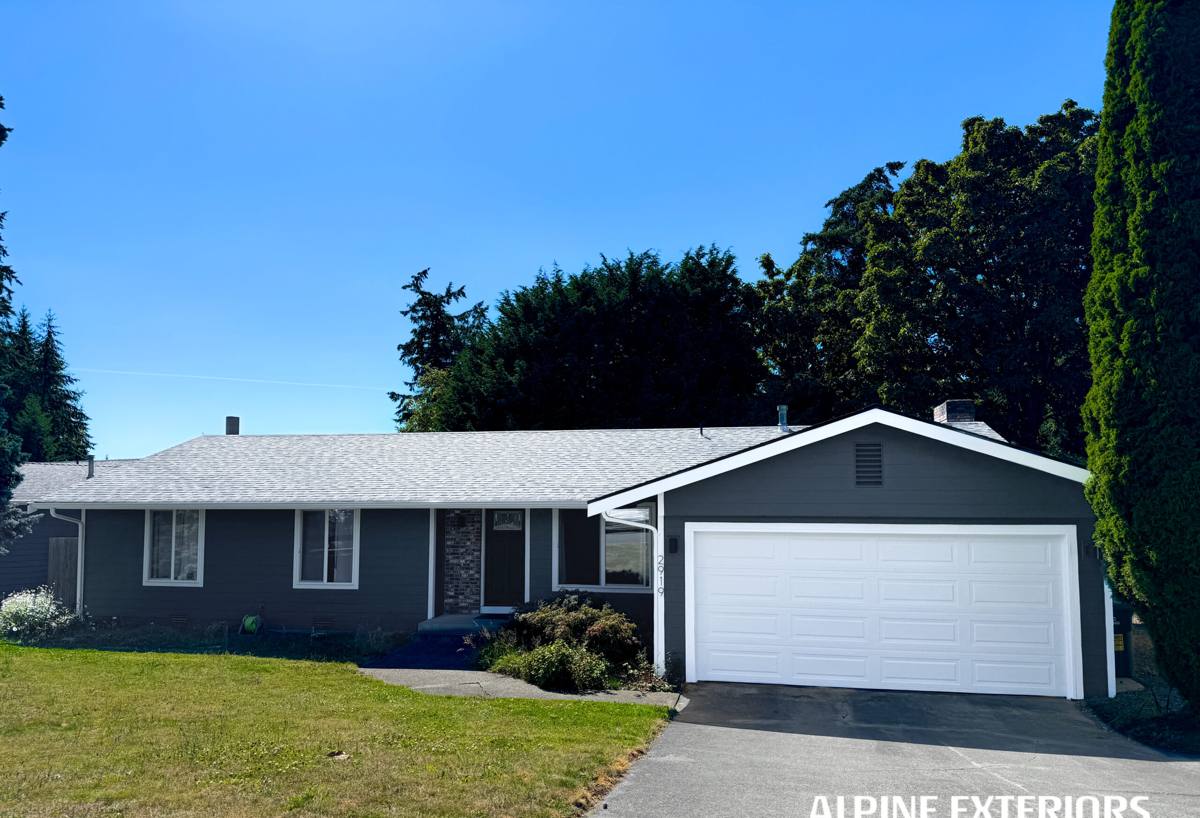
Why James Hardie Fits What Custer Homes Need
Built to Handle Moisture, Not Just Resist It
Fiber cement doesn't absorb and swell the way wood-based siding products can, and it doesn't rely on a factory coating alone to keep water out — the material itself is dimensionally stable in wet, humid conditions. That matters in a spot like Custer, where siding can go weeks at a time without a full dry-out period between rain events. Hardie's engineered HZ product lines are formulated with regional moisture and freeze-thaw conditions in mind, which is part of why we don't treat "siding" as a one-size-fits-all product category.
A Factory Finish That Doesn't Give Up to Salt and Grime
ColorPlus finish is baked on at the factory under controlled conditions, which gives it better adhesion and UV resistance than a field-applied paint job. In a salt-air environment, that matters twice over: the finish has to resist fading and chalking from UV and airborne salt, and it has to hold up to the pressure washing homeowners eventually need to knock moss and algae growth off the wall. A weak finish gets thin and blotchy after a few cleanings. ColorPlus is built to take that kind of maintenance without looking tired.
What a Correct Hardie Installation Actually Involves
James Hardie siding performs the way it's supposed to only when it's installed to spec. Most of the siding failures we get called out to inspect — on any brand — trace back to installation shortcuts, not the material itself. In a wet, salt-exposed climate like Custer's, the margin for error is smaller.
Weather Barrier and Flashing Details
Every correct installation starts underneath the siding, not at it. That means a continuous weather-resistive barrier, properly lapped and taped seams, and flashing at every horizontal transition — window and door heads, deck ledgers, roof-to-wall intersections, and butt joints in the siding itself. Skipping or rushing flashing details is the single most common cause of hidden moisture damage behind siding, and it's invisible from the street until the sheathing underneath starts to fail.
Fastening, Gapping, and Clearance
Hardie's installation specs call for specific fastener types, spacing, and embedment depth, plus minimum clearances from grade, roofing, and horizontal surfaces like decks and patios. Those clearances exist for a reason: they keep splash-back and standing moisture away from the bottom edge of the siding. In a driving-rain climate, an installer who "eyeballs" clearance instead of measuring it is setting the homeowner up for edge swelling and paint failure at the bottom courses years down the road.
Trim, Caulking, and Joints
Butt joints, trim-to-siding transitions, and penetrations for vents, hose bibs, and light fixtures all need to be sealed with a compatible, paintable sealant — not just caulked and forgotten. We back-prime and pre-treat cut edges on site, because a factory-finished board that gets field-cut without sealing the exposed edge has a raw, absorbent surface right where water is most likely to sit.
Choosing the Right Hardie Products for This Area
James Hardie makes several distinct product lines, and the right mix depends on the home's exposure, architectural style, and how much of the wall is shaded or facing prevailing weather. We walk through these options on-site rather than defaulting to one product for every house.
| Product | Best Use in Custer | Why It Fits |
|---|---|---|
| HardiePlank lap siding | Most wall areas, especially weather-facing elevations | Traditional profile, strong track record in wet coastal climates, wide color range |
| HardiePanel vertical siding | Accent walls, gables, modern or farmhouse styles | Fewer horizontal laps means fewer water-shedding joints to detail |
| HardieShingle siding | Accent gables, dormers, decorative sections | Adds texture and curb appeal without giving up fiber cement's durability |
| HardieTrim boards | Corners, window and door surrounds, fascia | Matches the siding's moisture performance so trim doesn't fail first |
For elevations that take the brunt of wind-driven rain or sit closest to open water, we'll often recommend tighter fastening schedules and extra attention to lap exposure and joint sealing even within the same product line — the material choice is only half the equation.
What Drives the Cost of a Custer Hardie Project
Every home is different, so we quote based on a site visit rather than a flat rate. That said, a few factors consistently move the price up or down, and it's worth understanding them before you start comparing bids.
| Factor | Cost Impact | Why |
|---|---|---|
| Tear-off vs. new construction | Higher for tear-off | Removing and disposing of old siding, plus repairing any sheathing damage found underneath |
| Wall complexity (gables, dormers, cutouts) | Higher with more cuts and angles | More trim work, more joints to seal, more labor time per square foot |
| Product mix (plank only vs. plank + panel + shingle accents) | Moderate to higher | Combining profiles adds design value but increases transition detailing |
| Color (ColorPlus vs. field-painted) | ColorPlus often comparable or better long-term value | Factory finish reduces future repainting costs even if upfront pricing is similar |
| Sheathing or moisture damage found during tear-off | Variable, addressed as discovered | Wet climates like Custer's occasionally reveal hidden damage behind old siding |
We flag the sheathing question upfront during the estimate walk-through so it isn't a surprise mid-project — it's common enough in this climate that we build the conversation into the initial visit.
Our Process From First Look to Final Walkthrough
- On-site assessment — we look at exposure, existing siding condition, trim details, and any signs of past moisture intrusion before quoting anything.
- Product and color selection — we walk through Hardie lines and ColorPlus color options based on the home's style and sun/rain exposure.
- Tear-off and inspection — old siding comes off, sheathing is inspected, and any repairs are addressed and documented before new material goes up.
- Weather barrier and flashing installation — the part of the job that determines whether the siding performs for decades or fails early.
- Hardie installation to manufacturer spec — correct fastening, clearances, joint treatment, and trim work.
- Final walkthrough — we go over the finished job with the homeowner before calling it complete.
Why Hiring a Crew That Already Works in Custer Matters
Installation quality is the biggest variable in how long siding lasts, and that quality depends heavily on whether the crew understands local conditions. A crew that mostly works drier, inland jobs may not think twice about clearance details or joint sealing that are non-negotiable out here. A crew that regularly works Custer and the surrounding Ferndale area already knows which elevations take the worst weather, how long moss growth takes to become a real maintenance issue, and what permitting and inspection expectations look like in Whatcom County. That familiarity shows up in fewer callbacks and fewer surprises once the job is done.
Living With Hardie Siding in a Moss-Prone, Salt-Air Climate
Correctly installed Hardie siding is low-maintenance, not no-maintenance. A little seasonal attention goes a long way toward protecting both the material and the finish.
- Rinse siding annually, and more often on shaded or north-facing walls where moss and algae take hold fastest.
- Keep gutters clean and downspouts directed away from the wall to reduce splash-back and sheeting water at the base of the siding.
- Trim back shrubs and tree limbs that keep siding shaded and damp longer than the rest of the house.
- Inspect caulking at trim joints and penetrations every year or two, and re-seal anything that's cracked or pulled away.
- Address any bare or damaged spots at cut edges promptly — an unsealed edge is the fastest way for moisture to get into the board.
- Avoid high-pressure washing directly at joints and edges; a garden hose or low-pressure setting is enough for routine cleaning.
Homes closest to open water or standing in more shade will need attention on the shorter end of these intervals; homes with more sun exposure and airflow can generally go longer between cleanings.
Ready to Talk About Your Siding?
If you're weighing options for a Custer home and want a straight answer about what your walls actually need, we're happy to take a look. The estimate is free, there's no pressure, and we'll tell you honestly what we see — including if your current siding still has useful life left in it. Fill out the form below to get started.