 Ferndale
 Building a Deck That Holds Up Near the Water
Blaine sits close enough to Semiahmoo Bay and the Strait of Georgia that salt-laden air is a real factor in how a deck ages, not just a talking point. Add Whatcom County's long wet season and the moss and algae growth that comes with months of shade and moisture, and you've got a climate that's noticeably harder on outdoor structures than most decking products are designed for on paper. A deck built the same way you'd build one in a dry inland climate will show its age here faster than it should — loose fasteners, soft spots at the ledger, black streaking on the boards, slick spots in winter.
None of that means a deck in Blaine has to be high-maintenance or short-lived. It means the material choices, the hardware, the flashing details, and the framing layout all need to account for what this specific stretch of coastline actually does to wood and metal over time. That's the difference between a deck that looks good for two seasons and one that still looks good in year fifteen.
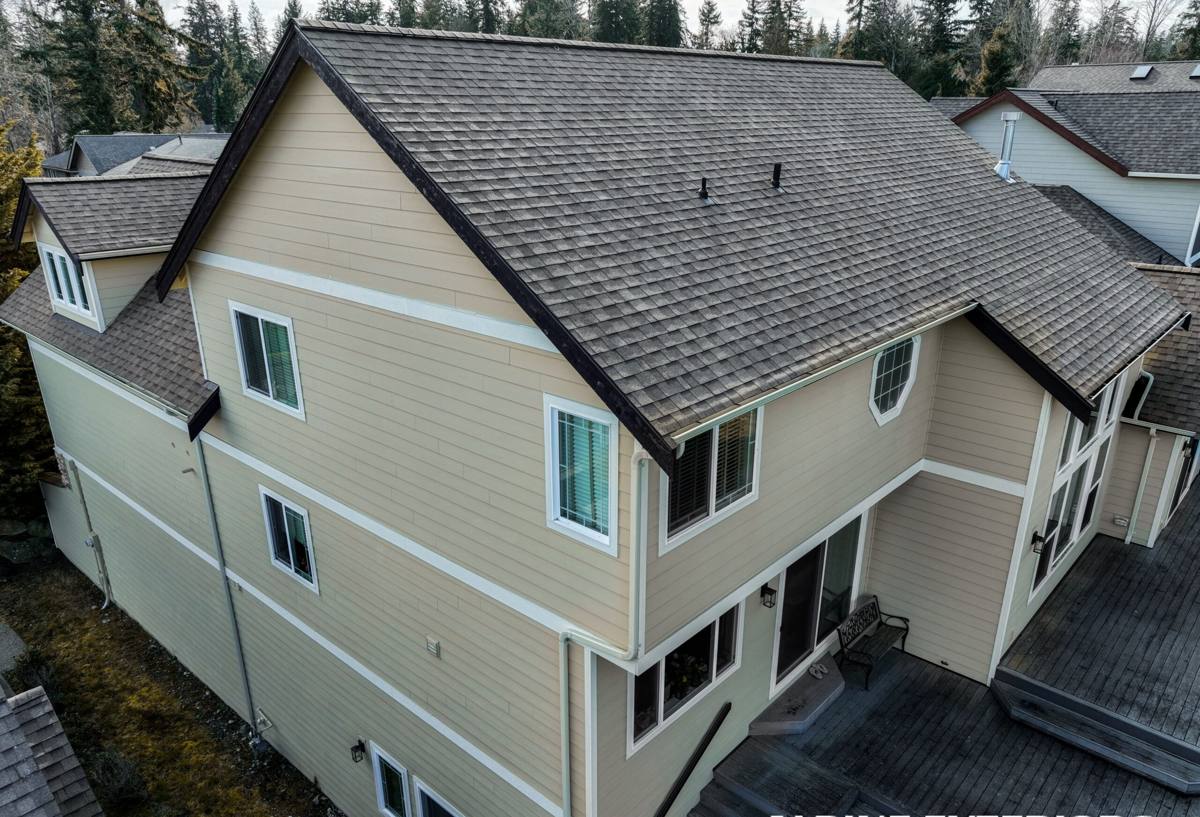
What Coastal Exposure Actually Does to a Deck
Salt Air and Metal Corrosion
Airborne salt accelerates corrosion on anything metal — fasteners, joist hangers, railing brackets, post bases. Standard electro-galvanized screws and connectors that would be fine forty miles inland can start rusting within a few years this close to the water. Once a fastener starts to corrode, it loses holding strength long before it looks obviously bad, which is part of why deck failures near coastal areas often trace back to hardware rather than the decking boards themselves.
Moss, Algae, and Wood Decay
Whatcom County's moss season isn't limited to roofs. Any deck surface that stays shaded and damp for extended stretches — under trees, on the north side of a house, or in low-airflow spots — will grow moss and algae given enough time. Beyond looking bad, that growth holds moisture against the board surface, which speeds up wood decay in untreated or poorly sealed lumber and turns the deck surface slippery, which is a real fall hazard on stairs and landings.
Driving Rain and Hidden Rot
Wind-driven rain off the water pushes moisture into places a calm-weather rain never reaches — behind ledger boards, into end-grain cuts, under railing posts where the wood meets a bracket. The ledger board, where the deck attaches to the house, is the single most common point of hidden rot on decks in this region because it's rarely inspected once the decking is down and it takes the brunt of both roof runoff and wind-blown rain.
Choosing the Right Decking Material for a Blaine Home
There's no single "best" decking material — there's a best fit for your budget, your maintenance appetite, and how exposed your specific lot is to wind and salt air. Here's how the common options actually compare once you factor in this climate:
| Material | Upfront Cost | Maintenance | Coastal Durability |
|---|---|---|---|
| Pressure-treated lumber | Lowest | Needs re-staining/sealing every 1-2 years | Good if sealed consistently; end cuts need field treatment |
| Cedar | Moderate | Regular sealing to prevent graying and moss uptake | Naturally rot-resistant but softer surface, needs upkeep |
| Capped composite | Higher | Occasional washing, no staining/sealing | Very good; resists moisture absorption and moss staining |
| PVC decking | Highest | Lowest of all options | Excellent; fully synthetic, no wood fiber to decay |
We install all of these, and we'll tell you honestly which one fits your situation rather than steering everyone toward the most expensive option. A shaded, low-airflow lot that already fights moss is a strong argument for composite or PVC. A sunnier, well-ventilated site can do perfectly well with cedar or treated lumber if you're willing to keep up with sealing on a schedule.
Framing and Fasteners: The Part You Don't See
A deck's surface gets all the attention, but its lifespan is decided underneath. In a marine climate, we treat the substructure as the part that has to outlast everything else.
- Stainless steel or heavy-coated hot-dip galvanized fasteners and joist hangers throughout — not the lighter coatings that work fine inland but corrode faster here
- Proper ledger flashing that sheds water away from the house rather than trapping it against the rim joist
- Footings set below frost depth per local code, sized for the actual load and soil conditions on your lot rather than a generic minimum
- Post bases that hold the post above the deck surface so water doesn't pool at the base and wick into the end grain
- Joist spacing tightened up under composite decking, since composite typically needs closer support than solid wood to avoid flexing
- Gaps and airflow built into the framing layout so the underside of the deck can actually dry out between rain events
None of this is visible once the deck is finished, which is exactly why it matters who builds it. Cut corners here don't show up as a problem until years later, and by then it's a structural repair instead of a maintenance item.
Railings, Stairs, and Code Requirements
Any deck more than 30 inches above grade needs a code-compliant guardrail, and Whatcom County follows the same prescriptive framework most of Washington uses: guardrails generally need to be between 36 and 42 inches high depending on use, baluster spacing has to keep a 4-inch sphere from passing through, and stair handrails have their own height and graspability requirements. Permits are typically required for new decks and significant deck rebuilds, and inspections check footings, framing, and guardrail compliance before the job is signed off.
We pull permits and schedule inspections as a normal part of the job rather than an extra step, because an uninspected deck can become a real problem when you go to sell the house or file an insurance claim after storm damage.
How We Build a Custom Deck, Start to Finish
1. On-Site Assessment
We walk the lot, look at drainage, sun and shade exposure, existing structure if you're replacing an old deck, and talk through how you actually plan to use the space — dining, grilling, hot tub, just a place to sit.
2. Design and Material Selection
We lay out size, shape, and railing style, and walk through decking material options against your budget and maintenance preference, being upfront about the trade-offs in the table above.
3. Permitting
We handle the permit application and drawings so you're not the one navigating that process.
4. Demolition and Footings
If there's an old deck, we remove it and inspect the ledger and house framing behind it before building anything new — this is often where hidden rot from a previous deck turns up. New footings go in below frost depth.
5. Framing
Ledger flashing, joists, beams, and posts go in with corrosion-resistant hardware sized for this climate, not the minimum spec.
6. Decking, Railings, and Stairs
Boards, railings, and any stairs are installed and finished, with fastener spacing and gapping set for the specific material to allow for seasonal expansion and drainage.
7. Final Walkthrough and Inspection
We walk the finished deck with you, confirm everything meets code, and make sure the final inspection is scheduled and passed.
What a Blaine Deck Actually Costs to Maintain
The upfront build price is only part of the picture. Here's roughly what ongoing upkeep looks like by material, so there are no surprises after the project is done:
| Material | Typical Upkeep Task | How Often |
|---|---|---|
| Pressure-treated / cedar | Clean, brighten, and reseal or restain | Every 1-2 years |
| Capped composite | Wash with soap and water, check for moss in shaded areas | 1-2 times per year |
| PVC | Rinse and wash | 1-2 times per year |
| All materials | Inspect fasteners, hardware, and ledger flashing | Annually |
Skipping the annual hardware check is the most common mistake we see, regardless of decking material. A five-minute look at the ledger connection and railing posts catches problems while they're still cheap to fix.
A Simple Maintenance Checklist for Local Homeowners
- Sweep leaves and debris off the deck surface regularly, especially in shaded corners where moisture collects
- Treat visible moss or algae promptly rather than letting it spread across boards
- Check that gaps between boards haven't filled with debris, which blocks drainage
- Look underneath the deck once a year for signs of moisture, staining, or loose hardware
- Reseal wood decking on schedule rather than waiting until it visibly grays
- Confirm downspouts and gutters aren't draining directly onto or under the deck
Why a Crew That Already Works Blaine Makes a Difference
We're based in Ferndale and work Blaine regularly, which means we're not learning this coastline's quirks on your project. We know which hardware grade actually holds up this close to the water, we know how the local building department wants footings and guardrails documented, and we've seen firsthand what happens when a deck is built to a generic spec instead of one that accounts for salt air and a genuinely long moss season. That local track record shows up in fewer surprises during the build and a deck that's still solid well past when a corner-cut version would need repairs.
If you're planning a new deck or replacing one that's showing its age, we're happy to take a look and give you a straight assessment — no pressure, no upsell, just an honest read on what your space and budget can support. Use the form below to request a free estimate.