 Ferndale
 Windows in Custer Work Harder Than Windows Inland
Custer sits in the open, flat stretch of northern Whatcom County between Ferndale and the Canadian border, close enough to Birch Bay and the Strait of Georgia that wind off the water reaches most properties with little to break it up. That means salt-laden air, near-constant winter wind loading, and long stretches of the year when moisture just sits against the house instead of drying off. Add in the region's extended moss season — cool, damp, shaded conditions that can run from October well into spring — and you get a window environment that's tougher on seals, frames, and finishes than what you'd find twenty miles inland.
A window that's fine in a sheltered subdivision can fail early in Custer if it wasn't sized, sealed, and flashed for this specific exposure. That's the difference between a generic window installation and a custom one: custom isn't just about matching an odd-shaped opening, it's about matching the opening and the climate load it actually sees.
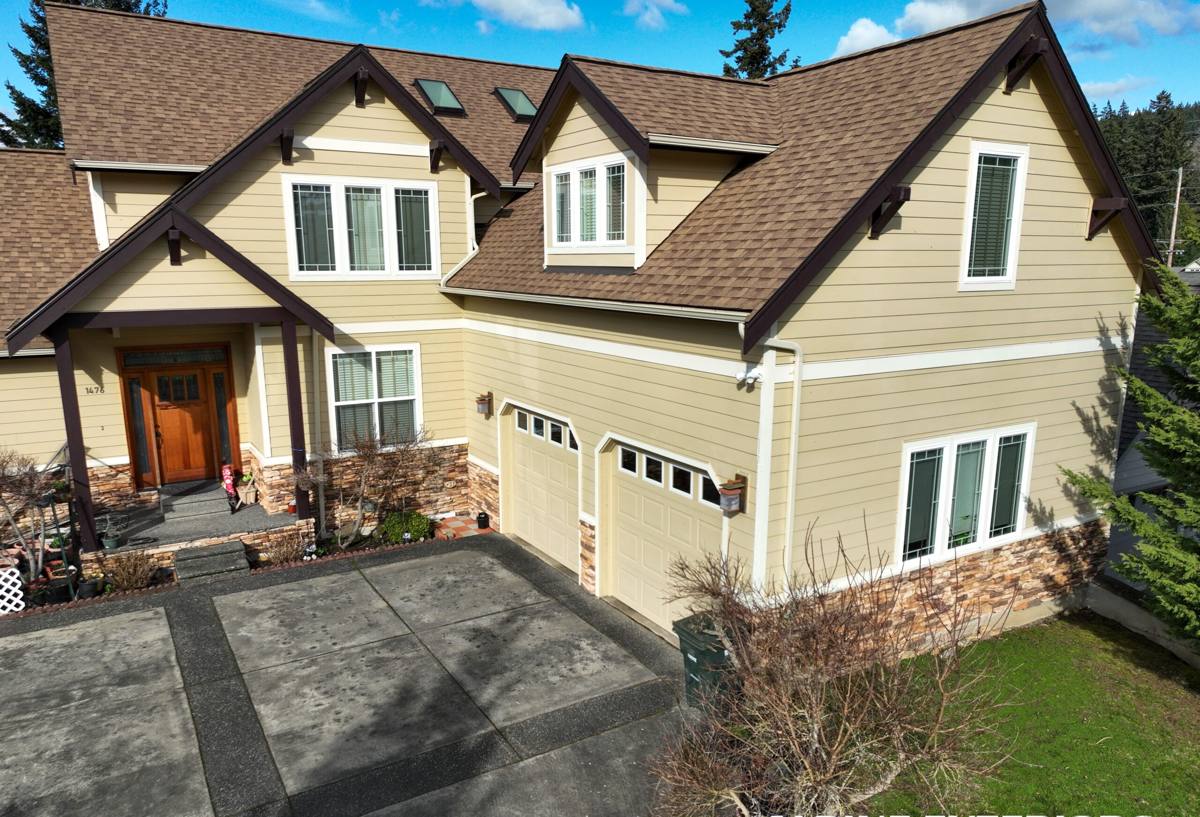
What "Custom" Actually Means for a Custer Job
Every older farmhouse, rebuilt rambler, and newer build in the Custer area has its own quirks — settled framing, non-standard rough openings, additions built to different code eras, or trim details that don't match anything off a shelf. Custom window work means we build or order to the opening you have, not the other way around. That covers:
Fit
Exact rough-opening measurements, accounting for out-of-square framing that's common in homes that have settled over decades of wet winters. A window forced into an opening it doesn't fit will never seal correctly, no matter how good the unit itself is.
Style and Sightlines
Matching grid patterns, frame profiles, and sash proportions to the rest of the house, especially on additions or partial replacements where mismatched windows stand out immediately from the street.
Performance for the Exposure
Choosing glass packages, frame materials, and hardware based on which side of the house faces prevailing wind and weather. A window on the exposed north or west side of a Custer property is doing a different job than one tucked on a covered porch wall, and it should be specified differently.
Signs Your Current Windows Are Losing the Battle
Salt air and driving rain don't destroy a window overnight — they wear down seals, finishes, and hardware gradually until a problem shows up as a draft, a stain, or a window that won't stay latched. Walk your house and check for these before deciding whether you need a repair, a reseal, or a full custom replacement:
- Fogging or a permanent haze between panes of a dual-pane window — the seal has failed and the gas fill is gone
- Soft or discolored wood at the sill or lower corners, especially on walls that catch prevailing wind and rain
- Visible moss or persistent green staining building up on the sill, frame, or trim, even after cleaning
- Windows that are hard to open, won't stay up, or don't latch tight — often a sign the frame has racked slightly
- Noticeable draft or cold spot near the frame on a windy day, even with the window fully closed
- Condensation forming on the inside of the glass regularly through fall and winter
- Peeling or bubbling paint/finish concentrated around the window opening rather than the wall generally
- Daylight visible around the frame from inside, or gaps you can feel with a hand run along the sash
One or two of these on a single window usually means a targeted repair or reseal is enough. Several of these across multiple windows, especially on the exposed side of the house, is usually the point where full replacement costs less over time than chasing repairs every year.
Frame and Glass Options That Actually Hold Up Here
We don't push one brand or material as the answer for every house. What we do is steer Custer homeowners away from choices that look fine on paper but create maintenance headaches once they're facing real coastal weather. The trade-offs below are about honest performance and upkeep, not any one product being "bad."
| Frame Material | How It Handles Salt Air & Moisture | Maintenance Burden |
|---|---|---|
| Vinyl | Won't rot or corrode; performs well in coastal exposure | Low — occasional cleaning, no repainting |
| Fiberglass | Very stable in temperature swings and wind-driven rain; strong seal retention over time | Low to moderate — durable finish, rarely needs attention |
| Wood (unclad) | Handsome but vulnerable to prolonged damp and moss growth without diligent upkeep | High — regular painting/sealing, especially on exposed walls |
| Wood-clad (vinyl or aluminum exterior) | Good compromise — exterior shrugs off moisture, interior keeps a wood look | Moderate — exterior low-maintenance, interior finish still needs occasional care |
| Aluminum | Strong but can corrode near salt air over time unless properly finished/thermally broken | Moderate — watch for pitting or corrosion near the coast |
On glass, we typically recommend dual-pane units with a low-E coating and argon fill as the baseline for this area — it cuts down on the condensation problems that come with our damp winters and helps with the temperature swings between a cold, wind-driven night and a sunny afternoon. Impact-resistant or laminated glass is worth discussing for windows that take direct wind-driven debris, but it's a specific-need upgrade, not something every window on the house requires.
How We Handle a Custom Window Job
- On-site assessment. We look at every window opening in question, note the exposure (which walls take the worst of the wind and rain), and check the condition of the surrounding framing and sheathing — not just the window itself.
- Exact measurement and material selection. Rough openings are measured precisely, and we talk through frame material, glass package, and style options based on what that wall actually faces.
- Ordering and lead time. Custom units are built to spec, so we give you a realistic timeline up front rather than a vague estimate — lead times vary by manufacturer and season.
- Removal and inspection. Old windows come out carefully, and we inspect the opening for hidden rot or moisture damage before anything new goes in. Problems found here get addressed, not covered up.
- Installation, flashing, and sealing. The new window is set, shimmed level and square, flashed correctly for water management, and sealed with materials rated for this climate.
- Final check and cleanup. We test operation, check the seal from inside and out, and walk the finished work with you before we consider the job done.
The Installation Details That Matter More on the Coast
Flashing and Water Management
In a climate with as much driving rain as Whatcom County sees, how water is directed around a window matters as much as the window itself. Proper head flashing, side flashing, and a sloped sill pan keep wind-driven rain from finding its way behind the trim and into the wall cavity — a slow leak here can rot framing for years before it's visible from inside.
Sealant Choice and Placement
Not every caulk or sealant holds up to repeated wet-dry cycling and salt exposure. We use sealants rated for exterior, coastal-adjacent conditions, and we're deliberate about where sealant goes versus where a weep path needs to stay open — sealing a window "airtight" in the wrong spot can trap moisture instead of keeping it out.
Weep Holes and Drainage
Many window systems are designed with small drainage paths that let any moisture that does get in escape again. These get blocked easily by paint, caulk, or debris during a rushed installation. Part of doing the job right is making sure those drainage paths stay clear and functional.
What Drives Cost on a Custom Window Project
Costs for custom windows vary a lot based on size, material, and how many units you're doing at once. Rather than quote a number that won't hold up for your specific house, here's what actually moves the price:
| Factor | Why It Affects Cost |
|---|---|
| Frame material | Vinyl is generally the most economical; fiberglass and wood-clad cost more upfront but often less over the window's life |
| Opening size and shape | Non-standard or oversized openings require custom sizing rather than stock dimensions |
| Number of windows replaced together | Doing multiple windows in one project usually lowers the per-window cost versus one-off replacements |
| Condition of the existing opening | Hidden rot or framing damage found during removal adds repair time before the new window can go in |
| Glass package | Upgraded low-E coatings, gas fills, or impact-resistant glass add cost but also add performance |
| Access and site conditions | Upper-story windows or difficult access add labor time |
Why a Crew That Already Works Custer Matters
A window contractor who mostly works drier, more sheltered parts of the county will spec and install differently than one who deals with Custer's wind and salt exposure regularly. We already know which wall orientations in this area take the worst weather, which materials hold up without a repaint every few years, and where moss buildup tends to become a drainage problem rather than just a cosmetic one. That local pattern recognition shows up in small decisions — sealant choice, flashing detail, glass package — that add years to a window's service life without adding much to the cost.
It also means less guesswork for you. We're not learning Whatcom County's coastal weather on your project; we're applying what already works on houses like yours in the same conditions.
Keeping Custom Windows Performing Once They're In
Even a well-installed, well-specified window benefits from basic upkeep in this climate:
- Rinse salt residue and grime off exterior glass and frames a couple times a year, more often on the most exposed walls
- Clear moss or debris from sills and tracks before it holds moisture against the frame
- Check and touch up exterior caulking annually, especially after a hard winter
- Operate each window through its full range a few times a year so hardware doesn't seize up from disuse
- Watch for early signs of seal failure (fogging, drafts) and address them before they spread to the surrounding frame
If your Custer home has windows that are drafty, fogged, hard to operate, or just original to a house that's due for an upgrade, we're glad to take a look and talk through honest options for your specific exposure and budget. Fill out the form below for a free, no-pressure estimate.