 Ferndale
 Custom Windows in Cordata: What the Climate Actually Demands
Homes in and around Cordata sit in a stretch of Whatcom County that gets a steady diet of marine weather — salt-tinged air drifting in off the water, driving rain that comes in sideways more often than straight down, and a moss season that seems to stretch longer every year. Windows here don't just need to look good. They need to shed wind-driven water without leaking, resist the slow corrosion that salt air causes on hardware and metal components, and keep performing after years of near-constant damp exposure between dry spells.
"Custom windows" doesn't have to mean exotic shapes or luxury pricing. For most homes we work on, custom simply means the window is built to the actual opening, the actual wall assembly, and the actual exposure that particular wall faces — not a generic stock size forced into a rough opening with extra caulk to make up the difference. That distinction matters more here than in drier climates, because a poorly fitted window in a high-exposure wall is where rot and leaks start.
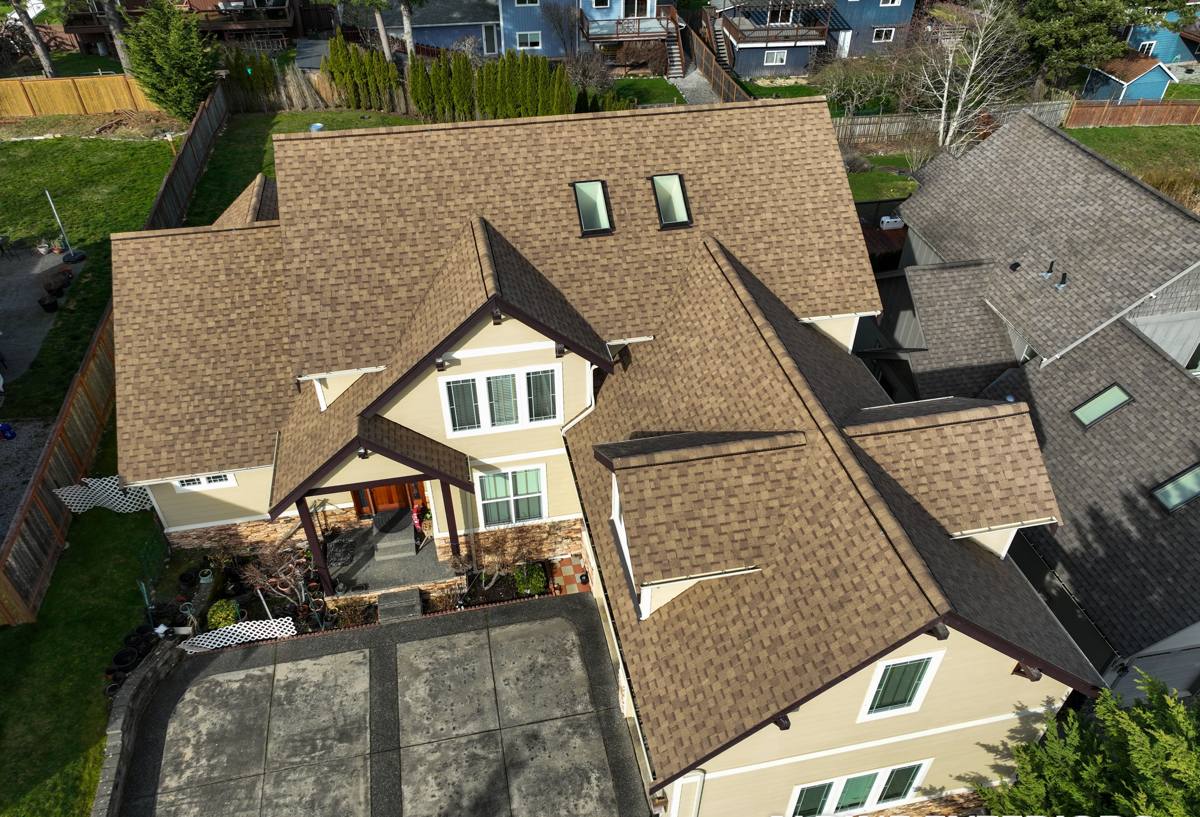
Signs a Cordata Home Needs New or Custom Windows
Most homeowners don't replace windows on a schedule — they replace them when something starts going wrong, or when a remodel changes an opening's size or shape. Around here, the early warning signs tend to show up as:
- Fogging or a permanent haze between the panes, meaning the seal on a double- or triple-pane unit has failed
- Soft or discolored trim and sill wood, especially on walls that catch prevailing wind and rain
- Windows that are hard to open, close, or lock — frames swelling and shrinking with moisture cycles
- Visible gaps, drafts, or daylight around the frame when the window is shut
- Green or black growth on the sill, casing, or lower corners of the frame — a sign moisture is sitting rather than draining
- Non-standard openings from an addition, a removed wall, or an older home with irregular framing
Any one of these is worth a look. Several together usually means the whole window — not just the glass — has reached the end of its useful life.
Why Standard Sizes Don't Always Work
Older homes in this area, along with additions and remodels done over the decades, often have openings that fall outside modern standard sizes. Forcing a stock window into an odd opening means shimming, extra trim, and more seams for water to find. A custom-built unit, sized to the actual rough opening, gives you a clean, continuous seal line instead of a patchwork of fixes.
What Goes Into a Correct Custom Window Job
A window replacement is really a moisture-management project with glass in the middle of it. The parts that matter most, in order of importance, are usually invisible once the job is done:
Accurate Measurement and Fabrication
We measure the actual opening — width, height, and depth — at multiple points, because framing settles unevenly over time and older openings are rarely perfectly square. The window is then built or ordered to that real opening, not a rounded-off standard size.
Removal Without Damage
Careful removal of the old unit lets us inspect the framing, sheathing, and existing flashing before anything new goes in. This is often where hidden problems turn up — soft sheathing, missing flashing, or old caulk-only "sealing" that was never going to hold up long-term.
Flashing and Water Management
This is the step that determines whether a window leaks in five years or lasts decades. Proper flashing directs any water that gets behind the siding or trim back out, rather than letting it pool at the sill or track down into the wall cavity.
Air Sealing and Insulation
Gaps around the frame are sealed with appropriate low-expansion foam or backer rod and sealant — not stuffed with fiberglass insulation alone, which does nothing to stop air movement.
Trim and Finish
Exterior trim is reinstalled or replaced with material and fasteners suited to sustained damp exposure, and finished so water sheds away from every joint.
Material and Glass Options
There's no single "best" window material — it depends on the wall's exposure, the home's style, and how much upkeep you want to take on. Here's how the common options compare for a marine, high-rain climate like this one:
| Material | Moisture & Salt-Air Resistance | Maintenance | Typical Lifespan |
|---|---|---|---|
| Vinyl | Good — won't rot or corrode, hardware is the weak point | Low | 20–30 years |
| Fiberglass | Excellent — dimensionally stable, doesn't expand/contract much with moisture | Low | 30–40 years |
| Wood (unclad) | Poor without diligent upkeep — most vulnerable to rot in this climate | High | Varies widely with maintenance |
| Wood-clad (metal or vinyl exterior) | Good on the exterior face; interior wood still needs some care | Moderate | 25–35 years |
| Aluminum | Fair — durable but prone to condensation and corrosion near salt air unless thermally broken | Low to moderate | 20–30 years |
For most Cordata-area homes facing prevailing wind and rain, we steer homeowners toward vinyl or fiberglass on exposed walls, simply because they hold up with the least maintenance in exactly the conditions this area produces year-round. Wood and wood-clad options can still make sense on more protected elevations or where a homeowner wants a specific look and is prepared for the upkeep — that's a conversation, not a rule.
Glass Packages Worth Considering
Double-pane, low-E glass is the baseline we'd recommend for this climate — it cuts heat loss and helps control condensation on cold, damp mornings, which are common here for months at a stretch. Triple-pane adds further insulation value and is worth discussing for north- or west-facing rooms that take the brunt of the weather, though it comes at a higher cost that doesn't pencil out for every wall. Argon or krypton gas fill between panes is a modest, inexpensive upgrade that improves insulation performance and is generally worth including.
Our Process
- On-site assessment: We look at every window being discussed, note exposure, framing condition, and any existing moisture damage.
- Honest recommendation: Not every window on a home needs the same treatment — we'll tell you which openings are urgent and which can wait.
- Accurate measurement and ordering: Custom sizing to the real opening, not a stock fit.
- Removal and inspection: Old units come out carefully so we can check the framing and flashing underneath.
- Installation with proper flashing and sealing: The step that determines long-term performance.
- Finish work and walkthrough: Trim, cleanup, and a check that every window opens, closes, and locks correctly.
Flashing, Sealing, and Why It Matters More Here
In a drier climate, a mediocre flashing job might go unnoticed for years. In Whatcom County, where driving rain hits window walls directly and humidity rarely drops for long, any gap in the water-management layer tends to show up fast — as a stain on interior drywall, a soft spot in exterior trim, or mold at a lower corner. We treat flashing and sealant work as the part of the job that actually protects the house, not a finishing touch. That includes proper sill pans, correctly lapped house wrap or building paper at the flanges, and sealant compatible with the window and siding materials involved.
Maintenance in a Wet, Salt-Influenced Climate
Even a well-installed window benefits from a bit of seasonal attention here:
- Rinse frames and hardware periodically to clear salt residue and airborne grime, especially on walls facing prevailing wind
- Clear debris and moss from sills and tracks before it holds moisture against the frame
- Check exterior caulking annually and touch up any cracked or shrunken sealant lines
- Lubricate locks and hardware if they start to stick — a sign of moisture intrusion or salt buildup
- Watch for condensation between panes, which signals a failed seal rather than something you can fix from outside
Why a Crew That Already Works This Area Matters
Window performance in this climate isn't theoretical — it's determined by decisions made during installation: how the flashing laps, what sealant is used where, how the trim is finished. A crew that regularly works homes around Ferndale and Cordata has already seen how local wind exposure, rainfall patterns, and salt air affect different wall orientations and materials over time. That experience shows up in fewer callbacks, not in anything flashy — just windows that keep doing their job season after season without surprises.
What to Ask Before Hiring for a Custom Window Job
- Will the windows be built to the actual opening, or fitted to the nearest stock size?
- What flashing and sealing method will be used, and is it appropriate for this wall's exposure?
- What's the warranty on both the window unit and the installation labor?
- Are they licensed and insured to work in Washington State?
- Can they explain, in plain terms, why they're recommending a particular material or glass package for your specific walls?
If you're noticing drafts, fogged glass, or soft trim on a window in Cordata or anywhere nearby, it's worth having someone look before it turns into a larger repair. We offer free, no-pressure estimates — use the form below to get a straightforward assessment of what your windows actually need.