 Ferndale
 Board & Batten Siding for Marietta Homes
Board and batten is one of the most requested siding styles in the Marietta area, and it's easy to see why. The bold vertical lines suit the mix of farmhouse, craftsman, and modern homes you'll find in this part of Whatcom County, and it holds up well against the wide-open, wind-exposed sites common near the water outside Ferndale. But board and batten is also one of the least forgiving siding styles to get wrong. It's a system built from parts — a base panel, vertical battens, flashing, and fasteners — and if any one of those parts is installed off-spec, the whole wall pays for it over the next few winters.
This page covers what board and batten siding actually needs to perform in Marietta's climate, what a correct installation involves, and why we only install it in James Hardie fiber cement rather than the vinyl, engineered wood, or raw wood versions of the same look.
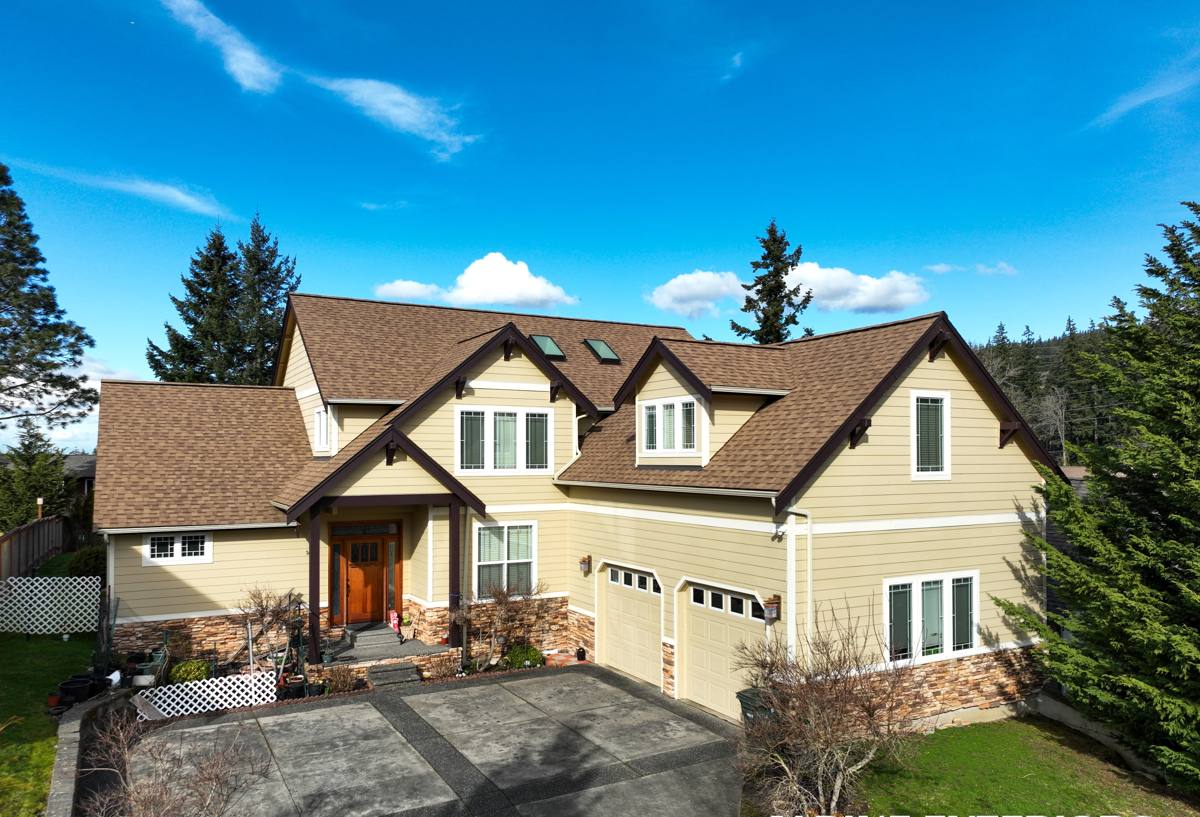
Why Marietta's Climate Is Hard on Vertical Siding
Marietta sits close to Bellingham Bay, which means homes here deal with a combination of conditions that inland Whatcom County properties don't see nearly as much of.
Salt air
Airborne salt from the bay accelerates corrosion on anything metal — fasteners, flashing, and hardware included. On board and batten siding, the battens are fastened through the base panel in a long vertical line, so every one of those fastener points is a potential weak spot if the wrong fastener was used or the head wasn't properly sealed.
Driving rain
Wind off the water pushes rain sideways, not just straight down, which matters a lot on a vertical siding profile. Board and batten relies on the seams between panels being covered and sealed correctly by the battens above them. Wind-driven rain finds any gap in that coverage that a calmer climate would never expose.
A long moss season
Whatcom County's wet season stretches long, and shaded or north-facing walls in Marietta can stay damp for weeks at a stretch. Moss and algae need that sustained moisture to establish, and once they take hold on a batten or panel face, they hold even more water against the siding and its fasteners.
None of this means board and batten is a bad choice for Marietta — it means the installation details matter more here than they would somewhere drier and more sheltered.
What a Correct Board & Batten Installation Actually Involves
A board and batten wall looks simple from the street, but there's a lot happening behind the battens. Skipping any of the following is where most of the failures we get called out to look at started.
- A drainage gap (rainscreen): Water that gets behind the siding, and some always does eventually, needs a path to drain and dry out instead of sitting against the wall sheathing.
- Correct panel seam coverage: Base panel joints need to land where a batten will cover them, not in the open field of the wall.
- Proper flashing at every horizontal transition: Window heads, roof lines, deck ledgers, and the bottom starter course all need flashing detailed to shed water outward, not into the wall.
- Batten fastening into framing: Battens fastened only into the panel, not the studs behind it, work loose faster in wind-exposed, waterside conditions like Marietta's.
- Factory-finished cut edges sealed: Any field cut needs its raw edge treated so it doesn't wick moisture, especially at the corners and bottom trim where splash-back is constant.
- Fastener spacing and type matched to the product manufacturer's install manual, not general carpentry habit.
Get these right and board and batten siding is genuinely low-maintenance for decades. Get two or three of them wrong and you're looking at soft spots, streaking, and premature repainting within the first several years — on a siding style where those problems show more, not less, because the vertical lines draw the eye.
Board & Batten Material Options — and Why We Only Install One
Board and batten is available in several materials, and homeowners in Marietta often ask us why we don't quote all of them. It comes down to which materials hold up to the specific combination of salt air, driving rain, and long wet seasons described above without needing constant upkeep.
| Material | How it handles this climate | Where we see it fall short here |
|---|---|---|
| Vinyl board and batten | Won't rot, low cost | Expands and contracts with temperature swings, which stresses the fastening system over time; can crack in a hard impact; color is molded in and fades unevenly |
| Primed wood or cedar | Traditional look, repairable | Needs repainting and caulk maintenance on a regular cycle; end grain and cut edges absorb moisture quickly in a wet climate; more attractive to moss and insects |
| LP SmartSide (engineered wood) | Lighter than fiber cement, factory primed | Wood-based core means cut edges and any coating failure expose it to swelling; long-term performance depends heavily on caulking and paint maintenance being kept up |
| James Hardie fiber cement | Non-combustible, engineered for Pacific Northwest moisture, factory-baked ColorPlus finish | Heavier to install and requires fiber-cement-rated tools and fasteners — a labor and equipment cost, not a performance downside |
We used to quote several of these. We stopped installing anything but James Hardie fiber cement because the callbacks we saw over the years — swollen edges, chalking paint, loose battens — traced back almost every time to a material that couldn't fully shrug off this region's moisture load, not to bad installation. Fiber cement isn't magic and it still has to be installed to spec, but it gives that installation a much wider margin for error against salt air and driving rain than the alternatives do.
The James Hardie Board & Batten Products We Install
For vertical siding, we typically install James Hardie in one of two configurations, depending on the look a homeowner wants:
- HardiePanel vertical siding with HardieTrim battens: Smooth or cedar-textured panels with trim battens fastened over the seams — the classic board and batten profile, available in a range of ColorPlus factory finishes.
- Artisan-series siding: A more refined, tighter-reveal option for homeowners who want a higher-end architectural look, with the same fiber cement core.
James Hardie's HZ5 product line is engineered for the wetter, milder climate zone that Whatcom County falls into, which matters more than it sounds like — it's a formulation difference aimed at moisture and freeze-thaw performance, not just a marketing label. The ColorPlus finish is baked on at the factory rather than field-painted, which removes the weakest link in most siding paint jobs: the site-applied coat that's only as good as the weather conditions the day it was sprayed.
Our Process, Start to Finish
For a board and batten project in Marietta, our process looks like this:
- On-site assessment: We walk the exterior, check the current siding and sheathing condition, and note any moisture or rot issues already present — common on older homes closer to the water.
- Written estimate: A clear scope covering material, drainage plane, flashing, and labor — no vague allowances.
- Prep and moisture barrier install: Any damaged sheathing gets addressed before siding goes up, along with the weather-resistive barrier and drainage gap.
- Panel and batten installation: Installed to James Hardie's fastening and clearance specifications, with flashing detailed at every window, door, and roofline.
- Final walkthrough: We go over the finished job with the homeowner before calling it complete.
Because we work this area regularly, we already know which conditions to expect on a Marietta site — how exposed the wall in question is to bay wind, whether a north side is going to hold moss longer, and where the original construction likely cut corners on flashing.
What Board & Batten Siding Costs in Marietta
Board and batten typically costs more than plain lap siding because it uses two layers of material (the base panel and the battens) and more labor hours to install correctly. Exact pricing depends on the specifics of your home, but these are the main factors that move the number:
| Cost factor | Why it matters |
|---|---|
| Wall square footage and complexity | More corners, windows, and gables mean more cutting, flashing, and batten layout time |
| Existing siding removal and sheathing repair | Older homes near the water more often need sheathing repairs discovered once the old siding is off |
| Batten spacing and reveal chosen | Tighter batten spacing uses more material and labor than a wider, traditional reveal |
| ColorPlus finish selection | Standard colors versus premium or custom-matched finishes carry different material costs |
| Site access | Steep grades, tight setbacks, or waterside lots can add scaffolding or staging time |
We give a firm, itemized number after seeing the home in person — not a phone estimate — because on board and batten specifically, the flashing and prep work behind the siding affects the price as much as the siding itself does.
Maintenance Checklist for Board & Batten in This Climate
Correctly installed James Hardie board and batten needs very little upkeep, but a couple of times a year is worth spending on a quick check, especially given how long the moss season runs here:
- Rinse off built-up salt residue and grime, particularly on walls facing open exposure toward the bay
- Check north-facing and shaded walls for early moss or algae growth and clean it before it spreads
- Look at caulking around windows, doors, and trim for cracking or gaps
- Confirm gutters and downspouts are draining away from the siding, not splashing back onto it
- Keep landscaping and sprinklers from spraying directly onto lower courses
- Watch for any soft spots, staining, or paint changes that could signal a flashing issue underneath
Why a Crew That Already Works Marietta Matters
Board and batten siding fails, when it fails, almost always at the details — a flashing lap that's backwards, a batten fastened into panel instead of framing, a seam that landed in the open field of the wall instead of under a batten. Those are the kind of mistakes that don't show up on day one; they show up two or three winters later, once the driving rain and long wet season have had time to find them.
A crew that already works Marietta and the surrounding Ferndale area has already seen how this specific stretch of Whatcom County treats siding — the wind exposure off the bay, the wall orientations that hold moss longest, the age and condition of the homes typical to the neighborhood. That's not a substitute for a careful installation, but it does mean fewer surprises and fewer corners that get missed because a crew was guessing at local conditions instead of working from experience with them.
If you're considering board and batten siding for a home in Marietta, we're happy to take a look and put together a free, no-pressure estimate — including an honest read on what your walls need and what it'll take to do the job right.