 Ferndale
 Board & Batten in Blaine's Coastal Climate
Blaine sits about as close to saltwater and the Canadian border as a Whatcom County home can get, and that location shapes how siding ages here. Board and batten is one of the most popular looks for the area's farmhouses, coastal cottages, and newer builds alike, but the same vertical board-and-strip design that gives it a clean, strong shadow line also means more seams, more fasteners, and more places for water to find a way in if the install isn't done right. In a climate that mixes salt-laden air off the water with long stretches of driving rain and a moss season that can run most of the year, those details matter more than they would somewhere drier.
What Salt Air Does to Siding Over Time
Airborne salt doesn't just affect metal — it accelerates the breakdown of paint film, softens caulk joints faster than inland exposure, and speeds up wood decay wherever moisture gets trapped. On a board and batten wall, that's usually at the top and bottom of each batten strip and around window and door trim, where a lot of the wall's total joint length is concentrated. A siding material and finish that don't handle that exposure well will show it first in these narrow board and batten reveals.
Driving Rain and Vertical Lines
Board and batten's vertical orientation is part of its appeal, but it also means rain runs straight down the face of every board and can be driven sideways into the seams during a real Pacific storm. Correct installation depends on what's happening behind the boards — the water-resistive barrier, flashing, and fastening pattern — every bit as much as what's visible on the surface.
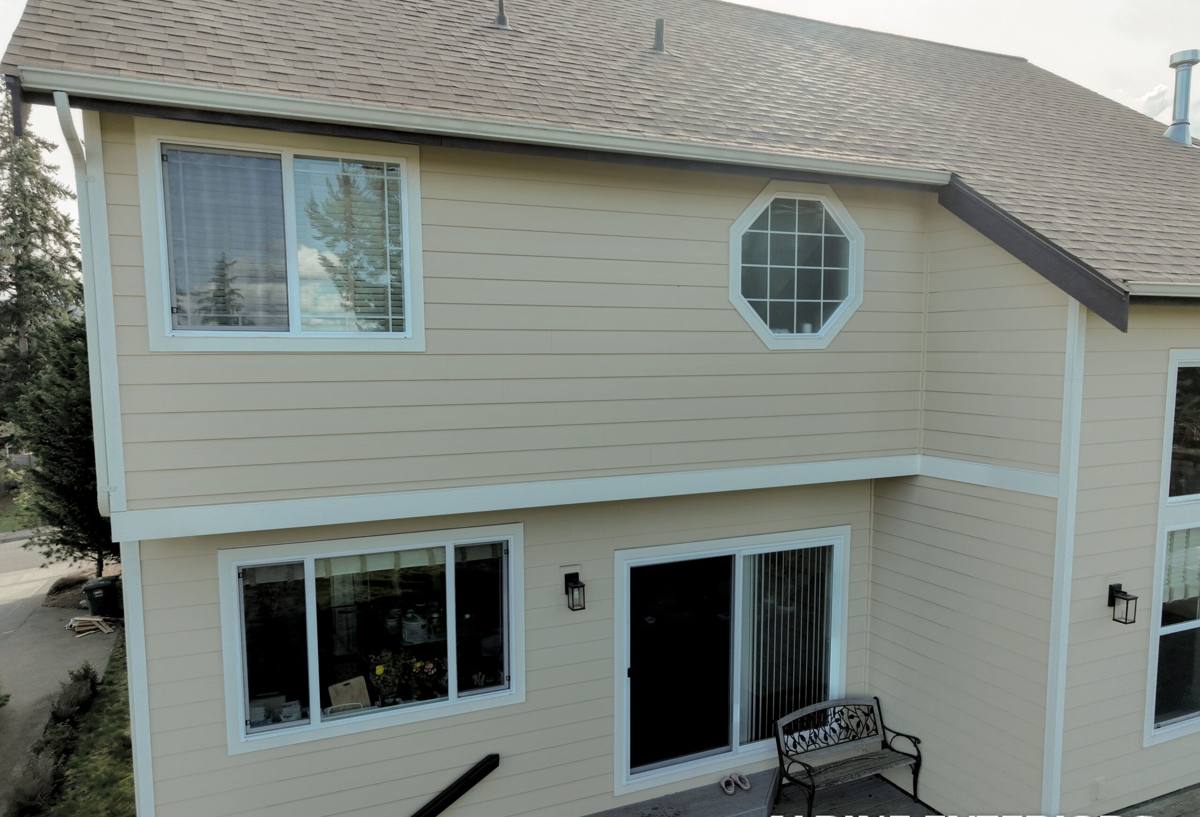
What Board & Batten Siding Actually Is
Board and batten is a two-layer siding pattern: wide flat panels or boards installed first, with narrower strips (the battens) fastened over each seam. Done correctly, it's a legitimate long-term siding system, not just a decorative accent. Done poorly — battens nailed straight through unsupported panel seams with no attention to drainage — it becomes one of the more failure-prone siding styles on the market, regardless of material.
True Board & Batten vs. Batten-Over-Panel
There's a meaningful difference between a true board and batten assembly built for the coastal Northwest and a look-alike installed the same way you'd hang lap siding. The panel underneath needs a drainage plane behind it, and the batten needs to be fastened in a way that doesn't trap water against the panel joint. We treat every batten seam as a spot that will eventually see standing moisture during a hard rain, because on this coastline it will.
Why We Only Install James Hardie for Board & Batten
We standardized on James Hardie fiber cement across every job we take, and board and batten is where the material choice matters most, because the seam count is so much higher than a standard lap job. We don't install LP SmartSide, vinyl, Cemplank, Allura, primed spruce, or cedar board and batten — not because those products can't be installed, but because we've made fiber cement our professional standard for the moisture and maintenance conditions this area produces.
The HardiePanel and HardieTrim System
James Hardie's board and batten systems pair HardiePanel vertical siding with HardieTrim battens, engineered to work together as a system rather than mismatched parts. The panels are non-combustible fiber cement, and the ColorPlus factory finish is baked on and warranted against fading and peeling — which matters on a wall that gets full weather exposure and salt air with no soffit or gutter to shield it. HZ5 product lines are engineered for wetter, more moisture-variable climates like this one, which is a real factor in a Whatcom County installation, not just a marketing label.
| Material | How it handles salt air & driving rain | Long-term maintenance |
|---|---|---|
| James Hardie fiber cement | Non-combustible, dimensionally stable, factory ColorPlus finish resists fading and moisture damage at seams | Occasional wash; repaint interval measured in decades, not years |
| Cedar / primed spruce | Natural material, absorbs and releases moisture with weather swings; prone to cupping and checking at battens | Regular repainting/staining, more frequent caulk maintenance |
| Vinyl | Won't rot, but can warp or crack in temperature swings and doesn't hide seam lines well in a board and batten profile | Low maintenance but limited repair options if damaged; color can't be changed |
| LP SmartSide / other engineered wood panel | Treated wood-based substrate; performs acceptably but is more sensitive to cut-edge sealing and standing moisture than fiber cement | Manufacturer requires strict edge treatment and caulk maintenance to hold warranty |
What a Correct Board & Batten Installation Involves
The visible battens are the smallest part of the job. Most of what determines whether board and batten siding lasts in this climate happens before the first board goes up.
- Weather-resistive barrier installed and lapped correctly behind the panels, with seams taped or shingled to shed water downward
- Flashing at every window, door, and horizontal trim transition — the points most likely to leak in driving rain
- Panel fastening per manufacturer spec, not "close enough" nailing patterns
- Battens fastened into framing where possible, not just through the panel face
- Correct gaps and sealant at panel-to-trim and panel-to-panel joints, sized for expansion and contraction
- Bottom clearance from grade, decks, and roof lines to keep splash-back and standing water away from the siding base
- ColorPlus touch-up product used on any field-cut edges to maintain the factory finish and warranty coverage
Our Process on Blaine Jobs
Whatcom County properties near the water tend to have their own quirks — wind exposure, drainage patterns, and existing moisture issues that a crew unfamiliar with the area might miss. Our process is built around catching those before they become part of the finished wall.
1. On-Site Assessment
We walk the exterior and check for existing moisture damage, drainage problems, and anything about the site — wind exposure, tree cover, grade slope — that should influence how the new siding is detailed.
2. Tear-Off and Substrate Check
Once the old siding is off, we inspect sheathing and framing for hidden rot or previous water intrusion before anything new goes on. Covering a moisture problem with new siding just hides it longer.
3. Weather Barrier and Flashing
This is the step that decides how the job performs in year five and year fifteen, not just on install day. We don't shortcut it.
4. Panel and Batten Installation
Installed to James Hardie's fastening and clearance specs, with attention to the reveal consistency that gives board and batten its clean look.
5. Final Inspection and Caulk/Touch-Up Review
We walk every seam and trim joint before calling the job done.
Common Problems We Find on Existing Board & Batten Homes
When we're called out to look at an older board and batten home in the area, the same issues come up repeatedly: battens nailed directly through panel seams with no drainage gap, missing or under-lapped flashing at window heads, caulk that's failed at the base of battens where salt air and UV exposure hit hardest, and moss buildup at horizontal trim that's held moisture against the wall for years. None of these are unusual for the climate — they're the predictable result of a siding style that punishes shortcuts more than most.
Maintenance in a Salt-Air, High-Moss Environment
Even the right material benefits from basic upkeep here. A yearly rinse-down removes salt residue and moss spores before they take hold, especially on north-facing walls and anywhere tree cover keeps siding shaded and damp longer after a storm. Check caulk joints at trim and battens annually — this is normal maintenance, not a sign of a failed install, and catching a cracked joint early is a five-minute fix instead of a repair job. Keep gutters and downspouts clear so runoff isn't sheeting down the face of the siding, and keep grade and landscaping from holding splash-back against the bottom courses.
Why Hiring a Crew That Already Works This Area Matters
Board and batten siding done wrong doesn't usually fail in month one — it fails in year three or four, after enough freeze-thaw cycles, wind-driven rain events, and moss seasons have worked on a shortcut. A crew that already works Blaine and the greater Ferndale area has already seen how this coastline treats siding, knows which details get skipped by out-of-area contractors unfamiliar with the exposure, and can spot early warning signs on an existing home before they turn into a full rebuild. That local pattern recognition is worth as much as the material spec sheet.
If you're planning new siding or replacing failing board and batten on a Blaine-area home, we're happy to take a look and give you a straightforward, no-pressure estimate — fill out the form below and we'll get in touch.