 Ferndale
 Board & Batten Siding for Bellingham Properties
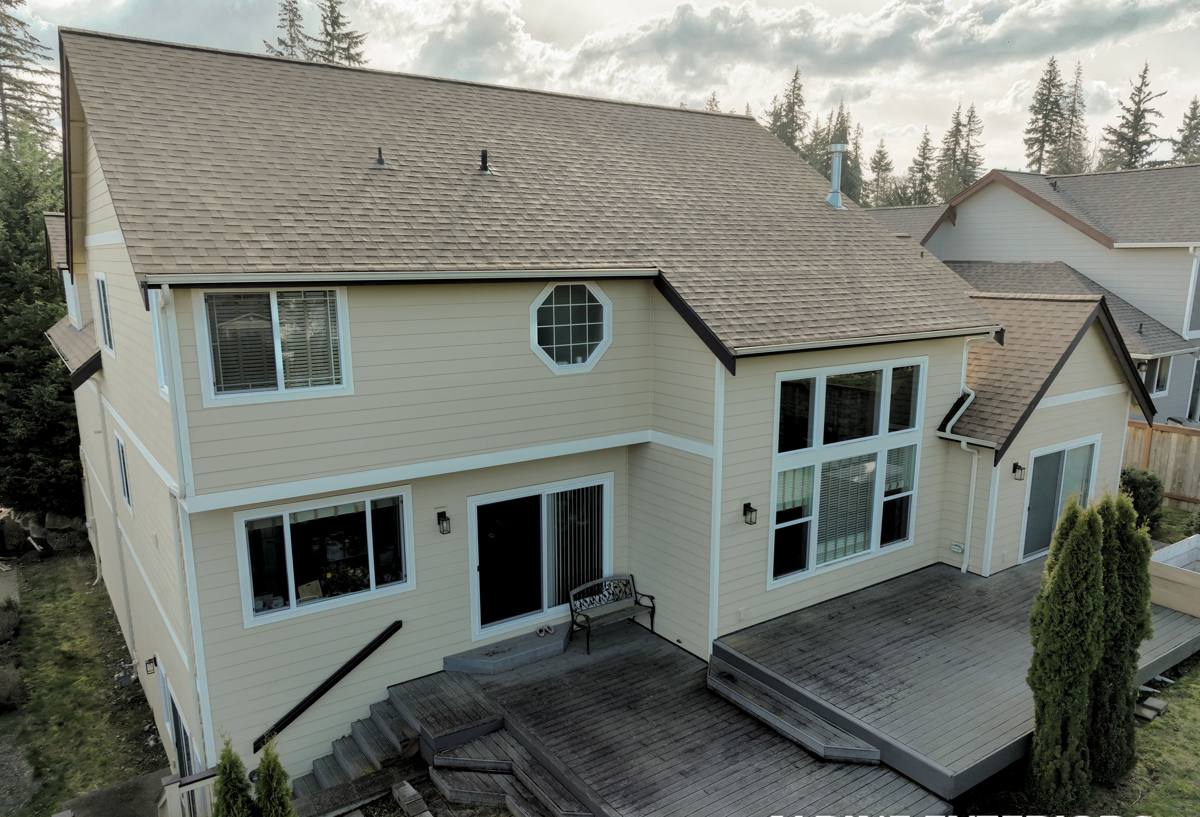
Board and batten has become one of the most requested siding profiles for homes in and around Bellingham, and it's not hard to see why. The vertical lines read as clean and modern on new construction, but they also sit comfortably on farmhouse-style remodels and older Whatcom County homes looking for a refresh. What most homeowners don't think about until later is that board and batten is a different animal to install and maintain than lap siding — and on a property exposed to Bellingham Bay's salt air, driving rain, and a moss season that can stretch half the year, getting the details right matters more than the style choice itself.
This page covers what board and batten actually needs to hold up in this specific climate, what a correct installation looks like, and why we only offer it in James Hardie fiber cement rather than the wood, engineered wood, or vinyl versions of the same look.
Why Bellingham's Climate Is Hard on Vertical Siding
Board and batten's vertical battens create more seams, more fastener points, and more edges than a horizontal lap profile covering the same wall. Every one of those details is a potential entry point for moisture if it isn't built correctly. In Bellingham, that matters for a few specific reasons:
- Salt air corrosion. Proximity to Bellingham Bay means airborne salt reaches fasteners, trim, and any exposed metal flashing. Uncoated or under-rated fasteners corrode faster here than they would inland, and a corroded fastener head is a leak waiting to happen.
- Driving rain. Wind-driven rain off the water pushes water sideways into wall assemblies, not just straight down. Vertical battens can channel that water if the drainage plane behind them isn't detailed properly.
- Extended moss and algae season. Whatcom County's damp, mild winters and shaded northern exposures give moss and algae a long window to establish on any surface that holds moisture, including siding that stays damp on the north and west walls.
None of this means board and batten is a bad choice for a Bellingham home. It means the material and the installation both need to be built for these conditions specifically, not just installed the way it would be in a drier climate.
What Correct Board & Batten Installation Requires Here
A real drainage plane
Board and batten should never be installed directly against the weather-resistive barrier with no gap. A drainage plane — typically a rainscreen or furring strategy — gives any water that gets past the siding a path to drain and dry out instead of sitting against the wall sheathing. On a coastal, high-rainfall site like Bellingham, this isn't optional detailing; it's the difference between siding that lasts decades and siding that traps moisture behind it.
Fastener strategy
Every batten strip and board face is a fastener line. In a salt-air environment, fastener corrosion resistance is a real spec decision, not an afterthought — the wrong fastener will bleed rust streaks down the face of the siding or fail structurally years before the siding itself would need replacement.
Flashing at every horizontal break
Window heads, door heads, water tables, and any horizontal trim intersecting the vertical boards need proper flashing and kickout details. Vertical siding tends to funnel water down to these horizontal breaks, so a weak flashing detail at a window head shows up as a stain or soft spot faster with board and batten than it would with lap siding.
Board spacing and expansion room
Fiber cement is dimensionally stable, but it still needs manufacturer-specified gaps at butt joints and board ends to handle seasonal movement. Installers who don't follow the spec sheet on this — often crews more used to caulking gaps shut than respecting them — set the siding up for buckling or cracked caulk lines down the road.
Why We Only Install This in James Hardie Fiber Cement
Board and batten is available in real wood, engineered wood products like LP SmartSide, vinyl, and fiber cement. We install James Hardie exclusively, and on a profile with this many seams and fastener points, the material choice matters even more than usual.
| Material | How it handles this climate |
|---|---|
| Solid wood boards | Attractive but absorbs moisture at every seam; requires ongoing refinishing and is the most vulnerable to the region's rain and moss exposure |
| Engineered wood (e.g. LP SmartSide) | More stable than raw wood but still wood-based at its core — edge and seam moisture exposure over years of Bellingham rain is a real maintenance factor |
| Vinyl board and batten | Low maintenance, but it's a thin plastic panel — it can warp with temperature swings and doesn't hold up in wind-driven rain events the way a rigid material does |
| James Hardie fiber cement | Non-combustible, dimensionally stable, engineered moisture resistance, factory-baked ColorPlus finish that doesn't rely on field-applied paint for its color life |
We're not going to tell you the alternatives are junk — plenty of homes around the country wear them fine. But for this profile, in this climate, with this many seams exposed to salt air and driving rain, we've made fiber cement our standard because it's the material we're comfortable standing behind for the long term.
Hardie's board and batten-specific products
James Hardie makes purpose-built vertical siding panels and board-and-batten profiles engineered as a system — not boards repurposed from a lap-siding line. The HZ5 product line, engineered for wetter, colder climates, is the right specification for Whatcom County's weather rather than a warm-climate HZ10 formulation. ColorPlus factory finish means the color and the moisture-sealing topcoat are baked on before the boards ever reach the jobsite, which matters on cut edges and fastener heads that get touched up in the field.
Our Process for a Bellingham Board & Batten Project
- On-site assessment. We look at wall orientation, existing moisture damage, roofline interactions, and how much wind-driven rain exposure each elevation actually gets — not every wall of a Bellingham home faces the same conditions.
- Drainage plane and WRB check. If we're re-siding, we inspect what's underneath before deciding whether the existing barrier stays or gets replaced. Board and batten over a compromised weather barrier just locks a problem behind new siding.
- Material and color selection. We walk through Hardie's board and batten and vertical panel options and ColorPlus palette, factoring in HOA or neighborhood considerations where relevant.
- Installation to spec. Rainscreen or furring strategy, corrosion-resistant fasteners, proper flashing at every horizontal break, and manufacturer gap spacing — every step documented, not assumed.
- Final walkthrough. We go over trim lines, caulk joints, and touch-up work with you directly before calling the job done.
What to Check Before Hiring Anyone for This Job
- Ask specifically how they'll handle the drainage plane — a vague answer here is the biggest red flag on a vertical siding job.
- Confirm the fastener type and corrosion rating they're specifying, especially this close to salt water.
- Ask how they flash window and door heads under board and batten — this is where poor installs fail first.
- Get the manufacturer's installation spec sheet referenced by name, not just "we've done this before."
- Confirm whether they're licensed and insured to work in Washington and familiar with Whatcom County permitting.
- Ask about warranty structure — both the material warranty and what's covered on labor.
Maintenance Expectations for Bellingham Homeowners
Even with the right material and a correct install, board and batten in this climate isn't zero-maintenance. Expect to periodically check and clear moss or algae growth on shaded north- and west-facing walls, especially where trees overhang the roofline. Inspect caulk joints at trim and window intersections every year or two, since caulk is a wear item regardless of how good the siding behind it is. And keep an eye on any exterior fixtures, downspouts, or hose bibs mounted to the siding — fastener points around hardware are common places for small leaks to start if not sealed correctly.
Cost Factors Specific to This Job
| Factor | Why it affects cost on a board & batten job |
|---|---|
| Wall square footage and elevation count | More seams and cuts than an equivalent lap siding job due to the vertical batten layout |
| Existing siding removal and WRB condition | Tear-off and any sheathing repair needed before new drainage plane goes on |
| Trim and window head flashing complexity | Homes with more window and door openings require more flashing detail work |
| Rainscreen/furring strategy | Adds material and labor but is the right call for coastal wind-driven rain exposure |
| Color and finish selection | ColorPlus factory finishes vs. field-painted options affect material pricing |
We don't publish fixed pricing because every wall, every tear-off, and every flashing detail is different — but we'll walk you through exactly what's driving the number on your specific home.
Is Board & Batten the Right Fit for Your Bellingham Home?
Board and batten works well on homes with simple, uninterrupted wall planes where the vertical lines can read cleanly, and on farmhouse or craftsman-influenced designs common throughout Whatcom County. It's a less natural fit on walls with a lot of window and trim complexity, where the seam count can start working against the clean look that makes the profile appealing in the first place. Part of our on-site visit is an honest conversation about whether board and batten, a lap profile, or a mix of the two makes the most sense for your specific elevations.
If you're considering board and batten siding for a home in Bellingham or elsewhere in Ferndale's service area, we're happy to walk your property, look at what your walls are actually dealing with, and give you a straight answer on what a correct installation would involve. Reach out for a free, no-pressure estimate using the form below.