 Ferndale
 Siding Repair Built for Sumas Conditions
Sumas sits in the low, wet corner of Whatcom County, tucked against the Sumas River valley near the Canadian border. It doesn't get the salt-laden coastal air that homes closer to Ferndale and Bellingham Bay deal with, but it gets something just as hard on siding: standing valley moisture, heavy fog, long stretches of driving rain off the Fraser lowlands, and a moss season that can run eight or nine months out of the year. Add in the temperature swings between the valley floor and the surrounding foothills, and you get siding that's constantly cycling between wet and dry, which is exactly the kind of stress that turns small problems into big ones if nobody's watching.
We work siding repair calls throughout Whatcom County, and Sumas jobs are rarely a simple patch. The moisture patterns here are different from town to town — a house a quarter mile off the river bottom can have a completely different repair history than one up on higher ground. That's the kind of local variation you only pick up by actually working these streets, not by driving through once for an estimate.
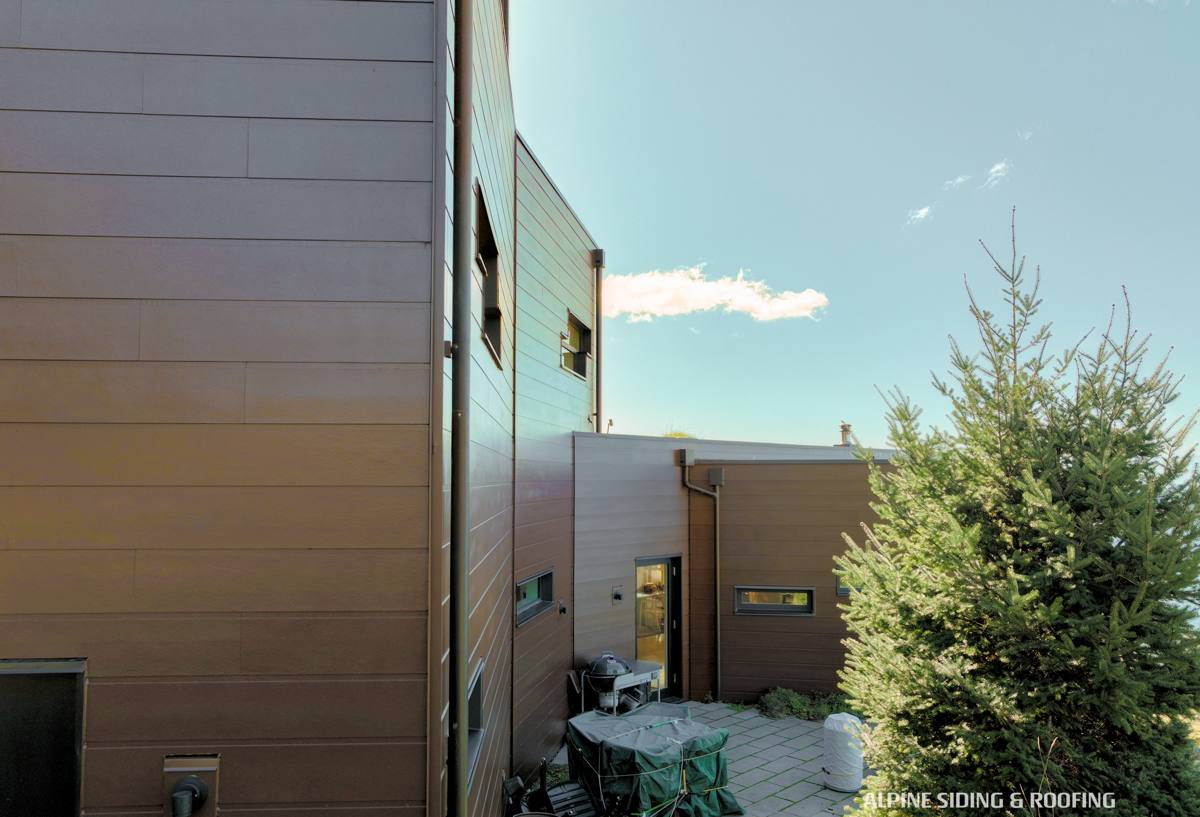
Why Sumas Siding Fails Differently Than Other Parts of the County
Low-lying moisture and slow drying
Homes in the Sumas valley sit lower and closer to water than most of Whatcom County. Fog burns off slower here, humidity lingers longer after a storm, and siding that would dry out in a few hours closer to the coast can stay damp overnight. Wood-based siding products and old paint systems soak that moisture in, and over years it shows up as swelling, soft spots, and paint that won't hold no matter how often it's redone.
Moss and organic growth
A long moss season means more than green staining. Moss holds water directly against the siding surface for weeks at a time, and where it colonizes seams, laps, and trim joints, it keeps those spots wet long after the rest of the wall has dried. That's where rot gets its foothold, usually starting from the inside of a lap joint where nobody sees it until the siding is already failing.
Freeze-thaw at the margins
Sumas gets colder snaps than the immediate coast, especially on clear winter nights when cold air pools in the valley. Trapped moisture that freezes and thaws inside a compromised siding panel accelerates cracking and delamination, particularly in older wood or composite products that were never designed for repeated cycling.
Signs Your Sumas Home Needs Siding Repair
- Soft, spongy, or crumbling spots when you press on the siding, especially near the bottom courses and around window trim
- Paint that's bubbling, peeling, or failing again within a year or two of being redone
- Visible gaps or separation at seams, corners, or where siding meets trim
- Persistent moss or algae staining that comes back within weeks of cleaning
- Warping, buckling, or panels that no longer sit flat against the wall
- Water stains or damp drywall on interior walls that back up to exterior siding
- Visible daylight or drafts around siding penetrations (vents, faucets, hose bibs)
Any one of these can be a localized fix. Several at once, especially on the same wall, usually means moisture has been getting behind the siding for a while and the repair needs to include what's underneath — house wrap, flashing, and sheathing — not just the visible panel.
What a Correct Repair Actually Involves
A siding repair that just swaps a damaged board for a new one and calls it done is the single most common shortcut we see undone within a year or two, especially in a valley climate like this. Water damage is rarely limited to what's visible from the ground. A correct repair means:
- Full diagnosis before any board comes off. We check moisture levels behind the siding, not just what's visible, and look at flashing, caulking, and drainage paths around the damaged area.
- Removing siding wide enough to see the actual extent of the damage. If rot traveled sideways under a lap joint, patching just the stained board leaves the real problem in the wall.
- Inspecting and repairing the water-resistive barrier and sheathing underneath. If house wrap is torn or sheathing has gone soft, that gets addressed before anything new goes back on — new siding over compromised sheathing just buys a few years before the same call comes back in.
- Correcting the flashing detail that let water in. Most siding failures trace back to a flashing or sealant detail that failed, not the siding material itself. Fix the entry point or the repair is temporary.
- Matching material and finish so the repair doesn't stand out. This is where factory-finished fiber cement has a real advantage — matching colors from a controlled ColorPlus batch is far more consistent than trying to field-match painted wood or a discontinued vinyl profile.
Our Process for a Sumas Siding Repair Call
Because we already work this area regularly, we're not learning the neighborhood on your dime. Our process for Sumas repair calls looks like this:
1. On-site inspection and honest diagnosis
We look at the damaged area and the surrounding wall, check for moisture intrusion beyond what's visible, and tell you plainly whether this is a contained repair or a sign of a bigger issue on that elevation.
2. A written scope before any work starts
You get a clear explanation of what's being replaced, what's being inspected underneath, and why — no vague "patch and paint" line items.
3. Repair with the same fiber cement system, not a mismatched patch
Since we install James Hardie exclusively, repairs on homes we've already sided are a straightforward match. On homes with other existing siding, we'll tell you honestly when a patch makes sense and when the smarter long-term move is replacing the affected section or elevation with fiber cement instead of continuing to chase failures in an aging product.
4. Cleanup and a final moisture check
We don't consider a repair finished until the area is confirmed dry and sealed correctly, not just visually patched.
Why We Only Repair and Install James Hardie Fiber Cement
We don't install LP SmartSide, vinyl, Cemplank, Allura, primed spruce, or cedar, and that standard shapes how we handle repairs too. In a climate that cycles between soaked and dry as often as Whatcom County's does, the material doing the repair matters as much as the workmanship. James Hardie fiber cement is non-combustible, doesn't absorb moisture the way wood-based products do, and holds its factory ColorPlus finish for years without the repeat repainting cycle that wood and some composite sidings demand. Hardie's HZ5 product line in particular is engineered for the freeze-thaw and moisture patterns common to the Pacific Northwest, which is exactly what a Sumas valley home deals with.
That doesn't mean every siding product is bad — vinyl is inexpensive and low-maintenance in the right setting, and cedar has real aesthetic appeal for the right buyer. But we've made a standard for what we're willing to put our name behind, and repeated callback repairs on moisture-prone materials in a climate like this aren't it. When we repair, we repair with what we'd install new: a product built for this exact kind of weather, backed by a strong transferable warranty.
Repair vs. Replace: How to Think About the Decision
| Factor | Favors Repair | Favors Replacement |
|---|---|---|
| Extent of damage | Localized to one board or small section | Multiple elevations or recurring failures |
| Age of existing siding | Under 10-15 years, sound overall condition | Original siding is decades old or discontinued |
| Underlying material | Fiber cement or sound wood substrate | Failing wood, particleboard, or brittle vinyl |
| Moisture history | Isolated incident (impact damage, one bad seam) | Chronic moss, staining, or damp interior walls |
| Color match | Recent Hardie ColorPlus batch available | Older or custom-painted finish, poor match likely |
Cost is almost always a secondary factor to these. A cheap patch on a wall that's already failing elsewhere just delays a bigger job and adds labor cost you'll pay twice.
Timeline and What to Expect
Most localized Sumas siding repairs — a damaged section, a rotted area around a window, storm impact damage — run one to three days once the scope is confirmed, weather permitting. Repairs that uncover sheathing damage or extend across a full elevation take longer, since drying time and structural repair have to happen before new siding goes back up. We'll give you a realistic window up front rather than a best-case number that assumes nothing goes wrong once the old siding comes off.
Whatcom County's rain patterns mean we plan around weather more than crews in drier climates do. We won't leave a wall open ahead of a forecasted system, and we'll walk you through the sequencing before we start so there are no surprises about how long your home has exposed sheathing during the repair.
Why It Matters That We Already Work Sumas
Siding repair estimates can vary wildly depending on whether a contractor actually understands the moisture patterns of a specific area or is applying a generic assessment. A crew that regularly works Sumas and the surrounding Ferndale and Whatcom County area knows which elevations typically take the worst weather exposure, how valley moisture behaves differently than it does closer to the coast, and what an honest repair versus replacement conversation looks like for homes built during the different eras common in this part of the county. That local pattern recognition is the difference between a repair that holds and one that's back on the schedule in two years.
After the Repair: Keeping It From Happening Again
- Rinse moss and algae off siding annually, especially on north-facing and shaded walls, before it gets a foothold
- Keep gutters clear so overflow doesn't run directly down siding walls
- Trim back vegetation and tree cover that keeps siding shaded and damp longer than it should be
- Re-caulk trim joints and penetrations on the schedule your contractor recommends, not just when it looks cracked
- Walk the exterior once or twice a year and check the same trouble spots — corners, bottom courses, and window trim — for early signs of moisture
None of this is complicated, but it's the difference between a repair that lasts and one that's a recurring line item on your home maintenance list.
If you're dealing with damaged, soft, or failing siding on a Sumas home, we're glad to take a look and give you a straight answer about what it needs. Reach out for a free, no-pressure estimate — there's a form just below.